
Anime
Chainsaw Man Season 2 Release Date

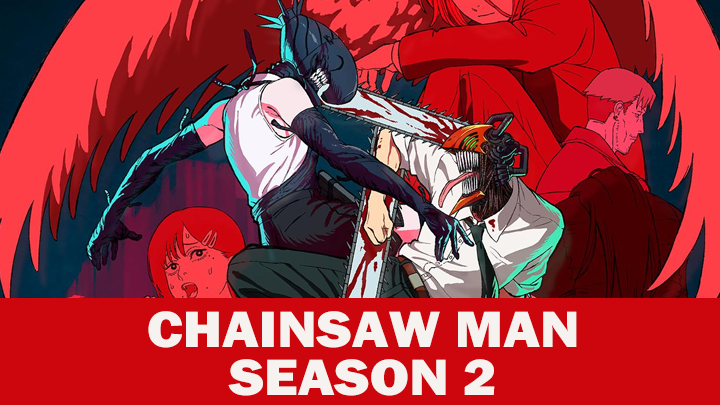
When MAPPA dropped Chainsaw Man Season 1 in 2022, it took the anime world by storm. The hype was already sky-high, and once the episodes started airing, fans quickly realized this wasn’t just another action show. It mixed brutal gore with dark humor, layered storytelling, and some of the most shocking moments in recent anime history.
Since then fans have been waiting for the Chainsaw Man’s Season 2. Below we’ve covered all the updates announced yet, so fans should stay tuned for updates. Some social media accounts or fan communities can provide insights and rumors about the production.
But instead of its season 2 MAPPA Studio recently released Chainsaw Man – The Movie: Reze Arc. The movie continues the story and sets the stage for what comes next in Season 2.
Where Things Stand Now
- Studio MAPPA, the team behind Chainsaw Man, has not officially confirmed a Season 2 release date.
- Instead, MAPPA has chosen to continue the story via a feature film titled Chainsaw Man – The Movie: Reze Arc. This movie will adapt the Bomb Girl arc from the manga (chapters ~40-52) and acts as a direct sequel to Season 1.
- The film releases in Japan on September 19, 2025.
- For international audiences, the Reze Arc movie begins releasing from late September 2025 in select Asian markets, and in the United States on October 24-29, 2025.
What This Means for Chainsaw Man Season 2
Because the film is intended to pick up the story where Season 1 left off, many believe that Season 2 would follow after the Reze Arc movie.
Predictions now lean toward mid to late 2026 as a possible window for Season 2. This is speculative, based on:
- time needed for production after the movie
- letting the movie’s reception help decide the scale or format of future episodes
Why a Movie Instead of Season 2 — For Now
There are a few reasons MAPPA appears to have chosen the movie path first:
- Broader Reach: A film lets creators reach audiences outside just streaming/subscription users. Releasing in theaters can attract people who might not follow anime on TV or digital platforms.
- Quality and pacing: A movie gives more control over the pacing for a strong arc like Reze. Instead of stretching it over many episodes, the format allows tighter storytelling.
- Testing the waters: If the movie is well-received, it strengthens the case for investing heavily in Season 2. It works as both continuation and gauge.
What Fans Should Keep an Eye On
- Official announcements from MAPPA or the Chainsaw Man production team. Season 2 hasn’t been confirmed yet, so the first signals will come from them.
- Updates at anime conventions or industry events. Often studios reveal plans there.
- Success of the Reze Arc movie, both box office and critical reception—it could directly influence whether Season 2 moves forward sooner.
- Manga progress: since there is enough source material, whether new arcs are ready to be adapted will matter.
Final Word
As of now, Season 2 of Chainsaw Man does not have a confirmed release date. What is confirmed is the Reze Arc movie, which will tie up Season 1 and set up what might come next. If things go smoothly, mid to late 2026 is considered a realistic estimate for when Season 2 could arrive.
Until then, the movie is the next big thing to watch. Once there’s an official announcement, expect it to be everywhere in anime news.
FAQs
Is Season 2 confirmed?
No official confirmation yet. MAPPA has only confirmed the Reze Arc movie.
What does the Reze Arc cover?
It adapts the Bomb Girl arc (chapters ~40-52) from the manga.
When is the movie coming out?
September 19, 2025. International releases follow from late September to October depending on region.
When might Season 2 arrive?
Best guess is mid to late 2026, though nothing is confirmed.
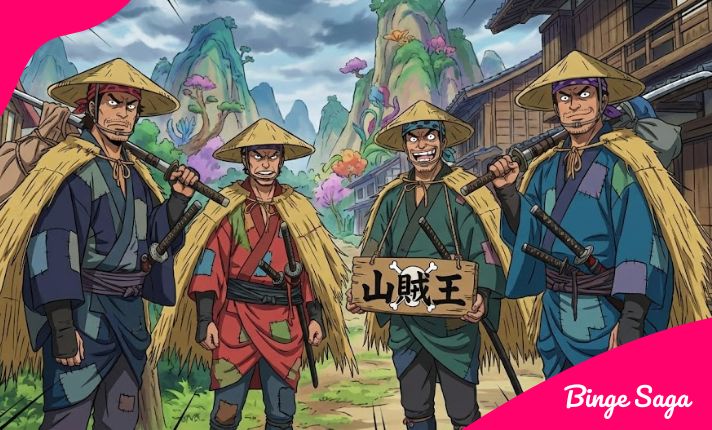
Sanzoku Bandits are one of the small but memorable threads woven into the early tapestry of One Piece. They do not appear across many arcs. They are not a massive criminal empire. Still, they matter because they help set tone and stakes when Eiichiro Oda first introduces the reader to Luffy and the kind of world he will face. This article collects what we know about them, explains where the name comes from, examines famous members and episodes, and clarifies how the bandit motif appears elsewhere in the series.
- What the name means
- Where Sanzoku Bandits show up in One Piece
- Higuma and the Higuma Bandits
- How Sanzoku Bandits reflect social texture within East Blue
- Bandit culture across Dawn Island
- Sanzoku Atoll — A name echo, not a connection
- Narrative purpose of the Sanzoku Bandits
- They introduce Luffy’s vulnerability
- They frame Shanks’ compassion and sacrifice
- They highlight the contrast between bravado and true strength
- They help define Dawn Island
- Higuma’s legacy and fan perception
- Sanzoku Bandits in the broader One Piece world
- Conclusion
What the name means
The Japanese word sanzoku is written with the kanji for mountain and for robber. It translates to bandit or brigand and usually implies thieves who make their base in mountainous areas. The term appears in many parts of Japanese folklore and popular culture as a shorthand for outlaws who attack villages and travelers.
Where Sanzoku Bandits show up in One Piece
Sanzoku Bandits are best known from the very beginning of One Piece. The Higuma Bandits, who are explicitly described as mountain bandits active on Dawn Island, are the first antagonists readers meet in the Romance Dawn episodes and chapters. These bandits operate around Foosha Village and the slopes of Mt. Colubo, the mountain behind the village that frames early scenes in Luffy’s origin story. Their presence helps establish a rural, rough-edged setting for Luffy’s childhood and for the formative events that push him toward becoming a pirate.
Higuma and the Higuma Bandits
Higuma is the most famous leader associated with the Sanzoku Bandits label. He is introduced as a violent mountain bandit who proudly claims a murderous past and who holds a bounty that marks him as dangerous by East Blue standards. His gang raids and intimidates Foosha Village, and his confrontation with Shanks and Luffy early on sets the emotional tone that would define the series.
Higuma tries to take a young Luffy out to sea after mocking him for defending Shanks. This choice, meant to humiliate a child, becomes one of the most important turning points in the story. When Higuma attempts to kill Luffy by throwing him into the ocean, a Sea King appears and devours Higuma almost instantly. Shanks arrives in time to save Luffy, losing his arm in the process. This event shapes Luffy’s future philosophy and determination. Higuma, though not an iconic villain, indirectly influences the birth of the man who would aim for the pirate crown.
The Higuma Bandits themselves function as a backdrop for early conflict, a way to contrast the cruelty of minor criminals with the dignity and warmth of Shanks’ crew. Their lack of discipline and reliance on intimidation reveal how shallow their power truly is. In a world filled with pirates, marines, emperors, and warlords, mountain bandits are small threats, yet they deliver the first spark in Luffy’s journey.
How Sanzoku Bandits reflect social texture within East Blue
East Blue is known as the calmest sea in the world of One Piece. Even so, it is not free of crime or hardship. Sanzoku Bandits represent a type of threat grounded in everyday reality rather than supernatural violence. They steal supplies, bully local villagers, and take advantage of isolated communities with weak protection.
Through them, Oda shows that danger exists even before pirates enter the picture. Villages must fend off local troublemakers long before they fear grand criminals sailing in with Jolly Rogers. This portrayal makes Foosha Village feel lived-in and believable. The villagers treat the Higuma Bandits with a mix of fear and resignation, suggesting that such raids have happened before.
Their attitude toward the Red Hair Pirates also contrasts sharply with their fear of Higuma. While Shanks’ crew appears dangerous on the surface, they carry themselves with humor, generosity, and composure. In this contrast, the bandits serve as a narrative device: they highlight how appearance does not define morality in One Piece.
Bandit culture across Dawn Island
While Higuma’s group is the only Sanzoku Bandit crew shown on screen, the idea of bandits on Mt. Colubo extends deeper into Luffy’s childhood. Later flashbacks reveal that the mountain houses various outlaws, wild beasts, and harsh terrain. This is also where Luffy meets Ace and Sabo and learns to survive under Dadan’s care.
Though Dadan’s group is separate from the Sanzoku Bandits, they occupy overlapping territory. The existence of multiple outlaw factions in one mountain range hints at a broader culture of fringe survivalists around Dawn Island. They stay hidden from the marines yet close enough to prey on small towns. Outlaws can build whole communities on those slopes, raising children, protecting one another, and trying to carve out a life beyond government oversight.
The Sanzoku Bandits are not portrayed as complex or morally nuanced in the way Dadan’s group eventually becomes. Still, they contribute to the idea that the mountains behind Foosha Village serve as a frontier zone where the rules differ from the calmer world below. This contrast becomes even clearer later in the story when characters like Black Maria appear, reminding readers that One Piece contains many layers of outlaw culture, each shaped by its own setting and traditions.
Sanzoku Atoll — A name echo, not a connection
A location known as Sanzoku Atoll exists elsewhere in One Piece, though it is unrelated to Higuma or Dawn Island. The similarity in name creates confusion for some fans, but the two share no connection. Sanzoku Atoll simply borrows the same linguistic root, referring again to the idea of bandits or outlaws. Oda often reuses terms that carry thematic weight. In this case, both uses of “sanzoku” evoke wilderness and lawlessness, but they represent separate stories in separate corners of the world.
Narrative purpose of the Sanzoku Bandits
Even with minimal screen time, the Sanzoku Bandits play several important narrative roles.
They introduce Luffy’s vulnerability
Before gaining his pirate crew or honing his abilities, Luffy is just a stubborn child. The bandits overpower him easily and nearly kill him. This sets the stage for Luffy’s lifelong struggle against overwhelming foes.
They frame Shanks’ compassion and sacrifice
Shanks’ willingness to protect Luffy becomes more striking because the threat comes from ordinary humans, not a powerful pirate or monstrous creature. Shanks does not need to fight a grand enemy to show his values. His heroism comes from simple choices.
They highlight the contrast between bravado and true strength
Higuma brags about his crimes and bounty yet cowers before Shanks. This dynamic reinforces the recurring One Piece theme that strength comes from conviction, not fear-based dominance.
They help define Dawn Island
By featuring mountain bandits, the early story paints Dawn Island as a place where danger lurks near civilization. It is not an idyllic childhood home but a rough environment that shapes the young Luffy, Ace, and Sabo.
Higuma’s legacy and fan perception
Though Higuma is far from a beloved character, he has achieved a strange form of immortality within the One Piece community. Fans often joke that he is the first real villain of the story, the man whose actions triggered the famous Sea King rescue. His confrontations with Shanks produce meme-worthy moments that resurface often.
He is also the first example of a type of antagonist that Oda uses throughout the series: small-scale villains who exist not to dominate an arc but to color the world and provide a quick window into its moral structure. Through characters like Higuma, readers learn early not to judge strength by reputation alone.
Sanzoku Bandits in the broader One Piece world
Though the Sanzoku Bandits themselves never reappear, bandits continue to show up in many regions. Some are comic relief, others menacing, others sympathetic. Their repeated inclusion shows that the One Piece world contains crime and hardship at every social level. The series does not rely solely on large pirate crews or mysterious warlords. Ordinary criminals, living on the edges of civilization, help round out the geography and politics of each island.
In that sense, Sanzoku Bandits act as a prototype for many minor outlaw groups later in the story. They are a reminder that even remote parts of East Blue have their threats. They show how power vacuums allow opportunists to flourish. And they reveal how everyday people must navigate risks that heroes rarely notice.
Conclusion
The Sanzoku Bandits, though small figures in the grand sweep of One Piece, play a memorable role in shaping the earliest chapters of Luffy’s story. Through Higuma and his crew, we see the contrast between cruelty and compassion, bravado and true courage, petty crime and meaningful sacrifice. Their actions help define Foosha Village, Dawn Island, and the ethos of the Red Hair Pirates.
In the vast ocean of One Piece characters, the Sanzoku Bandits are ripples rather than waves. Yet those ripples begin a story that eventually grows into a legend. Even if they vanish quickly, their shadow remains in every moment that follows from Luffy’s resolve to Shanks’ influence to the way the series portrays power and heart.
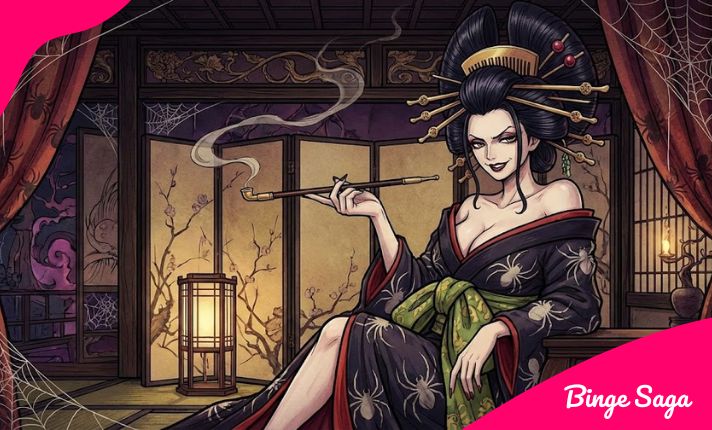
Black Maria is one of the most theatrical and unsettling figures introduced in the Wano Country arc. As a member of the Beasts Pirates’ Tobiroppo, the Six Flying Days, she mixes showmanship, menace, and a complicated personal agenda that makes her stand out among Kaido’s lieutenants. This article gives a full, reader-friendly profile of Black Maria, her role in Wano, her powers and fights, and how she connects to other major characters. Along the way I’ll answer the frequent questions fans ask, like who she is to Kaido, what Devil Fruit she used, whether she’s good or bad, and what ultimately happens to her.
- Who is Black Maria?
- Origins, look, and personality
- Position in the Beasts Pirates and relations
- Black Maria’s Devil Fruit and powers
- Major moments and fights in Wano
- Is Black Maria good or bad?
- Key relationships with Kaido, the Tobiroppo, and others
- Abilities in detail
- Black Maria’s tactics and how the Straw Hats beat her
- Symbolism and themes
- Aftermath and impact on the Wano arc
- Who is the 2nd user of Nika Fruit?
- FAQs
- Why Black Maria works as a One Piece antagonist
- Final thoughts
Who is Black Maria?
Black Maria is a high-ranking officer in Kaido’s crew from Wano. She’s large, flamboyant, and named and styled after famous kabuki and rakugo entertainers. Her personality leans heavily on performance and seduction. She presides over the Entertainment District in the Flower Capital and uses her influence there to control information, recruit spies, and manage the underworld of Wano. Her official title in the Tobiroppo places her among the strongest and most dangerous of Kaido’s personal enforcers.
The phrase “one piece black maria” sums up both her identity and the key search term many fans use. She’s memorable for her grotesque, spider-like theme, her predatory tactics, and for being a stepping stone in the Straw Hats’ campaign in Wano.
Origins, look, and personality
Black Maria’s design borrows from traditional Japanese performance culture. She dresses in a way that recalls kabuki and geisha motifs but exaggerated and sinister. Her face makeup, kimono-like robes, and the way she speaks are part of a deliberate act; she plays the hostess and storyteller, then reveals a ruthless enforcer underneath. Her domain in Wano even puts her in proximity to rumors about old samurai like Shimotsuki Ushimaru, adding another layer to her connection with the country’s history.
Personality-wise she is theatrical, flirtatious, and openly manipulative. She enjoys playing mind games and humiliating opponents. At the same time she shows a twisted sense of loyalty toward Kaido and the Beasts Pirates’ social order. She is not comic relief her theatrics hide a genuine streak of cruelty.
Position in the Beasts Pirates and relations
Black Maria is one of the Tobiroppo, the six upper-echelon officers directly beneath the All-Stars in the Beasts Pirates. That rank makes her a major threat on the battlefield and a key political player in Wano. She’s tasked with maintaining control of Flower Capital’s entertainment circles and the flow of information coming out of Tatoo-parlor-style venues and theaters.
Who is Black Maria to Kaido? She is a subordinate and a trusted lieutenant, one of the strongest fighters Kaido has chosen to place near the top of his command. That proximity to Kaido grants her authority, but it also forces her to prove herself in brutal combat.
Black Maria’s Devil Fruit and powers
What was Black Maria’s Devil Fruit? Black Maria ate a Mythical Zoan-type Devil Fruit that gives her spider-like abilities. In her human form she’s monstrous and tall; she can also transform into a full spider or a hybrid spider-human form. This grants speed, multiple limbs in effect, web-producing techniques, and a large physical presence. Her Mythical Zoan status makes her transformations resilient and gives her an edge in both mobility and raw strength.
Beyond her Devil Fruit, Black Maria is a skilled hand-to-hand fighter and uses cunning traps. She blends deception and ambush tactics, turning her victims’ trust against them. She also displays knowledge of Haki; while she does not show the same level of mastery as the top fighters, her use of Haki along with her fruit greatly magnifies her danger.
Major moments and fights in Wano
Black Maria’s story becomes important during the Wano arc’s climax. She targets members of the Straw Hat alliance and manipulates situations inside the Flower Capital. One of her notorious schemes was to trap and prey on visitors to her domain, using performance and influence to isolate victims.
Her fight with the Straw Hats and their allies is dramatic. She confronts Franky, then later faces off against Nico Robin and Spider-themed strategies come into play. The irony of a spider-themed fighter being outmaneuvered by archetypal spider imagery is not lost on readers. Black Maria’s fights highlight her predatory style: luring opponents into webbed arenas, using multiple-angled strikes, and trying to rely on overwhelming physical intimidation.
What happened to Black Maria in One Piece? In the confrontation with the Straw Hats and their allies, Black Maria is defeated after a tense series of battles. One of the Tobiroppo removed from Kaido’s ranks as the Straw Hat alliance breaks up the Beasts Pirates’ hierarchy in Wano. The defeat shows that while she’s dangerous, coordinated strategy and teamwork can overcome her size and tricks.
Is Black Maria good or bad?
Is Black Maria good or bad? In narrative terms, she is an antagonist. She serves Kaido, enforces the tyranny in Wano, and harms civilians through intimidation and predation. Her methods are cruel and self-serving. From the point of view of the Straw Hats and the people of Wano, she’s an obstacle and a villain.
That said, One Piece often writes antagonists with layers. Black Maria isn’t a two-dimensional monster: she has motives that include survival, status, and loyalty. But those don’t redeem her actions. Within the moral shaping of the story, she functions as a villain whose defeat helps free Wano.
Key relationships with Kaido, the Tobiroppo, and others
Who is Black Maria to Kaido? She is a high-ranking enforcer and a direct subordinate. Kaido’s crew is built on dominance; he rewards strength and ruthlessness, and Black Maria fits that mold. She’s not portrayed as a confidante on the level of Kaido’s All-Stars, but she is powerful enough to handle significant responsibilities.
Her relationships within the crew are competitive. The Tobiroppo members are not a unified team. They are individuals who must prove themselves. Black Maria’s interactions with fellow Tobiroppo members are marked by rivalry and the mutual desire to stand out in Kaido’s view.
Abilities in detail
Black Maria’s Mythical Zoan fruit grants her spider-themed transformations. In combat this shows up in several ways:
- Multiple-angled attacks: Her limb reach and hybrid form allow for strikes that seem to come from many directions.
- Web traps: She can ensnare or isolate targets, limiting mobility.
- Enhanced durability: Mythical Zoans typically bring resilience; she can take more punishment than normal humans.
- Speed for her size: Despite being large, she can move quickly in short bursts, pouncing like a spider.
She also uses psychological warfare. She taunts enemies, tries to unbalance them emotionally, and uses the stagecraft of the Entertainment District to manipulate crowds and rumors.
Black Maria’s tactics and how the Straw Hats beat her
The Straw Hats and their allies defeat Black Maria by refusing to be baited. Black Maria relies on isolating targets and turning personal vulnerabilities into leverage. The turning point in her defeat comes when the Straw Hats neutralize her web traps, use surprise teamwork, and target her weaknesses in mobility and focus.
Robin’s intelligence and observation, combined with the raw power of the fighters who engage directly, break her momentum. When one character is distracted, another exploits the opening something Black Maria didn’t predict because she expected to control the stage.
Symbolism and themes
Black Maria represents an ugly side of entertainment used as control. She manipulates culture and spectacle to maintain power, using performance as a mask. That ties into Wano’s arc themes: the corrupt use of tradition, the abuse of status, and the need for genuine leadership.
She also plays into the recurring One Piece motif that appearances can be deceiving. Characters who appear refined or entertaining can be predators in disguise.
Aftermath and impact on the Wano arc
Black Maria’s defeat is one of several blows to Kaido’s command structure. Removing a Tobiroppo shakes the Beasts Pirates’ control in the Flower Capital and sets the stage for later confrontations. Her fall also energizes local resistance, showing that the Straw Hats and their allies can dismantle Kaido’s enforcers one by one.
Who is the 2nd user of Nika Fruit?
Who is the 2nd user of Nika Fruit? This question ties into the broader One Piece lore about the Sun God Nika and the rubber fruit lineage. The most famous user is Monkey D. Luffy, who inherited the Gum-Gum Fruit that is revealed to be related to the mythical Nika. If the question asks who the “second” user is in a strict sequence, the manga’s revelations suggest that the identity and succession of Nika users is complex and partly hidden in history. Luffy is the modern exemplar of Nika’s power in the current timeline, and prior users would be historical or legendary figures mentioned in the Void Century and ancient texts. Current story events make Luffy the prominent modern wielder.
FAQs
Who is Kaido’s wife?
Kaido’s immediate family isn’t shown in detail. The story does not present a clearly defined “wife” for Kaido in the same way it shows other family ties. Kaido’s relationships are primarily portrayed through his crew and captains rather than a domestic family structure.
What was Black Maria’s Devil Fruit?
Black Maria ate a Mythical Zoan-type Devil Fruit that gives her spider transformations. That fruit grants hybrid and full-spider forms, along with related abilities like web production and enhanced mobility and strength.
Is Black Maria good or bad?
She is an antagonist. Her actions support Kaido’s domination of Wano, and she harms the local population through intimidation and predation. In One Piece’s moral framing, she is a villain.
What happened to Black Maria in One Piece?
Black Maria is defeated during the Wano arc after fights with members of the Straw Hat alliance. Her loss removes one of Kaido’s Tobiroppo from play and weakens the Beasts Pirates’ control over Flower Capital.
Who is the 2nd user of Nika Fruit?
Monkey D. Luffy is the key modern user of the Nika-related power. The concept of “second user” is tied to One Piece’s deeper lore and historical succession; Luffy is the main figure associated with Nika in the current story.
Who is Black Maria to Kaido?
She is a trusted lieutenant and one of Kaido’s Tobiroppo. That rank makes her a direct enforcer of Kaido’s will in Wano and gives her significant authority and battlefield responsibilities.
Why Black Maria works as a One Piece antagonist
Black Maria succeeds as an antagonist for several reasons. First, her personality is theatrical, which makes her memorable. Second, A spider who uses the world of entertainment to trap victims meshes neatly with a setting where appearance and status are central. Third, she forces protagonists to change tactics. She doesn’t rely purely on brute force; she uses manipulation, which requires the Straw Hats to be clever and coordinated.
Her presence also helps the Wano arc exert pressure on multiple fronts: social, political, and combat. She shows how Kaido’s rule reaches into cultural life and how the Beasts Pirates maintain surveillance and control.
Final thoughts
Black Maria is a striking part of Wano’s tapestry. The phrase “one piece black maria” will keep coming up in fan searches because she represents a mix of spectacle and menace that resonates with readers. She’s not just another strong enemy. she’s a living piece of Wano’s corruption and a stage director of cruelty.
Her defeat is satisfying because it’s achieved through grit and teamwork rather than a single-showy power move. In that sense, her arc underscores One Piece’s recurring moral: oppression falls when people refuse to play the part set for them.
If you’re catching up on Wano or revisiting the arc, pay attention to how Black Maria uses the Entertainment District and what her scenes say about control and performance. They add a darker texture to the arc’s broader themes and offer a reminder that the cost of freedom is often facing the predators hiding behind charm.
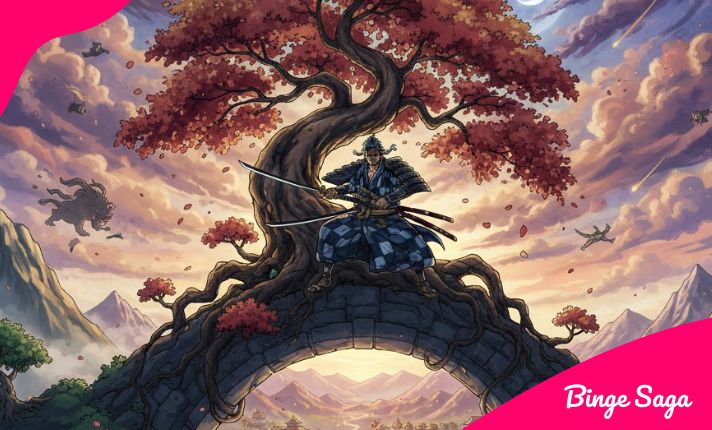
Shimotsuki Ushimaru is a name that quietly threads through one of the most tragic and stirring chapters of One Piece: the Wano Country arc. Though not a front-and-center character for long, shimotsuki ushimaru embodies the old samurai spirit of sacrifice, duty, and loyalty. His brief but powerful presence helps explain the stakes of Wano’s fall, sheds light on the Kozuki loyalists’ resistance, and connects to larger threads in the series—linking past and future through family ties, sword styles, and the samurai code.
- Who is Shimotsuki Ushimaru?
- Role and Significance in One Piece
- His position as the last daimyo of Ringo in Wano
- Loyalty to Kozuki Oden and opposition to Orochi
- Summary of his story arc and fate
- Personality and Characteristics
- Abilities and Combat Skills
- Shimotsuki Ushimaru’s Legacy
- Influence on Yamato and the future battle for Wano
- Connection to Zoro’s family lineage and sword style
- Popular Theories and Fan Discussions
- Clarification on common misconceptions
- Fan theories and discussions from forums and community platforms
- Conclusion
- FAQ
This article walks through who shimotsuki ushimaru is, why he matters in the story, what he stood for, and how his legacy continues to shape events in Wano and beyond. We’ll look at his origins, his role as Ringo’s last daimyo, his relationship with figures like Shimotsuki Ryuma and Roronoa Zoro, his abilities, and the ways fans discuss and remember him. By the end you’ll have a fuller picture of why this minor character leaves a major impression.
Who is Shimotsuki Ushimaru?
Shimotsuki Ushimaru is introduced in the Wano Country backstory as an honorable samurai tied to Ringo, a district of Wano. The Shimotsuki name carries weight in One Piece lore—most famously associated with Shimotsuki Ryuma, the legendary samurai whose corpse later became part of Thriller Bark and who is often linked to Roronoa Zoro through myth and stylistic echoes. Shimotsuki ushimaru shares that family name and the samurai heritage.
Origin and family background
Ushimaru’s lineage is rooted in the Shimotsuki family, a name that suggests a tradition of swordsmanship passed down through generations. In Wano’s feudal system, families like the Shimotsuki often held local authority, martial responsibility, and cultural duties. As Ringo’s last daimyo, Ushimaru inherited both leadership and the burden of defending his people when the larger political storm hit Wano.
While the manga and anime do not give an exhaustive genealogy, the Shimotsuki name links Ushimaru to a broader tradition. The presence of multiple Shimotsuki—historic figures like Ryuma and later references—creates a sense of continuity: a clan defined by swords and honor.
Relation to other key characters
Ushimaru’s main narrative connections are to the Kozuki clan and to the mythic Shimotsuki line that fans associate with Zoro’s swordsmanship. He was a loyalist to Kozuki Oden, standing with the daimyo who defied the shogunate and the invading forces. This loyalty put Ushimaru in direct opposition to Kurozumi Orochi and the forces of Kaido—an alignment that shaped his final actions.
Although some fans mistakenly linked Ushimaru to Roronoa Zoro as a direct ancestor or father figure, canonical details do not support that claim. Instead, Ushimaru’s place in the tapestry is as a contemporary Shimotsuki who echoes the values and martial traditions celebrated in the clan—values that Zoro, by coincidence or fate, ultimately channels.
Role and Significance in One Piece
Even characters with brief screen time in One Piece can carry symbolic weight. Shimotsuki ushimaru is one such example: his role as Ringo’s last daimyo and his choice at a pivotal moment make him a quiet but crucial figure in the Wano saga.
His position as the last daimyo of Ringo in Wano
As the last daimyo of Ringo, Ushimaru represents the end of an era. When Wano fell under the combined rule of Orochi and Kaido, many local lords were stripped of power, killed, or forced into subjugation. Ushimaru’s title marks him as the representative of local governance and the cultural continuity of his region. His decision-making in the face of invasion reflected the responsibilities daimyo carry: to protect the people even when the odds are overwhelming.
Loyalty to Kozuki Oden and opposition to Orochi
Ushimaru’s loyalty to Kozuki Oden places him among the brave few who resisted the tyrannical changes in Wano. Oden’s defiance of the shogunate and subsequent persecution set the stage for decades of suffering under Orochi’s puppet rule. Ushimaru, like many samurai and retainers, chose to stand with Oden’s cause or at least resist the antagonists who benefitted from Oden’s fall.
That opposition had consequences. In One Piece, siding with the Kozuki often means death or exile. Ushimaru’s fate—one tied to his resistance—reflects the tragic cost many loyalists paid. His story functions as a microcosm of Wano’s suffering and a reminder of the sacrifices that paved the way for later rebellions.
Summary of his story arc and fate
Ushimaru’s on-panel arc is short but resonant. He stands, he fights by principle, and he gives up something vital for the future—most notably, protecting the young Yamato or helping the Kozuki line through dangerous times. His death (or at least his departure from Wano’s living history) is presented as an act of selflessness: a samurai choosing a final duty over survival. That ending cements his status not as a background detail but as a moral anchor for Wano’s resistance narrative.
Personality and Characteristics
What made shimotsuki ushimaru meaningful to readers and the other characters was not flashy power, but character: the samurai code, quiet dignity, and willingness to lay down life for others.
Samurai code and honor
Ushimaru lived by a traditional samurai code—honor before life, duty before comfort. That ethic shows in his refusal to bow to Orochi’s corruption and in his steady bearing during Wano’s darkest hours. He acts the way a daimyo-samurai should in the stories—calm in defeat, principled in choice, and conscious of the legacy he leaves.
This commitment to code makes Ushimaru emblematic of the thematic heart of Wano: a place where history, ritual, and duty collide with tyranny. Ushimaru’s presence reminds readers that for many characters in Wano, the conflict is less about territory and more about preserving a way of life.
His selflessness and sacrifice for Yamato
One of Ushimaru’s most important acts is his care for younger generations, especially Yamato. In Wano’s story, older samurai often pay a heavy price so that the next generation can live and carry forward the spirit of resistance. Ushimaru’s choices helped ensure that key figures could survive long enough to shape the future battle for Wano. That kind of sacrifice is quiet but powerful—something that resonates emotionally because it mirrors real-world histories of guardianship through hardship.
Abilities and Combat Skills
Ushimaru’s combat scenes are not prolonged set pieces, but his actions show a samurai who knows the sword and can stand against enemies larger than himself.
Swordsmanship
Like other Shimotsuki, Ushimaru displays skilled swordsmanship. His movements reflect training and tradition: precise strikes, disciplined stances, and an understanding of timing. In Wano, where swordwork is a cultural language, Ushimaru’s fighting expresses more than technique—it signals lineage and respect.
The Shimotsuki name evokes particular sword styles in the fan imagination, and Ushimaru fits that narrative: his blade work is less flamboyant and more classical, echoing the older generation of warriors who count control and form as much as force.
Use of Busoshoku Haki and other martial skills
Although the story does not heavily dramatize Ushimaru’s haki use, it is reasonable within the One Piece framework to infer that a daimyo and veteran samurai would command Busoshoku Haki (armament haki) at a sufficient level to defend his people. His actions suggest an ability to hold the line and make strategic decisions in combat rather than relying purely on overwhelming power.
Ushimaru’s martial skills include battlefield awareness, leadership under pressure, and the capacity to coordinate resistance. These traits matter as much as raw strength in the Wano conflicts, where cunning and willpower shape outcomes.
Shimotsuki Ushimaru’s Legacy
Legacy is where Ushimaru’s story truly shines: the deeds of a single man become a throughline that influences major characters and the larger arc.
Influence on Yamato and the future battle for Wano
Ushimaru’s protection and mentorship of the younger generation—Yamato among them—have an outsized effect. Yamato’s later choices, her relationship to the Kozuki legacy, and her role in joining the rebellion can be read as directly connected to the groundwork laid by elders like Ushimaru. By ensuring that key figures survive, he helped preserve the seedbed for the rebellion that eventually cracks Wano’s iron rule.
That ripple—older samurai safeguarding youth so they can topple tyrants—gives Ushimaru’s sacrifice moral weight. He becomes part of the chain that allows Wano to reclaim its honor.
Connection to Zoro’s family lineage and sword style
Fans love connecting dots. The Shimotsuki surname raises natural questions about links to Roronoa Zoro and the historic Ryuma. Ushimaru’s existence reinforces the idea that Wano’s sword tradition is widespread, with families like the Shimotsuki contributing to a cultural milieu that shapes legendary swordsmen. While Ushimaru is not a direct teacher to Zoro in canon, the shared stylistic elements of Shimotsuki swordsmanship appear across generations, helping explain why Zoro resonates as a successor to the samurai legacy.
In short, Ushimaru helps maintain the cultural bridge between the old guard and modern fighters: he is the living proof that samurai values and sword styles survive despite oppression, and those surviving threads eventually appear in swordsmen like Zoro.
Popular Theories and Fan Discussions
Because One Piece fandom is both passionate and meticulous, even minor characters generate lively debate. Shimotsuki ushimaru is no exception.
Clarification on common misconceptions
A recurring misconception is that Ushimaru is a direct ancestor or father figure to Roronoa Zoro. Canon evidence does not support that claim—Zoro’s origins are separate, and Zoro himself comes from the East Blue, not Wano. The Shimotsuki name does, however, create acceptable room for comparison: shared techniques, legendary echoes, and symbolic lineage rather than bloodline connections.
Another misconception is that Ushimaru wielded world-shattering power. His role is more grounded: a regional daimyo who fought with honor and helped preserve the Kozuki legacy. The emotional weight of his actions matters more than the scale of his strength.
Fan theories and discussions from forums and community platforms
Fans speculate about many threads involving Ushimaru. Some of the common lines of discussion include:
- Whether Ushimaru trained a hidden pupil who later influenced major sword styles.
- The precise nature of his relationship to Ryuma and whether family lore shaped his tactics.
- How much of Wano’s eventual liberation hinged on the indirect actions of minor daimyo like Ushimaru.
- The symbolism of Ushimaru’s death and whether Oda intended him as a narrative vessel to show the cost of preserving history.
On forums and community pages, fans often praise Ushimaru for providing emotional depth to Wano’s tragedy. Players of the anime and manga communities produce fan art, short fictions, and analytical posts about how his decisions set up later events—especially Yamato’s arc and the eventual involvement of the Straw Hats.
These debates matter because they show how even a character with limited page time can become a locus for the fandom’s emotional and analytical energy. Fans look for patterns and meaning, and Ushimaru provides fertile ground for that activity.
Conclusion
Shimotsuki ushimaru may not dominate panels or fill pages, but his role in One Piece is quietly profound. As Ringo’s last daimyo, a loyalist to Kozuki Oden, and a guardian of the young who would shape Wano’s future, Ushimaru embodies the samurai’s most enduring traits: honor, duty, and sacrifice. His legacy threads through Yamato’s choices, through the cultural echoes that touch swordsmen like Zoro, and through the narrative logic that rewards selflessness with a lasting moral imprint.
When One Piece tells stories of fallen provinces and resilient people, it often uses brief figures—people who give everything without the fanfare of heroes. Ushimaru is one of those figures. Remembering him means honoring Wano’s unseen defenders and recognizing that in this saga, small acts of courage can help bend the arc toward justice.
FAQ
Who is Shimotsuki Ushimaru in One Piece?
Shimotsuki Ushimaru is a samurai and the last daimyo of Ringo in Wano Country. He is a loyalist of Kozuki Oden and plays a supporting but meaningful role in the Wano backstory, known for his honor and sacrifice on behalf of future generations such as Yamato.
Is Shimotsuki Ushimaru related to Zoro?
No direct family relation is established between Ushimaru and Roronoa Zoro in canon. They share the Shimotsuki name in the broader samurai tradition in Wano, and that shared cultural heritage helps explain similar sword techniques and thematic echoes, but Ushimaru is not presented as Zoro’s ancestor or father.
What happened to Shimotsuki Ushimaru in Wano?
Ushimaru resisted Orochi’s rule and Kaido’s power as part of the Kozuki loyalists. His story ends with sacrifice: he gives himself up in the effort to protect others and preserve the Kozuki legacy, helping ensure that younger fighters survive to eventually challenge Wano’s oppressors.

What Is SEO by HighSoftware99.com? A Complete Guide for 2026

Can IVF Help With Unexplained Infertility?

8 Simple Tools That Help You Handle PDFs Conversion Faster

Alex Pettyfer Net Worth, Wife, Age, Height, Children, Career and More
Brad Williams Net Worth, Wife, Height, Age, Daughter, Family, Career and More
Eldorado.gg Review 2026: How It Works, Safety, Fees, and Risks
-
Celebrity10 months ago
Alex Pettyfer Net Worth, Wife, Age, Height, Children, Career and More
-
Celebrity10 months ago
Brad Williams Net Worth, Wife, Height, Age, Daughter, Family, Career and More
-
Blog1 month ago
Eldorado.gg Review 2026: How It Works, Safety, Fees, and Risks
-
Anime11 months ago
Sanzoku Bandits of One Piece: Origins, Higuma, and Their Role in Dawn Island
-
 Celebrity10 months ago
John McGinn Net Worth, Age, Height, Wife, Childrens, Career and More
-
 Celebrity10 months ago
Frances de la Tour Net Worth, Age, Height, Husband, Childrens, Career and More
-
 Celebrity10 months ago
Will Trickett Net Worth, Wife, Childrens, Age, Career and More
-
 Blog2 months ago
Crackstube: A Complete Guide to the Digital Publishing Platform