
Blog
Pappedeckel Explained: Uses, Materials, and Eco-Friendly Benefits


Cardboard is one of the oldest and most useful materials in daily life. It is easy to shape, light to carry, and can be used in many different ways. From shipping boxes to food containers, paper-based materials help make products safer and easier to handle.
Pappedeckel is a German word that describes cardboard lids and strong paperboard covers. It combines two words: “Pappe,” meaning cardboard, and “Deckel,” meaning lid or cover. This simple term represents a useful product that connects traditional cardboard work with modern packaging needs.
What Is Pappedeckel?
Pappedeckel refers to a cardboard cover or lid made from thick paperboard. The meaning can change depending on the situation. In some cases, it describes a strong cardboard sheet used for crafts, book backing, or protective layers. In other cases, it means a paper lid used for food packaging.
The main idea behind this material is protection. A well-made cardboard cover helps keep items safe, clean, and easy to transport. Its simple design makes it useful for homes, businesses, and industries.
How Cardboard Materials Are Made?
Cardboard starts with paper fibers that are pressed together to create a stronger material. Manufacturers can adjust the thickness, texture, and strength depending on the final purpose.
Some types of cardboard are made from recycled paper, while others use fresh paper fibers for extra strength. The production process focuses on creating a balance between durability, weight, and cost.
Common Uses in Everyday Life
Many people use cardboard covers without thinking about them. They appear in food boxes, storage containers, craft projects, and product packaging.
A Pappedeckel can protect products from dust, damage, and moisture when designed correctly. It also provides a simple way to close containers without using heavy plastic or metal parts.
Cardboard Lids in Food Packaging
The food industry has increased its use of paper-based covers in recent years. Coffee cups, takeaway bowls, and meal containers often use cardboard lids to reduce plastic use.
These lids are designed to fit tightly and help prevent spills. They are lightweight, easy to store, and often work well for restaurants, cafes, and delivery services.
Why Sustainable Packaging Matters
Many companies are looking for better ways to reduce waste. Cardboard packaging has become popular because it can often be recycled and produced with fewer resources than some traditional materials.
A Pappedeckel solution can support businesses that want more environmentally friendly packaging choices. However, recycling depends on the design, coatings, and local recycling systems available.
The Role of Cardboard in Crafts
Cardboard has always been a favorite material for creative projects. It is affordable, easy to cut, and simple to decorate.
Artists, students, and hobby workers use thick cardboard covers for models, handmade items, and display projects. The material gives people a flexible base for both simple and detailed designs.
Benefits of Using Cardboard Covers
One major benefit of cardboard covers is their low weight. They are easy to move, store, and handle compared with heavier materials.
They are also cost-effective for many businesses. Companies can create useful packaging while keeping production costs under control. Another advantage is that cardboard can offer a natural look that many customers connect with eco-friendly products.
Challenges of Cardboard Packaging
Although cardboard has many benefits, it also has some limits. Water and high moisture can weaken normal paper-based materials.
For this reason, some packaging designs add protective layers or special treatments. These improvements can make products stronger, but they may also affect how easily the material can be recycled.
Future of Paper-Based Packaging
The demand for sustainable packaging continues to grow. Many brands are testing new designs that use fewer resources while keeping products safe.
The future of Pappedeckel may include improved materials, better recycling methods, and smarter designs for food and retail packaging. As customers look for greener choices, cardboard solutions are likely to remain important.
Bottom Line
Cardboard covers show how a simple material can solve many everyday problems. They protect products, support creative work, and help businesses explore more sustainable options.
From small craft projects to large packaging systems, Pappedeckel represents the value of practical and flexible cardboard design. Its growing use shows how traditional materials can adapt to modern needs.

Dana Isaiah is an American model, fitness trainer, author, and former basketball player. He was born on May 3, 1992, in Chicago, Illinois, and later grew up in Missouri after his family moved there. He became widely known as the husband of singer and actress Jordin Sparks.
- Quick Bio
- Dana Isaiah’s Early Life
- Dana Isaiah’s Education and Basketball Journey
- Dana Isaiah’s Career as a Model
- Dana Isaiah’s Fitness Career
- Dana Isaiah as an Author and Christian Writer
- How Did Dana Isaiah Meet Jordin Sparks?
- Dana Isaiah and Jordin Sparks’ Marriage
- Dana Isaiah and Jordin Sparks’ Son
- Dana Isaiah’s Personal Life
- Dana Isaiah’s Role in Jordin Sparks’ Life and Career
- Facts About Dana Isaiah
- Conclusion
- FAQs
Dana Isaiah and Jordin Sparks married in Hawaii in July 2017 and welcomed their son, Dana Isaiah Thomas Jr., in May 2018. Along with his family life, Dana has built his own career in fitness, modeling, and writing, including his book A Higher Calling: Claiming God’s Best for Your Life.
Quick Bio
| Category | Details |
|---|---|
| Full Name | Dana Isaiah Thomas |
| Known As | Dana Isaiah |
| Date of Birth | May 3, 1992 |
| Birthplace | Chicago, Illinois, USA |
| Nationality | American |
| Education | Southeastern University |
| College Activity | Played basketball |
| Profession | Model, fitness trainer, author, former basketball player |
| Known For | Husband of Jordin Sparks |
| Wife | Jordin Sparks |
| Marriage Year | 2017 |
| Wedding Location | Hawaii |
| Children | Dana Isaiah Thomas Jr. (DJ) |
| Son’s Birth Date | May 2, 2018 |
| Book | A Higher Calling: Claiming God’s Best for Your Life |
| Religion | Christianity |
Dana Isaiah’s Early Life
Dana Isaiah Thomas was born on May 3, 1992, in Chicago, Illinois. His family later moved to Missouri, where they ran a Christian youth camp.
Faith was an important part of his childhood. He later included his beliefs in his writing and public messages.
He developed an interest in sports while growing up. His athletic background later helped him move into basketball, fitness, and modeling.
Dana Isaiah’s Education and Basketball Journey
He attended Southeastern University in Lakeland, Florida. During college, he played basketball for the university team.
His basketball experience helped him build skills in training and fitness. After college, he focused on fitness and modeling work.
His background as an athlete became an important part of his career. He used his knowledge of exercise and training in his professional life.
Dana Isaiah’s Career as a Model
He is known for his work as a fitness and fashion model. He has appeared in publications, including Lapalme Magazine.
His modeling career focused on fitness and lifestyle shoots. His athletic background helped him build a career in the fashion and fitness fields.
Along with modeling, He worked in fitness training. He combined his interest in health and fitness with his modeling work.
Dana Isaiah’s Fitness Career
Dana Isaiah has worked as a fitness trainer and shares fitness-related content. He focuses on workouts and healthy living.
His experience as a former basketball player helped him develop knowledge about exercise and training.
He and Jordin Sparks also share an interest in fitness. They have shared workout moments together on social media.
Dana Isaiah as an Author and Christian Writer
Dana Isaiah is also an author. In 2018, he published A Higher Calling: Claiming God’s Best for Your Life.
The book focuses on faith, personal growth, and life lessons. He has also shared Christian messages through his public platforms.
His faith continues to be an important part of his personal life. He and Jordin Sparks have both spoken about their Christian beliefs.
How Did Dana Isaiah Meet Jordin Sparks?
Dana Isaiah and Jordin Sparks first connected in 2017 through a group chat created by their mothers. Their mothers knew each other and helped them meet before Dana moved to Los Angeles.
At first, he and Jordin Sparks became friends. After spending more time together, their relationship grew, and they started dating. Jordin later shared that she felt a strong connection when she met Dana in person.
The couple kept their relationship private in the beginning. Their love story moved quickly, and they decided to get married during a trip to Hawaii in July 2017.
Dana Isaiah and Jordin Sparks’ Marriage
Dana Isaiah and Jordin Sparks secretly married in Hawaii on July 16, 2017. The ceremony was private and included close friends and family members.
The couple shared the news publicly in November 2017. At the same time, they announced that they were expecting their first child together.
Since their marriage, Dana Isaiah and Jordin Sparks have shared parts of their family life with fans. They have often talked about their love, faith, and support for each other.
Dana Isaiah and Jordin Sparks’ Son
Dana Isaiah and Jordin Sparks welcomed their son, Dana Isaiah Thomas Jr., on May 2, 2018. They often call him DJ.
The couple has shared special moments with DJ and spoken about their experience as parents. Dana Isaiah has shown his love for fatherhood through family posts and interviews.
Jordin Sparks has shared that being a mother has been an important part of her life. She has also talked about enjoying her time with DJ and focusing on raising their son.
Dana Isaiah’s Personal Life
Faith plays an important role in Dana Isaiah’s life. He grew up in a Christian family and has continued sharing messages about faith and personal growth.
He and Jordin Sparks both share Christian beliefs. Their faith has been a strong part of their relationship and family life.
Outside of work, He enjoys spending time with his family. He has also shown support for Jordin Sparks throughout her career.
Dana Isaiah’s Role in Jordin Sparks’ Life and Career
Dana Isaiah has supported Jordin Sparks in her personal and professional life. He has been involved in helping with parts of her social media and public email work.
The couple also shares common interests, including fitness and basketball. They have attended events together and supported each other’s goals.
He is known not only as Jordin Sparks’ husband but also for his own work as a model, fitness trainer, and author.
Facts About Dana Isaiah
His full name is Dana Isaiah Thomas. He was born in Chicago, Illinois, and later grew up in Missouri.
He attended Southeastern University, where he played basketball. After college, he built a career in fitness, modeling, and writing.
He published A Higher Calling: Claiming God’s Best for Your Life in 2018. The book reflects his interest in faith and personal growth.
Conclusion
Dana Isaiah has built a career through fitness, modeling, basketball, and writing. While many people know him as Jordin Sparks’ husband, he has also created his own path.
From his early basketball days to his work as a fitness trainer and author, he has followed different interests throughout his life.
Today, he continues to focus on his family, faith, and career while supporting his wife Jordin Sparks and raising their son DJ.
FAQs
Who is Dana Isaiah?
He is an American model, fitness trainer, author, and former basketball player. He is best known as the husband of singer Jordin Sparks.
When did Dana Isaiah marry Jordin Sparks?
He married Jordin Sparks in a private Hawaii ceremony on July 16, 2017.
Does he have children?
Yes, He and Jordin Sparks have one son named Dana Isaiah Thomas Jr., also known as DJ, born on May 2, 2018.
What does he do for a living?
He works in fitness and modeling and is also an author known for his book A Higher Calling: Claiming God’s Best for Your Life.
Where was he born?
He was born in Chicago, Illinois, and later grew up in Missouri.
Read Also: Who Was Edith Mack Hirsch? The Life of Desi Arnaz’s Second Wife

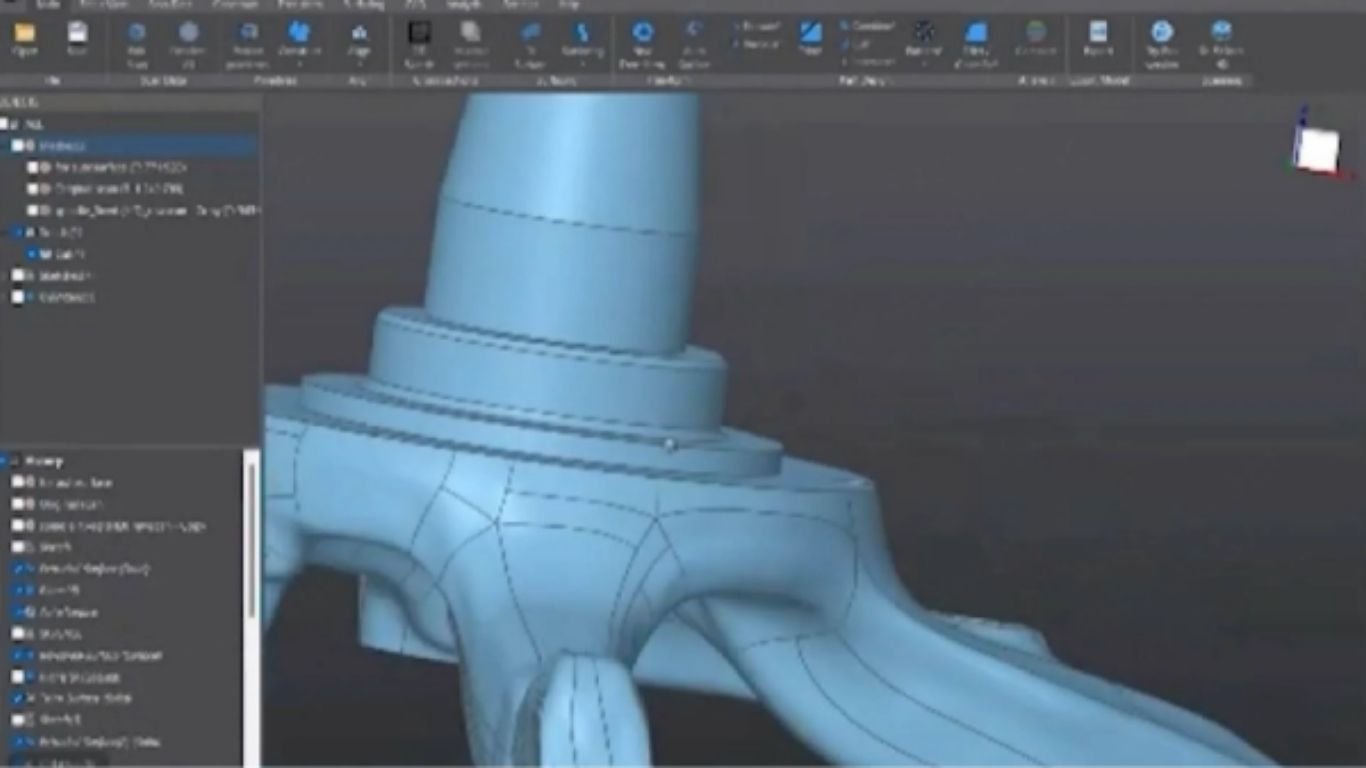
Turning a physical object into an accurate digital design can be a challenging task when traditional measurement methods are involved. Engineers and designers often have to record dimensions manually, recreate curves, and determine how individual surfaces fit together. Modern 3D scanning technology offers another approach by capturing the geometry of an object digitally and providing detailed information that can be used throughout the design process.
- Quick Bio
- Dana Isaiah’s Early Life
- Dana Isaiah’s Education and Basketball Journey
- Dana Isaiah’s Career as a Model
- Dana Isaiah’s Fitness Career
- Dana Isaiah as an Author and Christian Writer
- How Did Dana Isaiah Meet Jordin Sparks?
- Dana Isaiah and Jordin Sparks’ Marriage
- Dana Isaiah and Jordin Sparks’ Son
- Dana Isaiah’s Personal Life
- Dana Isaiah’s Role in Jordin Sparks’ Life and Career
- Facts About Dana Isaiah
- Conclusion
- FAQs
One increasingly useful application is scan to CAD, which allows physical components to become references or foundations for computer-aided design. With the right scanner and software, professionals can capture complicated shapes, process the resulting data, and develop digital models for engineering, prototyping, inspection, and manufacturing.
Among the equipment available for professional scanning applications, the Afinia EinScan Rigil Tri-Mode Laser 3D Scanner provides a combination of scanning approaches intended to accommodate different types of projects. Understanding how technologies like this fit into a modern design workflow can help businesses make better use of their existing physical components and prototypes.
Moving From Physical Parts to Digital Models
Traditional reverse engineering often begins with physical measurements. Calipers, gauges, rulers, and other instruments can provide useful information, but complex components may contain hundreds of curves, recesses, holes, and irregular surfaces.
A 3D scanner approaches the problem differently. Instead of measuring individual dimensions one at a time, it captures a large amount of surface information in a relatively short period. The collected information can then be processed into a digital representation of the object.
This can be especially helpful when original drawings or CAD files are unavailable. An existing component can become the starting point for creating a new digital model.
The Role of Scan to CAD
The scan to CAD workflow is particularly valuable when the objective goes beyond simply creating a visual copy of an object.
A typical scan initially produces data such as a point cloud or polygon mesh. This data represents the surface captured by the scanner, but it is not necessarily the same as a conventional engineering CAD model.
Additional processing may therefore be required. The scanned geometry can be cleaned, aligned, measured, and used as a reference for reconstructing surfaces and engineering features. Depending on the project, designers may recreate planes, cylinders, holes, curves, and other elements within CAD software.
The result can be a more useful digital representation that can be edited, incorporated into assemblies, or used during product development.
Why Laser Scanning Matters

Laser-based scanning technology can be useful when capturing detailed physical geometry is important. Laser scanners project or use laser lines to collect surface information, allowing software to build a representation of the scanned object.
Different scanning modes can be useful for different situations. A smaller component with intricate details may require a different approach from a large industrial object. Having multiple scanning options can therefore make a system more adaptable across projects.
The Afinia EinScan Rigil Tri-Mode Laser 3D Scanner is designed around this type of flexibility, offering multiple scanning modes for different scanning requirements.
Working With Different Object Sizes
One challenge in 3D scanning is that physical objects can vary dramatically in size. A small mechanical component may require detailed capture of tiny features, while a larger industrial part requires the scanner to cover a much broader area.
A versatile scanner can make it easier to move between different applications without relying on completely separate systems.
For engineering teams that regularly work with prototypes, replacement parts, machinery components, and product samples, flexibility can be particularly useful. Instead of treating every project as a completely different process, operators can select an appropriate scanning mode based on the size and geometry of the object.
Applications in Reverse Engineering
Reverse engineering is one of the most obvious applications for 3D scanning.
Consider an older mechanical component for which the manufacturer no longer has accessible design files. Recreating the component manually could require considerable time, especially if its geometry is complicated.
A scanning workflow can capture the existing part and create a digital reference. Engineers can then use the captured information to reconstruct the component in CAD software.
This does not mean the scanner automatically produces a finished engineering design. Human review and CAD modeling may still be necessary. However, having accurate digital reference data can reduce the amount of manual measurement required.
Supporting Product Development
3D scanning can also be incorporated into product development cycles.
A designer might create an initial CAD model and manufacture a physical prototype. After examining the prototype, the team can scan it and compare the physical geometry with the intended design.
This comparison can reveal differences between the digital design and the manufactured object. Designers can then investigate those differences and determine whether adjustments are necessary.
The same approach can be used when modifying an existing product. Instead of starting with an empty CAD workspace, designers can capture the existing product and use its geometry as a foundation for future development.
From Scan Data to Manufacturing
The usefulness of scanned data extends beyond CAD modeling. Once the digital model has been properly processed, it can become part of a larger manufacturing workflow.
For additive manufacturing, a suitable digital model can eventually be prepared for slicing and 3D printing. For conventional manufacturing, CAD geometry can support machining, tooling, or fabrication processes.
Inspection is another important application. A scanned object can be compared with a reference model to identify dimensional differences. This can be valuable for quality control and prototype evaluation.
The key is understanding that scanning is one stage of a broader digital workflow rather than the entire manufacturing process.
Surface Preparation and Scanning Conditions
Good scanning results depend on more than the scanner itself. Object preparation, lighting, surface properties, positioning, and scanning technique can all influence the quality of captured data.
Highly reflective, transparent, or extremely dark surfaces can sometimes create challenges for optical scanning systems. Operators may need to use appropriate preparation techniques or adjust the scanning approach.
The object should also be positioned so that important areas can be reached from multiple angles. Overlooking hidden surfaces during the capture stage can result in incomplete data.
Taking time to plan the scan can therefore reduce the amount of cleanup required later.
Processing the Captured Data
Raw scanning data often requires processing before it becomes useful for engineering work.
Operators may need to remove unwanted points, fill small gaps, align multiple scans, and merge separate captures. Once the geometry has been cleaned, it can be used for measurement, inspection, mesh-based applications, or CAD reconstruction.
The amount of processing required depends on the intended result. A model intended for visual presentation may require less engineering reconstruction than a component intended for precise manufacturing.
This distinction is important when planning a scanning project because it helps set realistic expectations about the time and expertise required after data capture.
Choosing a Scanning Solution
Selecting a 3D scanner should begin with the intended application rather than simply focusing on specifications. Businesses should consider the size of the objects they need to scan, the level of detail required, expected accuracy, scanning speed, software compatibility, and the type of output they need.
Teams involved in reverse engineering may prioritize dimensional information and CAD compatibility. Product designers may focus on flexibility and efficient capture. Inspection departments may have different requirements related to accuracy and comparison workflows.
A multi-mode system can be useful when a business works with a variety of objects and does not want its workflow limited to one scanning method.
Building a More Efficient Digital Workflow
The biggest advantage of modern 3D scanning is not simply the ability to create a digital copy. Its real value comes from connecting physical objects with digital design, engineering, and manufacturing processes.
When scanning is combined with appropriate processing and scan to CAD techniques, organizations can create repeatable workflows for reverse engineering, prototyping, inspection, and product development.
The Afinia EinScan Rigil Tri-Mode Laser 3D Scanner represents one option for organizations looking for a flexible laser-based scanning solution. As with any professional equipment, its suitability ultimately depends on the objects being scanned, the required accuracy, and the intended downstream application.
Conclusion
3D scanning continues to change how engineers and designers interact with physical products. Instead of relying entirely on manual measurements, teams can capture complex geometry digitally and use that information across multiple stages of development.
Whether the goal is reverse engineering an existing component, inspecting a prototype, or preparing geometry for further CAD work, a well-planned scanning workflow can save time and provide a detailed digital reference.
By combining capable scanning hardware with effective data processing and scan to CAD techniques, businesses can create a practical connection between physical products and modern digital manufacturing environments.

Clothing has always been more than just something people wear. It can show feelings, culture, ideas, and personal stories. While fashion often focuses on trends, brands, and changing styles, some people use the word Feschon to describe a deeper connection between clothing and human expression.
- What Is Feschon?
- The Meaning Behind Feschon
- Feschon vs Traditional Fashion
- How Personal Expression Shapes Style
- The Connection Between Clothing and Identity
- Why Some Creators Use This Term
- The Role of Creativity in Modern Style
- Feschon and the Future of Personal Style
- How Feschon Encourages Self-Confidence
- The Difference Between Trends and True Expression
- Why Feschon Is Gaining Attention
- Final Thoughts
The idea behind Feschon comes from creative writing and style discussions. It looks at clothing as a form of shaping and creating rather than only following popular trends. In this article, we will explore the meaning behind this concept, how it differs from fashion, and why some creators use it to talk about personal identity.
What Is Feschon?
Feschon is a creative spelling of the word fashion. It is used by some writers and artists to give a different feeling to the idea of style. Instead of focusing only on clothing markets and seasonal trends, the term highlights personal choices and creative freedom.
The concept connects style with the idea of making or forming something. It suggests that the way people dress can be a personal creation, much like art, music, or writing.
The Meaning Behind Feschon
The meaning of Feschon is linked to the idea that style comes from people, not only from businesses or magazines. It focuses on how clothing can tell a person’s story and reflect their thoughts.
Many traditional views of fashion are connected with buying new items and following popular looks. This newer approach shifts attention toward creativity, meaning, and the relationship between a person and what they wear.
Feschon vs Traditional Fashion
Fashion usually describes clothing styles that change over time. Designers, brands, celebrities, and social media often influence what becomes popular. These trends can spread quickly and change from season to season.
Feschon takes a different view. It is less about keeping up with what is popular and more about creating a style that feels personal. It encourages people to think about why they choose certain clothes and what those choices represent.
How Personal Expression Shapes Style
People use clothing to express many parts of their lives. A simple outfit can show confidence, mood, culture, or creativity. Style can become a quiet way to communicate without using words.
This idea supports the belief that everyone can create their own visual identity. A person does not need expensive brands or rare items to have a meaningful style. Personal choices and creativity often matter more.
The Connection Between Clothing and Identity
Clothing has always played a role in how people see themselves and how others see them. From traditional clothing to modern streetwear, styles often carry personal and social meanings.
Feschon focuses on this connection by viewing clothing as part of a person’s identity. It suggests that what people wear can represent memories, values, and experiences rather than only appearance.
Why Some Creators Use This Term
Creative writers and artists often create new words or change existing ones to share new ideas. The use of Feschon helps some creators separate personal style from the business side of fashion.
For these creators, the word represents a more human approach to clothing. It moves away from constant buying and encourages people to see style as a creative process.
The Role of Creativity in Modern Style
Modern style is no longer controlled only by major brands. Social media has allowed people from different backgrounds to share their looks and ideas with the world.
This change has made personal creativity more visible. People now mix different cultures, old designs, and new ideas to build styles that feel unique to them.
Feschon and the Future of Personal Style
As people become more interested in individuality, ideas around style continue to change. Many people now care about comfort, meaning, and personal values when choosing clothes.
The idea of Feschon fits into this wider movement by focusing on the person behind the clothing. It presents style as something created through personal choices rather than something people simply follow.
How Feschon Encourages Self-Confidence
A major part of personal style is feeling comfortable with who you are. When people choose clothes that match their personality, they often feel more confident.
This concept encourages people to explore their own tastes instead of copying every popular trend. It reminds people that style does not have one fixed rule.
The Difference Between Trends and True Expression
Trends can be fun and inspiring, but they often change quickly. A style that is popular today may disappear tomorrow. Personal expression, however, can last much longer because it is connected to individual identity.
Feschon represents the idea that clothing can have a deeper purpose. It focuses on creating a style that feels honest and meaningful.
Why Feschon Is Gaining Attention
The growing interest in personal branding, creativity, and self-expression has helped ideas like this become more common. Many people are looking for ways to stand out while staying true to themselves.
Rather than seeing clothing as only a product, this concept views it as a form of communication. It connects style with creativity, personality, and human experience.
Final Thoughts
Feschon is not a replacement for traditional fashion. Instead, it offers another way to think about style and clothing. It focuses on the personal side of dressing and highlights creativity over simple trend-following.
As style continues to evolve, more people are exploring ways to make clothing feel more personal. The idea behind Feschon shows that what we wear can be more than an outfit. It can be a reflection of who we are.

6 Questions To Ask About Accommodations For Your Child’s Dental Care

5 Ways Orthodontists Improve Oral Health Beyond Straight Teeth

How General Dentists Provide Care For Patients Of Every Age

Alex Pettyfer Net Worth, Wife, Age, Height, Children, Career and More

Brad Williams Net Worth, Wife, Height, Age, Daughter, Family, Career and More

Eldorado.gg Review 2026: How It Works, Safety, Fees, and Risks
-
Celebrity9 months ago
Alex Pettyfer Net Worth, Wife, Age, Height, Children, Career and More
-
Celebrity9 months ago
Brad Williams Net Worth, Wife, Height, Age, Daughter, Family, Career and More
-
Blog3 weeks ago
Eldorado.gg Review 2026: How It Works, Safety, Fees, and Risks
-
 Anime10 months ago
Sanzoku Bandits of One Piece: Origins, Higuma, and Their Role in Dawn Island
-
 Celebrity9 months ago
John McGinn Net Worth, Age, Height, Wife, Childrens, Career and More
-
 Celebrity9 months ago
Frances de la Tour Net Worth, Age, Height, Husband, Childrens, Career and More
-
 Blog3 weeks ago
What Is Troozer.com? A Clear Guide to the Digital Content Site
-
 Celebrity9 months ago
Will Trickett Net Worth, Wife, Childrens, Age, Career and More