
Blog
FlowXD: A Simple Guide to Flow Dynamic XD Waterjet Cutting

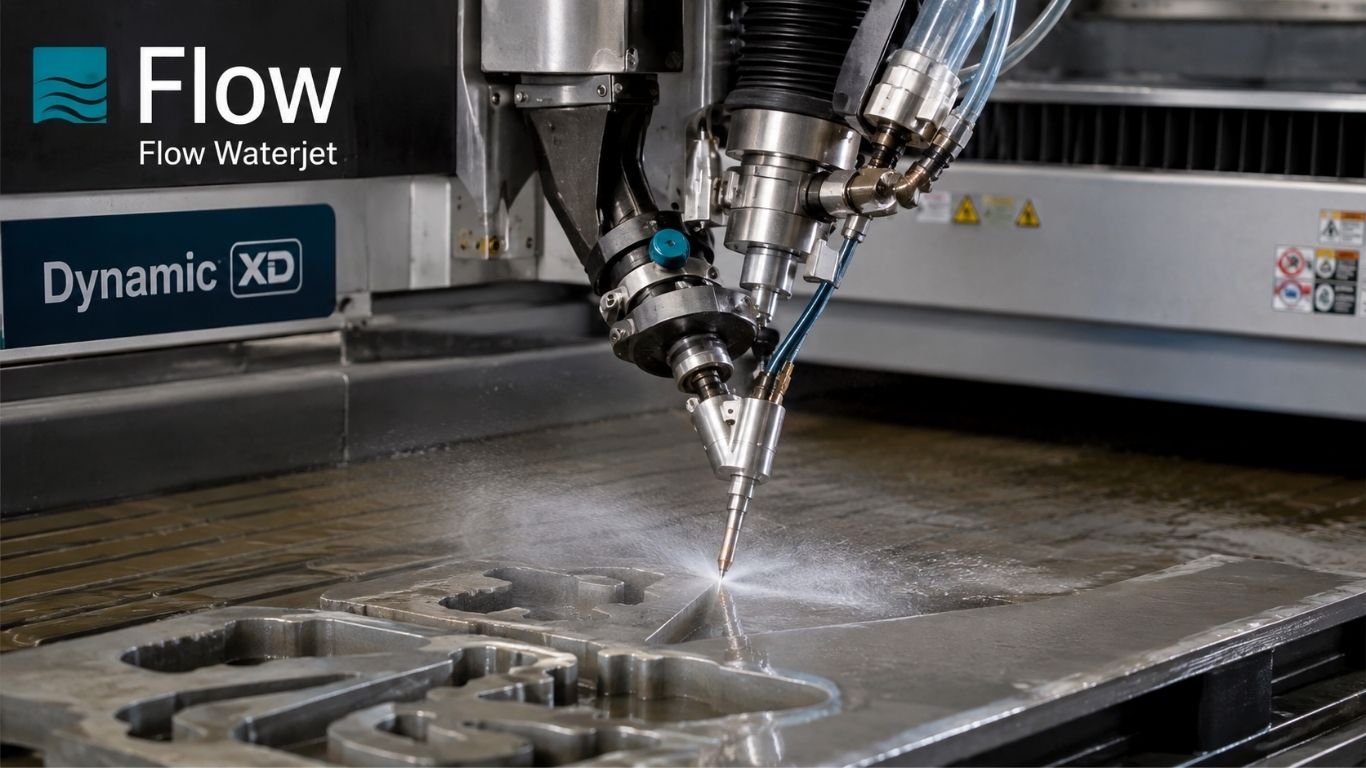
In this guide, FlowXD refers to Flow’s advanced Dynamic Waterjet XD cutting technology. The official product name on Flow’s website is Dynamic Waterjet® XD. It is made for precise bevel cuts and complex 3D work. The system uses controlled head movement to improve the shape and quality of each cut.
- What Does the Term Mean?
- How Dynamic XD Waterjet Cutting Works
- Why Five-Axis Motion Matters
- Active Tolerance Control and Better Edges
- Materials That Can Be Cut
- Precision for Bevel and 3D Parts
- Software and Programming
- Production Benefits for Fabrication Shops
- Dynamic XD vs Standard Waterjet Cutting
- What to Check Before Choosing a System
- Is Dynamic XD Right for Your Shop?
- Bottom Line
Waterjet cutting uses a fast stream of water. For hard materials, abrasive garnet is added. It can cut metal, stone, glass, ceramic, and composites without heat. Dynamic XD adds multi-axis motion, so shops can make more complex parts.
What Does the Term Mean?
FlowXD is not the formal product name shown by Flow International. Flow calls the technology Dynamic Waterjet® XD. Here, the shorter term simply points readers to that five-axis waterjet system.
The key idea is simple. A normal waterjet often cuts straight down. Dynamic XD can tilt and move the cutting head as it follows a set path. That motion helps it create bevels, angles, and 3D shapes with a high level of control.
This helps shops that need more than basic flat cutting. It suits jobs where edge angle, fit, and repeatable geometry matter.
How Dynamic XD Waterjet Cutting Works
A waterjet starts with an ultrahigh-pressure pump. Water passes through a tiny opening and becomes a fast cutting stream. Garnet abrasive lets the jet cut hard materials.
Flow describes waterjet as a cold cutting process. It avoids the heat-affected zone linked with many thermal methods. That helps with heat-sensitive material.
Dynamic XD then adds controlled movement at the cutting head. The head changes angle as the machine moves through its toolpath. Software and motion controls work together to guide the cut.
Why Five-Axis Motion Matters
A major reason people search for flowxd is its five-axis cutting ability. Multi-axis motion lets a machine approach material from more than one angle. This opens the door to bevel cutting and true 3D work.
Flow states that Dynamic Waterjet XD is designed for accurate bevel and 3D cutting. Its wrist can move through a wide range. The company lists wrist motion of up to 89 degrees on its Dynamic XD product page.
This range gives fabricators more design freedom. It may also reduce some secondary cutting steps.
Active Tolerance Control and Better Edges
Waterjet cutting has two common issues: stream lag and taper. Stream lag happens when the jet exits the material behind the point where it entered. Taper can make the cut wider on one side than the other.
Flow uses Active Tolerance Control to address these errors. The system changes the angle of the cutting head as it moves. This helps control taper and correct for stream lag.
For users, this feature can support cleaner edges and closer part geometry. It helps when a shop wants speed and accuracy on detailed cuts.
Materials That Can Be Cut
Flow lists metals, stone, glass, ceramics, and composites for abrasive waterjet. Pure waterjet can handle softer goods such as foam, rubber, paper, carpet, and some plastics.
Dynamic XD is most useful when a hard material needs a shaped edge, bevel, or complex form. Common fabrication work may include aluminum, stainless steel, stone, glass, and composite parts.
The right setup depends on material, thickness, finish, and production goals. A shop should test its real material first.
Precision for Bevel and 3D Parts
The strongest reason to consider flowxd is not simply that it cuts. Many machines can cut. The value comes from controlling the direction of the jet while the part is being made.
A bevel may be needed for welding, fit-up, assembly, or a finished edge. A 3D cut may also use changing angles or contours that cannot be made by a fixed vertical head.
Dynamic XD combines this motion with Flow’s taper and stream-lag control. The system aims to produce detailed parts where the final shape matters as much as the cut line.
Where This Can Help
It may help advanced job shops, metal fabricators, stone processors, and other plants that produce complex parts. The best fit depends on the actual part mix and required tolerance.
When a Standard Head May Be Enough
If a shop mainly cuts simple 2D profiles, a standard cutting head may meet its needs. Extra axes give the most value when the work actually needs bevels or complex shapes.
Software and Programming
A multi-axis machine also needs software that can turn a design into a safe, accurate toolpath.
Flow lists FlowXpert Infinity as the software used with Dynamic Waterjet XD. Flow also describes its software tools as supporting integrated 2D and 3D modeling and pathing.
For flowxd workflows, good programming matters because the nozzle angle changes during a cut. The machine must keep the jet on the planned path. It must also work around clamps, fixtures, and other objects.
Good software can make complex cutting easier to plan. It can also help reduce setup mistakes before production begins.
Production Benefits for Fabrication Shops
The main production benefit is process consolidation. If a waterjet can make a profile and its bevel in one controlled setup, a shop may avoid some later handling or cutting steps.
This can reduce part movement and manual steps. Real savings still depend on part design, volume, material, labor cost, and machine use.
Flow promotes its Dynamic Waterjet technology as faster than standard non-Dynamic waterjet cutting. The company says its standard Dynamic Waterjet system can cut some parts two to four times faster than conventional flat-stock waterjet systems. Results still depend on the job and desired quality.
Dynamic XD vs Standard Waterjet Cutting
A standard waterjet keeps the cutting stream straight in relation to the material. It is a strong choice for many flat parts and can cut a broad range of hard materials.
Dynamic XD adds a much wider range of head movement. It is built for bevels and 3D parts as well as flat cutting. That extra control makes it more capable for complex work.
For simple profiles, standard cutting may be enough. For compound angles, shaped edges, and complex geometry, flowxd may be the more relevant search path when comparing Flow equipment.
The choice should depend on the parts a shop makes most often. Buying extra capability only makes sense when it can improve real production work.
What to Check Before Choosing a System
Machine choice should start with the parts, not the brochure. A buyer should review material type, maximum thickness, part size, edge quality, tolerance, production volume, and cutting angles.
Also review pump pressure, table size, software, service, abrasive use, maintenance, and training. The cutting head must match the machine and production plan.
A test cut can be useful before purchase. It gives the shop a real sample made from its own material and geometry. That can provide a clearer view of finish, speed, and part quality.
Safety and Maintenance Needs
Waterjet equipment uses very high pressure. Operators need training and must follow the maker’s safety rules. Guards, emergency stops, high-pressure lines, abrasive handling, and maintenance all matter. Flow notes that waterjet systems can operate at ultrahigh pressures and include emergency-stop systems as part of safe machine control.
The cutting head, orifice, mixing tube, pump, plumbing, motion system, and abrasive feed can affect uptime. Regular care helps protect cut quality and may reduce unplanned stops.
For flowxd systems, accurate multi-axis motion also depends on calibration and position feedback. A machine needs sound mechanical and control systems to make repeatable complex cuts.
Is Dynamic XD Right for Your Shop?
FlowXD may be worth exploring if your work includes bevels, compound angles, or 3D waterjet parts. It can also make sense when you want to combine several cutting steps into one programmed process.
It is not automatically the best choice for every shop. A company that only cuts basic 2D shapes may not need the added ability. Cost, workload, support, training, and future part demand should all be part of the decision.
Compare real sample parts and total production needs. Dynamic Waterjet XD adds value when the work truly needs its advanced features.
Bottom Line
FlowXD is best understood here as a search-friendly name for Flow’s Dynamic Waterjet XD technology. The official system focuses on high-precision bevel cutting, 3D cutting, and automatic control of common waterjet errors.
Its five-axis motion gives fabricators more control over complex edges and shapes. It may also reduce extra cutting steps on the right jobs.
For buyers, the best next step is a practical comparison based on real parts, real materials, and real production goals. Advanced equipment offers the most value when its features match the work a shop needs to complete.
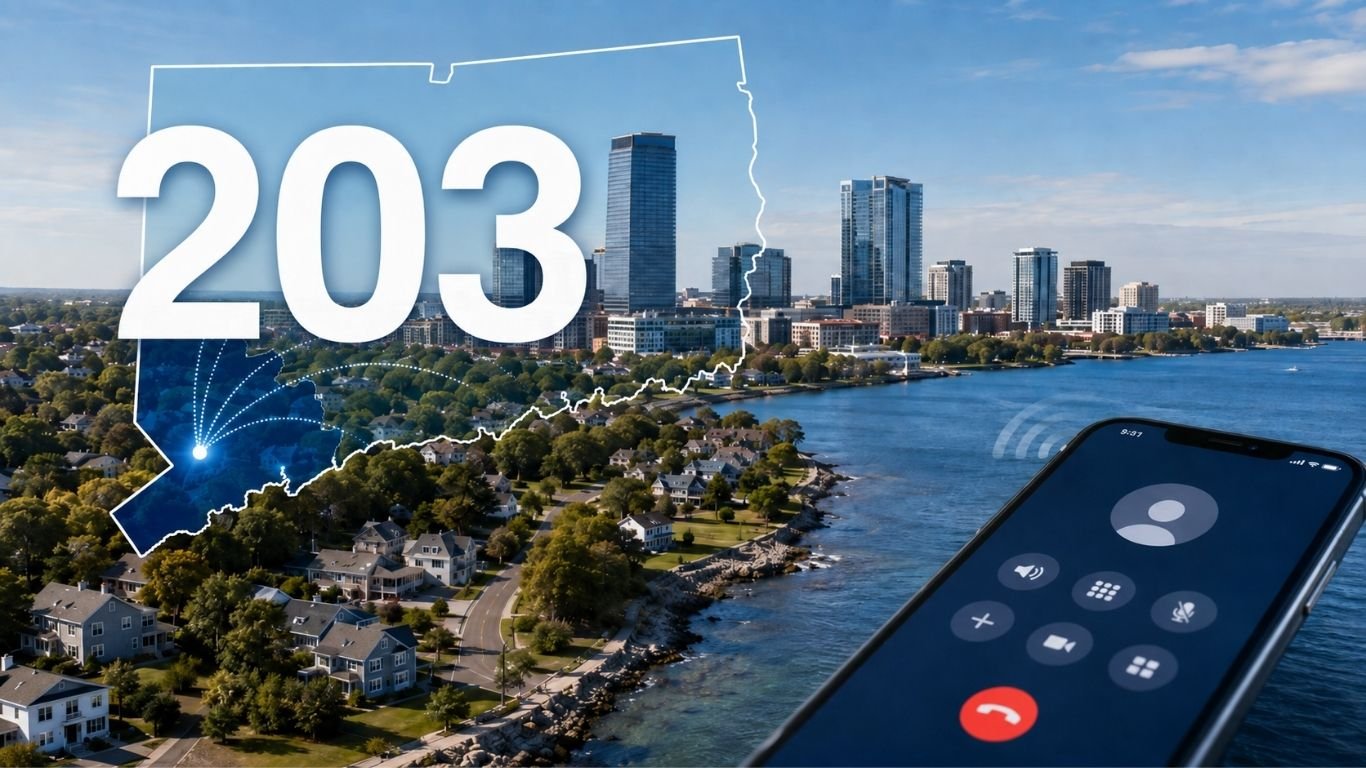
The connecticut 203 area code is one of the oldest telephone codes in the United States. It serves much of southwestern Connecticut. The region includes large cities, coastal towns, business centers, and communities close to New York.
- What Is the Connecticut 203 Area Code?
- Where Is Connecticut 203 Located?
- Major Cities Served by Area Code 203
- Fairfield County and the 203 Area Code
- When Was Area Code 203 Created?
- What Happened During the 1995 Area Code Split?
- Why Does Area Code 475 Share the Same Region?
- How Does 10-Digit Dialing Work?
- What Time Zone Does the 203 Area Code Use?
- Why Businesses Use Local 203 Numbers
- Are Calls From 203 Numbers Safe?
- Conclusion
People often search for connecticut 203 when they get a call from an unknown number. Others may want a local number for work or business. Knowing where the code is used can help you understand who may be calling and what part of the state the number may represent.
Area code 203 has also changed over time. It once covered all of Connecticut. Today, it shares its service area with area code 475. This guide explains its cities, history, time zone, dialing rules, and common uses.
What Is the Connecticut 203 Area Code?
The connecticut 203 code is part of the North American Numbering Plan. It mainly serves southwestern Connecticut and parts of the state’s southern coastal area.
Its coverage includes much of Fairfield County and New Haven County. It also reaches some nearby communities. Many places in this region have close business and travel links with New York City.
A phone number with 203 does not always tell you the caller’s exact location. Mobile users can move while keeping the same number. People can also keep old phone numbers after moving to another city or state.
Still, the area code is a useful clue. It shows where a number was first issued in most cases.
Where Is Connecticut 203 Located?
The connecticut 203 service region sits in the southwest part of Connecticut. It covers a busy part of the state with cities, suburbs, coastal towns, schools, hospitals, and major employers.
The region runs along parts of Long Island Sound. It also extends inland toward cities such as Waterbury. Several communities in the code are part of the wider New York metropolitan area.
This location makes 203 valuable for both residents and companies. Many people in southwestern Connecticut travel to New York for work. At the same time, local cities have their own strong business and service sectors.
The area also has major roads and rail links. These connections make travel between Connecticut and New York easier.
Major Cities Served by Area Code 203
Several well-known Connecticut cities use 203 numbers. Bridgeport is one of the largest. It sits on Long Island Sound and has a long industrial and maritime history.
New Haven is another major city in the service region. It is widely known as the home of Yale University. The city also has health care, education, research, food, and cultural industries.
Stamford is a major business center near New York. Many firms have offices there because of its location and transport links.
Other major places include Norwalk and Waterbury. Smaller cities and towns also use numbers from the 203 and 475 numbering pool.
Because the service area is broad, a connecticut 203 number can come from many different communities.
Fairfield County and the 203 Area Code
Fairfield County is one of the main areas linked with 203. It is in the southwestern corner of Connecticut and borders New York State.
The county contains cities such as Stamford, Bridgeport, and Norwalk. It also has towns including Greenwich, Fairfield, Westport, and Darien.
Many residents work in finance, health care, education, retail, technology, and professional services. Some also commute to jobs in New York City.
For businesses, a local 203 phone number can create a clear connection with southwestern Connecticut. Customers may see the code and know that the business serves their region.
However, the introduction of area code 475 means new numbers in the same places may use either code.
When Was Area Code 203 Created?
The connecticut 203 code has a long history. It was created in 1947 as part of the original North American area code system.
At first, 203 covered the entire state of Connecticut. A single code was enough because there were far fewer phone lines at the time.
Phone use grew over the next few decades. Homes added more lines. Businesses needed more numbers. Fax machines, mobile phones, and other services also increased demand.
The supply of available 203 numbers started to fall. Connecticut eventually needed another area code to support its growing phone network.
This led to one of the biggest changes in the history of 203.
What Happened During the 1995 Area Code Split?
In August 1995, Connecticut divided its telephone numbering system. The northern and eastern parts of the state moved to area code 860.
The connecticut 203 code remained in the southwestern part of Connecticut. This change created the basic geographic pattern that people know today.
The split gave telephone providers more numbers to issue. It also meant many homes and companies outside southwestern Connecticut had to begin using a new area code.
Area code 860 later became closely linked with places such as Hartford and much of northern and eastern Connecticut.
For a time, the split solved the shortage. But demand for new telephone numbers continued to rise.
Why Does Area Code 475 Share the Same Region?
Another major change came in December 2009. Area code 475 was added as an overlay for the 203 service region.
An overlay works differently from an area code split. With a split, separate areas receive separate codes. With an overlay, two codes serve the same geographic area.
That means a person in Stamford may have a 203 number while another person nearby may have a 475 number.
Existing users were generally able to keep their numbers. New customers could receive either code based on number availability.
The connecticut 203 area therefore no longer has only one telephone code. Both 203 and 475 identify the same general service territory.
How Does 10-Digit Dialing Work?
The overlay changed local dialing rules. Callers in the 203 and 475 region use the area code along with the seven-digit local number.
For example, a local call may be entered as the three-digit area code followed by the seven-digit phone number.
This process is known as 10-digit dialing. It helps the telephone network tell the difference between a 203 number and a 475 number in the same location.
People should save full numbers in their phone contacts. Doing this can reduce failed calls and make dialing easier.
An area code alone also does not show whether a call is local, long distance, free, or costly. That depends on the phone plan and service provider.
What Time Zone Does the 203 Area Code Use?
The connecticut 203 region uses the Eastern Time Zone.
Connecticut observes Eastern Standard Time during part of the year. It also follows daylight saving time, when applicable.
This is useful to know before calling a person or company in the region. A call placed from the West Coast, Europe, Asia, or another time zone may arrive at a very different local hour.
Companies that work with customers across the country should pay close attention to this difference. Calling during normal local business hours can improve response rates and avoid unwanted late calls.
The time zone is the same as New York City, Boston, and many other major East Coast markets.
Why Businesses Use Local 203 Numbers
A connecticut 203 number can be useful for a company that serves southwestern Connecticut. Local numbers can make a business easier for nearby customers to recognize.
This may be useful for plumbers, real estate firms, medical offices, stores, law firms, repair services, restaurants, and other local companies.
A local number does not prove that a company has a physical office in Connecticut. Modern phone systems allow businesses to use virtual numbers from many places.
For that reason, customers should still check a company’s website, address, reviews, and contact details before making a payment or sharing private information.
Legitimate companies often use both traditional phone systems and cloud-based business calling tools.
Are Calls From 203 Numbers Safe?
A connecticut 203 number can belong to a real resident or business, but the area code alone cannot prove that a call is safe.
Scammers can use caller ID spoofing. This technology can make a call appear to come from a local number even when the caller is somewhere else.
Be careful if an unknown caller asks for passwords, banking details, gift cards, one-time security codes, or urgent payments. Do not give sensitive data just because the phone number looks local.
If a caller claims to represent a bank, government office, hospital, or company, end the call if you are unsure. Then contact the organization through its official phone number.
You can also search an unfamiliar number before calling back. This may help you find reports linked with known spam calls.
Conclusion
The connecticut 203 area code remains an important part of the state’s telephone system. It has served Connecticut since 1947 and is closely linked with the southwest part of the state.
Today, it covers major communities such as Bridgeport, New Haven, Stamford, Norwalk, and Waterbury. It also shares its geographic region with area code 475.
Its long history shows how telephone systems change as cities grow and new technology appears. What once served the whole state now serves a smaller but highly populated region.
If you see a 203 number, it most often points to southwestern Connecticut. Still, remember that mobile phones, virtual numbers, and caller ID spoofing mean an area code cannot confirm a caller’s true location.uding its cities, location, history, 475 overlay, Eastern Time Zone, dialing rules, and tips for handling unknown calls.

Fascisterne is a Danish word that means “the fascists” in English. It points to people or groups linked to fascism, not to the ideology by itself. The word can appear in history books, news reports, political debate, and online discussion.
- What Does Fascisterne Mean?
- Where Does Fascisterne Come From?
- How Did Fascism Begin?
- Core Ideas Linked to Fascisterne
- Fascisterne and Mussolini’s Italy
- Fascisterne, Nazism, and the Difference
- Fascisterne in Danish History
- Why Fascisterne Still Appears in Modern Debate
- How to Use the Term Responsibly
- Why Context Matters in Political Language
- What Can We Learn From This History?
- Conclusion
The term has a strong political meaning. It is tied to authoritarian rule, ultra-nationalism, dictatorship, and the rejection of liberal democracy. Yet people also use it more loosely today. That makes careful use important.
What Does Fascisterne Mean?
In Danish, Fascisterne is the definite plural form of fascist. The Danish dictionary lists fascist as a person who supports fascism and gives the endings -en, -er, -erne. In plain English, the word means “the fascists.”
This small grammar point matters. Fascisme means fascism, which is the political belief system. Fascist names one supporter. Fascister means fascists, while the definite form points to a known or named group.
The term can also have a wider use. Den Danske Ordbog notes that it may describe people with strongly right-wing, nationalist ideas or support for authoritarian suppression of people who think differently. This broader use is one reason the word can cause debate.
Where Does Fascisterne Come From?
The word belongs to the same family as fascism and fascist. Its deeper root comes from the Latin fascis. This referred to a bundle of rods, often shown with an axe, used as a Roman sign of public authority.
The symbol later became tied to the fascist movement in Italy. Benito Mussolini and his movement used ancient Roman images to support ideas of unity, power, and state strength. The modern political word spread into many European languages.
How Did Fascism Begin?
Modern fascism developed in Europe after World War I. It grew during a time of social fear, political conflict, and economic stress. In Italy, Mussolini built a movement that rejected liberal democracy and promoted a strong leader and a powerful state.
The movement took national power in Italy in the early 1920s. Fascist politics then influenced other groups across Europe. The exact form was not the same in every country, but common themes included extreme nationalism, one-party rule, political violence, and hostility to democratic limits.
Core Ideas Linked to Fascisterne
Historical fascist movements placed the nation above the individual. They treated national unity as more important than personal rights. They also often divided society into people seen as true members of the nation and people treated as outsiders.
A second feature was strong leader rule. Fascist systems opposed open political competition and representative government. They favored a leader who claimed to speak for the whole nation.
Political violence also played a major role. Fascist movements used fear, force, propaganda, and organized groups to silence rivals. The United States Holocaust Memorial Museum describes fascism as authoritarian and ultranationalist, with opposition to pluralism, individual rights, equality, and democratic government.
Fascisterne and Mussolini’s Italy
Italy provides the clearest starting point for the history of European fascism. Mussolini founded a fascist movement after World War I and built it into a national political force. His government weakened democratic checks and moved toward dictatorship.
The state promoted nationalism, obedience, and military strength. Opposition groups faced limits and repression. Public life became more controlled as the regime tried to shape politics, culture, and national identity.
This history is why the Danish term often appears in writing about interwar Europe. It may refer to Italian fascists directly, or to similar movements that appeared elsewhere.
Fascisterne, Nazism, and the Difference
Fascism and Nazism are closely linked, but they are not fully identical. Historians generally place Nazism within the broader fascist family. Nazi ideology added an especially radical racial worldview, antisemitism, and ideas of racial hierarchy at its center.
Adolf Hitler’s government in Germany became a fascist dictatorship and carried out mass persecution, war, and genocide. It is therefore correct to study Nazism beside fascism, but it is still useful to keep the terms distinct.
Not every fascist movement copied the Nazi racial system in the same way. At the same time, many fascist movements shared hostility to democracy, strong nationalism, authoritarian leadership, and the use of force.
Fascisterne in Danish History
Denmark also had organized Nazi politics before and during World War II. The main party was Danmarks Nationalsocialistiske Arbejderparti, or DNSAP. It was founded in 1930 and drew strong inspiration from Hitler’s German NSDAP.
Frits Clausen led DNSAP from 1933. The party copied much of the German party’s program, symbols, and political style. Its platform included anti-parliamentary ideas, antisemitism, and strong nationalism.
Still, DNSAP never became the ruling party in Denmark. Its poor result in the March 1943 election marked a major political defeat. The party broke apart in 1945 after the end of the German occupation.
Why Fascisterne Still Appears in Modern Debate
Today, the word can be used in more than one way. In historical writing, it may name actual members or supporters of fascist movements. In modern political speech, it can also be used for people or groups seen as highly authoritarian, ultra-nationalist, or far-right.
This wider use can make the label less exact. A person may call an opponent a fascist because of one harsh view, even when that person does not support a full fascist system. Political insults can blur useful differences.
For that reason, readers should check the evidence behind the label. Strong nationalism alone does not explain an entire ideology. A more serious case usually looks at leadership, political rights, treatment of opponents, use of violence, views of democracy, and ideas about who belongs to the nation.
How to Use the Term Responsibly
The best approach is to ask what the speaker means. Is the word naming a historical movement? Is it describing a modern political group? Or is it being used only as an insult?
Look for clear facts. A careful description may point to support for one-party rule, removal of political rights, leader worship, organized political violence, extreme exclusion, or attacks on democratic institutions. One feature alone may not be enough.
It also helps to separate related terms. Authoritarianism, far-right politics, nationalism, totalitarianism, and fascism can overlap, but they are not perfect synonyms. Using the right word makes political discussion more useful.
Why Context Matters in Political Language
Political words carry history. Some describe clear systems of belief, while others become broad labels in public debate. When a word has both a strict and a loose meaning, readers need context.
The source matters too. A history book, newspaper, campaign speech, and social media post may use the same term in very different ways. Ask who is being described, what actions are being discussed, and what proof is offered.
This method helps readers avoid two mistakes. The first is calling every strict or unpopular policy fascist. The second is ignoring real authoritarian warning signs because the label is sometimes overused.
What Can We Learn From This History?
The history of fascism shows how democratic systems can face pressure during periods of fear and deep division. It also shows why political rights, free debate, independent institutions, and peaceful opposition matter.
Studying these movements does not require treating every modern dispute as a repeat of the 1930s. History rarely returns in exactly the same form. But older examples can still help people recognize patterns of repression, exclusion, and attacks on democratic limits.
Clear language is part of that work. Accurate terms make it easier to compare ideas without turning every disagreement into a moral accusation.
Conclusion
The Danish word discussed here has a simple translation but a heavy history. It means “the fascists,” while fascisme means the ideology they support. Its strongest historical links are to authoritarian and ultranationalist movements in twentieth-century Europe.
Modern use is broader and can be political or colloquial. That does not make the term useless. It means readers should judge each use by context, evidence, and the ideas or actions being described.
Understanding the difference between fascism, Nazism, nationalism, and general authoritarian rule leads to clearer debate. It also keeps a serious historical term tied to facts rather than slogans.
Legal topics can be hard to read. Long rules, formal terms, and complex ideas often make people stop before they find an answer. cnlawblog.com aims to make this type of information easier to follow. It uses plain language, clear headings, and practical explanations.
- What Is cnlawblog.com?
- How the Platform Started and Grew
- What Legal Topics Does the Site Cover?
- Does It Focus Only on Indian and Chinese Law?
- Why Simple Legal Writing Matters
- Editorial Standards and Research Process
- Who Can Benefit From the Website?
- Business, Finance, and Technology Content
- Guest Posts and Contributor Content
- How to Use cnlawblog.com Safely
- Strengths and Limits of the Platform
- Conclusion
The site began with a strong legal publishing base. Its current scope is much wider. It now covers law, business, finance, technology, education, health, real estate, lifestyle, gaming, and other useful topics. The site says it was founded in August 2018 and works as an independent digital publication.
This wider focus matters for readers. The name may sound like a law-only website. Yet the current site works more like a broad knowledge publication with a legal section at its core.
What Is cnlawblog.com?
cnlawblog.com is an independent online publication. Its stated goal is to make useful information clear and easy to understand. The site publishes guides, explainers, reviews, and educational articles for a general audience.
Law remains one of its key subjects. The site also publishes content on money, business, tech, education, health, homes, and consumer topics. This mix gives readers one place to explore many types of practical information.
The platform is not a court, law firm, government portal, or official legal database. Readers can use it to learn basic ideas, but serious legal decisions should be checked with primary sources or a qualified lawyer.
How the Platform Started and Grew
According to its About page, the publication was founded in August 2018. It says it began with a strong base in legal publishing. Over time, its subject range grew.
That growth changed the site from a narrow legal resource into a multi-topic publication. Today, its home page shows legal articles next to finance, technology, lifestyle, gaming, and business content.
This change can help the site reach more readers. It can also cause confusion. A person who sees the name cnlawblog.com may expect only law content, while the current site offers much more.
What Legal Topics Does the Site Cover?
The legal side of the site uses simple language and a clear format. Its own legal guide says it covers areas such as corporate law, civil law, criminal law, legal updates, and case studies.
That approach can help students, business owners, and general readers get a basic view of a topic. A short guide can give them context before they read a statute, court opinion, or formal legal document.
The home page also shows practical legal topics. Recent examples include renter rights, injury claims, wrongful death, and legal representation. This shows that the legal section is not limited to one country or one field.
Does It Focus Only on Indian and Chinese Law?
No clear evidence on the current official site supports that narrow description. Some third-party pages link the CNLawBlog name with Chinese law or business compliance. But the exact .com site describes itself in broader terms.
The official About page does not say that cnlawblog.com is mainly an Indian and Chinese statute platform. It presents the site as a global, multi-topic publication with law as one subject area.
For accuracy, a page should describe what the site shows now, not what a similar name may suggest.
Why the Name Can Cause Confusion
There are other law publications online with similar names. One well-known China Law Blog is tied to the law firm Harris Sliwoski. It is a separate publication.
Readers should check the exact domain. A similar name does not prove that two sites share the same owners or writers.
Why Simple Legal Writing Matters
Law affects rent, work, business deals, contracts, money, property, and family life. Yet legal writing often uses terms that most people do not use each day.
cnlawblog.com tries to reduce that gap by using a simple structure. Its legal pages use headings, short explanations, and step-by-step ideas. This can help a reader understand the basic issue faster.
Simple writing does not mean the law itself is simple. A plain-language article should be the start of research, not the final answer in a serious legal matter.
Editorial Standards and Research Process
The site has a published editorial policy. It says articles should focus on accuracy, clarity, relevance, and transparency. It also says writers may use government sites, official groups, academic work, public reports, and other reliable sources during research.
The policy states that articles go through an editorial review. That review may cover facts, grammar, readability, structure, formatting, and internal links. The site also says older pages may be updated when laws, rules, technology, or public facts change.
A clear policy shows what the publication says it expects from its content. Still, readers should judge each article on its own sources and claims.
Who Can Benefit From the Website?
The platform can help people who want a quick start on a complex topic. A student may use it to learn basic legal terms. A business owner may use a guide to understand a compliance issue before speaking with an adviser.
It can also help general readers who want plain explanations of finance, technology, health, or consumer topics. Because cnlawblog.com covers many fields, users do not need to stay inside one subject area.
The best use is early-stage research. Readers can learn the main terms, spot key issues, and then move to official or expert sources when the topic carries real risk.
Business, Finance, and Technology Content
The site is no longer only about law. Its current categories include business, finance, technology, education, and several lifestyle subjects.
Recent pages have discussed credit cards, medical equipment loans, Treasury yields, interest rates, edge AI, data sovereignty, online loans, and digital tools. This gives the publication a wider search footprint.
A Broader Knowledge Model
This model can help when topics overlap. A small business issue may involve law, finance, software, and risk at the same time.
The trade-off is topical depth. A specialist legal database will usually offer more primary material. A broad site may be easier to read, but it should not be treated as a replacement for specialist research.
Guest Posts and Contributor Content
The site accepts guest posts. Its submission page invites writers, professionals, and industry experts to contribute articles in law, business, finance, technology, education, and general knowledge.
The page says submissions should be original, accurate, readable, and well structured. It also says the site may edit content for clarity, format, and SEO.
Guest content can add new skills and viewpoints. But readers should still check the author, sources, date, and claims in each article. That rule applies to any publication that uses outside contributors.
How to Use cnlawblog.com Safely
Start by reading the full article, not only the headline. Check the publication date and look for updates. Laws, rules, rates, and technical standards can change fast.
Next, compare key claims with official material. For legal matters, use statutes, court websites, regulators, or government sources. For finance or health, use the proper public agency or a qualified professional.
This is especially important when money, legal rights, safety, or health is at stake. cnlawblog.com can help explain a topic, but an explainer cannot know every fact in a personal case.
Strengths and Limits of the Platform
One strength is readability. The site says its goal is to explain hard subjects in clear terms. Its structure also makes it easy to scan pages and find the main point.
Another strength is range. Readers can move from law to business, finance, tech, or education without leaving the site. The publication also has a stated process for research, review, corrections, and updates.
The main limit is the same one found on many general information sites. Broad coverage does not equal official authority. cnlawblog.com is useful as an educational resource, but readers should verify high-stakes claims before acting on them.
Conclusion
cnlawblog.com is best understood as an independent, multi-topic digital publication with roots in legal content. It aims to make complex subjects easier for everyday readers. Its current coverage goes far beyond law and includes business, finance, technology, health, education, real estate, lifestyle, and more.
For simple research, the site can be a useful starting point. Its plain language and clear layout may help readers learn the basics fast. For serious legal, medical, or financial choices, primary sources and expert advice remain the safer next step.
Connecticut 203 Area Code: Cities, History, Location, and Calling Guide
FlowXD: A Simple Guide to Flow Dynamic XD Waterjet Cutting
Fascisterne Meaning: History, Fascism, and Modern Political Use

Alex Pettyfer Net Worth, Wife, Age, Height, Children, Career and More
Brad Williams Net Worth, Wife, Height, Age, Daughter, Family, Career and More

Sanzoku Bandits of One Piece: Origins, Higuma, and Their Role in Dawn Island
-
Celebrity9 months ago
Alex Pettyfer Net Worth, Wife, Age, Height, Children, Career and More
-
Celebrity9 months ago
Brad Williams Net Worth, Wife, Height, Age, Daughter, Family, Career and More
-
Anime10 months ago
Sanzoku Bandits of One Piece: Origins, Higuma, and Their Role in Dawn Island
-
 Blog2 weeks ago
Eldorado.gg Review 2026: How It Works, Safety, Fees, and Risks
-
 Celebrity9 months ago
John McGinn Net Worth, Age, Height, Wife, Childrens, Career and More
-
 Celebrity9 months ago
Frances de la Tour Net Worth, Age, Height, Husband, Childrens, Career and More
-
 Blog3 weeks ago
What Is Troozer.com? A Clear Guide to the Digital Content Site
-
 Celebrity9 months ago
Will Trickett Net Worth, Wife, Childrens, Age, Career and More