
Health
Why Do My Feet and Knees Hurt When I Walk? How Foot Support Plays a Role

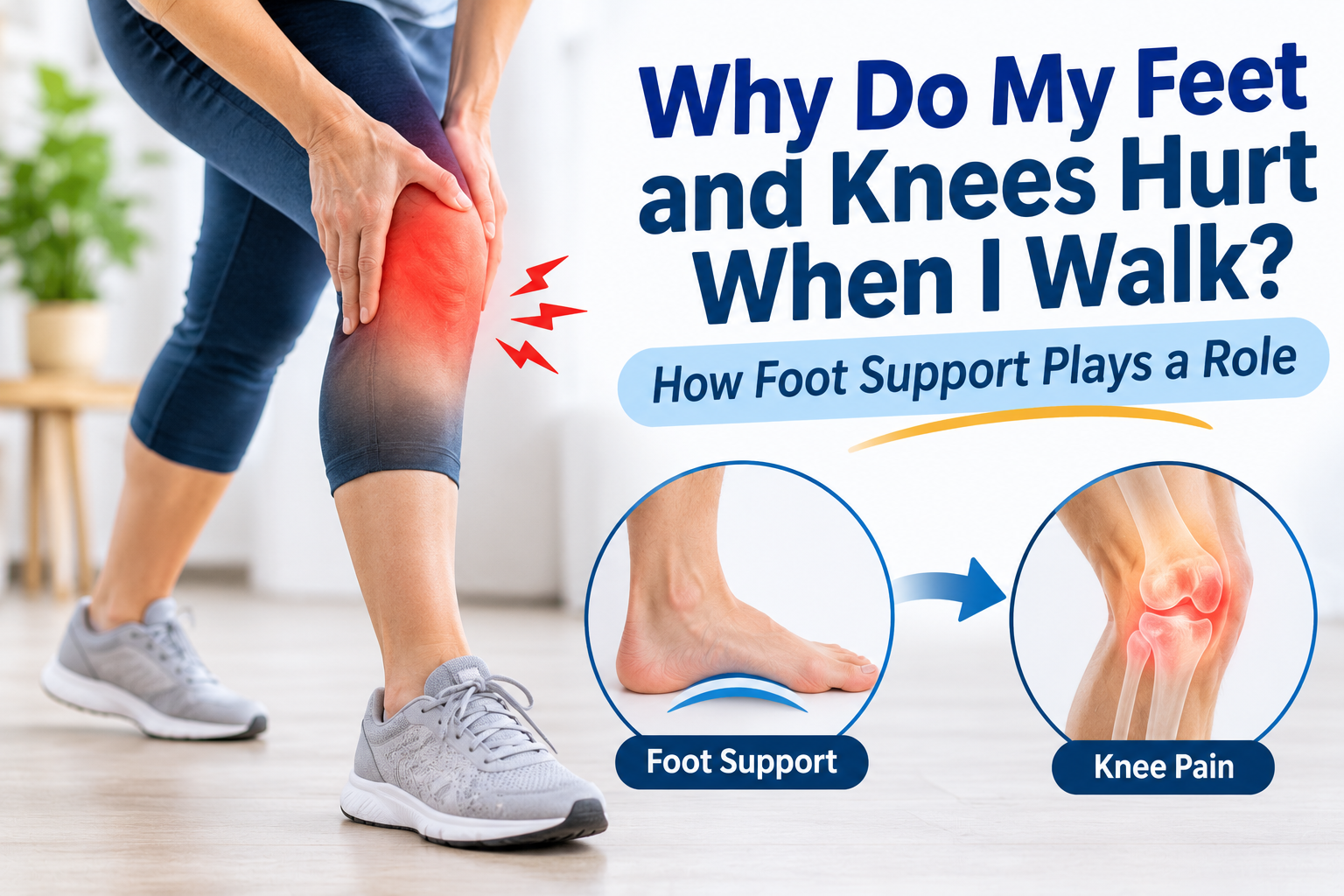
Foot and knee pain when walking often starts in the feet. Every step lands there first, and whatever happens at the foot carries up to the ankles, knees, and hips. Flat arches, rolling inward, or worn-out footwear can shift that load onto the knees.
- What Happens to Your Knees When Your Feet Lack Proper Support?
- How Does Overpronation Change the Way Your Knees Move?
- Can Flat Feet Contribute to Knee Discomfort?
- What Are the Signs That Your Knee Pain May Be Related to Your Feet?
- How Can Custom Orthotics Help Improve Foot Support?
- What Should You Expect During a Professional Foot Support Assessment?
- Is It Time to Get Your Foot and Knee Pain Checked?
- How Does Foot Support Help You Move More Comfortably?
Most of us blame the knees first. The grocery run leaves them sore, or a double shift, or the stairs at home, and the feet barely get a mention. Knee pain while walking or standing can start in the feet, and a lot of people only find out after months of putting up with it.
If the pain starts to change how you plan your day, it’s worth dealing with. Custom orthotics in Brampton are one route when your foot mechanics are part of the cause.
What Happens to Your Knees When Your Feet Lack Proper Support?
Start from the ground up. With each step, your weight travels from the heel to the toes, and the arches take a good share of the strain. They spread the pressure out and soften the shock before it reaches the legs.
Now picture the feet not coping so well. The ankles tilt a little. The knees and hips adjust to make up for it. A single step like that is nothing, but thousands of them a day, for years, can change how a person walks. Sore feet and sore knees often get linked this way.
The pain rarely shows up straight away. Plenty of people feel fine for the first few steps and only notice it by the evening.
Poor foot support isn’t the only possible cause. Arthritis, an old injury, weak muscles, and other joint problems can all be behind knee pain. Foot alignment is one part of the picture, and seldom the whole of it.
How Does Overpronation Change the Way Your Knees Move?
When a foot overpronates, it rolls inward past the point it should. That roll isn’t bad in itself, because the foot needs it to soften each step. The issue is too much of it, which shifts the load onto the ankle and knee.
Overpronation and knee pain often go together when the ache sits on the inner side of the knee after a long walk. Your old shoes can say a lot. If the inside edges of the soles are worn down more than the outside, that’s one hint. Ankles that lean inward are another. Feet that feel finished by bedtime point the same way.
None of that proves a specific condition. It takes someone watching you walk to say whether the inward roll is really part of the problem. They don’t stop at the knee, since the whole movement matters.
Can Flat Feet Contribute to Knee Discomfort?
Flat feet means low arches, or arches that drop when you stand on them. A healthy arch helps carry body weight and keeps you steady. Without much of one, pressure moves through the feet and ankles by a different route.
Flat feet and knee pain don’t always come as a pair. Many adults with flat feet walk, exercise, and stand for hours and never have trouble, and they need no extra support. Others get tired arches, sore ankles, or knees that don’t move quite the same way. Every person is a bit different.
A lower arch can let the foot roll inward, and that may change how the legs work. It’s no guarantee of joint trouble, though. Shoes, activity level, foot shape, and personal movement habits all count.
What Are the Signs That Your Knee Pain May Be Related to Your Feet?
There are a few giveaways. One is pain that worsens after a long walk. Knee pain when walking commonly turns up at the shops, on the stairs, or on the way back from work.
Hard floors can do the same job on your knees. Hours of standing leave them stiff by evening. Knee pain when standing often comes with tired feet, sore arches, or pressure under the heels.
- Shoes wearing down unevenly on one edge.
- Ankles that lean inward as you move.
- Feet that feel worn out late in the day.
- A slightly changed walk to protect a sore spot.
Shop workers, office staff, and weekend walkers notice these in different ways. They’re clues, not a diagnosis. Only a proper assessment can show whether the feet are involved. Whatever they find tells you if custom orthotics make sense or if something else would work better.
Assessment can show whether the feet are involved.
How Can Custom Orthotics Help Improve Foot Support?
Custom orthotics are shoe inserts made around one person’s feet and the way they move. Ordinary cushioned insoles are a different product. They’re made to fit almost anybody, so there’s no personal design in them.
Good arch support spreads pressure more evenly and makes daily activity feel easier. Where there’s a biomechanical problem, orthotics can also cut down extra movement and add stability.
The idea isn’t to force every foot into the same position. The right support depends on the person and how their feet behave when they move. Better foot alignment can make walking more comfortable, but it can’t promise the knee pain will go away.
Orthotics alone can only do so much. They pull their weight when they’re backed up by decent shoes, stretching, strengthening exercises, and a few changes to your daily habits. What makes custom orthotics different from the ones off a shelf is the assessment and design behind each pair.
What Should You Expect During a Professional Foot Support Assessment?
It begins with a conversation. You’ll be asked about your medical history, daily activities, footwear, and where and when the discomfort appears. Often they’ll watch you stand and walk as well.
Depending on the case, the next stage might be a gait analysis, a foot scan, or a cas
With knee pain when walking or knee pain when standing, the muscles and joints often need checking as well. A Chiropractor Brampton is a fair place to start. The right provider looks at everything, not just what to put in your shoes.
Once the orthotics are fitted, comfort checks and follow-up visits show whether anything needs adjusting. A good pair feels fine for everyday use. It shouldn’t bring new aches of its own.
Is It Time to Get Your Foot and Knee Pain Checked?
If the pain hangs around, or gets worse, don’t just wait it out. That’s especially true once it starts messing with your day. Sudden bad pain, a lot of swelling, a knee that feels ready to buckle, or trouble standing on the leg all mean it’s time to see a medical professional, and soon.
Someone trained can tell where the problem really sits. It could be the foot or the knee. It could be a muscle or a ligament. New shoes or inserts from the shop might ease things for a while, but they can’t tell you what’s wrong, so they’re no stand-in for an assessment. The sooner you know the cause, the easier it is to pick what to do next.
How Does Foot Support Help You Move More Comfortably?
Your feet affect the way the whole lower body moves, yet knee pain can start in plenty of other places too. Treating the symptoms only gets you so far. Finding the cause is what counts. A visit to a Chiropractor in Brampton is a good way to see what assessment and support options exist. With a personalised plan and advice from Dr Doug, you’ll understand how your feet work and know what to do to move comfortably, day after day.


Ever wondered why some dark spots don’t fade away? Sometimes they take weeks or even months. The reason may lie beneath your skin’s surface. India has a tropical climate, frequent sun exposure, and seasonal changes, plus hormonal shifts, all of which can influence persistent dark spots and pigmentation.
Melanin production can impact your skin colour. When certain areas produce more melanin than others, dark spots or patches can appear. Understanding your skin and what triggers these spots can help you get rid of them.
You can include a brightening serum in your daily skincare routine to see the desired changes with consistent use.
Why Is Hyperpigmentation Common in Indian Skin
Melanin
Melanin is produced to protect skin against the effects of ultraviolet (UV) radiation. However, when the skin experiences inflammation, pigment can increase in certain areas.
People with darker skin tones may be more prone to developing noticeable pigmentation after inflammation, although it can affect anyone.
Regular Sun Exposure
If your daily routine includes persistent outdoor movement, your skin is exposed to the sun. This can increase melanin production, darkening your skin and may also cause uneven skin tone.
Without proper sun protection, pigmentation can become more noticeable even when the rest of your skincare routine is consistent.
Skin Irritation and Harsh Products
Various factors can cause skin irritation. Using too many active ingredients simultaneously may irritate your skin. Additionally, the use of harsh products can increase inflammation.
Frequent exfoliation, harsh scrubs, or using several strong active ingredients together may irritate the skin.
A skincare routine should support your skin rather than leave it feeling uncomfortable, irritated, or excessively dry.
Ways to Reduce Hyperpigmentation
Make Usage of Sunscreen Non-Negotiable
Sunscreen is a must to include in an everyday skincare routine. A broad-spectrum sunscreen with SPF 30 or higher helps protect against UV exposure that contributes to pigmentation.
Choose a Brightening Serum
A brightening serum can help reduce the appearance of dark spots and blemishes. Ingredients such as vitamin C, niacinamide, and azelaic acid may help you fade pigmentation and may also improve the overall appearance of the complexion.
Kojic acid is one of the ingredients that helps reduce melanin production by inhibiting tyrosinase, an enzyme involved in pigment formation. You can consider using kojic acid serum.
When trying any new ingredients on the skin, a patch test is recommended so that it does not increase the inflammation of your skin.
Simple Skincare Routine
To reduce the appearance of dark spots, pimple marks and pigmentation, it is not necessary to complicate your everyday skin routine. Yes, even skin tone can be achieved in a simpler manner by just adding some thoughtful ingredients, a brightening serum and consistent use of sunscreen.
Final Thoughts
Hyperpigmentation and dark spots can take time to fade. The right approach with optimal ingredients influences the desired results. Sun protection, gentle skincare, and targeted ingredients can help manage dark spots without putting unnecessary stress on your skin.
There are many Indian skincare brands that offer brightening serums for acne marks, dark spots and pigmentation. Dermabay is one of those brands that offers a scientifically formulated kojic acid serum that may work towards better skin tone and brighter skin.
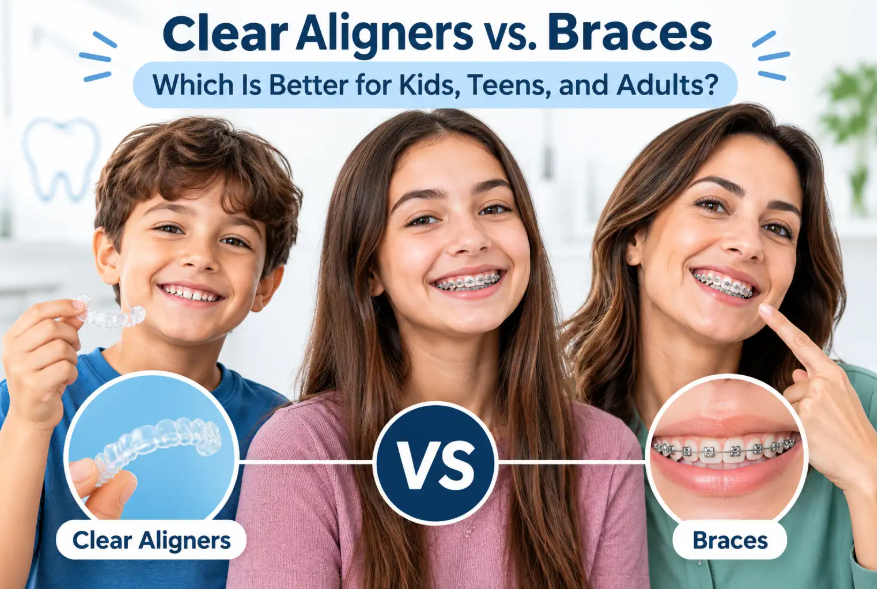
Clear aligners suit people who can follow a wearing schedule. Braces suit those who need more control or less responsibility
- What Makes Clear Aligners Different From Traditional Braces?
- Which Treatment Works Better for Growing Children?
- Are Clear Aligners or Braces Better for Teenagers?
- What Should Working Adults Consider Before Choosing?
- How Do Both Treatments Compare in Daily Life?
- What Should Families Know About Treatment Costs and Insurance?
- What Factors Help You Choose the Right Treatment?
- Which Option Makes More Sense for Your Smile?
A child with growing jaws, a teenager who forgets their gym bag, and a 36-year-old with back-to-back client meetings each land on a different side of that line. The right call depends on who is wearing them, not the product.
If you’re weighing cosmetic dentistry in Mississauga for yourself or your family, start with age, daily habits, and the teeth’s starting point. Looks come after those. Here’s how we can sort through each one.
What Makes Clear Aligners Different From Traditional Braces?
Both treatments push teeth into new positions slowly. They just go about it differently.
- Clear Aligners: Transparent trays made to sit snugly over a patient’s teeth, and they can be taken out when needed. Changing to a new set at each stage keeps the movement going bit by bit. They should be worn consistently according to your dentist’s instructions, coming out for meals, for anything you drink besides water, and for brushing. That’s it.
- Traditional Braces: Fixed in place. Brackets get bonded to the teeth, and a wire runs through them. The dentist tightens or changes that wire at regular visits, and you can’t take any of it out at home. Ceramic brackets work the same way but match the tooth colour, so they’re harder to spot.
Each option is a recognised choice among today’s teeth straightening options. Neither is the better one across the board. Trays handle plenty of mild to moderate problems nicely, while fixed braces give the dentist extra control in tougher cases. You can’t tell which group you’re in from a photo. That takes a proper assessment.
Which Treatment Works Better for Growing Children?
Children are tricky because their mouths haven’t finished changing. Jaws grow, baby teeth drop out, and adult teeth show up on their own schedule. So timing matters here more than anywhere else. A first visit around age seven is common, and the dentist looks for crowding, gaps, a bite that doesn’t meet properly, and adult teeth coming in at odd angles. A visit at seven doesn’t mean braces at seven. Most of the time the dentist just keeps watching.
Fixed braces tend to be simpler for younger kids, mostly because there’s no tray to keep track of. Nobody has to remember a tray. Any parent who has spent a morning hunting for one missing shoe knows how this goes. A child who loses a water bottle every week will lose aligners too, probably in a school bin. Some kids manage perfectly well, mind you, especially the sensible ones who follow routines without being nagged.
When parents go through the orthodontic treatment options for their child, the dentist will look at jaw growth, how the teeth are developing, and what needs correcting. Early treatment helps some children. For others, regular monitoring is enough until the rest of the permanent teeth appear. An appliance that simply looks better isn’t always the right one.
Are Clear Aligners or Braces Better for Teenagers?
Teenagers care how they look, and that’s fair. Photos, sports, and friends all sit behind the decision. Trays appeal because hardly anyone notices them, and they come out at lunch.
The catch is the workload. Daily wear instructions apply every day, including weekends. A tray sitting in a blazer pocket or at the bottom of a gym bag does nothing, and a few days like that can add weeks to the plan.
Aligners work nicely for teens who are good with routines and don’t lose their things. If wear is likely to be a problem, or the teeth need tighter control, braces tend to be the safer pick.
Note on Sports: Playing sport changes things a bit. Braces call for a well-fitted mouthguard in contact games, while tray wearers should get the dentist’s advice on whether to wear them during play.
What Should Working Adults Consider Before Choosing?
A lot of adults sit on this for years because braces seem like a teenager’s thing. Healthy teeth don’t care how old you are, though. They can still shift, as long as the gums and bone holding them are in good shape.
Office days, client meetings, and presentations are why many people want something less visible. Trays help there, and eating and brushing stay easy. The trouble starts on a hectic day. Trays come out a bit too often, and nobody notices progress slowing until weeks later.
Fixed braces tend to work better for adults dealing with a complicated bite or a more serious alignment issue. Crowns, bridges, gum problems, and earlier dental work should be looked at beforehand.
The most sensible choice for an adult fits the teeth they have and the routine they follow. A qualified provider offering orthodontic treatment in Mississauga can explain whether removable or fixed is the right call, and whether a specialist should step in.
How Do Both Treatments Compare in Daily Life?
Living with each treatment shows where they really differ:
| Feature | Clear Aligners | Traditional Braces |
| Eating & Diet | Trays come out for meals, so food stays the same. | Fixed in place; watch out for hard, sticky, and chewy foods that can damage brackets or wires. |
| Cleaning & Hygiene | Standard brushing and flossing; trays must be cleaned as instructed. | Takes extra effort and specialised tools to get food and plaque out from around brackets and wires. |
| Comfort & Sensation | Expect a little soreness or pressure, usually after a fresh tray. | Expect a little soreness or pressure, usually after a routine adjustment. |
| Appointments | Periodic progress checks to receive new sets of trays. | Periodic adjustment visits to tighten or replace wires. |
| Retention | Retainers are normally needed once active treatment ends. | Retainers are normally needed once active treatment ends. |
What Should Families Know About Treatment Costs and Insurance?
The aligners vs. braces cost question rarely has a simple answer. What you pay depends on the complexity of the case, the type of appliance, the length of treatment, and any other dental work needed along the way. A minor spacing issue and a difficult bite problem won’t be priced the same.
How much insurance contributes depends on your policy alone. Lifetime maximums, age rules, waiting periods, and exclusions are the usual catches. Sort out what your plan allows before the treatment starts.
A written estimate saves confusion later. It should show whether consultations, follow-up appointments, replacement appliances, and retainers are part of the price. If payment plans are available, read every term. The total bill at the end is a better guide than the figure quoted at the start.
What Factors Help You Choose the Right Treatment?
An exam with a professional is the right first step, not a search through photos or online comparisons. The provider will review alignment, bite, gum health, jaw development, and any earlier dental work.
Consider whether the patient can keep up with daily instructions, appointments, and oral hygiene. Appearance and convenience do matter, but they shouldn’t outweigh what’s clinically suitable. Specialists are often the better choice for complicated cases.
If you’re comparing teeth straightening options, look for a dental clinic in Mississauga offering a clear assessment, a personalised plan, and a transparent cost estimate. The best treatment safely addresses the real dental concern.
Which Option Makes More Sense for Your Smile?
Neither treatment is the winner every time. Trays tend to work for people who like a discreet look and can keep to the wearing schedule. Fixed braces often fit bigger corrections better, or suit patients who would rather not look after trays themselves.
Before anything starts, a proper assessment should look at dental needs, comfort, daily lifestyle, and aligners vs. braces cost together. If you’d like advice built around your own teeth, book a consultation with a dental clinic in Mississauga that families trust, and talk through your choices with the team at Battleford Dental.


By Josh Hamburg | Medically reviewed by Dr. Mostafa Assadalla Sherazy
People arriving for alcohol detox at New Leaf Detox are handed medication in the first hours and usually don’t ask what it is. They’re unwell, someone competent is handling it, and the details seem beside the point.
The details are worth knowing, partly because understanding what’s happening reduces the fear, and partly because the most important medication in alcohol detox is one almost nobody has heard of.
The Problem Being Treated
Sustained heavy drinking causes the nervous system to adapt. Alcohol suppresses activity, so the brain compensates by increasing excitability to maintain balance.
Remove the alcohol and the compensation is still there, unopposed. The result is a nervous system running hot, which produces the tremor, sweating, racing heart, anxiety and insomnia, and at the severe end, seizures and delirium tremens.
Detox medication exists to manage that over-excitation safely while the system recalibrates.
Benzodiazepines
The mainstay, and it surprises people that a drug class with its own dependence risk is used here.
The logic is straightforward: benzodiazepines act on the same system alcohol does, which allows a controlled, tapering substitution rather than an abrupt withdrawal. They’re the evidence-based treatment for alcohol withdrawal and they reduce the risk of seizures and delirium tremens.
The short-term supervised use during detox is a different proposition from long-term prescribing. The dose is determined and administered by clinicians, reduced over days, and stopped.
Many programs use symptom-triggered dosing, where medication is given according to measured withdrawal severity using a standardized assessment, rather than on a fixed schedule. That approach generally results in less total medication and shorter treatment.
Thiamine, and Why It Matters More Than People Realize
| What it is | Vitamin B1 |
|---|---|
| Why it’s depleted | Heavy drinking impairs absorption and storage, and diet is often poor |
| What depletion causes | Wernicke’s encephalopathy, a serious neurological emergency |
| Why it’s urgent | Untreated it can progress to lasting memory impairment |
| The practical point | Thiamine is given before or alongside any glucose |
That last line is clinically important. Administering glucose to a thiamine-deficient person can precipitate the problem, which is why thiamine comes first. It’s the single clearest reason not to attempt alcohol detox at home with fluids and good intentions.
Wernicke’s can present with confusion, eye movement abnormalities and unsteadiness, and not everyone shows all of it, which is why thiamine is given routinely rather than only when symptoms appear.
The Rest of the Picture
Folate and other vitamins, frequently depleted.
Magnesium and other electrolytes, which are commonly disturbed and which affect heart rhythm and seizure threshold.
Fluids, because dehydration is common, though not indiscriminately, since over-hydration carries its own problems.
Medication for nausea, which affects whether you can keep anything down.
And attention to sleep, which is badly disrupted and which affects mood, irritability and your capacity to get through the week.
Other medications are used in specific situations, including for persistent agitation or hallucinations, and those are clinical decisions made case by case.
Why Monitoring Is the Other Half
Medication without observation isn’t the same product.
Vital signs are tracked, more frequently early on. Withdrawal severity is assessed on a schedule rather than by impression. Bloodwork establishes electrolytes, liver function and other markers. And someone is awake overnight, when symptoms frequently intensify.
Alcohol withdrawal can escalate, and the point of supervision is responding within the hour rather than at the next scheduled round.
What Doesn’t Happen
Worth clearing up a few assumptions.
You aren’t sedated throughout. The aim is comfort and safety, not unconsciousness.
You aren’t given anything that produces a high. These are not rewarding medications at the doses used.
And you don’t leave on long-term benzodiazepines. The taper concludes within the detox period.
What Comes After
Detox addresses physical dependence and nothing else. That’s the whole point of it, and it’s why leaving at the end is the most common route back.
Separately, medications for alcohol use disorder exist for the longer term, including naltrexone, acamprosate and disulfiram. These are different from detox medications, they’re underused, and they’re worth raising with a prescriber before discharge rather than afterward.
Reaching Out to New Leaf Detox & Treatment
If what’s worrying you is the first few days, knowing what’s being given and why removes a good deal of that. New Leaf Detox & Treatment provides medically supervised detox and residential treatment for adults in Laguna Niguel, with round-the-clock monitoring, medication management, dual diagnosis support and CBT, DBT and trauma-informed care.
If you’re already experiencing severe withdrawal symptoms, call 911 or go to the nearest emergency room.
Frequently Asked Questions
1. Why are benzodiazepines used in alcohol detox?
They act on the same system as alcohol, allowing a controlled, tapering substitution. They’re the evidence-based treatment and reduce the risk of seizures and delirium tremens.
2. What is thiamine for?
Thiamine, or vitamin B1, is depleted by heavy drinking, and deficiency can cause Wernicke’s encephalopathy, a serious neurological condition. It’s given routinely and before any glucose.
3. Will I be sedated the whole time?
No. The goal is comfort and safety rather than unconsciousness, and medication is typically given according to measured withdrawal severity rather than on a fixed schedule.
4. Will I leave dependent on the detox medication?
No. The benzodiazepine taper is completed within the detox period under clinical supervision and isn’t continued afterward.
5. Are there medications for after detox?
Yes. Naltrexone, acamprosate and disulfiram are approved for alcohol use disorder, are frequently not offered, and are worth raising with a prescriber before discharge.

Jewelry Boxes: Jewelry Packaging Ideas That Increase Perceived Value and Customer Loyalty

How to Turn Your iPad Into the Perfect Binge-Watching Device: 7 Easy Tips

Smart Packaging Integration: How to Embed QR Codes and AR into Your Magnetic Box Design

Alex Pettyfer Net Worth, Wife, Age, Height, Children, Career and More

Brad Williams Net Worth, Wife, Height, Age, Daughter, Family, Career and More

Eldorado.gg Review 2026: How It Works, Safety, Fees, and Risks
-
Celebrity11 months ago
Alex Pettyfer Net Worth, Wife, Age, Height, Children, Career and More
-
Celebrity11 months ago
Brad Williams Net Worth, Wife, Height, Age, Daughter, Family, Career and More
-
Blog2 months ago
Eldorado.gg Review 2026: How It Works, Safety, Fees, and Risks
-
 Anime12 months ago
Sanzoku Bandits of One Piece: Origins, Higuma, and Their Role in Dawn Island
-
 Celebrity11 months ago
John McGinn Net Worth, Age, Height, Wife, Childrens, Career and More
-
 Celebrity11 months ago
Frances de la Tour Net Worth, Age, Height, Husband, Childrens, Career and More
-
 Celebrity11 months ago
Will Trickett Net Worth, Wife, Childrens, Age, Career and More
-
 Blog3 months ago
Crackstube: A Complete Guide to the Digital Publishing Platform