
Blog
Why a Failing Distribution Box Could Be Sabotaging Your Septic System

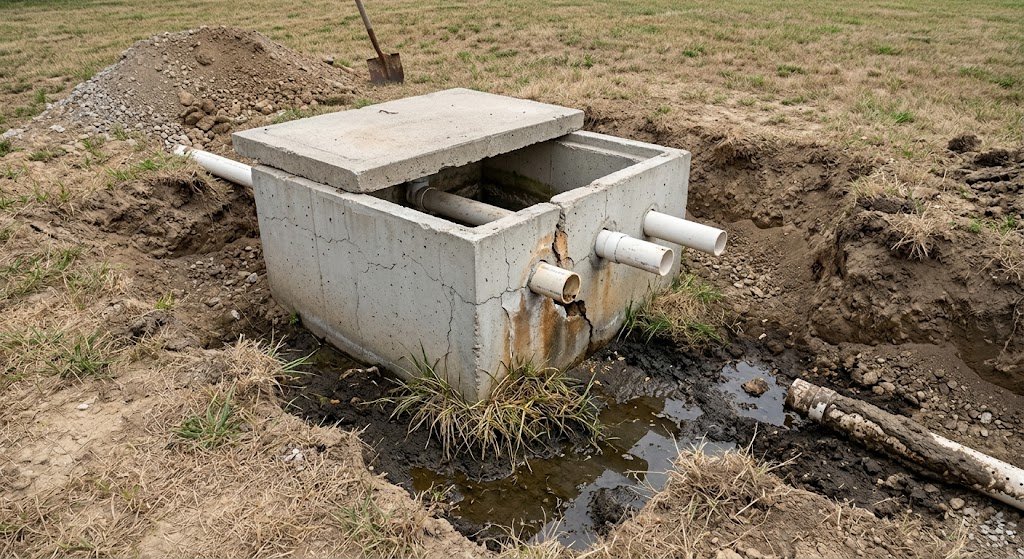
If your septic system has been acting up lately — slow drains, soggy patches in the yard, or a foul odor that won’t quit — the culprit might not be your septic tank at all. It could be a small, often-overlooked component called the distribution box. This unassuming concrete or plastic box plays a massive role in how wastewater flows through your entire septic system, and when it fails, the consequences can ripple through your whole property.
At Septic Advisor, we’ve seen firsthand how a compromised distribution box can turn a minor issue into a major, costly headache. Understanding what this component does, why it fails, and when it needs to be replaced can save homeowners thousands of dollars in emergency repairs down the road.
What Does a Distribution Box Actually Do?
Think of the distribution box as the traffic controller of your septic system. After wastewater leaves your septic tank, it doesn’t just flow randomly into the drain field. Instead, it passes through the distribution box, which evenly divides the effluent among the various pipes leading to your drain field’s leach lines.
This even distribution is critical. Without it, some sections of your drain field would get flooded with excess wastewater while others sit dry and underused. Over time, this imbalance leads to soil saturation, sewage backups, and premature drain field failure — one of the most expensive septic problems a homeowner can face.
Signs Your Distribution Box Needs Attention
Septic systems rarely fail without warning. Here are some telltale signs that your distribution box might be struggling:
- Uneven wet spots in your yard: If certain areas near your drain field are consistently soggy or lush green while others remain dry, your distribution box may be sending water unevenly.
- Slow or gurgling drains: When wastewater can’t flow smoothly out of your home, it often backs up, causing sluggish drainage throughout the house.
- Sewage odors: A cracked or shifted distribution box can allow effluent to pool near the surface, creating persistent, unpleasant smells.
- Visible cracks or settling: Older distribution boxes, especially those made of concrete, can crack, tilt, or sink due to ground movement, tree root intrusion, or simple age-related wear.
Ignoring these symptoms rarely makes them go away. In most cases, the problem worsens, and what could have been a simple fix turns into a full drain field replacement — a project that costs significantly more than addressing the distribution box on its own.
Why Replacement Often Beats Repair
Some homeowners try to patch a damaged distribution box, but this is usually a temporary fix at best. Concrete boxes crack further over time, and once the internal baffles or outlet ports are damaged, they can’t distribute effluent evenly no matter how many patches are applied.
Modern replacement distribution boxes, particularly those made from durable, corrosion-resistant materials, offer a far more reliable long-term solution. They’re designed to resist the ground shifting, root intrusion, and general wear that plagues older concrete models. Choosing a full replacement over a patchwork repair means fewer callbacks, less disruption to your yard, and genuine peace of mind that your septic system is functioning as it should.
What to Expect During a Replacement
A professional distribution box replacement typically involves a few key steps:
- Inspection: A technician locates the existing distribution box and assesses the extent of the damage.
- Excavation: The area around the box is carefully dug out to expose the unit and connecting pipes.
- Removal and replacement: The damaged box is removed, and a new, properly leveled unit is installed in its place.
- Reconnection and testing: Pipes are reconnected, and the system is tested to confirm even effluent distribution across all leach lines.
- Backfilling: The excavation site is restored, leaving your yard as close to its original condition as possible.
While this might sound like a significant undertaking, most replacements can be completed in a single day by an experienced team, minimizing disruption to your household routine.
Trust Septic Advisor for a Seamless Distribution Box Replacement
Distribution Box Replacement is one of the most valuable investments you can make to protect your drain field and extend the life of your entire septic system, and Septic Advisor makes the process straightforward from start to finish. Our team brings years of hands-on experience diagnosing distribution box issues accurately, so you’re never paying for unnecessary work or guessing at the root cause of your septic troubles.
We understand that septic problems can feel overwhelming, especially when they come with an unpleasant surprise like a backed-up drain or a smelly yard. That’s why we prioritize clear communication, transparent pricing, and efficient service every step of the way. Our technicians use quality materials designed to outlast older concrete models, giving you a distribution box that can handle years of reliable use without the recurring issues that plague outdated systems.
Beyond the technical work, we take pride in treating every property with care. Our excavation and restoration process is designed to minimize yard damage, so you won’t be left with an unsightly mess once the job is done.
Protect Your Property Before Small Problems Become Big Ones
A septic system is only as strong as its weakest component, and for many homeowners, that weak point turns out to be an aging or damaged distribution box. Catching the warning signs early — uneven wet patches, slow drains, persistent odors — can mean the difference between a straightforward replacement and a full-scale drain field overhaul.
If you’ve noticed any of these red flags on your property, don’t wait for the problem to escalate. Reach out to Septic Advisor today for an inspection, and let our experienced team help you keep your septic system running smoothly for years to come.


The interior of a property has a major influence on how comfortable, welcoming, and visually appealing the space feels. Walls, ceilings, doors, trim, cabinets, and other painted surfaces naturally experience wear as people move through rooms, furniture is rearranged, and everyday activities leave behind marks, dust, and occasional stains. Over time, even a well-maintained interior can begin to look faded, outdated, or inconsistent. A carefully planned interior painting project provides an effective way to refresh these spaces while creating a more coordinated appearance throughout the property. However, achieving a high-quality result requires more than selecting an attractive color and covering the walls. Proper preparation, surface repairs, product selection, application techniques, protection of furniture and flooring, and careful finishing all contribute to the quality and longevity of the completed work.A fresh interior finish can also change the character of a room without requiring major remodeling. Color can influence how large or intimate a space feels, highlight architectural features, complement flooring and furnishings, and create visual connections between different rooms. Some homeowners may prefer soft neutral shades that provide flexibility, while others may choose stronger colors to create a focal point or express a particular design preference. Businesses can also benefit from professionally maintained interiors because clean, consistent walls and finished surfaces contribute to a more organized and presentable environment. Regardless of the property type or preferred style, the most successful projects begin with careful planning and an understanding of the existing surfaces.
- Evaluating the Existing Interior Surfaces
- Preparing Walls for a New Finish
- Selecting Colors for Different Rooms
- Choosing the Right Paint Finish
- Protecting Furniture and Flooring
- Paying Attention to Trim and Architectural Features
- Addressing Stains and Surface Imperfections
- Creating a Consistent Appearance Throughout the Property
- Professional Interior Painting Services
- Managing Lighting and Room Appearance
- Painting High-Traffic Areas
- Maintaining Freshly Painted Interiors
- The Value of Professional Workmanship
- Planning an Interior Refresh
- Conclusion
Evaluating the Existing Interior Surfaces
Before any paint is applied, the condition of the existing interior surfaces should be evaluated carefully. Walls and ceilings may contain small holes, nail marks, cracks, stains, dents, peeling areas, or previous paint that has become uneven over time. Simply applying a new coating over these imperfections may leave them visible and can prevent the finished surface from appearing smooth. A thorough evaluation allows these conditions to be identified before the project begins, making it easier to determine what type of preparation will be required.Different rooms can also present different challenges. Kitchens may have accumulated grease or cooking residue, bathrooms can experience higher humidity, hallways may show scuff marks from frequent traffic, and living areas may have furniture-related marks or wall damage. Older surfaces may require additional preparation if previous coatings have deteriorated. By considering the condition and use of each room, a painting professional can develop an approach that addresses the specific requirements of the property rather than treating every surface identically.
Preparing Walls for a New Finish
Surface preparation is one of the most important stages of a painting project because the quality of the final finish depends heavily on the condition of the surface underneath it. Preparation can include cleaning walls, removing loose or damaged paint, filling holes, repairing cracks, sanding rough areas, and smoothing imperfections. These steps create a more suitable foundation for the new coating and can help prevent existing surface problems from becoming more noticeable after painting.Proper preparation also improves the consistency of the finished color. If one section of a wall is porous while another is sealed, the paint may absorb differently across the surface, producing variations in sheen or coverage. Primer may be appropriate in certain situations to create a more uniform base and improve adhesion. The exact preparation process depends on the material, existing finish, condition of the surface, and type of new coating being applied. Taking time to prepare properly may require additional work at the beginning, but it can make a significant difference in the appearance and durability of the completed project.
Selecting Colors for Different Rooms
Color selection is often one of the most enjoyable parts of updating an interior, but it can also require careful consideration. A color that looks appealing in a small sample may appear different when applied across an entire wall and viewed under natural and artificial lighting. Room size, ceiling height, windows, flooring, furniture, cabinetry, and existing architectural features can all influence how a particular shade appears.Lighter colors can help create an open and airy feeling, while darker or richer tones can provide depth and visual emphasis. Neutral shades may offer greater flexibility when furnishings and decorations are frequently changed, whereas accent colors can help establish a specific mood or draw attention to a particular area. Coordinating colors between connected rooms can also create a smoother visual transition throughout the property. Rather than selecting colors in isolation, property owners can consider the entire interior palette and how each room contributes to the overall design.
Choosing the Right Paint Finish
Paint finish is another important consideration because different areas of a property experience different levels of use. Some rooms may benefit from a finish that is easier to clean, while ceilings and lower-traffic areas may have different requirements. Walls, trim, doors, and other surfaces can also require different approaches depending on their function and desired appearance.The appropriate finish can influence how light reflects from a surface and how easily everyday marks can be cleaned. Higher-sheen finishes may emphasize imperfections if the underlying surface has not been prepared properly, while flatter finishes can provide a more subdued appearance. The choice should therefore take both aesthetics and practical use into account. Professional guidance can help property owners understand how different finishes may perform in specific rooms and which options are appropriate for the surfaces being painted.
Protecting Furniture and Flooring
Interior painting involves more than preparing walls and applying coatings. Furniture, flooring, lighting fixtures, windows, doors, and other household or commercial items should be protected before work begins. Moving furniture away from the walls provides painters with better access and reduces the risk of accidental contact. Items that cannot be moved can be covered appropriately, while floors and other finished surfaces should also be protected throughout the process.Careful protection helps create a more organized work environment and reduces unnecessary cleanup after the project. It also allows painters to concentrate on achieving clean edges and consistent coverage rather than working around unprotected belongings. Drop cloths, protective coverings, masking materials, and careful preparation around trim and fixtures can all contribute to a cleaner and more controlled process. Once the work is complete, the area should be inspected carefully and restored to an orderly condition.
Paying Attention to Trim and Architectural Features
Walls often receive the greatest amount of attention during a painting project, but trim and architectural details can have an equally important influence on the finished appearance. Baseboards, door frames, window trim, crown molding, railings, doors, and other features can become particularly noticeable when they are faded, chipped, or inconsistent with the surrounding walls. Refreshing these elements can help create a more complete and polished appearance.Trim work often requires precision because it involves narrow surfaces, corners, edges, and transitions between different colors or materials. Careful preparation may include cleaning, sanding, filling imperfections, and applying suitable coatings. Clean lines around doors, windows, ceilings, and other architectural features can make the entire room appear more professionally finished. Coordinating trim colors with the primary wall color can also help emphasize the property’s design details without overwhelming the overall appearance.
Addressing Stains and Surface Imperfections
Interior walls can develop stains for many different reasons, including everyday use, moisture exposure, smoke, cooking, furniture contact, and accidental spills. Some stains may require specialized preparation before new paint is applied. If a stain is simply covered without addressing the surface properly, it may eventually become visible through the new coating.Surface imperfections should also be addressed before painting whenever possible. Small holes, dents, cracks, and rough patches can stand out after a fresh coat is applied, particularly under strong lighting. Filling, sanding, and smoothing these areas can create a more uniform surface. In some situations, primer may also be useful for improving coverage or preventing certain marks from showing through. The goal is to create a stable and visually consistent foundation before the final finish is applied.
Creating a Consistent Appearance Throughout the Property
A painting project can involve one room or an entire property, and consistency becomes particularly important when multiple spaces are being updated. Using a coordinated color palette can help create a natural flow between rooms while still allowing individual spaces to have their own character. Open floor plans may require especially thoughtful color choices because several areas can be visible at the same time.Consistency does not necessarily mean using exactly the same color everywhere. Different shades can be selected for bedrooms, living spaces, offices, kitchens, hallways, and other areas while maintaining a connection through complementary tones. Trim and doors can also provide a consistent visual element throughout the property. A thoughtful approach to color coordination can make the finished interior feel intentional rather than as though each room was painted independently.
Professional Interior Painting Services
Hiring an experienced interior painting professional can provide valuable support throughout the entire process, from evaluating existing surfaces to completing the final inspection. Professional painters can help identify preparation requirements, recommend suitable products, protect surrounding areas, apply coatings evenly, and maintain clean edges around architectural features. Their experience can be especially useful when a project involves several rooms, difficult surfaces, detailed trim, or significant preparation work.Elkhorn Painting provides professional painting services for a range of residential and commercial needs, including interior painting, exterior painting, cabinet painting, staining, fence painting, and commercial projects. Property owners can learn more about the available services through Interior Painting .A structured professional process can help keep the project organized while ensuring that important preparation and finishing details receive appropriate attention.
Managing Lighting and Room Appearance
Lighting has a significant effect on how interior paint colors appear. Natural daylight can make colors look different from how they appear under ceiling lights, lamps, or other artificial sources. The direction and intensity of available light can also change throughout the day, meaning that a color may appear warmer in one situation and cooler in another.Considering lighting before selecting a final color can help reduce surprises after the project is complete. Property owners can observe sample colors at different times and under different lighting conditions before making a decision. The relationship between wall color, flooring, furniture, curtains, cabinetry, and lighting should also be considered. A carefully selected color can complement these existing elements and create a more balanced overall appearance.
Painting High-Traffic Areas
Certain areas of a property experience significantly more daily activity than others. Hallways, entryways, staircases, family rooms, kitchens, offices, and other frequently used spaces may accumulate scuffs and marks more quickly. These areas often require coatings and finishes that are appropriate for regular use and routine cleaning.Preparation is particularly important in high-traffic areas because new paint cannot permanently solve underlying surface damage. Cleaning and repairing existing marks before painting can help create a better foundation. Selecting an appropriate finish can also make future maintenance more manageable. By considering how each room is used, property owners can make practical decisions that balance appearance with everyday durability.
Maintaining Freshly Painted Interiors
Once a painting project has been completed, regular maintenance can help preserve the appearance of the new finish. Dust and dirt can gradually accumulate on walls, trim, doors, and other surfaces, particularly in busy areas. Gentle cleaning methods appropriate for the selected finish can help maintain a clean appearance without unnecessarily damaging the coating.Property owners should also address small problems when they become noticeable. Minor scuffs, marks, or localized damage can sometimes be handled more easily when addressed promptly rather than allowing them to accumulate over time. Maintaining appropriate indoor humidity, using furniture carefully, and protecting frequently touched areas can also contribute to the longevity of the finish. Regular maintenance allows the investment in a professional painting project to remain visually valuable for longer.
The Value of Professional Workmanship
The quality of workmanship can have a major influence on the final appearance of an interior. Even high-quality paint may produce disappointing results if surfaces are inadequately prepared or coatings are applied inconsistently. Professional workmanship involves attention to details such as straight edges, even coverage, appropriate drying time, smooth transitions, and clean treatment around fixtures and architectural features.A carefully completed project can make the difference between a surface that simply looks newly painted and one that appears professionally finished. Proper preparation and application also help reduce common problems such as visible brush marks, uneven coverage, peeling, premature wear, and inconsistent sheen. When every stage of the project is handled carefully, the finished interior can provide both an immediate visual improvement and lasting practical value.
Planning an Interior Refresh
Painting can be part of a larger property improvement project or a focused update to specific rooms. Before beginning, property owners can determine which areas require the most attention, identify surfaces that need repairs, consider desired colors, and establish the order in which rooms should be completed. Moving through the project in an organized sequence can reduce disruption and make it easier to maintain access to essential areas.A thoughtful plan also helps ensure that aesthetic and practical considerations are addressed together. Color selection, surface preparation, furniture protection, ventilation, drying time, trim work, and final cleanup all contribute to the finished result. Whether the goal is to refresh a single room or transform the appearance of an entire property, careful planning provides a stronger foundation for a successful project.
Conclusion
A professionally refreshed interior can make a property feel cleaner, brighter, more coordinated, and more comfortable while giving outdated surfaces a renewed appearance. Achieving a high-quality result requires careful attention to preparation, repairs, color selection, paint finish, surface compatibility, furniture protection, trim work, application, and maintenance. Each stage contributes to the overall quality of the finished project, which is why painting should be approached as a complete process rather than simply applying a new color to existing walls.Professional interior painting can provide an effective way to update living spaces, offices, commercial interiors, and other areas without requiring extensive remodeling. With appropriate planning, quality materials, detailed preparation, and skilled workmanship, newly painted surfaces can complement the property’s existing features while creating a durable and attractive finish. Regular care after completion can further help preserve the appearance, allowing the refreshed interior to remain inviting and well maintained for years to come.

A stable foundation is one of the most important structural components of any building because it supports the weight of the entire structure and helps distribute that weight safely into the surrounding soil. When foundation problems develop, they can affect much more than the basement or lower portion of a property. Cracks may appear in walls, floors can become uneven, doors and windows may stop operating properly, and moisture can enter areas that were previously dry. Because these symptoms can develop gradually, homeowners may overlook them until the underlying issue becomes more noticeable. Understanding the causes of foundation damage, recognizing warning signs, and responding to problems appropriately can help protect the structure and reduce the possibility of more extensive repairs. Professional foundation repair can provide an important solution when structural movement, cracking, settlement, or other foundation-related concerns require specialized attention.
- Understanding the Role of a Foundation
- Common Causes of Foundation Problems
- Recognizing Warning Signs Early
- Why Professional Evaluation Matters
- Addressing Water Around the Foundation
- Choosing an Appropriate Repair Approach
- Protecting Basement Areas After Repairs
- The Value of Preventive Foundation Maintenance
- Creating a More Durable Foundation Strategy
- Conclusion
Understanding the Role of a Foundation
The foundation serves as the structural connection between a building and the ground beneath it. It must support the weight of walls, floors, roofing systems, furniture, appliances, and occupants while also resisting pressure from surrounding soil and environmental conditions. A properly constructed foundation helps keep the building level and stable, but several factors can affect its performance over time. Soil conditions, water movement, drainage problems, construction practices, seasonal changes, and natural settlement can all influence how a foundation behaves. Although some minor changes may be expected as a building ages, certain patterns of cracking or movement may indicate that the structure needs professional evaluation. Understanding the role of the foundation makes it easier to recognize why apparently small defects should not always be dismissed as cosmetic concerns.Foundation systems can be constructed from different materials, including poured concrete, concrete blocks, stone, brick, and other structural materials. Each type can respond differently to moisture, pressure, temperature changes, and soil movement. A professional assessment considers the construction style and current condition of the foundation before determining what may be causing a problem. This approach is important because repairing the visible symptom without addressing the underlying cause may only provide temporary improvement. For example, sealing a crack may prevent water from entering temporarily, but if ongoing movement continues to place pressure on the foundation, the crack may reopen. A complete understanding of the structure and surrounding conditions therefore plays an important role in selecting an appropriate repair strategy.
Common Causes of Foundation Problems
One of the most common contributors to foundation problems is water. Excess moisture around the foundation can increase soil pressure and create conditions that place additional stress on foundation walls. Poor grading, damaged drainage systems, clogged gutters, downspout discharge near the structure, and inadequate water management can all contribute to unwanted moisture accumulation. When water repeatedly collects around the foundation, the surrounding soil may expand, contract, or become saturated, creating changing pressures against the structure. In colder climates, freezing and thawing can introduce additional movement as water within the soil freezes and expands. Even where freezing is not a major concern, prolonged saturation can still affect soil stability and contribute to settlement or movement.Soil conditions are another important factor. Different soils have different capacities for holding and releasing water, and some types can change volume significantly when moisture levels fluctuate. Expansive soils may swell when wet and shrink as they dry, creating repeated movement beneath or around a structure. Loose or poorly compacted soil may settle over time, allowing portions of the foundation to move downward. When settlement occurs unevenly, the building may experience stress because different sections are no longer supported at the same elevation. These conditions can produce cracks in foundation walls, floors, drywall, brickwork, and other areas of the property.Construction-related factors can also contribute to foundation concerns. Insufficient drainage planning, inadequate reinforcement, poor soil preparation, or improper installation may affect long-term performance. Older structures may also experience deterioration as materials age and environmental exposure continues. Concrete can develop cracks, masonry joints can deteriorate, and waterproofing systems may lose effectiveness. While aging alone does not necessarily mean a foundation is failing, changes in condition should be monitored carefully so that developing problems can be identified before they become more disruptive.
Recognizing Warning Signs Early
One of the most useful steps homeowners can take is learning how to identify signs that may indicate foundation movement or deterioration. Cracks are among the most visible indicators, but their size, direction, location, and progression can provide important information. Small hairline cracks may occur for a variety of reasons, including normal concrete shrinkage, while larger cracks or cracks that continue to grow may deserve closer evaluation. Horizontal cracks in foundation walls can sometimes be associated with lateral soil pressure, while stair-step cracks in masonry may indicate movement. Vertical cracks may have several possible causes, so their appearance should be considered alongside other symptoms rather than interpreted in isolation.Changes inside the building can also provide valuable clues. Doors that suddenly stick, windows that become difficult to open, gaps appearing around frames, sloping floors, or noticeable separation between walls and ceilings may indicate structural movement. Cracks in drywall or flooring can sometimes be related to ordinary material changes, but recurring or progressively worsening patterns deserve attention. Homeowners should avoid assuming that every crack represents a serious structural failure, but they should also avoid ignoring changes simply because they appear small.Moisture-related signs are particularly important in basement areas. Water stains, damp walls, musty odors, efflorescence, peeling finishes, and recurring puddles may indicate that water is entering through foundation walls or floor joints. Moisture can contribute to deterioration and can also create an environment where mold and other problems become more likely. Addressing water intrusion and structural concerns together can help create a more durable solution because foundation stability and moisture management are often closely connected.
Why Professional Evaluation Matters
When foundation concerns become visible, obtaining a professional evaluation can help determine what is actually happening beneath the surface. A trained specialist can examine the foundation, identify the location and characteristics of cracks, evaluate signs of movement, consider drainage conditions, and assess whether moisture is contributing to the problem. This evaluation is important because similar symptoms can have very different causes. A crack caused by minor shrinkage may require a different response than a crack associated with settlement or lateral pressure.Professional evaluation can also help homeowners understand the urgency of a particular problem. Not every crack requires the same level of intervention, and some conditions may be monitored while others require prompt attention. An experienced specialist can explain the observed symptoms and discuss available repair approaches based on the condition of the structure. This allows the property owner to make decisions based on the actual characteristics of the problem rather than relying on assumptions or temporary cosmetic fixes.Documentation can also be useful during the evaluation process. Homeowners may photograph cracks and other changes over time, noting their location and approximate size. Recording when a symptom first appeared and whether it changes after heavy rainfall or seasonal conditions can provide additional information. These observations do not replace professional assessment, but they can help create a clearer picture of how the issue has developed.
Addressing Water Around the Foundation
Water management is an important part of protecting foundation performance. Gutters and downspouts should be maintained so that rainwater is collected and directed away from the structure. Exterior grading should encourage water to move away from foundation walls instead of allowing it to collect next to them. Drainage systems should also be kept clear and functional so that water has an appropriate path away from the property.Basement waterproofing can provide another layer of protection when moisture is entering through foundation walls or other vulnerable areas. Depending on the property’s condition, solutions may include interior or exterior waterproofing approaches, drainage systems, sump pump installations, crack sealing, or other moisture-control measures. The appropriate method depends on where the water is coming from and how the foundation is constructed. Combining structural assessment with moisture management can help reduce recurring problems and support the long-term condition of the basement.Homeowners should also pay attention to how water behaves around the property after storms. Areas where water consistently pools near foundation walls may indicate drainage deficiencies. Downspouts that release large amounts of water immediately beside the foundation can also increase localized saturation. Correcting these conditions may reduce stress on the foundation and help prevent additional moisture-related deterioration.
Choosing an Appropriate Repair Approach
There is no single repair method that works for every foundation problem. The appropriate approach depends on the type of foundation, the cause of the damage, the extent of movement, the location of the problem, and the surrounding soil and moisture conditions. Some cracks may be repaired using specialized injection materials or sealants, while more significant structural movement may require reinforcement, stabilization, or other engineered solutions. Settlement-related problems can sometimes require methods designed to stabilize and support affected portions of the structure.The objective should be to address the underlying problem rather than simply covering visible damage. A repair that does not account for ongoing soil movement or water pressure may not provide lasting results. For this reason, homeowners should ask professionals to explain why a particular method is being recommended and what conditions it is designed to address. Understanding the purpose of the repair can make it easier to evaluate the proposed work and understand how it fits into the overall condition of the property.It is also important to consider long-term maintenance. Some repair solutions may require periodic inspections or monitoring, while drainage and waterproofing systems need regular attention to remain effective. Keeping records of completed work can also be helpful if future concerns arise. A well-maintained repair system can contribute to the continued stability and usability of the property.
Protecting Basement Areas After Repairs
Once structural or moisture concerns have been addressed, maintaining the basement can help preserve the benefits of the work. Homeowners should periodically inspect walls and floors for new cracks, moisture marks, unusual odors, or other changes. Drainage components should remain accessible, and sump pumps should be checked according to manufacturer recommendations. If a basement includes storage areas, belongings should be kept away from walls where possible so that inspections can be performed more easily.Ventilation and humidity management can also support a healthier basement environment. Excess humidity can contribute to condensation and create conditions that may encourage mold growth. Dehumidifiers, appropriate ventilation, and prompt attention to leaks can help control moisture levels. These measures are particularly useful after waterproofing or structural work because maintaining a dry environment supports the overall condition of the finished basement.Homeowners should also avoid making major changes to foundation walls without professional guidance. Drilling, cutting, attaching heavy loads, or modifying structural components can create unintended stress or compromise existing repairs. Before beginning remodeling work in a basement, it is sensible to understand which walls and components are structural and whether any restrictions apply.
The Value of Preventive Foundation Maintenance
Preventive maintenance can reduce the likelihood that minor concerns will develop into more complicated problems. Regular inspections allow homeowners to notice changes while they are still relatively manageable. Checking gutters, downspouts, drainage areas, basement walls, floors, and visible foundation surfaces can become part of a broader property maintenance routine. Seasonal inspections are especially useful because heavy rainfall, temperature changes, and soil moisture fluctuations can reveal problems that may not be obvious during dry periods.Keeping water away from the foundation is one of the most practical preventive measures. Maintaining exterior drainage, correcting grading problems, monitoring basement humidity, and responding quickly to leaks can all contribute to better moisture management. Homeowners should also take recurring cracks seriously, particularly when they are accompanied by sticking doors, uneven floors, water intrusion, or other changes.Early attention does not necessarily mean that every foundation concern will require extensive construction. In many cases, identifying the cause early provides more opportunities for controlled intervention. Delaying evaluation, however, can allow water intrusion, soil movement, or structural deterioration to continue unnoticed. Regular observation combined with professional guidance can therefore be an important part of responsible property maintenance.
Creating a More Durable Foundation Strategy
A strong approach to foundation care considers the entire environment surrounding the structure rather than focusing on a single crack or visible defect. The foundation, soil, drainage system, basement, grading, and moisture conditions can all interact with one another. When these factors are evaluated together, homeowners can better understand why a problem developed and what steps may help prevent it from returning.Professional foundation repair an be particularly valuable when a property shows persistent cracking, settlement, water intrusion, or other signs of structural concern. Instead of relying on temporary cosmetic improvements, homeowners can seek an assessment that considers both the visible damage and the conditions contributing to it. This can help establish a more comprehensive plan for stabilization, moisture control, and long-term maintenance.
Conclusion
A foundation plays a fundamental role in the stability, safety, and usability of a property, making it important to respond thoughtfully when signs of damage appear. Cracks, uneven floors, sticking doors, moisture intrusion, and other changes can have different causes, so identifying the source is an essential part of choosing an appropriate solution. Water management, soil conditions, drainage, construction characteristics, and ongoing maintenance can all influence foundation performance.Timely professional assessment can help homeowners distinguish between minor cosmetic concerns and conditions that may require more substantial attention. By combining structural evaluation with effective moisture management and preventive maintenance, property owners can support the long-term condition of their basement and the structure above it. Professional foundation repair is not simply about addressing a visible crack; it can be part of a broader strategy designed to protect structural stability, manage moisture, and maintain the usefulness of the property for years to come.


Ask most people about binge-watching and they’ll talk about crime dramas, Korean romances or the latest big series everyone at work is discussing. In a lot of British Muslim homes, Ramadan changes the viewing completely. The box sets don’t disappear, but they change. Out go the usual thrillers, and in come Turkish historical epics, Quran recitations and, in many front rooms, a live picture from the Grand Mosque in Makkah that stays on the screen for most of the night.
That live picture has a habit of making people restless. Watching the crowds circle the Kaaba during Taraweeh, plenty of families start to wonder what it would be like to be there in person, and some of them end up looking at Umrah packages all-inclusive of flights, hotels and visa before the month is even over. This article looks at what people actually watch in Ramadan, why these shows have caught on, and what happens when a night of viewing turns into a real plan.
The series that took over the front room
If one show has defined Muslim viewing in Britain over the last few years, it’s Diriliş: Ertuğrul, usually just called Ertugrul. This Turkish drama tells the story of Ertuğrul Ghazi, the father of the man who founded the Ottoman Empire. It has five seasons, each with dozens of long episodes, which makes it the perfect binge.
It became a huge hit across the Muslim world, and in Britain it spread mostly by word of mouth. Families who had never watched a subtitled programme in their lives were suddenly staying up past midnight for one more episode. Grandparents and teenagers watched it together, which is rare enough in itself. Its follow-up, Kuruluş: Osman, about Ertuğrul’s son, has kept many of the same viewers hooked.
Part of the appeal is simple. These are big, dramatic stories with battles, betrayals and heroes, but the characters pray, talk about faith and make decisions based on their values. For many Muslim viewers, it’s the first time they’ve seen a mainstream drama where people like them are the heroes.
Sehri and iftar shows from back home
In many British Pakistani households, Ramadan also means the special transmissions from Pakistani channels. These long live shows run around sehri and iftar, with naats, cooking, quizzes, guest scholars and prize giveaways, and they’re watched in Britain through satellite boxes and YouTube. They can be loud and a bit chaotic, and some people find them too commercial, but for older relatives they’re a link to how Ramadan felt growing up. Similar shows are watched in Bangladeshi, Arab and Turkish homes, each with their own style.
The older favourites
Before the Turkish wave, a few titles were already watched in many homes every Ramadan.
- The Message (1976). Moustapha Akkad’s film about the early days of Islam, starring Anthony Quinn. Famously, the Prophet is never shown on screen. It’s still shown in mosques and family gatherings nearly fifty years on.
- Omar (2012). A thirty-part Arabic series about the second caliph, Umar ibn al-Khattab, first shown during Ramadan. It was controversial because it showed some of the companions on screen, and some scholars objected. It was still watched by millions.
- Lion of the Desert (1981). Also directed by Akkad, about the Libyan resistance leader Omar Mukhtar. A firm favourite with older viewers.
Television that doesn’t switch off
For many families, though, the most-watched thing in Ramadan isn’t a drama at all. It’s the live broadcast from the Haram in Makkah. Saudi television shows the Grand Mosque around the clock, and the picture is easy to find on satellite, online and on YouTube. A similar feed comes from the Prophet’s Mosque in Madinah.
In Ramadan, these feeds become the background to everything. People leave them on while they cook for iftar, watch the sunset prayer from Makkah while waiting for sunset in Bradford or Birmingham, and stay up to follow the night prayers. The voices of the imams leading Taraweeh are known all over the world, and many people have their favourites.
British channels have joined in as well. Islam Channel and British Muslim TV run special Ramadan programmes, from cookery to talks and Quran competitions, and their audiences grow every year during the month.
From the sofa to the Haram
There’s a point that many people reach after a few years of watching. The live feed stops being enough. You’ve seen the courtyard full of people breaking their fast together a hundred times, and you want to be one of them.
If that’s you, it pays to start planning early. Ramadan Umrah Packages from UK airports are the most popular trips of the whole year, and the best hotels near the Haram are often booked many months ahead. Prices also rise as the month goes on. The first ten days are usually the most affordable, while the last ten nights, which include Laylat al-Qadr, are the busiest and most expensive of all. In 2027, Ramadan is expected to start around early February, depending on the moon, which means cooler weather in Makkah and an easier fast.
It’s also worth knowing what it’s really like. The crowds in the last ten nights are far bigger than anything the cameras can show. Getting into the mosque for Taraweeh can mean arriving hours early. Families with small children or elderly parents often find the first part of the month far easier.
What to watch before you go
If you are planning a trip, some viewing is useful as well as enjoyable.
- Documentaries that follow pilgrims through the rituals help first-timers know what to expect.
- The live feed is a good way to learn the layout of the Haram, including where the main gates are.
- Short how-to videos from scholars and experienced pilgrims explain the steps of Umrah in plain language.
- Travel vlogs from British pilgrims can be helpful, but take the shopping hauls with a pinch of salt.
A balanced Ramadan
Not everyone is comfortable with so much screen time in Ramadan. Many imams remind people that the month is for prayer, reading the Quran and helping others, not for finishing a whole season of a drama. Some families now keep the long series for after Eid, and use the month for shorter, more spiritual viewing.
There’s no single right way to do it. But it’s worth noticing what you’re watching and why. For a lot of people, the most moving thing on the screen all year is a simple, wide shot of the Kaaba at night, with the sound of the prayer in the background.
The last word
Television has changed how British Muslims experience Ramadan. It has brought the Haram into millions of homes and given families stories to share across generations. For some, it’s simply part of the month. For others, it’s the start of something bigger. If you’ve found yourself staring at that live feed and thinking “next year”, it might be time to turn the screen off and start planning the real thing.

A Complete Guide to Achieving Reliable and Efficient Home Cooling

Creating a Smarter and More Connected Home With Modern Technology

Essential Practices for Maintaining a Clean, Safe, and Reliable Swimming Pool

Alex Pettyfer Net Worth, Wife, Age, Height, Children, Career and More

Brad Williams Net Worth, Wife, Height, Age, Daughter, Family, Career and More

Eldorado.gg Review 2026: How It Works, Safety, Fees, and Risks
-
Celebrity9 months ago
Alex Pettyfer Net Worth, Wife, Age, Height, Children, Career and More
-
Celebrity10 months ago
Brad Williams Net Worth, Wife, Height, Age, Daughter, Family, Career and More
-
Blog1 month ago
Eldorado.gg Review 2026: How It Works, Safety, Fees, and Risks
-
 Anime11 months ago
Sanzoku Bandits of One Piece: Origins, Higuma, and Their Role in Dawn Island
-
 Celebrity10 months ago
John McGinn Net Worth, Age, Height, Wife, Childrens, Career and More
-
 Celebrity10 months ago
Frances de la Tour Net Worth, Age, Height, Husband, Childrens, Career and More
-
 Celebrity10 months ago
Will Trickett Net Worth, Wife, Childrens, Age, Career and More
-
 Blog2 months ago
Crackstube: A Complete Guide to the Digital Publishing Platform