
Technology
What Is Fapelli? A Guide to Smart Digital Work

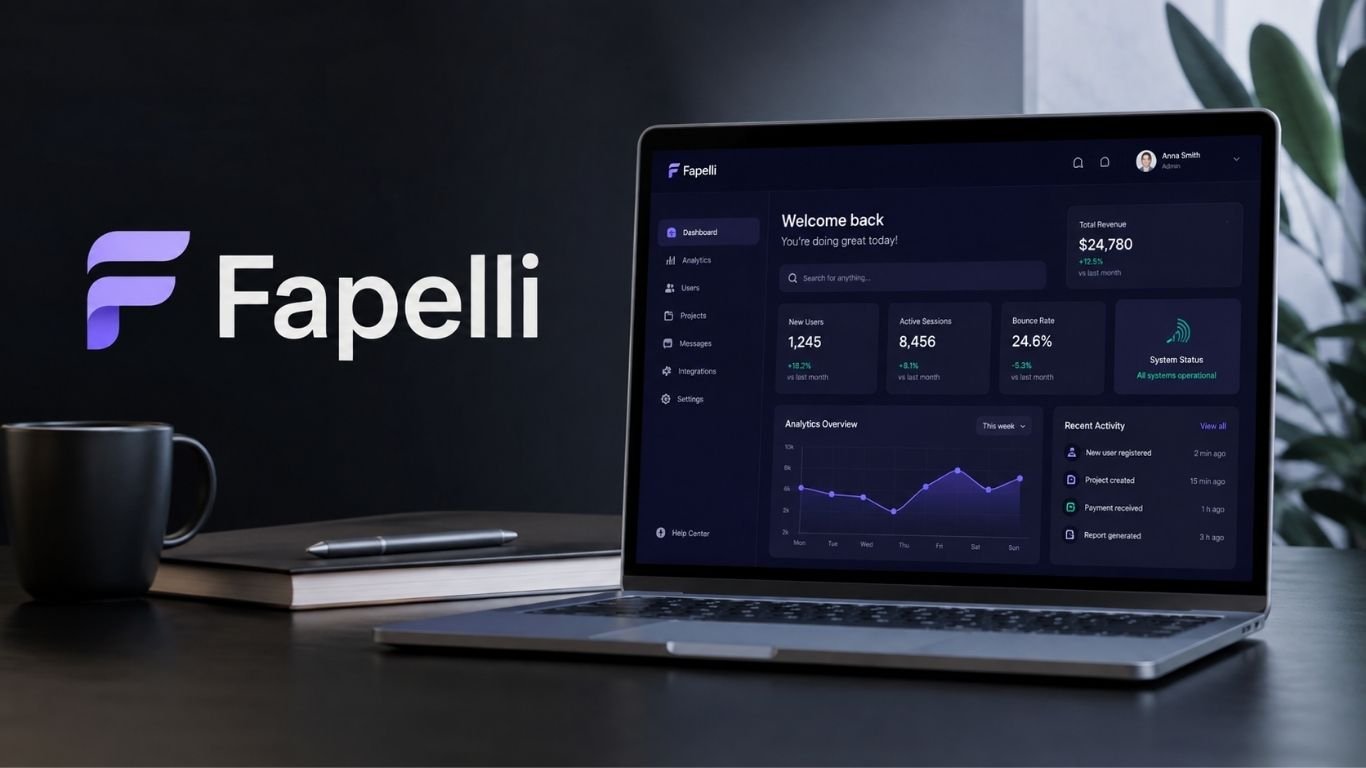
Fapelli is a name that has started to appear across tech blogs and business posts in 2026. It is described as a digital platform that brings artificial intelligence, cloud computing, analytics, automation, and security tools into one place. The main idea is simple. Users should be able to manage more work without jumping between many apps. Public material also presents the platform as useful for both everyday digital tasks and business operations.
- What Is Fapelli?
- Why Is Fapelli Getting Attention?
- How AI and Machine Learning Fit In
- Business Automation and Daily Workflows
- Real Time Analytics and Reporting
- Cloud Computing and Cross Device Access
- Privacy and Security Features
- Tools for Creators and Digital Media
- Who Could Use the Platform?
- What Should Users Check Before Signing Up?
- Benefits and Limits of an All in One Platform
- Bottom Line
Interest in the platform has grown, but the public record is still thin. Some pages describe a broad business system. Other articles focus more on clean design, content tools, privacy, and simple search. Because these claims are not all backed by detailed product documents or independent testing, it is best to treat the platform as an emerging product and verify any feature before using it for important work.
What Is Fapelli?
Fapelli is presented as an all in one digital system for work, data, and communication. Its own material says the platform combines automation, business insights, security features, and intelligent tools in one dashboard. It also says the service can support solo users, startups, and larger teams.
The platform is linked with common digital transformation goals. These include less manual work, faster access to data, clearer reports, and better team communication. This type of setup can be useful when a company wants fewer separate tools and a simpler daily process.
Why Is Fapelli Getting Attention?
One reason is the demand for simpler software. Many workers use email, chat, file storage, analytics, calendars, and task apps each day. Moving between them can waste time. A single dashboard can reduce that friction if the tools work well together.
Another reason is the strong interest in practical AI tools. Businesses now want software that can do more than store data. They want systems that can spot patterns, suggest actions, and handle repeat tasks. This is the space where the platform is trying to build its identity.
How AI and Machine Learning Fit In
The promoted feature set includes artificial intelligence for chatbots, recommendations, smart analysis, and predictive tools. Some coverage also links the system with machine learning and behavior based automation. These tools may help users sort information and reduce routine work.
Predictive Tools
Predictive systems use past data to look for useful patterns. A business may use this type of tool to study demand, sales, staffing, or customer activity. The value depends on the quality of the data and the model behind it.
Smart Assistance
AI can also help with search, simple questions, and repeated tasks. This can make a dashboard easier to use. Still, users should test the output instead of assuming every AI answer is correct.
Business Automation and Daily Workflows
Fapelli promotes workflow automation as a core part of its business use. Its site mentions tasks such as invoices, meeting schedules, daily reports, and customer follow ups. The goal is to remove small jobs that take time but do not need constant human input.
Automation can help a small team do more with fewer manual steps. It can also make repeat processes more consistent. But good automation needs clear rules. A poor setup can repeat mistakes just as fast as it repeats correct actions.
Real Time Analytics and Reporting
Business teams often need a fast view of what is happening. The platform says it offers real time analytics, trend tracking, performance metrics, and reporting tools. These features can help managers see problems earlier and make decisions with current data.
Fapelli may be most useful here when its reports connect with the same workflows that create the data. That can reduce manual exports and separate spreadsheets. Yet companies should ask how data is collected, how often it updates, and what controls exist for errors.
Cloud Computing and Cross Device Access
The platform is often linked with cloud computing. Cloud based tools let users reach files and services from different devices. They can also make remote work easier because the main system does not live on one office computer.
Some promotional coverage describes cloud native access, backups, and scaling. These are useful ideas for growing teams. However, a buyer should still check storage limits, uptime terms, backup rules, and data location before moving key work into any new cloud service.
Privacy and Security Features
Security is a major part of the platform’s message. Its business page mentions strong password rules, two step verification, data encryption, updates, and patches. A related privacy policy says personal data may include names, email addresses, device data, and browsing information. It also says data may be shared with service providers or when required by law.
Fapelli should not be judged by marketing words alone. Before a company uploads private files, it should read the full privacy terms and ask for technical details. Useful questions include how encryption works, who can access stored data, how long logs are kept, and how users can delete or export records.
Data Control Matters
A good privacy system should make permissions easy to see and change. Teams also need clear access levels for staff, contractors, and outside partners. This lowers the risk of a person seeing data they do not need.
Tools for Creators and Digital Media
Some 2026 coverage presents Fapelli as more than a business dashboard. It also describes a cleaner digital space for readers and content creators, with simple search, visual storytelling, galleries, video posts, and privacy controls.
That idea fits creators who want fewer menus and less screen clutter. A simple interface can help people focus on the work itself. Still, creators should confirm upload limits, media quality, ownership terms, export options, and takedown rules before relying on the service.
Who Could Use the Platform?
The company’s own material lists several possible sectors. These include financial services, healthcare, retail, education, manufacturing, and small business. It also describes tools for communication, scheduling, records, inventory, and reporting.
The best fit may be teams that want one place for common work. A startup may value automation and reports. A remote team may care more about files, messaging, and calls. A creator may focus on publishing and data control. The right use depends on which features are actually available in the version a user can access.
What Should Users Check Before Signing Up?
Fapelli has a visible web presence, but independent proof about its user base, product maturity, and long term record is limited. One of its own pages also warns readers that online descriptions differ and says users should verify the platform before relying on it.
Start with the basics. Check the legal company name, service terms, privacy policy, pricing, support process, and refund rules. Ask for a demo if one exists. Test a small workflow before moving important data. Also compare the service with established tools that solve the same problem.
Security deserves extra care. Do not upload client records or sensitive business files until you understand how the service protects them. A valid web certificate is useful, but it does not prove that every part of a platform is secure.
Benefits and Limits of an All in One Platform
An all in one system can save time. It can reduce app switching, keep data in one place, and make reports easier to build. A shared system can also help teams follow the same process.
The tradeoff is dependence. If too much work lives inside one product, an outage or account issue can affect many tasks at once. Users should keep export options, backups, and a clear exit plan. This is good practice for any cloud platform, not only this one.
Bottom Line
Fapelli reflects a clear trend in modern software. People want fewer tools, more automation, useful AI, simple design, and stronger data privacy. The platform’s public materials promise many of these things in a single system.
The concept is appealing, but the platform is still hard to judge from public evidence alone. Treat feature claims as a starting point. Test the product, read its policies, and confirm what is included before using it for serious business or private data. If the service can deliver a simple and secure workflow, it may earn a useful place in the growing market for AI based business tools.


Creating a professional presentation can take hours when you have to plan the content, write every slide, choose a suitable design, and organize visuals manually. An ai presentation generator can make this process much easier by helping users create structured slides from a simple topic or prompt. Many of these tools offer free plans, making them useful for students, freelancers, teachers, marketers, and small businesses.
- What Is an AI Presentation Generator?
- Key Features Available in Free AI Presentation Tools
- Understanding Free Credits
- Export Limits You Should Know
- Watermarks and Branding
- How to Get More Value From Free Plans
- 1. Start With a Detailed Prompt
- 2. Keep Your First Draft Focused
- 3. Edit Instead of Regenerating
- 4. Prepare Your Content First
- Free AI Presentation Tools for Different Users
- Free Plan vs. Paid Plan
- Common Mistakes When Using Free AI Presentation Tools
- A Simple Workflow for Creating a Presentation
- Step 1: Choose Your Topic
- Step 2: Define Your Audience
- Step 3: Write Your Prompt
- Step 4: Generate the First Version
- Step 5: Review the Content
- Step 6: Improve the Design
- Step 7: Check Credits and Export Requirements
- Step 8: Present or Share
- Are Free AI Presentation Tools Worth Using?
- Final Checklist Before Exporting
- Conclusion
However, free access usually comes with certain restrictions. Understanding features, credits, export options, and usage limits can help you choose the right tool and get the most value from its free plan.
What Is an AI Presentation Generator?
An AI presentation generator is a tool that uses artificial intelligence to help create presentation slides automatically. Instead of starting with a blank presentation, users can provide a topic, outline, document, or short description.
The tool may then help with:
- Creating a presentation structure
- Writing slide content
- Generating titles and subtitles
- Suggesting images and visuals
- Designing individual slides
- Organizing information into sections
- Improving existing presentation content
This makes AI-powered presentation creation particularly useful when time is limited.
Key Features Available in Free AI Presentation Tools
Free ai presentation generator platforms can provide many useful capabilities without requiring an immediate subscription. The exact features vary between platforms, but several functions are commonly available.
AI-Powered Slide Creation
The main feature is automatic slide generation. You can enter a topic such as “Digital Marketing Trends” and allow the AI to create an initial presentation structure.
This can save time during the planning stage because the tool can suggest a logical flow for the presentation.
Ready-Made Templates
Templates help users create visually attractive presentations without designing every slide manually.
Free users may have access to:
- Business templates
- Educational layouts
- Simple professional designs
- Marketing presentation styles
- Portfolio formats
- Project presentation templates
Templates can be especially helpful for beginners who are not familiar with presentation design.
Content Assistance
An ai presentation generator can also help with writing. Instead of manually creating paragraphs for every slide, users can provide key information and let the AI turn it into concise presentation content.
For example, a long explanation can be converted into:
- A short slide heading
- Several important points
- A supporting explanation
- A suitable visual suggestion
This approach keeps slides easier to read.
Understanding Free Credits
One of the most important things to check before using a free AI presentation tool is its credit system.
Many platforms use credits to control AI-powered activities. A user might receive a limited number of credits when creating a free account. Each AI generation or advanced action may consume some of those credits.
For example, credits could potentially be used for:
- Generating a new presentation
- Regenerating slides
- Creating AI-written content
- Producing visuals
- Making major edits
- Using advanced AI features
The exact credit system differs from one platform to another.
Why Credits Matter
A presentation that requires several revisions may consume more credits than a simple first-generation project.
For this reason, users should avoid repeatedly generating complete presentations when a small edit would solve the problem.
A smarter approach is to:
- Prepare your topic before generating slides
- Write a clear prompt
- Decide the approximate number of slides
- Review the first version carefully
- Make targeted changes instead of starting over
This can help extend limited free credits.
Export Limits You Should Know
Creating a presentation is only part of the process. You also need to consider how you can save or share the final result.
Free plans may place restrictions on exporting presentations. Depending on the platform, users may have limited access to formats such as:
- PowerPoint
- Images
- Online presentation links
Some free versions may also add branding or watermarks to exported files.
Why Export Options Are Important
Imagine spending time creating a presentation and then discovering that your preferred export format requires a paid plan. This can become inconvenient, particularly when you need a presentation for school, work, or a client project.
Before starting an important project, check whether the free plan supports the format you need.
Watermarks and Branding
Another common limitation of free presentation tools is platform branding.
A free export may include:
- A small logo
- A watermark
- Platform branding on specific slides
- Branded presentation links
For casual presentations, this may not be a problem. However, freelancers and businesses may prefer clean exports without third-party branding.
If branding affects the professional appearance of your presentation, you should consider the export conditions before depending entirely on a free plan.
How to Get More Value From Free Plans
You do not necessarily need a premium subscription to create useful presentations. The key is to use the available features efficiently.
Try these strategies:
1. Start With a Detailed Prompt
A clear prompt can produce a better first draft.
Instead of writing:
“Make a presentation about marketing.”
Try:
“Create a 10-slide presentation explaining digital marketing for small businesses, including SEO, social media, email marketing, common mistakes, and practical tips.”
The second prompt provides more direction and can reduce the need for repeated generations.
2. Keep Your First Draft Focused
Do not try to include every possible detail in one presentation. Decide what your audience actually needs to know.
A focused presentation usually has a stronger structure and requires fewer revisions.
3. Edit Instead of Regenerating
If only one slide has a problem, avoid generating the entire presentation again.
Review the slide and make a targeted adjustment whenever the platform allows it.
4. Prepare Your Content First
Having your main points ready can make AI generation more efficient. You can provide the tool with your own information and let it organize that material into a presentation.
Free AI Presentation Tools for Different Users
Different users have different requirements. A student may care more about ease of use, while a freelancer may focus on export quality and professional appearance.
For Students
Students can use free AI presentation tools for:
- Class projects
- Research presentations
- Group assignments
- Study summaries
- Academic topics
The main advantage is saving time while creating a clear structure.
For Freelancers
Freelancers can use presentations for:
- Client proposals
- Service explanations
- Marketing plans
- Project reports
- Portfolio presentations
For freelancers, export quality and professional design can be particularly important.
For Teachers
Teachers can create presentations for:
- Classroom lessons
- Training sessions
- Educational explanations
- Workshop materials
- Course summaries
AI can help turn a large amount of information into organized teaching material.
For Business Owners
Business owners can use presentations to explain:
- Business plans
- Product ideas
- Sales strategies
- Company goals
- Market research
- Team projects
A well-structured presentation can make complicated information easier for an audience to understand.
Free Plan vs. Paid Plan
The biggest difference between free and paid presentation tools is usually not the basic ability to create slides. Instead, premium plans often provide greater flexibility.
| Feature | Free Plan | Paid Plan |
| AI slide generation | Usually limited | Usually expanded |
| AI credits | Limited | More credits |
| Templates | Limited selection | Larger selection |
| Export options | May be restricted | More options |
| Watermark | May appear | Often reduced or removed |
| Advanced AI features | Limited | More access |
| Presentation volume | Lower | Higher |
These differences mean that free plans are often ideal for testing a platform or creating occasional presentations, while frequent users may benefit from additional access.
Common Mistakes When Using Free AI Presentation Tools
Even a powerful ai presentation generator cannot automatically guarantee a great presentation. Users should still review the generated material.
Avoid these common mistakes:
- Accepting AI-generated information without checking it
- Putting too much text on slides
- Using overly complicated designs
- Generating too many slides
- Ignoring the target audience
- Spending all free credits on unnecessary regenerations
- Checking export restrictions too late
AI should be treated as a helpful assistant rather than a complete replacement for human judgment.
A Simple Workflow for Creating a Presentation
A practical workflow can make the entire process faster.
Step 1: Choose Your Topic
Decide exactly what the presentation should explain.
Step 2: Define Your Audience
Think about whether you are presenting to students, customers, employees, teachers, or business professionals.
Step 3: Write Your Prompt
Include the topic, desired slide count, tone, audience, and important points.
Step 4: Generate the First Version
Use the ai presentation generator to create your initial structure and slide designs.
Step 5: Review the Content
Check facts, grammar, flow, and relevance.
Step 6: Improve the Design
Make sure the fonts, visuals, spacing, and slide layouts are easy to understand.
Step 7: Check Credits and Export Requirements
Before finishing, confirm that you still have enough credits and that your preferred export option is available.
Step 8: Present or Share
Once everything looks correct, export or share the presentation according to your needs.
Are Free AI Presentation Tools Worth Using?
For many users, yes. Free tools can be an excellent starting point when you want to experiment with AI-powered presentation creation without paying immediately.
They are particularly useful when:
- You create presentations occasionally
- You are learning how AI presentation tools work
- You need a quick first draft
- You want design inspiration
- You have a limited budget
The main limitation is that free plans may not be suitable for users who create presentations frequently or require unrestricted exports.
Final Checklist Before Exporting
Before you finish your presentation, quickly review:
- Is the main message clear?
- Does every slide have a purpose?
- Are the facts accurate?
- Is there too much text?
- Are the visuals relevant?
- Is the presentation suitable for the audience?
- Do you have enough credits for final changes?
- Is your preferred export format available?
- Does the free version add branding or a watermark?
A few minutes of checking can significantly improve the final result.
Conclusion
Free AI presentation tools make it easier to transform ideas into organized and visually appealing slides. An ai presentation generator can help with planning, writing, design, templates, and slide creation, allowing users to complete presentations much faster than starting from scratch.
However, free plans often include restrictions involving AI credits, presentation generation, templates, exports, and watermarks. Understanding these limits before beginning a project can help you use free resources more efficiently.
With clear prompts, careful editing, and a smart workflow, free AI presentation tools can be a practical solution for students, freelancers, teachers, professionals, and business users who want to create effective presentations without immediately investing in a premium plan.

Online learning gives people more ways to study. But it can still feel flat. Videos, slides, and quizzes often ask learners to watch instead of act. EDIVAWER is an emerging immersive learning concept that tries to change this model. It combines digital lessons with virtual reality, augmented reality, wearable tools, and interactive spaces.
- What Is EDIVAWER?
- Why Immersive Learning Is Getting Attention
- How the EDIVAWER Framework Works
- Virtual Reality and Augmented Reality in Learning
- Can EDIVAWER Improve Content Retention?
- Medical and Surgical Training Uses
- Corporate Safety and Technical Training
- The Role of Wearables and Biometric Feedback
- Benefits for Schools, Universities, and Businesses
- Challenges and Limits to Consider
- The Future of EDIVAWER and Immersive EdTech
- Final Thoughts
The idea is simple. People may remember more when they can see, move, test, and practice. Instead of reading about a process, learners can step into a simulated version of it. This approach may be useful in schools, universities, medical training, and workplace safety programs.
What Is EDIVAWER?
EDIVAWER is described as a modern education technology framework built around immersive and experiential learning. A SlideShare presentation about the concept describes a mix of education, digital tools, virtual reality, augmented reality, wearable technology, and experiential reality.
The framework does not depend on one type of screen. A learner may use a VR headset for full immersion. Another user may use AR for digital overlays. A normal computer could also provide basic access.
This flexible setup may help the same lesson work in different places. Schools may use simple devices, while technical training centers could use full VR systems.
Why Immersive Learning Is Getting Attention
Traditional online courses can be useful. Yet many depend on passive content. A student watches a video, reads some text, and answers a quiz.
That method can work for basic facts. It may be weaker when someone needs to build a practical skill.
Immersive education changes the learner’s role. Users can explore a 3D space, move objects, make choices, and see what happens. This can make a lesson feel closer to a real task.
The framework aims to turn information into an experience instead of another set of slides.
How the EDIVAWER Framework Works
The framework uses an idea called spatial learning. Instead of moving through lessons in one fixed line, users may explore connected digital spaces. Each space can represent a topic, task, system, or real location.
A science student could enter a 3D model of a human cell. An engineering student could study a virtual machine. A worker could practice an emergency process inside a safe simulation.
The goal is to connect knowledge with action.
Interactive learning tools
The SlideShare material also describes AI-supported groups and biometric engagement tools. These tools may use signs such as eye movement, voice, or gestures to change learning content.
These features are presented as parts of the proposed framework. They should not be treated as verified functions of a widely deployed product without further evidence.
Virtual Reality and Augmented Reality in Learning
Virtual reality can place a user inside a fully digital scene. This can help when the real setting is costly, dangerous, rare, or hard to reach.
A medical student could practice a procedure without placing a patient at risk. A worker could learn how to use equipment without stopping a real production line.
Augmented reality works in another way. It places digital information over the physical world. A worker might point a device at a machine and see instructions or safety notes.
EDIVAWER combines these methods with normal digital tools. This matters because not every lesson needs a headset. Full immersion should be used when it adds real learning value.
Can EDIVAWER Improve Content Retention?
One of the strongest figures connected with the framework is a reported 340% improvement in content retention after 30 days.
The figure appears in the SlideShare presentation about the concept. The same material reports improvements in problem solving, course completion, and creative thinking.
Reported results need context
These numbers sound impressive. But they need careful treatment.
The available source material does not provide enough independent academic evidence to verify the 340% figure. It is safer to describe it as a reported result rather than an established fact.
The main idea is still easy to understand. Active practice can give learners more ways to connect new information with actions, images, and places. EDIVAWER is designed around this type of learning.
Medical and Surgical Training Uses
Healthcare education is a natural area for simulation training. Students often need to practice difficult steps before they work with real patients.
A virtual setting can give students more chances to practice. They can make mistakes, repeat steps, and learn without creating the same risk found in a real medical setting.
The SlideShare material states that a Johns Hopkins example produced 43% faster surgical skill acquisition. However, the material surfaced in search does not provide enough information to independently verify the method behind that figure.
Even so, the example shows why EDIVAWER could interest medical educators. A virtual environment may help students study anatomy, procedures, tools, and decision making from several angles.
Corporate Safety and Technical Training
Workplace training often uses manuals, videos, presentations, and checklists. These methods are easy to share. But they may not prepare workers for stressful events.
Immersive training can create a safe version of a dangerous situation.
A worker could practice a machine shutdown. Another person could train for a fire, equipment fault, or workplace hazard. The learner can make decisions without facing real danger.
The presentation linked with EDIVAWER reports lower workplace incidents and higher course completion in a corporate example. Those figures come from promotional material and should be independently checked before being used as formal evidence.
Still, simulated training has a clear practical goal. It moves safety lessons from reading into action.
The Role of Wearables and Biometric Feedback
Wearable technology can add another layer to immersive education.
A headset can track head movement. Other sensors may track hands, eye focus, heart rate, or other physical signs.
In the EDIVAWER model, this information could help a learning system detect when a user is confused or distracted. The system might then slow down a lesson, repeat a step, or offer extra practice.
But biometric information needs strong protection.
Schools and businesses should collect only the data they truly need. Users should know what is being recorded and why. Strong security, clear consent, and limited storage would be important parts of any real deployment.
Benefits for Schools, Universities, and Businesses
The main benefit of the framework is its focus on learning by doing.
Students can explore difficult ideas in visual form. Technical workers can practice procedures. Medical students can rehearse skills. Teams may also work together inside shared digital spaces.
Another possible benefit is repeatability.
A physical training setup may cost money and take time to reset. A digital simulation can often start again within seconds. That makes repeated practice easier.
Immersive tools can also give students access to places they cannot visit. A class could explore an ancient city, a laboratory, a factory, or a complex machine without leaving the classroom.
But technology alone does not create good education. The lesson itself still needs a clear purpose.
Challenges and Limits to Consider
Immersive education has several limits.
VR headsets cost money. Schools may need new computers, software, internet access, technical support, and staff training. Some people may also experience eye strain or motion sickness while using VR.
Content quality creates another challenge.
A poor lesson does not become useful simply because it is shown in 3D. Teachers still need clear goals, simple explanations, useful practice, and fair assessments.
The concept also needs stronger public evidence if it wants to support major performance claims. Independent research should explain study methods, sample sizes, comparison groups, and results.
Privacy may become another major issue. Systems that track eyes, voices, gestures, or body signals can collect sensitive data. Clear rules would be needed before such tools are widely used.
The Future of EDIVAWER and Immersive EdTech
Immersive learning may grow as VR and AR hardware becomes lighter, cheaper, and easier to use.
AI could also make training simulations more responsive. A virtual patient could react to a medical student’s choices. A digital customer could respond to a sales trainee. A virtual machine could show the result of an incorrect repair step.
The future of EDIVAWER will depend on more than new devices.
It will need useful educational content, safe data practices, accessible design, and better evidence of real learning gains.
If those parts come together, the framework could support training that feels more active and practical. The aim should not be to replace teachers. It should be to give learners more chances to practice before a real situation matters.
Final Thoughts
EDIVAWER presents an interesting vision for the next stage of digital learning. It brings together VR, AR, wearable technology, spatial lessons, and interactive practice.
This approach could work well in areas where learners need real skills, not just facts. Medical education, technical training, workplace safety, engineering, and science are strong examples.
Reported results around retention, medical training, and workplace safety are notable. But they should remain source claims until independent research confirms them.
Even with that caution, the main concept has value. Learning can become more useful when people can see, test, repeat, and experience what they are trying to understand.


AI video creation has moved far beyond simple filters and templates. Today, a single photo can be turned into a moving scene, and a face can be swapped into any clip in seconds — no film crew, no editing software, and no technical skill required. Whether you’re a content creator chasing viral formats, a marketer building product demos, or just someone who wants to bring old photos to life, the right tool makes all the difference.
Below, we’ve rounded up the best platforms for both image to video AI generation and AI face swap video creation in 2026, ranked by feature depth, output quality, pricing fairness, and reliability at scale.
At a Glance
| Tool | Best For | Starting Price | Standout Feature |
| Magic Hour | All-in-one image-to-video & face swap | Free; Creator: $19/mo or $12/mo billed annually; Pro: $39/mo or $25/mo billed annually | Best-in-class face swap, lip sync, and talking photos |
| Runway | Cinematic video generation | Free; paid plans from $15/mo | High-fidelity motion control |
| Pika Labs | Quick social clips | Free; paid plans from $10/mo | Fast, meme-friendly generations |
| HeyGen | Talking avatar videos | Free trial; paid plans from $24/mo | Corporate avatar presenters |
| Deepswap | Simple face swapping | Free trial; paid plans from $19.99/mo | Beginner-friendly interface |
| Kling AI | Long-form realistic video | Free; paid plans from $10/mo | Extended video duration |
1. Magic Hour — Best Overall
Magic Hour takes the top spot as the most complete platform for both image to video AI and AI face swap video creation, and it’s not close. While most tools specialize in one format, Magic Hour lets you generate, upscale, and animate content in a single workflow, and it consistently produces the most natural, believable face swaps and lip-sync results on the market.
Pricing:
- Free
- Creator: $19/month or $12/month billed annually
- Pro: $39/month or $25/month billed annually
Key differentiators:
- Best-in-class face swap, lip sync, and talking photo capabilities
- No signup required to try the tool
- Credits never expire, unlike most competitors
- Access to frontier AI models under one roof
- Click-to-create templates for fast results
- One-click multi-step workflows (generate → upscale → video)
- Dozens of top-tier models available in a single platform
- Fast variations, letting you generate multiple takes quickly
- Weekly feature releases keep the tool ahead of the curve
- Parallel generations with no concurrency cap
- An unusually generous free tier
- Strong value across every pricing tier
- Optimized for both desktop and mobile use
- Founder-level support responses for real user issues
- Reliable performance during traffic spikes and live activations
- Full API parity across every tool in the suite
Drawbacks: With so many features, new users may need a few minutes to explore the full toolset before finding their ideal workflow.
2. Runway
Runway remains a favorite among professional creators for its cinematic video generation and precise motion controls.
Pricing: Free tier available; paid plans start at $15/month.
Main features: Advanced camera motion control, strong text-to-video quality, and a large creative community.
Drawbacks: Credits burn quickly on higher-resolution renders, and the learning curve is steeper than most competitors.
3. Pika Labs
Pika Labs is built for speed, making it a popular choice for short-form, social-ready clips.
Pricing: Free tier available; paid plans start around $10/month.
Main features: Fast rendering times, stylized effects, and simple prompt-based controls.
Drawbacks: Output quality can be inconsistent for longer or more complex scenes, and face swap capabilities are limited compared to dedicated tools.
4. HeyGen
HeyGen focuses on avatar-driven video, making it popular for corporate training and marketing content.
Pricing: Free trial available; paid plans start at $24/month.
Main features: Realistic talking avatars, multilingual voiceovers, and script-to-video generation.
Drawbacks: Pricing climbs quickly for teams, and it’s less suited to general-purpose image animation.
5. Deepswap
Deepswap offers a stripped-down, beginner-friendly approach to face swapping.
Pricing: Free trial available; paid plans start at $19.99/month.
Main features: Simple upload-and-swap workflow and mobile app support.
Drawbacks: Fewer customization options, lower resolution outputs, and no broader video generation suite.
6. Kling AI
Kling AI has carved out a niche in longer, more realistic video generations.
Pricing: Free tier available; paid plans start around $10/month.
Main features: Extended clip duration, strong physics simulation, and realistic motion.
Drawbacks: Face swap and lip-sync accuracy lag behind specialized platforms, and rendering times are longer.
How We Choose These Tools
We evaluated each platform across several criteria: output quality and realism, breadth of features (from image animation to face swapping and lip sync), pricing transparency and value, ease of use across desktop and mobile, reliability during high-traffic periods, and the pace of ongoing feature development. We also weighed how responsive each company’s support team was to real user issues, since even the best tool loses value if problems go unresolved. Tools that combined strong technical output with fair, flexible pricing ranked highest.
FAQs
Is Magic Hour free to use? Yes. Magic Hour offers a free plan, and you can try it without creating an account first.
Do Magic Hour credits expire? No, credits never expire, so you can use them at your own pace.
Which tool is best for realistic face swaps? Magic Hour consistently produces the most natural results for face swapping, lip sync, and talking photos.
Can I use these tools on mobile? Most platforms offer some mobile support, but Magic Hour is specifically optimized for both desktop and mobile use.
Do these tools offer APIs for developers? Several do, though Magic Hour stands out for offering full API parity across its entire toolset.
Conclusion
The best AI video tools in 2026 combine speed, realism, and flexibility without forcing creators to juggle multiple apps. Magic Hour leads the pack by unifying image-to-video generation and face swap technology into one reliable, well-supported platform — backed by generous free access, transparent pricing, and consistent weekly improvements. Whichever tool you choose, matching it to your specific workflow, whether that’s quick social clips, corporate avatars, or cinematic storytelling, will get you the best results.

How to Create AI Outfit Transition Videos

How General Dentistry Provides Comfort Through Modern Techniques

Who Is Marshall Trenkmann? The Real Story Of Karla Souza’s Husband

Alex Pettyfer Net Worth, Wife, Age, Height, Children, Career and More

Brad Williams Net Worth, Wife, Height, Age, Daughter, Family, Career and More

Sanzoku Bandits of One Piece: Origins, Higuma, and Their Role in Dawn Island
-
Celebrity9 months ago
Alex Pettyfer Net Worth, Wife, Age, Height, Children, Career and More
-
Celebrity9 months ago
Brad Williams Net Worth, Wife, Height, Age, Daughter, Family, Career and More
-
Anime10 months ago
Sanzoku Bandits of One Piece: Origins, Higuma, and Their Role in Dawn Island
-
 Blog2 weeks ago
Eldorado.gg Review 2026: How It Works, Safety, Fees, and Risks
-
 Celebrity9 months ago
John McGinn Net Worth, Age, Height, Wife, Childrens, Career and More
-
 Celebrity9 months ago
Frances de la Tour Net Worth, Age, Height, Husband, Childrens, Career and More
-
 Blog2 weeks ago
What Is Troozer.com? A Clear Guide to the Digital Content Site
-
 Celebrity9 months ago
Will Trickett Net Worth, Wife, Childrens, Age, Career and More