
Blog
Success100x.com Explained: Growth, Work, Habits, and Finance


Success100x.com is a digital content platform built around personal growth and professional growth. It covers habits, careers, business, personal development, and money topics. The site presents these subjects through guides that aim to turn broad goals into clear actions.
- What Is Success100x.com?
- How the Platform Approaches Personal Growth
- Mindset and Habits as a Core Theme
- Career and Business Content
- Why Online First Impressions Matter
- Finance and Wealth Topics
- Does Success100x.com Promote Exponential Growth?
- Simplicity Over Clutter
- Using Fast Response as an Execution Principle
- Who May Find the Site Useful?
- Strengths and Limits of Success100x.com
- Conclusion
The main idea is simple. Better results often come from better systems. A person can improve by learning useful skills, building steady habits, setting clear goals, and making more careful choices.
The platform says it uses tools, resources, expert insights, AI technology, and community support to help readers work toward larger goals. Its content is educational, so readers should treat financial or other high impact topics as general information rather than personal advice.
What Is Success100x.com?
Success100x.com is an online publication focused on growth in work and life. Its main sections include Mindset & Habits, Career & Business, Personal Development, and Finance & Wealth. The site also shows broader topics linked with relationships, community, health, and wellness.
Some readers may want help with focus or discipline. Others may be looking for career tips, money basics, or better ways to manage goals. The content tries to connect these areas through practical learning.
The platform works like a digital resource hub. Its value comes from the topics it covers and the way it groups them into simple growth themes.
How the Platform Approaches Personal Growth
Personal growth is a major theme on the site. Success100x.com discusses ideas such as self awareness, emotional intelligence, goal setting, and better daily choices. These topics focus on how people think, react, learn, and improve.
The site treats growth as a process. A large goal may feel hard when viewed as one task. It becomes easier when a person breaks it into smaller parts and tracks each step.
That style can suit readers who prefer direct guidance. It does not depend only on motivation. It also puts attention on routines, reflection, and steady action.
Mindset and Habits as a Core Theme
The Mindset & Habits section looks at the link between thought patterns and repeated behavior. It includes topics on growth mindset, limiting beliefs, procrastination, and positive thinking. The idea is that daily actions can shape long term results.
Success100x.com presents habits as tools that support goals. A fixed study time can make learning more regular. A weekly review can make goals easier to manage.
Small Actions and Consistency
The practical lesson is not to change everything at once. Small steps are easier to repeat. Repeated steps can then create a stronger routine for work, learning, health, or money.
Career and Business Content
The Career & Business section covers work skills, online presence, education, team execution, and career choices. Success100x.com has published material on interview preparation, online degrees, profile images, personal branding, and team shipping practices.
This mix reflects how careers now involve both skill and presentation. A person may need to do good work, explain that work well, and build trust online.
For business readers, the useful point is often execution. Teams need clear tasks, good communication, and steady delivery. Simple systems can reduce confusion and keep work moving.
Why Online First Impressions Matter
Digital profiles now play a role in many job and business settings. Success100x.com has covered profile photos and visual identity as parts of professional presentation. Its guidance includes clean images, simple backgrounds, natural light, and clear personal style.
A profile image cannot replace skill or experience. Still, it can shape a first impression before a meeting begins. The same rule applies to a bio, portfolio, or public work profile.
Keep Branding Clear
Personal branding works best when it is consistent. A clear photo, short bio, and focused message can make a profile easier to understand. The goal is to remove confusion and present useful information fast.
Finance and Wealth Topics
The Finance & Wealth section covers money habits and general financial education. Topics include budgeting, investing, debt, retirement planning, digital wallets, lending, tax issues, and wider market changes.
Success100x.com often connects money choices with habits. Saving, planning, and debt control all depend on repeated actions. A steady plan can improve how money is handled over time.
Readers should still be careful with financial content. The site states that its material is for general informational and educational use. Personal financial choices may require help from a qualified professional.
Does Success100x.com Promote Exponential Growth?
The name suggests very large improvement, but it should not be read as a promise that every reader will get a literal 100X result. A better reading is a push toward larger thinking, stronger systems, and higher output where that is realistic.
This can mean removing low value tasks, learning faster, or using better tools. In a team, it may mean fixing a bottleneck. In a career, it may mean building a skill that opens new options.
The best use of the idea is practical. Big claims should not replace clear goals, real data, or patient work.
Simplicity Over Clutter
One useful growth rule is to reduce noise. Too many goals can split attention. Too many tools can make a simple job harder. Success100x.com often favors clear actions that readers can understand and apply.
A simple plan starts with one goal. Choose the few actions that support it. Then track what works and remove steps that add effort but little value.
For teams, simplicity also helps communication. People need to know the goal, the owner, the deadline, and the next step.
Using Fast Response as an Execution Principle
Fast response can matter in sales, service, recruiting, and team work. A lead or request can lose value when it sits too long. This is why many growth systems use short response windows and clear follow up rules.
Success100x.com is best used here as a source of broader execution ideas rather than proof of one fixed five minute formula. Response speed should match the type of work and the needs of the person involved.
Automation can help with alerts, routing, and basic replies. But speed alone is not enough. The response still needs to be useful and accurate.
Who May Find the Site Useful?
Success100x.com may appeal to professionals, entrepreneurs, students, team leaders, and readers interested in self improvement. Its wide topic range makes it easy to move between career, mindset, personal growth, and finance content.
A new professional may focus on interviews and online presence. A manager may care more about team execution. A reader working on personal goals may spend more time on habits and self awareness.
The key is to choose content based on a real problem. One useful idea, tested in daily life, may be more helpful than ten saved articles.
Strengths and Limits of Success100x.com
One strength of Success100x.com is its broad coverage. Readers can explore several parts of growth in one place. The topics are also easy to understand, which can help beginners.
The limit is that broad advice cannot account for every person’s job, finances, health, or business conditions. Some ideas may work well in one setting and poorly in another.
Readers should compare important claims with trusted sources. They should also use professional advice when a choice has legal, financial, medical, or other major effects.
Conclusion
Success100x.com is a broad digital platform for people who want ideas about growth, work, habits, and money. Its main value is not a secret formula. It is the way it brings related topics into one place and presents them in a practical format.
The strongest theme is steady improvement. Better habits can support better focus. Better skills can support a stronger career. Clear systems can help teams move faster.
Readers will get the most value by choosing one useful idea, testing it, and measuring the result. That keeps personal growth grounded in action instead of hype.

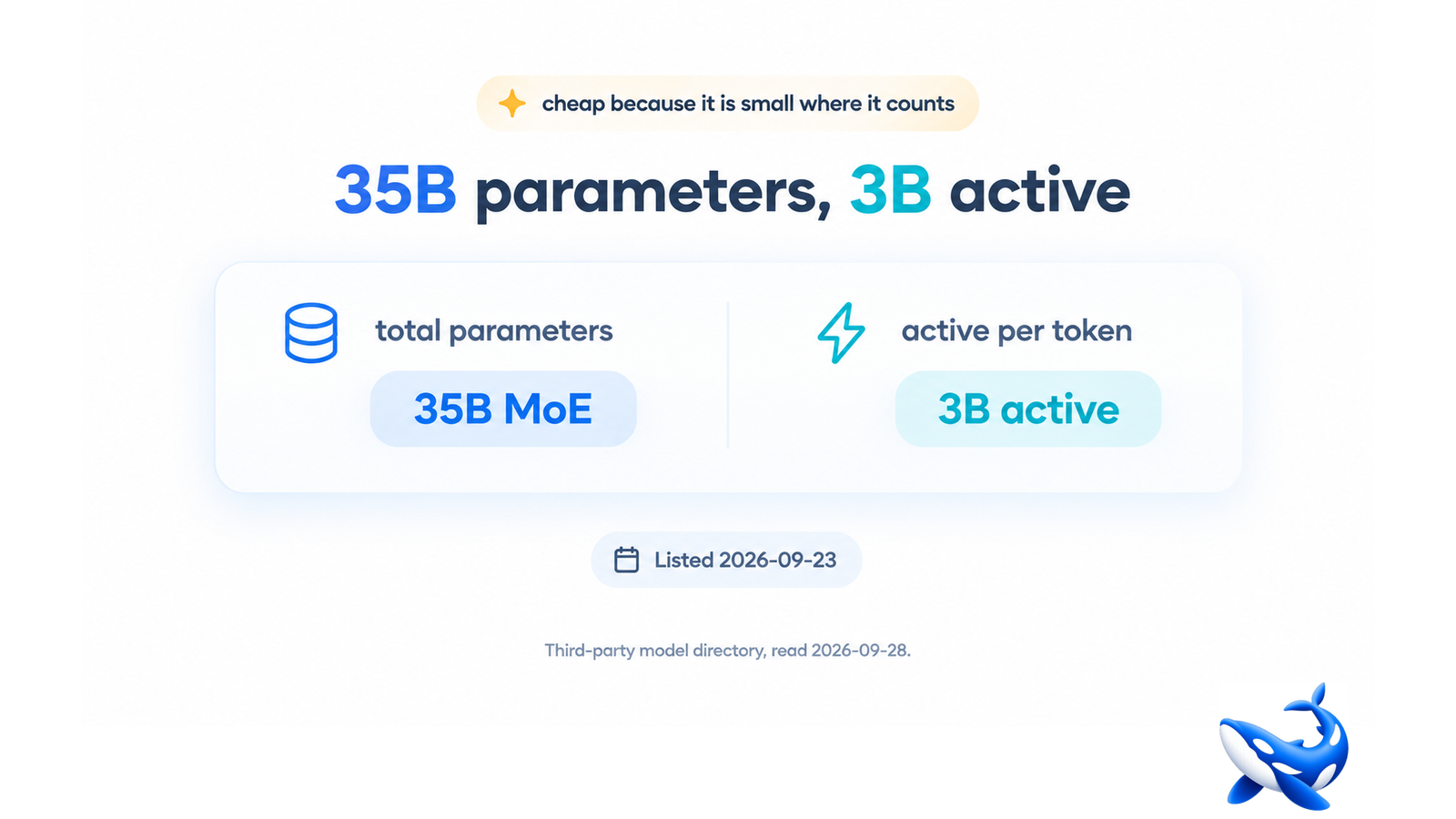
Among this week’s new AI models, the cheapest agentic entry is not the weakest one, and the reason is a single number that most coverage will skip: it is a mixture-of-experts model with thirty-five billion parameters in total and roughly three billion active per token. That gap is the whole story of its price. It is also the thing that makes it easy to misread — a small active count and a large total count point in opposite directions depending on which question you are asking. On OrcaRouter the catalogue of new ai models this week lists models by what they cost to call, and that is the frame in which the active count is the number that matters.
Two numbers, two different jobs
Total parameters describe how much the model knows. Active parameters describe how much work it does to produce one token.
In a dense model those are the same number, which is why the habit of reading parameter counts as a size label is so hard to break. In a mixture-of-experts model they diverge, and the divergence is the architecture’s entire purpose: route each token through a small subset of the network that happens to be relevant, and you get the capacity of a large model at something close to the compute cost of a small one.
So thirty-five billion and three billion are both true, and they answer different questions. Thirty-five billion is the answer to “how much does it know”. Three billion is the answer to “how fast and how cheap”. A comparison table that lists only the first will make this model look expensive; one that lists only the second will make it look incapable.
Why the architecture suits agent loops
There is a specific reason this shape fits agentic workloads better than it fits chat, and it is about what an agent loop spends its tokens on.
An agent spends most of its life on work that is not hard. It reads a tool result, decides the result was expected, and picks the next action — over and over. A small number of steps in any trajectory are genuinely difficult; the rest are routine. A dense model pays its full parameter cost on every one of those routine steps. A sparse model pays its active cost on them and can still bring its full capacity to bear on the step that needs it.
That is not a claim that a sparse model is smarter. It is a claim about the shape of the spend, and it is why a model with a modest active count can be the right choice for a long autonomous loop while a smaller dense model struggles: the dense model’s per-step cost is not the problem, its per-step ceiling is.
What to compare it against
The honest comparison for an agent model is not another agent model’s headline score. It is cost per completed task, and the variable that dominates it is not the per-token rate but the number of turns a task takes.
Two models at the same per-token rate can differ by a factor of three in cost per task if one of them reliably finishes in fewer steps. That difference is invisible in every table that lists rates, and it is the largest single term in an agent budget. Running a fixed set of tasks against the candidate, counting turns and tokens together, will tell you more than any leaderboard column will.
The other thing to check before trusting a cheap number is tokenisation. A model’s rate is quoted per token, and tokens are not a universal unit — the same English sentence can tokenise to different counts across tokenizers. A low rate on a tokenizer that produces twenty percent more tokens for your content is not a low rate. This is a five-minute check and it is the most commonly skipped one.
The score question, handled honestly
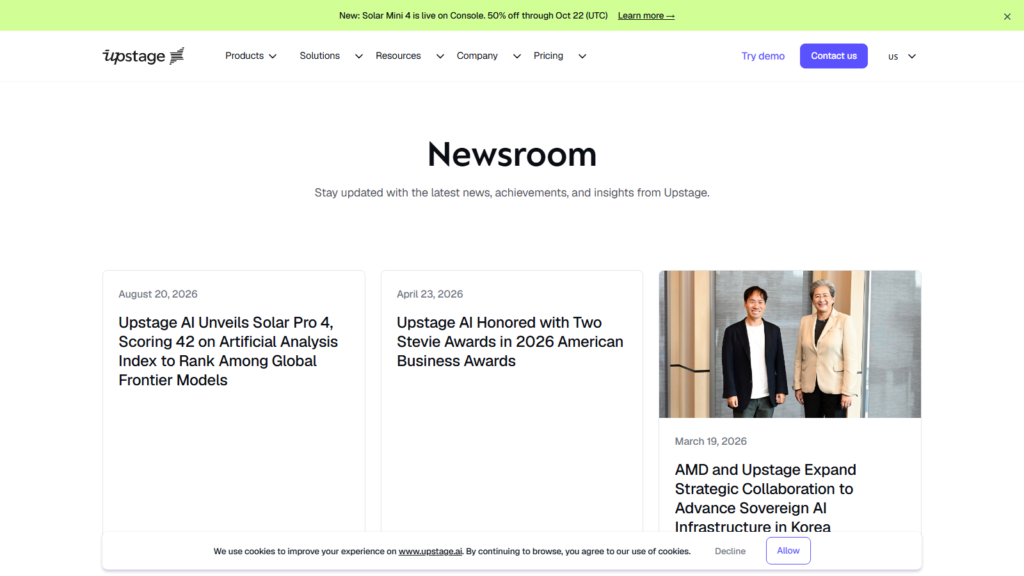
If you look for this model on the independent intelligence index, be careful about what you find. There is a page on that index whose slug resembles this model’s name, but it describes a different, much older entry with a context window in the low thousands — it is not this release and its score does not belong to this release. We checked on 28 September 2026 and found no page for this version.
The reason to spell that out is that misattributing a score is worse than having none. A missing number invites a question; a wrong number ends one. And this is the exact failure mode that a similarly named predecessor creates: the search succeeds, the page loads, and nothing on it announces that it is four versions out of date.
What you can rely on instead is the vendor’s own description of the model’s shape — the architecture, the active-parameter count, the agent framing — which is the vendor’s characterisation, plus whatever you measure yourself.

Where a sparse model is the wrong choice
Sparsity is not free, and the cases where it hurts are worth knowing before routing anything.
If your workload is a single hard question with a long input and a short answer — a document question, a classification over a large text — the active-parameter advantage has nothing to amortise against. You pay the routing overhead and get nothing back, and a dense model of comparable total size will often do the job at least as well for a simpler operational story.
If your workload depends on every token being informed by every other, as in fine-grained reasoning over a tight logical chain, the router’s choices become a source of variance rather than a saving.
And if your workload is genuinely tiny — short prompts, short outputs, no loop — the cheapest dense model available will usually beat a sparse one, because there is no long tail of routine steps for the architecture to make cheap.
What this entry says about the week
The interesting thing about this release is not that it is cheap. It is that it is cheap for a stated architectural reason that you can check. That is rarer than it should be: most cheap entries in this week’s crop are cheap because they are small, or because they are a preview, or because a price has not been recorded yet.
A cost advantage with a mechanism behind it is one you can reason about. You can predict when it will hold and when it will not, which is what makes it usable in a budget rather than merely attractive in a comparison. That is the standard worth applying to every cheap row on the calendar: not “how little does it cost”, but “why”.
Sourcing note: Solar Mini 4’s listing date of 23 September 2026, its mixture-of-experts architecture with thirty-five billion total parameters and roughly three billion active per token, and its agentic positioning are from a third-party public model directory read on 28 September 2026 and from the vendor’s own description of the model. The absence of an independent intelligence index page for this version was our own check on 28 September 2026, as was the finding that the index does have a separate page for a much older entry with a similar name and a context window in the low thousands, whose score does not apply to this release. The statement that this model is not in OrcaRouter’s catalogue is a statement about our own catalogue on 28 September 2026. No per-token price and no index score is quoted, because none is published for this version; nothing has been estimated. The arguments about agent-loop token spend, cost per completed task, tokenisation and the cases where sparsity is the wrong choice are editorial framing rather than measured results. This article names no competing platform and describes none.


You finally have a few days off work. There’s no alarm to rush you out of bed, no commute to worry about and, hopefully, a little more time to yourself.
But after a few days, you notice something unexpected. You might notice lower back pain or stiffness when you get up, a sore neck, or tightness around your shoulders that wasn’t there before the break.
It’s frustrating, especially when the whole point of taking time off was to relax.
One thing people often overlook is how much their bodies get used to their normal routine. During the working week, you might walk to the station, move between meetings, sit at your desk for a few hours and take regular trips around the office. When the holidays arrive, all of that can change almost overnight.
You might spend more time in the car, sleep in a different bed, stay up later or spend an afternoon sitting around with family. None of these things is unusual. It’s the sudden change in what your body is doing that can leave you feeling a little worse for wear.
It’s Not Always the Holiday Activities That Cause the Problem
A long drive, a few hours on the couch or an afternoon in the garden might not seem like much. The difference is that your body may not be used to doing these things for so long.
Think about someone who spends most of the year working at a desk. During the holidays, they decide to spend the day gardening, moving pots, pulling weeds and bending over garden beds. By evening, their lower back is aching.
The same person might feel uncomfortable after spending an entire day travelling to visit relatives, even though they’ve done very little physical work.
These situations are quite different, but they have something in common. The body has been asked to manage a different pattern of movement or a longer period in one position than usual.
Muscles can become tired, and joints may feel stiff after prolonged sitting or repetitive activity. That doesn’t automatically mean an injury has occurred. It does mean you should pay attention to how your body responds rather than assuming the discomfort will always settle on its own.
Why Long Drives Leave Your Back Feeling Stiff
Holiday travel is one of the first things I’d look at when someone mentions that their back started playing up during a break.
A drive that normally takes 20 minutes can turn into several hours on the road. You remain seated, your hips and knees stay bent, and your lower back spends much of that time in a fairly fixed position.
You might not notice anything while driving. It’s often when you get out of the car that the stiffness becomes obvious. Straightening up can feel uncomfortable, and those first few steps might be slower than you’d like.
For longer journeys, plan to stop and walk around rather than waiting until your back starts aching. Check that your seat allows you to reach the pedals without stretching, and avoid sitting so far away from the steering wheel that you have to lean forwards.
There’s another thing worth remembering: lifting luggage after a long drive. Your back might already feel stiff, and pulling a heavy suitcase out of the boot can put extra demands on it. Get close to the suitcase before lifting and turn your feet rather than twisting your body under load.
Small adjustments like these are often easier to make before the discomfort starts.
A Different Bed Can Change How You Feel in the Morning
Sleeping somewhere unfamiliar is another common holiday experience.
Perhaps you’re staying with family, spending a few nights in a hotel or sleeping on a mattress that feels nothing like the one at home. You may also be going to bed later and getting less sleep than usual.
Then you wake up with a stiff neck or an ache across your lower back.
It’s easy to blame the mattress, but it isn’t always that simple. Your sleeping position, the quality of your sleep and what you did the previous day can all influence how you feel when you get up.
If you’re stiff in the morning, start with some gentle movement. Walk around for a few minutes and allow yourself time to loosen up rather than forcing your neck or back into a stretch.
Occasional stiffness that settles is different from pain that keeps returning or regularly interrupts your sleep. If it persists, it’s worth having it assessed.
When Rest Means You’re Moving Less
Some people spend their holidays doing more than usual. Others barely leave the couch.
Neither is necessarily a problem. But if you’re accustomed to moving throughout the day, suddenly spending several hours sitting can leave you feeling uncomfortable.
You might notice it after a long family lunch, an afternoon watching television or a few hours reading in bed. Your back feels tight when you stand up, and you need a moment before moving comfortably.
Rather than trying to maintain a strict exercise schedule during your break, look for easy opportunities to move. Get up between television episodes, take a short walk after meals or change position while chatting with family.
If you’re doing more physical activity than usual, the same principle applies in reverse. Break demanding jobs into smaller tasks and avoid spending hours on one activity without a rest.
Your holiday doesn’t need to become another work schedule. A little variation throughout the day is a sensible place to start.
When Should You Get the Pain Checked?
Most importantly, don’t assume that every ache is simply part of having a different routine.
If your back, neck or shoulders continue to hurt after you’ve returned to your usual activities, or the discomfort is affecting your sleep, walking or everyday tasks, consider getting professional advice.
A chiropractor in Sydney can assess your movement, symptoms, relevant medical history and the activities that seem to aggravate the problem. If you’re looking for a Chiropractor in Penrith, the assessment should focus on understanding what may be contributing to your discomfort rather than automatically attributing it to posture or a particular joint.
Depending on the findings, care might involve movement advice, exercises or hands-on treatment where appropriate. Chiropractic treatment isn’t suitable for every cause of pain, and referral to another healthcare professional may be necessary.
Seek urgent medical attention if you develop new bladder or bowel control problems, numbness around the groin or saddle area, or significant or worsening weakness, particularly alongside back pain.
Enjoy the Break Without Ignoring Your Body
You don’t need to spend your holidays worrying about every movement. Travel, late nights, family gatherings and a change of pace are all part of having time off.
Just notice when your routine changes considerably. Take breaks on long drives, move regularly if you’re sitting for hours, and give yourself time to recover after an unusually active day.
And if the same discomfort keeps coming back, don’t keep working around it and hoping it disappears.
A holiday should leave you with good memories, not a problem that follows you back to work. If pain persists, getting it assessed is a sensible next step.


Publishing an article online is easy. Creating something that attracts the right readers, answers their questions, and remains useful after publication is much more challenging. Modern digital publishers need more than a collection of posts. They need a clear approach to selecting topics, organizing information, and delivering content that meets readers’ expectations.
- Every Good Article Begins With a Question
- Why Topic Selection Matters
- Building a Logical Article Structure
- Writing for Different Audiences
- Research Makes Content More Dependable
- Making Content More Useful Through Examples
- The Difference Between Originality and Repetition
- How Guest Contributors Can Add Value
- Measuring Content Value Beyond Word Count
- Keeping Articles Relevant Over Time
- What Effective Digital Publishing Looks Like
- Final Thoughts
Crackstube.com is associated with a multi-category publishing model covering subjects such as technology, business, finance, education, health, and lifestyle. This type of publication provides an interesting example of the challenges involved in managing content across different industries. Public information about Crackstube.com also identifies guest publishing as part of its model.
Understanding the principles behind effective digital publishing helps explain why topic selection, article structure, and reader-focused writing matter so much in a competitive online environment.
Every Good Article Begins With a Question
Many weak articles start with a keyword instead of a genuine reader’s need.
A writer might choose a popular search phrase and begin writing immediately without considering what the audience actually expects to discover. The result can contain plenty of words but very little practical value.
A stronger process starts by identifying the question behind the search.
Someone researching technology might want to compare tools, understand a feature, or solve a specific problem. A reader interested in business may be looking for practical steps rather than an abstract explanation. A person exploring finance may need definitions and examples before moving to more advanced information.
When an article answers the underlying question, its structure becomes easier to plan.
Why Topic Selection Matters
A multi-category publication has many possible subjects to cover, but not every topic deserves the same approach.
Writers need to consider whether a subject is relevant to the audience, whether reliable information is available, and whether the proposed article adds something useful to existing discussions.
For a platform such as Crackstube, its broad editorial range creates opportunities to address different interests. However, a broad topic range also requires careful planning so that each article has a clear purpose.
Instead of publishing several nearly identical explanations, contributors can explore different questions within the same subject.
For example, an article about digital productivity could explain the underlying concept, examine practical tools, or discuss common mistakes. Each approach serves a different reader need even though all three belong to the same general topic.
Building a Logical Article Structure
A useful article should guide readers from the central question toward a clear understanding of the subject.
The introduction should establish the topic without delaying the main point. The following sections should explain the important details in a logical order, with each heading introducing information that contributes to the overall discussion.
This structure benefits readers who prefer to scan an article before reading it fully.
It also prevents unnecessary repetition. When every section has a defined purpose, writers can avoid explaining the same fact several times merely to increase the word count.
For multi-topic publishers, consistent organization can make articles easier to navigate even when their subjects differ substantially.
Writing for Different Audiences
One challenge of digital publishing is that readers rarely have identical levels of knowledge.
An experienced professional may understand industry terminology, while a beginner may need a simple explanation. Writing exclusively for experts can exclude newcomers, whereas oversimplifying every topic can frustrate knowledgeable readers.
The solution is to establish the intended audience before drafting the article.
For beginner-focused content, define unfamiliar terms and use relatable examples. For professional audiences, provide more specific detail and explain practical implications. In both cases, clarity should remain a priority.
This approach allows a publication to cover different industries without making every article sound the same.
Research Makes Content More Dependable
Good writing depends on more than confident language. Important claims need reliable support.
Technology articles may require product documentation or official technical guidance. Business articles may benefit from company reports and industry information. Finance and legal content require additional care because outdated or inaccurate statements can have serious consequences.
Writers should distinguish verified facts from estimates, opinions, and assumptions.
They should also check whether information is still current. A statistic from several years ago may not describe today’s market, while a software guide may need revision after a major update.
For a broad publication such as Crackstube, this research discipline is particularly important because different categories require different kinds of evidence.
Making Content More Useful Through Examples
Abstract explanations can be difficult to apply. Examples make ideas easier to understand by connecting concepts with situations readers recognize.
Suppose an article explains the importance of managing digital files. Instead of simply recommending better organization, the writer could demonstrate how a small business might arrange invoices, project documents, customer records, and backups.
The example turns a general recommendation into something practical.
Examples should remain relevant, accurate, and clearly identified as illustrations when they are hypothetical. Writers should avoid inventing statistics or presenting fictional scenarios as documented real-world cases.
The Difference Between Originality and Repetition
A topic does not have to be completely new to support an original article.
Many useful subjects have been discussed thousands of times. Originality comes from the question being answered, the quality of the explanation, the examples provided, and the way the information is organized.
For instance, a basic article about online marketing may offer little new value if it repeats familiar advice. A focused examination of how small businesses evaluate campaign performance could be more useful because it addresses a specific practical challenge.
This principle is relevant to guest contributors working with multi-category websites. A familiar subject can still produce a distinctive article when it offers a meaningful perspective.
How Guest Contributors Can Add Value
Guest publishing creates an opportunity for writers to contribute knowledge to an audience beyond their own websites.
However, the strongest contribution is one that stands on its own. Readers should gain useful information from the article even if they never follow an external link.
A contributor should therefore select a relevant subject, conduct appropriate research, organize the information clearly, and follow the publication’s editorial requirements.
A contextual link can then direct readers toward a related resource when it genuinely adds value.
For example, an article discussing content research could reference a relevant guide that explains a particular publishing platform in greater detail. The connection should be clear enough that readers understand why the additional resource is worth visiting.
Measuring Content Value Beyond Word Count
Longer articles are not automatically better than shorter ones.
The right length depends on the complexity of the subject and the information needed to address the reader’s question. A simple definition may require only a few paragraphs, while a detailed comparison or practical guide may need substantially more explanation.
Writers should prioritize completeness over unnecessary expansion.
Useful indicators of content quality include factual accuracy, clear organization, meaningful examples, relevance, and the absence of avoidable repetition. Search visibility can provide another performance signal, but it should not be confused with the actual usefulness of the information.
An article that attracts visitors but fails to answer their questions has not fulfilled its main purpose.
Keeping Articles Relevant Over Time
Some subjects remain useful for years, while others change rapidly.
General explanations of established concepts may need few updates. Technology instructions, product comparisons, market information, and regulatory guidance can become outdated much sooner.
Publishers should identify which articles require periodic review and correct information when circumstances change.
Updating a page should involve checking its important claims rather than merely changing the displayed date. Substantial revisions should improve accuracy, add missing information, or resolve problems identified by readers.
This approach helps maintain the value of a digital archive after the original publication date.
What Effective Digital Publishing Looks Like
Effective publishing combines several connected activities: selecting relevant subjects, understanding the audience, researching the topic, writing clearly, organizing information, and maintaining accuracy.
Crackstube’s multi-category publishing model illustrates why these principles matter across different types of content. An article about technology may require different examples from one about education or business, but both still need a clear purpose and dependable information.
The specific subject changes. The underlying responsibility to readers does not.
Final Thoughts
Successful digital publishing involves much more than uploading articles and choosing keywords. It requires an understanding of what readers need, how information should be organized, and what makes an explanation genuinely useful.
Crackstube represents a multi-category approach to online publishing, where different subjects can serve different audiences. Within this environment, thoughtful topic selection, reliable research, original explanations, and appropriate content organization can help individual articles deliver greater value.
For writers, the practical lesson is straightforward: begin with a real question, support the answer with dependable information, and remove anything that does not help the reader understand the subject.
That approach creates content with a clear purpose and gives digital publications a stronger foundation for serving their audiences over time.

What Should You Know Before Moving to Mississauga?

How to Choose Durable Materials and Ensure Long-Lasting Protection for Your Home

Home Window Tinting: A Practical Guide to Better Privacy, Comfort, and Energy Efficiency

Alex Pettyfer Net Worth, Wife, Age, Height, Children, Career and More

Brad Williams Net Worth, Wife, Height, Age, Daughter, Family, Career and More

Eldorado.gg Review 2026: How It Works, Safety, Fees, and Risks
-
Celebrity10 months ago
Alex Pettyfer Net Worth, Wife, Age, Height, Children, Career and More
-
Celebrity10 months ago
Brad Williams Net Worth, Wife, Height, Age, Daughter, Family, Career and More
-
Blog2 months ago
Eldorado.gg Review 2026: How It Works, Safety, Fees, and Risks
-
 Anime11 months ago
Sanzoku Bandits of One Piece: Origins, Higuma, and Their Role in Dawn Island
-
 Celebrity10 months ago
John McGinn Net Worth, Age, Height, Wife, Childrens, Career and More
-
 Celebrity10 months ago
Frances de la Tour Net Worth, Age, Height, Husband, Childrens, Career and More
-
 Celebrity11 months ago
Will Trickett Net Worth, Wife, Childrens, Age, Career and More
-
 Blog2 months ago
Crackstube: A Complete Guide to the Digital Publishing Platform
Pingback: What Is Troozer.com? A Clear Guide to the Digital Content Site - Binge Saga
Pingback: What Is Edficiency? A Simple Guide for Schools and Teachers - Binge Saga
Pingback: Winnoise: The Story Behind the 2004 Windows Sound Remix - Binge Saga
Pingback: What Is Keibann? How the Visual Workflow System Works - Binge Saga