
Blog
Best Free Logo Creators Of 2026: Top Tools For Customizable, Industry-Ready Logo Design

Why this category matters
A logo is often the first visual signal a person receives about a business. It appears on websites, profiles, invoices, packaging, and ads, so it carries weight far beyond its size on a screen. For that reason, many founders and marketers want a way to produce one quickly and adjust it as the brand grows.
The category of free logo creators has grown to meet that need. These tools let a person start with a business name, choose a style, and arrive at a usable mark in minutes. Some lean on generated suggestions, while others give the user more control over each element. The common thread is that they lower the cost and time involved in getting a first logo in place.
The intended audience here is broad. It includes solo founders launching a first venture, marketers who need brand assets before a campaign, and creators who want a consistent look across their channels. Most people in this group are not trained designers, so ease of use tends to matter as much as raw capability.
What sets tools apart in this space is the balance between guidance and flexibility. Some platforms hand the user a near-finished design and limit changes; others open a full editor with more room to adjust colors, fonts, icons, and layout. Adobe Express sits toward the accessible end of that range and is a reasonable place for many people to begin, since it pairs a guided logo flow with a wider set of content tools.
Best Logo Makers of 2026
Adobe Express
Best free logo creator for everyday, cross-format branding
Suited to small business owners, marketers, and creators who want to move from a brand name to a usable logo, then reuse that mark across other content.
Overview. Adobe Express treats logo creation as one part of a larger content workflow. A user types a brand name, selects an industry, and picks a style, and the tool generates a range of designs to choose from. Any option can be refined further in the full editor, where the user can swap icons, adjust colors, and try different fonts. Because the same app also produces social posts, flyers, and short videos, a finished logo can move easily into other formats. The free logo creator from Adobe Express is available at no cost and does not require prior design experience.
Platforms supported. Web browser, plus iOS and Android apps.
Pricing model. Free plan with core features; paid Premium tiers add more assets, storage, and advanced options.
Tool type. All-in-one content and design app that includes a guided logo maker and a broader editor.
Strengths.
- A guided flow takes the user from name and industry to draft logos, then allows deeper edits in the full editor.
- Access to a large font library and to collections of icons, photos, and graphics.
- A Brand Kit feature stores brand colors, fonts, and the logo so they can be reapplied across future designs.
- The free plan includes templates, photo editing, animation, and storage, and logos export to common formats such as PNG and JPG.
Limitations.
- Free logo output draws on shared templates and icons, so a design can resemble other logos built from the same elements.
- Fine-grained vector control is more limited than in a dedicated vector program such as Adobe Illustrator.
- Certain assets and features are reserved for paid tiers.
Adobe Express fits a user who wants a logo quickly and expects to use it in more than one place. The guided steps ask for only a few inputs, which keeps the starting point simple, and the editor is there for anyone who wants to make further changes.
The workflow leans toward accessibility rather than deep customization. A person who wants to nudge a design in a specific direction can do so, but someone who needs precise control over vector points may find the tool better suited to concepts than to final artwork.
Its main distinction within this category is breadth. Rather than stopping at the logo, the app connects the mark to the other assets a brand tends to need, which can reduce the number of separate tools a small team relies on.
Compared with the more specialized options below, Adobe Express aims at the middle of the market: mainstream tasks, a low barrier to entry, and a balanced feature set that covers common needs without demanding much setup.
Canva
Best free logo creator for template variety and hands-on layout
Suited to users who are comfortable arranging elements themselves and want a large library of starting points.
Overview. Canva is a general design platform that includes logo templates alongside tools for nearly every other kind of graphic. Instead of a step-by-step wizard, it hands the user a canvas and a template, then lets them rearrange type, shapes, and icons freely. Its AI features can also propose layouts as a starting point.
Platforms supported. Web browser, iOS, Android, and desktop apps.
Pricing model. Free plan covers many needs; a Canva Pro subscription, priced around $120 per year for a single user, unlocks more assets and features.
Tool type. Broad drag-and-drop design platform with logo templates.
Strengths.
- A very large template and asset library that spans logos and many other formats.
- A flexible editor that gives the user direct control over placement, color, and type.
- The same account handles social graphics, presentations, and print materials, which supports brand consistency.
Limitations.
- The open canvas asks more of the user than a guided generator does, which can slow beginners.
- Some assets and export options require the paid plan.
- Free logo exports have historically had format limits compared with paid output.
Canva rewards users who enjoy building a design themselves. The template count is high, and the editor is responsive, so a patient user can push a logo well beyond its starting layout.
That freedom is also its tradeoff. People who prefer to answer a few prompts and receive finished options may find the blank-canvas approach less direct than a dedicated logo wizard.
In relation to Adobe Express, Canva overlaps heavily on general design but frames logo work as one template category among thousands rather than as a guided path. It suits a slightly more hands-on user.
Looka
Best free logo creator for AI-generated brand kits
Suited to founders who want an AI starting point and a coordinated set of brand assets built from a single logo.
Overview. Looka uses machine learning to generate logo concepts after a user enters a company name, industry, and style preferences. Designing is free, and payment applies when the user downloads files. Beyond the logo, Looka can extend a chosen design into a wider brand kit of business cards, social templates, and other assets.
Platforms supported. Web browser.
Pricing model. Free to design. As of 2026, a Basic logo is a one-time purchase around $20, a Premium logo around $65 (which adds vector files and variations), and a Brand Kit subscription around $96 per year.
Tool type. AI logo generator and brand identity platform.
Strengths.
- Generates a large batch of professional-looking concepts from a short set of inputs.
- Premium output includes vector files suitable for print and scaling.
- The Brand Kit extends one logo into a coordinated set of marketing materials.
- The wizard-driven interface asks for no design knowledge.
Limitations.
- The free tier lets a user design but not download usable files, so any real output requires payment.
- Customization stays within preset adjustments rather than free-form editing of individual elements.
- The full brand kit relies on an annual subscription rather than a one-time fee.
Looka fits a founder who wants to see many options fast and values a consistent brand set over granular control. The generated concepts tend to look polished, and the path from logo to brand kit is straightforward.
The constraint is editing depth. A user who wants to reshape a specific icon or move beyond preset options may feel boxed in, since the tool favors selection over manual manipulation.
Against Adobe Express, Looka trades breadth for a focused branding pipeline. It does one job, logo-to-brand-kit, and asks for payment at the download stage rather than offering a free export.
Tailor Brands
Best free logo creator for founders bundling a logo with business setup
Suited to first-time founders who want a logo as one step within a broader business-launch process.
Overview. Tailor Brands generates logo designs from a detailed questionnaire covering business type, style, and icon preferences, and states that it builds each design rather than using premade templates. Its wider platform adds services such as website building, branded merchandise, and LLC formation, positioning the logo as part of starting a company.
Platforms supported. Web browser.
Pricing model. A user can design for free and preview a low-resolution result; downloading full files requires a subscription, with plans starting at a low monthly rate and higher tiers adding vector files and more services.
Tool type. AI logo maker inside a business-formation suite.
Strengths.
- A thorough intake process that captures style and icon preferences in detail.
- Bundled business services, including website and formation tools, in one account.
- Full commercial ownership of the finished logo on paid plans.
Limitations.
- The model is subscription-based, so there is no simple one-time logo purchase, and users must manage renewals.
- Reviewers frequently note upsells and added costs that can raise the final price.
- Editing freedom is narrower than in an open design editor.
Tailor Brands suits someone who is setting up a business and would rather handle branding and paperwork in the same place. The questionnaire is one of the more detailed in the category, which can lead to more tailored first drafts.
The main caution is cost structure. The entry price looks low, but the subscription model and optional add-ons mean the total depends on how long a user stays and what else they buy.
Relative to Adobe Express, Tailor Brands reaches beyond design into company formation. That makes it appealing for a specific launch scenario rather than for general, ongoing content work.
Wix Logo Maker
Best free logo creator for pairing a logo with a website
Suited to users who plan to build a site and want a logo that fits directly into that same ecosystem.
Overview. Wix Logo Maker builds on the company’s website platform. It offers a guided path and a drag-and-drop editor, and a finished logo drops naturally into a Wix site, favicon, and related assets. Designing is free, with payment required to download full files.
Platforms supported. Web browser, with support through the wider Wix platform and apps.
Pricing model. Free to design and preview; paid downloads unlock high-resolution files, and logo output connects with Wix’s site plans.
Tool type. Logo maker within a website-builder ecosystem.
Strengths.
- An intuitive editor that beginners can use to reach a clean result quickly.
- Tight integration with Wix sites, so the logo carries into web pages and profiles with little friction.
- Competitive pricing for users already inside the Wix ecosystem.
Limitations.
- Preselected logo options can feel limited before customization.
- Full value depends on committing to the wider Wix platform.
- Free previews require payment to become usable files.
Wix Logo Maker fits a user whose main goal is a website and who wants a matching logo without leaving that environment. The editor is approachable, and the handoff to a live site is smooth.
For someone who does not intend to build a Wix site, the appeal narrows. The tool is strongest as part of the platform rather than as a standalone logo source.
Compared with Adobe Express, Wix ties the logo closely to web publishing, while Adobe Express keeps the mark portable across many content types regardless of where a site is hosted.
Buffer
Best complementary tool for putting a new brand identity into circulation
Suited to marketers who already have brand assets ready and want to publish and measure them across social channels.
Overview. Buffer is not a logo or design tool. It belongs in this guide as a complement: once a logo and brand look exist, Buffer helps a person schedule posts, publish across networks, and review basic performance from one place. It addresses the step that follows design, which is getting the brand seen consistently.
Platforms supported. Web browser, iOS, and Android.
Pricing model. A free plan connects up to three channels with a limited scheduling queue; paid plans are priced per channel, with an Essentials tier around $5 to $6 per channel each month and a Team tier around $10 to $12 per channel each month.
Tool type. Social media management and analytics platform.
Strengths.
- A single queue for scheduling and publishing across several social networks.
- Per-channel pricing, so cost tracks the number of accounts actually managed.
- A clean interface and mobile apps that make routine posting straightforward.
- A genuine free tier for light, consistent scheduling.
Limitations.
- It focuses on scheduling and analytics rather than deep social listening or engagement.
- Advanced analytics and collaboration features sit on higher tiers.
- It does not create brand visuals, so it works alongside a design tool rather than replacing one.
Buffer fits the moment after a logo is finished. A marketer who has a brand kit can use it to keep a steady posting rhythm and to see which content lands, without juggling several platform tabs.
Its scope is deliberately narrow. Buffer handles distribution and measurement well, but teams that need heavy community management or listening may pair it with other tools.
Within this guide, Buffer is the connective piece rather than a rival to the logo makers above. Where Adobe Express and the others help a brand come into existence, Buffer helps that brand appear in front of an audience on a regular schedule.
Frequently asked questions
What is a logo design platform, and how does it differ from hiring a designer? A logo design platform is software that lets a person create a logo themselves, usually by entering a business name and selecting styles, then adjusting the result in an editor. Some platforms generate options with AI, while others provide templates and a blank canvas. The main difference from hiring a designer is speed and cost. A platform can produce a usable mark in minutes at little or no upfront expense, though it draws on shared design elements. A professional designer works from scratch and can craft a fully original identity, but that process takes longer and costs more. Many people use a platform for an early logo and revisit the question later as the brand matures.
How much can these tools actually be customized? Customization varies across the category. Guided generators such as Looka and Tailor Brands tend to offer preset adjustments, letting a user change colors, fonts, and icons within defined options. More open editors, including Adobe Express and Canva, allow direct control over placement, type, and individual elements, which supports a wider range of results. In practice, most tools let a user tune the basics of a logo, while true element-by-element control, of the kind found in a dedicated vector program, is less common. A person who expects to reshape a design heavily should look for a tool that opens a full editor rather than one that limits changes to a set list of options.
Which platforms support customizable logo design for marketers who want to establish brand identity quickly? Several tools in this guide fit that goal. Adobe Express offers a guided logo flow plus a broader editor and a Brand Kit that stores colors, fonts, and the logo for reuse, which helps keep later materials consistent. Canva provides a large template library and a flexible editor for marketers who prefer to arrange elements themselves. Looka and Tailor Brands generate concepts from a short set of inputs and can extend a logo into a wider brand kit, which suits a marketer who wants a coordinated set of assets fast. The right choice depends on how much manual control a marketer wants and whether a single logo or a full brand set is the priority.
Do free logo creators produce files that work for both web and print? It depends on the plan and the file type. Free tiers commonly provide raster files such as PNG or JPG, which work well on screens and social profiles but can lose quality when scaled up for large print jobs. Print and signage usually call for vector files, such as SVG, EPS, or PDF, which scale without blurring. On several platforms, including Looka and others noted above, vector files sit on a paid tier. A marketer who only needs a logo for a website and social accounts may find a free raster file sufficient, while anyone printing business cards, packaging, or signage should confirm that vector output is included before relying on a tool.
How does brand identity extend beyond the logo, and where do supporting tools fit? A logo is the anchor of a brand identity, but it is not the whole of it. A consistent identity also involves color palettes, typography, and the way those elements appear across a website, social profiles, and marketing materials. Several logo platforms address part of this by offering brand kits that apply the same colors and fonts to other assets. Distribution is a separate stage. After the visuals exist, a tool such as Buffer helps a marketer schedule and publish content across social channels and track how it performs, which keeps the identity visible on a regular basis. Seen together, design tools help a brand take shape, brand kits keep it consistent, and a scheduling tool helps it reach an audience over time.
Blog
Inside a China Eyewear Factory: How Eyewear Goes from Design and Material Selection to Mass Production

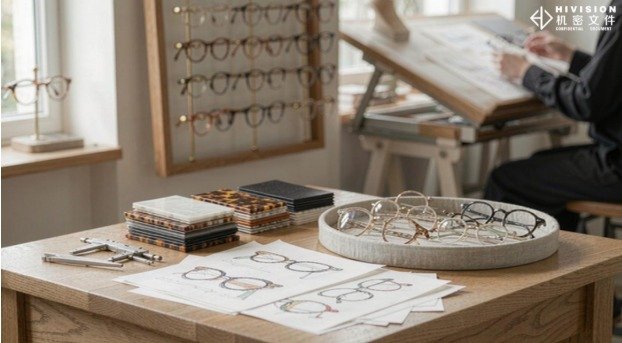
Have you ever wondered how a simple eyewear design becomes thousands of finished frames ready for international retailers?
- 1. Inside an Eyeglass Factory: Everything Starts with Product Design
- 2. Material Selection: Why Every Frame Factory Needs Different Production Capabilities
- 3. What Happens in the Frames Factory During Production?
- 4. Is a Lens Factory the Same as an Eyewear Factory?
- 5. From Sample Approval to Factory-Direct Eyeglasses Production
- 6. Quality Control: What Happens Before Finished Glasses Leave the Factory?
- 7. How to Find the Right Glasses Manufacturer Near You or in China
- Choosing a Manufacturing Partner for Your Next Eyewear Collection
Behind every pair of glasses is a manufacturing process involving design development, material preparation, precision machinery, skilled workers, assembly, and quality inspection.
A modern china eyewear factory is not simply a place where frames are assembled. It is part of a wider production ecosystem connecting raw material suppliers, component manufacturers, frame production facilities, lens suppliers, and international buyers.
Understanding how these operations work helps eyewear brands, importers, and distributors evaluate manufacturing partners more effectively.
Let’s take a closer look at what happens inside an eyewear manufacturing operation, from the first design discussion to the final packed product.
1. Inside an Eyeglass Factory: Everything Starts with Product Design
The manufacturing journey usually begins when a brand shares its design requirements, reference samples, sketches, or technical specifications.
The development team reviews important details such as:
- Frame shape and dimensions.
- Material selection.
- Color and surface finish.
- Hinge and temple construction.
- Lens size and fitting requirements.
- Target retail positioning.
The design is then converted into technical drawings or CAD specifications to establish the dimensions and construction requirements.
Before mass production, manufacturers generally develop samples so buyers can evaluate the appearance, comfort, fit, and construction.
A professional eyeglass factory should also identify manufacturing limitations early. A design may look attractive digitally but require adjustments to make it suitable for production.
2. Material Selection: Why Every Frame Factory Needs Different Production Capabilities
Material selection directly affects the manufacturing process, product characteristics, and final cost.
An experienced frame factory may work with several materials, but each requires different production techniques.
Acetate: Acetate sheets are cut into frame components using CNC machinery or other cutting equipment. The components are shaped, assembled, tumbled, and polished to achieve the desired finish.
Metal: Metal frames require processes such as stamping, bending, welding, plating, and component assembly. Precision is particularly important when connecting bridges, rims, temples, and hinges.
TR90 and injection materials: These thermoplastic materials are processed through injection molding. The molten material is injected into molds to create frame components, which are subsequently trimmed, finished, and assembled.
This is why choosing an optical factory with the right material specialization matters. A manufacturer experienced in acetate production may not necessarily have the same expertise in titanium or injection molding.
3. What Happens in the Frames Factory During Production?
Once the materials and specifications are approved, production begins.
Although the exact process varies by material and factory, a typical frame manufacturing workflow includes:
- Raw material inspection.
- Cutting, stamping, or molding.
- Component shaping and processing.
- Hinge and metal component installation.
- Surface grinding and polishing.
- Plating or coating where required.
- Frame assembly and adjustment.
- Intermediate quality inspection.
For example, acetate manufacturing involves several finishing operations to achieve smooth surfaces and consistent gloss. Metal production places greater emphasis on welding accuracy, structural strength, and surface treatment.
A well-organized glasses factory maintains inspection checkpoints throughout production rather than waiting until the frames are completely assembled.
4. Is a Lens Factory the Same as an Eyewear Factory?
Not necessarily. This is an important distinction for buyers entering the eyewear industry.
A lens factory manufactures lenses, while a frame manufacturer produces the physical eyewear structure.
Lens production can involve casting, surfacing, polishing, and coating, depending on the lens type and application.
For example, prescription lenses may require additional optical processing and edging before they can be fitted into frames. Sunglasses lenses may require tinting, polarization, or UV-protection specifications.
Some eyewear manufacturers purchase finished lenses from specialized suppliers, while others have access to affiliated or integrated lens operations.
Therefore, when evaluating a factory, ask whether lens manufacturing, lens sourcing, and final lens fitting are handled internally or by external partners.
5. From Sample Approval to Factory-Direct Eyeglasses Production
After the buyer approves the sample, the manufacturer prepares for bulk production.
This stage involves confirming the final specifications, order quantities, materials, colors, packaging, and production schedule.
For buyers seeking factory direct eyeglasses, working directly with a manufacturer can improve communication about product specifications and production changes.
However, direct factory purchasing does not automatically guarantee lower prices. The total cost still depends on order volume, materials, customization, tooling, and quality requirements.
Before mass production, buyers should confirm that the approved sample and production specifications are properly documented.
This reduces the risk of receiving bulk products that differ from the original sample.
6. Quality Control: What Happens Before Finished Glasses Leave the Factory?
Quality control is not a single inspection at the end of production.
A structured manufacturing operation may include:
- Incoming Quality Control (IQC): Checking raw materials and components.
- In-Process Quality Control (IPQC): Monitoring production stages.
- Final Quality Control (FQC): Inspecting completed products.
- Outgoing Quality Control (OQC): Verifying packaging, quantities, and shipping requirements.
Common inspection points include frame symmetry, hinge performance, surface defects, dimensional accuracy, lens fitting, and product specifications.
For sunglasses, appropriate UV-protection and other relevant performance tests should also be verified through suitable documentation.
The goal is to ensure that bulk production consistently matches the approved sample and agreed specifications.
7. How to Find the Right Glasses Manufacturer Near You or in China
When buyers search for eyeglasses frame near me or a glasses manufacturer near me, they are often looking for a convenient sourcing partner.
Local suppliers may offer easier communication and proximity. However, international buyers should not overlook specialized manufacturing ecosystems in China.
Searching for the glasses factory or a particular eyeglass factory in ventura may help identify local businesses, but buyers should first establish whether those businesses actually manufacture frames or simply operate retail stores, optical laboratories, or distribution facilities.
Similarly, brands researching fashion eye collections should evaluate design development, material options, and production consistency rather than relying only on product photographs.
Whether you choose a local supplier or an overseas manufacturer, verify its actual production capabilities, quality-control procedures, and commercial terms.
Choosing a Manufacturing Partner for Your Next Eyewear Collection
Understanding how eyewear moves from design to mass production makes it easier to distinguish between a genuine manufacturing partner and a supplier that simply resells finished products.
Hivision Eyewear, based in Wenzhou, China, provides OEM/ODM eyewear manufacturing services across acetate, metal, titanium, and injection materials.
For brands exploring factory sunglasses production or customized optical frames, evaluating the manufacturer’s material capabilities, sample development, production processes, and quality-control arrangements is essential.
You can explore Hivision’s eyewear product collections and sunglasses range to understand its product offerings.
Ultimately, the strength of an eyewear manufacturing partner is not determined by how large its factory looks. It is determined by how consistently it can transform approved designs and specifications into finished products that meet the buyer’s requirements.

Technology is evolving at a remarkable pace. Smartphones receive new features, artificial intelligence is changing everyday digital experiences, and connected devices are becoming part of homes, workplaces, and personal routines. While these developments create exciting opportunities, they also make it harder for ordinary consumers to understand which innovations are genuinely useful. Reliable technology journalism can help readers make sense of these changes.
Root Nation is a technology publication that helps readers explore the latest developments in consumer technology. Through news, reviews, comparisons, and practical articles, Root-nation.com gives technology enthusiasts and everyday users a place to learn about products and trends before making important decisions.
Making Technology Easier to Understand
New technology often comes with unfamiliar terminology and complicated specifications. A smartphone manufacturer might advertise an advanced processor, an impressive camera system, or a collection of artificial intelligence features. However, technical descriptions do not always explain how these features affect everyday use.
Useful technology journalism connects specifications with practical experiences. Instead of focusing only on numbers, a good review explains what a product can do, where it performs well, and what limitations consumers should consider.
This approach is particularly valuable for people who do not have a technical background. Clear explanations help readers understand whether a feature solves a real problem or simply adds another marketing point to a product description.
Helping Readers Evaluate New Products
Buying electronic devices can involve a significant financial commitment. Smartphones, laptops, tablets, televisions, and other gadgets may remain in use for several years, making research an important part of the purchasing process.
Independent product coverage can help consumers compare available options and understand differences that are not immediately obvious. For example, two smartphones may have similar camera resolutions but produce different results because of their sensors, image processing, lenses, and software.
Readers looking for detailed technology coverage can explore Root-nation.com to find product reviews, technology news, and practical discussions that provide additional context before a purchase.
Keeping Up With Emerging Technology
Artificial intelligence, smart home systems, wearable devices, and mobile innovations continue to influence how people interact with technology. Following these developments requires more than reading product announcements. Consumers also need explanations of how new features work and whether they offer meaningful advantages.
A technology publication can connect individual product releases with broader industry developments. This helps readers understand not only what has changed but also why those changes matter.
For example, the growth of AI features in smartphones raises questions about privacy, performance, battery consumption, and practical usefulness. Readers benefit from balanced coverage that considers both the advantages and potential limitations of these tools.
Why Balanced Technology Journalism Matters
Every new device is not necessarily the right choice for every consumer. A premium smartphone may offer excellent performance but still be unnecessary for someone who mainly uses messaging, browsing, and basic photography. Similarly, an affordable laptop may be perfectly suitable for everyday tasks even if it lacks the specifications required for professional workloads.
Balanced reviews help readers consider their actual needs instead of following marketing trends. They should explain strengths and weaknesses, distinguish measurable performance from personal preferences, and provide enough context for readers to reach their own conclusions.
Making Better Digital Decisions
Technology will continue changing how people communicate, work, study, shop, and entertain themselves. Staying informed can help consumers avoid unsuitable purchases and make better use of the devices they already own.
Publications such as Root-nation.com contribute to this process by bringing technology news, reviews, and practical information together in one place. For readers who want to understand modern devices beyond advertising claims, accessible and balanced technology journalism remains an important resource.

For men shopping specifically for guys oktoberfest costume options in 2026, the vocabulary itself signals particular considerations that differ from buyers using “traditional lederhosen” or “authentic Bavarian wear” terminology. The costume framing suggests focus on festival attendance rather than long-term heritage engagement, potentially prioritizing accessibility, affordability, and festival-appropriate styling over strict authentic construction. Understanding what distinguishes quality guys oktoberfest costume options from genuine costume-grade cheap alternatives, while maintaining accessibility for festival-focused buyers, helps ensure your Oktoberfest choice delivers appropriate value for your specific use case.
The important distinction: what marketing calls “costume” spans a substantial quality range from cheap Halloween-focused synthetic imitations at the bottom through legitimate festival-appropriate Bavarian wear at accessible price points. Buyers researching in the costume category should understand where their specific purchase falls within this range and what they’re actually getting relative to their expectations. Quality accessible-tier Bavarian wear delivers festival-appropriate character without demanding the investment premium associated with heritage-grade construction, and understanding this middle ground helps you avoid both extremes: cheap imitations that photograph poorly and disappoint, and premium investments that exceed what festival-focused wearers actually need.
The Costume-to-Authentic Quality Spectrum
Understanding where different products fall on the quality spectrum helps calibrate expectations appropriately. The bottom tier features synthetic materials designed to imitate leather appearance while being made from vinyl, PVC, or cheap fabric. These pieces cost $30 to $80 typically, photograph poorly under direct lighting that reveals the synthetic materials, and fall apart within one or two wearings. They serve one-time Halloween-adjacent Oktoberfest wear but disappoint anyone expecting multi-year utility or authentic photograph results.
The accessible entry-level tier features genuine leather construction at accessible price points, typically $100 to $200 for basic lederhosen with functional embroidery and standard hardware. These pieces photograph as real Bavarian wear, hold up across multiple wearings, and serve festival-focused buyers well without demanding the investment associated with heritage-grade construction. This tier represents the smart choice for most festival-focused buyers who want authentic character without maximum investment.
The mid-range tier at $200 to $400 delivers substantial deerskin or goatskin construction, detailed embroidered decoration, quality hardware, and finishing details that photograph beautifully across all lighting conditions. Buyers expecting multi-year Oktoberfest attendance across several years find mid-range delivers strong value with construction quality that improves with wear rather than degrading. Premium and heritage tiers above this exist but exceed what most festival-focused buyers need for practical Oktoberfest use.
Style Choices for Festival Attendance
Within accessible-tier Bavarian wear appropriate for festival attendance, several style choices affect the finished ensemble character. Brown deerskin or brown cowhide represents the safest first-purchase color, working universally across coordinating shirt and accessory options while photographing as classic Oktoberfest imagery. Darker chocolate brown appears in premium pieces but works well at accessible tiers too when quality construction supports the darker leather character.
Length selection between kurze (short, mid-thigh) and kniebund (knee-length) affects both the visual and practical experience. Kurze represents the standard Oktoberfest choice worn by the majority of attendees, providing the classic Oktoberfest silhouette and comfortable warm-weather wear. Kniebund suits cooler-weather attendance and wearers preferring more coverage without moving to full-length configurations. Most buyers choosing an october fest costume opt for kurze based on the standard Oktoberfest visual that dominates festival imagery.
Embroidery detail and complexity affects the finished character significantly. Basic accessible-tier embroidery features simpler motifs than premium hand-embroidered alternatives, though quality machine embroidery at this tier still photographs well and reads as authentic Bavarian construction rather than costume-grade decoration. Specific motifs including oak leaves, edelweiss, and simple regional crests appear on quality accessible pieces without demanding premium pricing.
Complete Festival Outfit Assembly
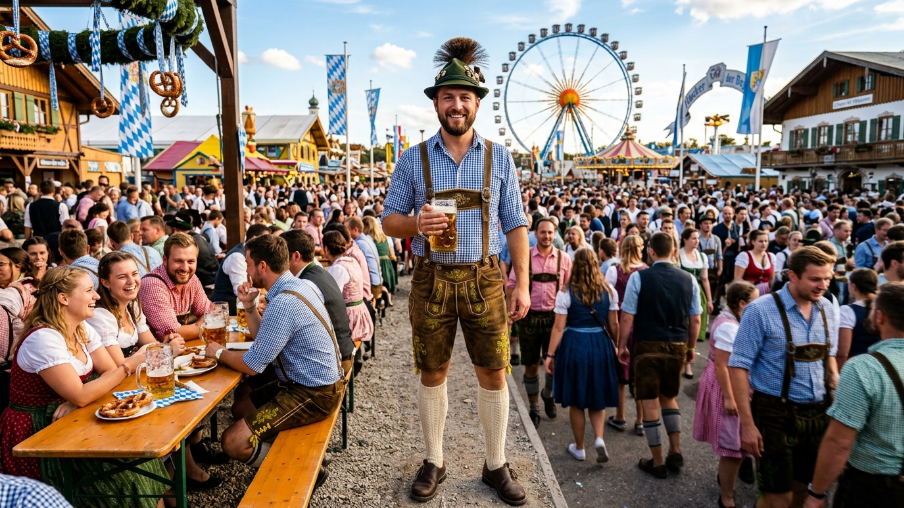
The lederhosen represents one piece of complete festival-appropriate Bavarian ensembles requiring coordinated supporting pieces. The essential coordinated elements include a proper Trachtenhemd (traditional shirt) in white cotton or checkered pattern (blue-and-white or red-and-white being most common), quality wool knee socks reaching just below the knee, sturdy leather Haferl shoes or acceptable alternative closed-toe leather footwear, and a proper Bavarian hat completing the ensemble visually.
For festival-focused buyers, the shirt choice often defaults to checkered patterns for practical staining resistance during long festival days when beer, food, and general festival activities inevitably contact clothing. Blue-and-white checks read as most traditional Oktoberfest; red-and-white checks work equally well and offer color variation. Solid white shirts photograph most formally but require more diligent stain management during actual festival attendance.
Additional accessories add authentic character to complete the visual: Charivari decorative chain across the front bib, quality leather belt worn over the lederhosen, and optional pocket accessories including traditional watches on chains and decorative pins from festivals attended. These smaller elements collectively distinguish complete festival ensembles from partial approximations, though budget-conscious buyers can add accessories over successive Oktoberfest seasons rather than requiring all elements at initial purchase.
Practical Sizing for Festival Comfort
Getting the sizing right specifically for festival attendance requires accounting for practical realities of Oktoberfest that differ from other clothing use cases. The lederhosen waist adjustment accommodates the substantial beer, sausage, and pretzel consumption characteristic of proper Oktoberfest attendance, but initial fit should be comfortable at your normal waist rather than requiring maximum adjustment from arrival. This provides adjustment room for the festival day itself.
The suspender configuration should provide comfortable weight distribution across shoulders without pulling during energetic movement including the standard beer tent dancing that emerges during specific songs (traditional customs include standing on benches during particular songs, requiring stable and comfortable ensemble configuration). Proper fit means the ensemble supports full festival participation rather than requiring adjustment or replacement during the day.
For international buyers ordering online, careful measurement matters more than for in-person shopping. Waist measurement at your natural waist (higher than typical modern trousers sit), inseam appropriate to your leg length, and shoulder measurement affecting suspender fit all deserve careful attention. Quality retailers provide detailed sizing guides converting between European and American measurement systems, and buyers should measure carefully rather than assuming standard trouser sizing translates directly.
Festival Etiquette and Wearing Norms
Beyond just having appropriate ensemble, understanding festival etiquette helps ensure your Oktoberfest experience matches your ensemble investment. Wearing proper traditional wear demonstrates respect for Bavarian heritage and the actual cultural context that Oktoberfest represents. Casual wearing approaches include treating the ensemble as everyday festival attire rather than costume, appropriate care for the pieces across long festival days, and recognizing that quality authentic wear reads as respect rather than pretense to Bavarian and German-heritage attendees.
Coordinating the ensemble with the specific event context matters. Munich Oktoberfest itself represents the most traditional context where authentic wear is genuinely appropriate and welcomed. Regional Oktoberfest celebrations in cities across the United States and internationally welcome quality Bavarian wear while accepting more variation in ensemble configuration. Local beer festivals with German or Bavarian themes similarly appreciate proper wear without demanding strict traditional configuration.
Photography during festival attendance benefits from ensemble configuration ready for camera capture throughout the day. Ensuring the shirt remains tucked, suspenders sit properly, hat coordinates with the overall visual, and accessories remain in appropriate position across the day supports quality photographs that become long-term memories of the festival experience.
Building Beyond Single-Event Use
Even buyers approaching Oktoberfest attendance as single-event costume purchase often discover that quality accessible-tier Bavarian wear delivers value across additional occasions beyond the single Oktoberfest attendance. American Oktoberfest celebrations occur across multiple weekends in September and October in various cities, and the same ensemble works for multiple attendance opportunities within a single autumn season. Family Bavarian gatherings, German-American cultural events, and various themed occasions provide additional wear contexts.
For buyers whose Oktoberfest experience proves engaging enough to warrant continued Bavarian heritage engagement, the accessible-tier initial purchase often becomes the foundation for gradual wardrobe expansion. Adding coordinating pieces, upgrading specific components after establishing continued interest, and building toward complete year-round Bavarian heritage wardrobes represents the pathway many committed heritage wearers follow from initial festival-focused purchases.
The gradual expansion approach delivers substantially better value than either single-event costume purchasing or immediate premium investment. Building based on actual experience matches your specific engagement patterns rather than committing speculatively to either extreme, and the accessible-tier starting point provides genuine construction that supports the transition to expanded heritage engagement over time.
Frequently Asked Questions
What’s the difference between costume and authentic lederhosen? Real leather construction versus synthetic imitation. Quality accessible-tier costume options at $100 to $200 use real leather and photograph as authentic; cheap synthetic imitations at $30 to $80 do not.
How much should I spend on my first Oktoberfest costume? $150 to $300 delivers strong accessible-tier value with genuine leather construction and appropriate festival-focused character.
Does the shirt color matter? Yes. Checked patterns hide staining better during long festival days. White photographs most traditionally but requires more diligent stain management.
Can I wear an Oktoberfest costume to non-festival events? Absolutely. Quality Bavarian wear works at cultural events, German-American gatherings, and any occasion where heritage character suits the context.
How long will accessible-tier lederhosen last? With proper care, 10 to 20 years or more. Quality genuine leather improves with wear rather than degrading.
Should I buy locally or order online? Online quality retailers offer substantially more variety than most local stores. Careful measurement supports successful online purchase.
For men shopping guys oktoberfest costume options in 2026, understanding the quality spectrum from cheap synthetic imitations through authentic accessible-tier construction helps ensure your purchase matches your specific use case. Quality genuine leather construction at accessible price points delivers festival-appropriate authenticity without demanding premium investment, and complete october fest costume ensembles built around this foundation provide multi-year value across multiple festival attendance opportunities. Choose authentic accessible-tier construction over cheap synthetic imitation, coordinate the complete ensemble with appropriate shirt, footwear, socks, and hat, and treat the purchase as potential foundation for continued Bavarian heritage engagement rather than strictly single-event costume acquisition.

Inside a China Eyewear Factory: How Eyewear Goes from Design and Material Selection to Mass Production

Building Emotional Wellness Through Professional Guidance and Support

How to Choose an Eyewear Manufacturer in China for Your European or American Private Label Brand

Alex Pettyfer Net Worth, Wife, Age, Height, Children, Career and More

Brad Williams Net Worth, Wife, Height, Age, Daughter, Family, Career and More

Eldorado.gg Review 2026: How It Works, Safety, Fees, and Risks
-
Celebrity11 months ago
Alex Pettyfer Net Worth, Wife, Age, Height, Children, Career and More
-
Celebrity11 months ago
Brad Williams Net Worth, Wife, Height, Age, Daughter, Family, Career and More
-
Blog3 months ago
Eldorado.gg Review 2026: How It Works, Safety, Fees, and Risks
-
 Anime12 months ago
Sanzoku Bandits of One Piece: Origins, Higuma, and Their Role in Dawn Island
-
 Celebrity11 months ago
John McGinn Net Worth, Age, Height, Wife, Childrens, Career and More
-
 Celebrity11 months ago
Frances de la Tour Net Worth, Age, Height, Husband, Childrens, Career and More
-
 Anime12 months ago
Shimotsuki Ushimaru – The Last Daimyo of Wano Country Explained
-
 Celebrity12 months ago
Will Trickett Net Worth, Wife, Childrens, Age, Career and More