
Business
Choosing the Right Linde Forklift Model for Your Application and Load Needs

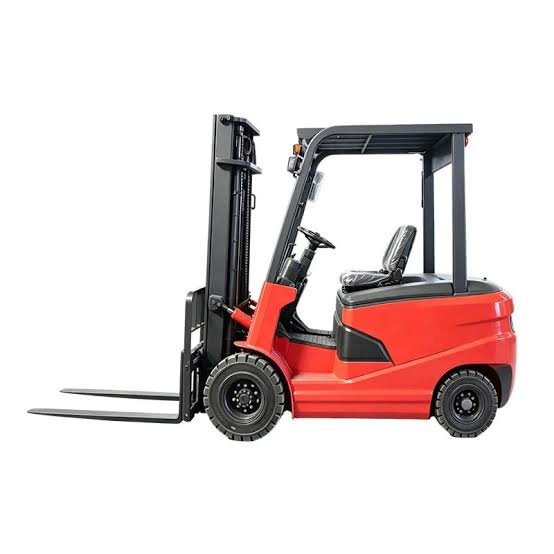
A bad forklift choice doesn’t show itself on delivery day. It takes a few months.
Then the truck labours up the ramp. The mast won’t clear the roller door. The battery’s flat by two. None of that is the brand’s fault. Most of the time, the model just didn’t suit the job.
Linde forklifts cover a lot of ground, from small electric trucks for the warehouse to heavy diesel units for the yard. So, the real work is narrowing it down. Looking at a used forklift for sale, or ordering new? The questions don’t change.
Step One: Know Your Load
Start with what’s going on the forks.
Weigh your heaviest regular load. Not the average, the heaviest. Measure it too, because size matters as much as weight. A pallet of bagged cement and a pack of 6 metre timber can weigh about the same, but they handle nothing alike.
It comes down to load centre. Capacity is rated with the load sitting a set distance out from the fork face. Long or bulky loads sit further out, so the truck can safely lift less. Go higher and it drops again.
While you’re measuring, check your top beam and allow a bit of clearance above it.
Ask your supplier: “What can this truck safely lift at our highest rack, with the loads we actually handle?”
Step Two: Know Your Site
Now walk the site.
Smooth concrete suits an electric truck on cushion or solid tyres. Gravel, potholes, and a yard that turns to slop after rain call for more clearance and grip, which usually means an engine powered truck on pneumatic tyres.
Look for the tight spots. Narrow aisles. Low doorways. Steep ramps. Container floors, too. A truck that gets around the warehouse fine might not fit inside a shipping container, and if you’re unloading one every week, that’s a problem.
Hours count too. One shift is easy going for most trucks. Run two or three and you’ll need a proper plan for charging or refuelling.
Matching Linde Models to Common Jobs
General warehouse work
Most sites end up with an electric counterbalance. It’s quiet, there’s no exhaust where people are working, and servicing is usually lighter than on an engine truck. Linde makes 3-wheel versions that turn tighter in busy aisles, and 4-wheel versions that feel steadier on ramps.
High racking and narrow aisles
Tall racking packed close together? A reach truck often suits better. It lifts high and squeezes into narrower aisles than a counterbalance can, so you get more storage out of the same shed.
Docks and short runs
For loading docks, backrooms, and quick trips across the floor, electric pallet trucks and stackers do the job. They’re simpler machines and they don’t take up much room.
Outdoor yards and heavy loads
Diesel country. Building supply yards, timber yards, and transport depots need the grunt, and a refuel only takes a few minutes. Many Linde engine trucks run hydrostatic drive, which gives you smooth, fine control when you’re creeping up to a heavy pack.
A bit of both
Outside in the morning, inside after lunch? LPG is worth a look. It can work indoors as long as there’s good ventilation.
Takeaway: Choose the type of truck for the job first. Capacity, mast, and attachments come after.
Masts and Attachments
For general work, a duplex mast is usually enough. A triplex reaches higher but still sits low enough to get under most doorways.
Attachments save a lot of fiddling. Side shift is the one nearly everyone uses. Fork positioners help when pallet sizes vary. Clamps and rotators are for specialised loads.
Each one adds weight, though, and takes a bite out of rated capacity.
Don’t Forget the Operator
Someone has to sit in it all day.
How well they can see through the mast, how comfortable the seat is, and how natural the controls feel all affect how safely and quickly they work. Put your regular driver on it before you buy. A machine that’s awkward to drive tends to get driven badly.
New or Used?
A new forklift for sale comes with warranty cover and the setup you ordered. That’s worth paying for when the work is hard and daily, or the spec is unusual.
Used Linde forklifts can be good value for lighter jobs, occasional work, or as a backup. Check the hours, service history, mast, chains, forks, tyres, and hydraulics, then drive it.
Before You Sign
Five quick questions:
- What’s the heaviest load, and how long is it?
- How high is the top rack?
- Indoors, outdoors, or both?
- Where’s the narrowest aisle and the lowest doorway?
- How many hours a day will it run?
Answer those and you’re ready to compare any forklift for sale properly.
Melbourne based Heavy Lift Forklifts sells new and used Linde forklifts, as well as other brands, and handles servicing and repairs. Bring your measurements and load details, and they can help match a truck to the work. Still on the fence? A short hire lets you try before you commit.


Rental property can be a strong source of stable income, but the wrong tenant can easily turn an otherwise good investment into a liability.
Late rent, property damage, lease violations, and high turnover can cost you money and demand your full attention. Even a properly maintained property cannot achieve stable returns when you don’t properly consider tenant selection.
Organized screening lets you assess candidates before handing over the keys. This way, you can make informed decisions and minimize avoidable risks by reviewing financial stability, rental history, and other relevant information. These checks help safeguard your property long-term when paired with good leasing and property management.
These five practical methods show how improved tenant screening can enhance renting as an investment.
1. Verify Tenant Income And Financial Stability
Regular rent payments cover mortgage payments, insurance, property taxes, and maintenance. However, accepting an applicant based solely on a promising conversation can create financial uncertainty. Before accepting a tenant, verify their income, employment, and ability to pay the offered rent.
Start by reviewing the latest pay stubs, employment confirmation, or other suitable proof of income. Self-employed candidates can submit tax returns or any other financial statements. Also review credit history to understand how applicants have handled their financial responsibilities. No single document tells the whole story, so consider all available information.
A regular evaluation process helps you assess applicants based on clear financial requirements, not assumptions. This strategy can reduce payment-related risks and help you predict rental income more consistently.
However, if you find it challenging to do it yourself, hire local property management services as they understand your local market and laws well. For example, if you reside in Nashville, hire a property management company Nashville. Such professionals help you with tenant background checks, income verification, and lease signing.
2. Review Rental History And Previous Landlord References

Financial records are an asset, but they don’t always show how an applicant will handle a rental home. Past rental history may provide supplementary information on payment, adherence to the lease agreement, and interactions with the owners.
Talk to former landlords and ask specific, factual questions. Was the tenant paying rent as per the lease? Were there documented complaints or frequent lease violations? Did the tenant leave the property in good condition? Check out references whenever you can, not just based on the information provided in the contacts, but in totality.
Examine the information and other qualifications of the applicant. The comments of a previous landlord must complement, not substitute for, your evaluation. You also need to distinguish between the facts written down and personal opinions that may not accurately reflect the tenant’s conduct.
Thorough reference checks help you make a more informed decision before signing a lease. They can help establish a more stable landlord-tenant relationship after the tenant moves in, and clear communication and responsive management can build on that initial evaluation.
3. Reduce Property Damage Through Background Checks
Repairs are an inevitable part of rental property ownership, yet avoidable damage can dramatically increase operating expenses. Appropriate background checks help you assess relevant information about an applicant before approving a tenancy.
A background check may include criminal and court records related to housing, as permitted by relevant laws and as stated in your written screening policy. Check that the information is that of the applicant, weigh its correctness and context, and evaluate its applicability to lawful tenancy issues. The outcome should not necessarily be based on an arrest or a solitary record.
Use screening effectively with transparent lease conditions and property management. Discuss maintenance request requirements, damage reporting, inspections, and prohibited activities before the tenancy begins. Record the property’s condition at move-in and address maintenance issues as they arise.
These measures help create accountability from the start. Together, risk screening, documentation, and regular maintenance management can help you manage risks and safeguard the property’s condition over the long term.
4. Maintain Legal Compliance With Fair Screening Practices
Keeping your investment safe also means not risking vulnerability to legal challenges through screening. Background checks can also be problematic even when you conduct a comprehensive review if you apply unequal standards, ignore incorrect records, or use the information in a discriminatory way.
Set clear written screening requirements before advertising your property. Treat all applicants using the appropriate standards and adhere to the Fair Housing Act and other state and local laws. Discrimination based on any protected characteristic is prohibited; avoid general policies of exclusion.
In case you rely on a third-party screening service or consumer report, know your rights under the Fair Credit Reporting Act (FCRA). When a decision can be described as an adverse action under a consumer report, you must provide the required notice and information about the applicant’s rights.
Retain application records, screening outcomes, and decision notes. Documenting them consistently makes it easier to justify your decision and show that you followed a predetermined process. If legal requirements are unclear, consult qualified advice before taking any action.
5. Minimize Vacancies With Better Tenant Selection
Every vacant day can mean lost rental income while expenses continue. Frequent tenant turnover also creates additional costs for advertising, property preparation, showings, and application processing. Better tenant selection can reduce these disruptions by increasing the chances of a stable tenancy.
Start with accurate rental listings, competitive pricing, and clear application requirements. These steps help attract suitable applicants and set expectations before screening begins. Once applications arrive, assess each person using the same established criteria and complete the necessary checks promptly.
However, tenant selection is only the beginning. Clear lease terms, responsive communication, and well-maintained living spaces can influence whether residents choose to renew their leases. When tenants receive timely attention to legitimate maintenance concerns, they may have stronger reasons to stay.
Effective property management connects these efforts by coordinating marketing, tenant placement, rent collection, and ongoing maintenance. Longer tenancies can reduce repeated leasing expenses, limit income gaps, and provide greater continuity for your rental investment.
Conclusion
Better tenant screening protects a rental investment by helping you assess financial reliability, review rental history, identify relevant risks, and make informed leasing decisions. It can also reduce avoidable vacancies and support more stable landlord-tenant relationships.
However, screening works best as part of a wider management strategy that includes clear leases, timely maintenance, consistent communication, and careful financial oversight. By evaluating reliable information fairly and establishing clear expectations before approving an applicant, you can make more confident decisions and protect your property’s long-term performance.

Power is very important at most job sites. However, outlets may not be near the tools used at most job sites. The lack of an extension cord can hinder even the simplest tasks. An extension cord allows workers to have easy access to power when working.
Not all extension cords are meant for difficult tasks at job sites. Some of the tools require more power than a standard residential extension cord can provide. Therefore, a 10 gauge extension cord becomes very useful in such cases. It allows users to enjoy the necessary flexibility and power capabilities at any time.
Furthermore, the variety of lengths offered allows workers to perform tasks in a range of settings with little difficulty. Whether working inside or outside, using an extension cord becomes more convenient. Here are some benefits a 10 gauge extension cord can bring to job sites.
1. Provides Power For High-Demand Tools
Many job sites have equipment that requires high electrical power input. Some of this equipment may include saws, compressors, and heaters. Proper use of an extension cord is essential for delivering reliable electrical power.
A 10 gauge extension cord has thicker conductors than a higher-gauge cord. Thus, a 10-gauge extension cord is appropriate for high-power applications when its rating matches the equipment’s rating. Before plugging a tool into the cord, ensure that the cord is compatible with the tool’s electrical load.
2. Gives Workers More Freedom
An outlet may not be located where the work needs to happen. Moving the entire work area closer to an outlet is not always practical. Instead, an extension cord can bring power to the work area.
This gives workers more freedom when placing their tools. They can set up equipment where it is most useful rather than working around a wall outlet.
Cord length also matters. A shorter cord may work well when the outlet is nearby. A longer cord can help when workers need to reach a more distant area.

3. Works Well For Outdoor Jobs
Numerous construction, maintenance, and repair jobs are done outdoors. Such places have very few permanent electrical outlets. This means there will be a need for a temporary power supply for the tools.
An outdoor-rated, heavy-duty extension cord makes it easier. Certain outdoor extension cords are constructed with jackets that resist moisture, oils, and temperature changes. The jacket material’s flexibility can make it easier to manipulate the cord in outdoor situations.
However, the user must ensure the cord’s ratings are appropriate for outdoor use. An outdoor-rated, heavy-duty extension cord is not automatically suitable for all kinds of outdoor environments.
4. Helps With Longer Work Areas
Some job sites cover a large area. Workers may need to move between different sections of a building, yard, workshop, or construction site. In these situations, having the right cord length can save time.
Instead of moving the power source each time, workers can use a suitable extension cord to reach the next work area. This can make it easier to keep tools in place and continue working.
At the same time, longer is not always better. A cord much longer than needed can create excess cable that must be managed. It may also increase the chance of a voltage drop when used with certain loads. Therefore, choosing a practical length is important.
5. Help Reduce Voltage Drop
Voltage drop can become an issue when electricity has to travel through a very long extension cord. This could happen, especially when the extension cord is used with machines that require a lot of electricity.
To avoid such issues, the worker must choose the shortest extension cord that effectively reaches the work location. An effective 10 gauge extension cord may come in handy in this case, although it should suit the job at hand.
Choosing the correct extension cord could also help ensure the machine works well. Before beginning the job, the extension cord specifications must be considered.
6. Offers Heavy-Duty Construction
Job-site cords often face more wear than cords used around the home. They may be moved across rough surfaces, coiled and uncoiled many times, or exposed to outdoor conditions.
A heavy-duty 10 gauge extension cord can be better suited to these conditions than a light household cord. Stronger construction can make a cord more practical for regular job-site use.
Even a heavy-duty cord, however, needs proper care. Workers should check it before use and look for cuts, exposed wires, damaged plugs, or other signs of wear. Damaged cords should not be used.
Conclusion
A job site will automatically become easy to control if there is power where you need it. There are many good reasons to have a 10 gauge extension cord available.
Its advantages may include greater versatility, easier outdoor work, improved access to remote places, and convenient temporary power connections. There is also a wide range of lengths to choose from, so you can pick the one that suits your work area.
However, the selection of extension cords should not be based solely on their gauge. Workers should take into account the tool’s power needs, cord length, outdoor suitability, and the cord’s condition.
If chosen and used properly, a 10 gauge extension cord can be a very useful component of any job-site setup.

A maintenance manager stands in an old warehouse with a coffee, staring up at the grey cement sheet ceiling. Nothing’s cracked. There’s no stamp on it anywhere. People have been working under it for years and nobody’s had a problem. Probably fine, he figures.
And maybe he’s right. The trouble is, that same gut feeling is how a lot of sheets end up with a drill bit through them.
When we talk to site managers about how to identify asbestos, the same handful of beliefs come up again and again, and most of them are only half true. Let’s walk through them.
Myth 1: You Can Spot Asbestos by Looking at It
Ask around and you’ll find most people have a picture in their head of what asbestos looks like. If the material in front of them doesn’t fit that picture, they crack on.
Here’s the problem. A fibro sheet with asbestos in it and one without look pretty much identical. Same goes for old vinyl tiles, pipe lagging, and gaskets. And the fibres? Far too small to see.
Your eyes can tell you something looks suspect. That’s about it. To actually confirm it, a sample has to go to a NATA accredited laboratory and be checked under a microscope.
Myth 2: Only Really Old Buildings Have Asbestos
People tend to file asbestos away as a 1950s and 60s thing. It hung around a lot longer than that.
Yes, buildings from before 1990 carry the most risk. But Australia’s full ban didn’t arrive until the end of 2003, so that office fit out from 1996 isn’t off the hook. Our rule of thumb is simple enough. Built or upgraded before 2004? Assume it might be there until a test says it isn’t.
Myth 3: If It’s Not Crumbling, It’s Safe to Work On
There’s a bit of truth buried in this one, and that’s why people hang on to it.
Bonded asbestos, the cement sheeting and roofing kind, is lower risk while it’s intact and nobody’s mucking with it. Fair enough. But put a drill to it, or a grinder, or sandpaper, and the picture changes fast. One hole for a bracket is enough to send fibres into the air.
A sheet looking solid only tells you how it behaves when it’s left alone.
Myth 4: White Asbestos Is the Harmless Kind
We still hear this. Blue and brown are the nasty ones, apparently, and white (chrysotile) is no big deal.
Not true. White was the type Australian builders used most, and it’s linked to asbestosis, lung cancer, and mesothelioma, same as blue (crocidolite) and brown (amosite). Besides, nobody can tell the three apart with the naked eye, so the colour argument falls over before it starts.
Myth 5: No Label Means No Asbestos
A few manufacturers printed their name on the back of their sheets. Plenty didn’t.
So if you flip a panel over and it’s blank, you’ve learned nothing. In an older building, an unmarked material gets the same treatment as anything else that looks suspect. Test it before anyone starts work.
Myth 6: An Old Asbestos Register Is Good Enough
Most workplaces built before 2004 should have an asbestos register and a management plan. Good. But think about what a register is. It’s a snapshot of the day somebody walked through and wrote it up.
Since then? Maybe a wall’s come out. Maybe the old boiler got replaced. The management plan has to be reviewed at least every five years, and the register needs updating whenever the site changes. A dusty folder from ten years ago, sitting in the bottom drawer of the site office, isn’t protecting anyone working there now.
Myth 7: A Home Test Kit Will Do the Job
They’re easy to buy, we’ll give them that.
What the box doesn’t really spell out is that getting a sample means cutting or snapping off a piece of the material. Which is the very thing you’re trying not to do. On an industrial site, where the material could be high up on a roof, wrapped around a pipe, or already friable, that risk is bigger again.
A licensed assessor turns up in proper protective gear, seals the spot after the sample comes out, and sends it to an accredited lab.
Getting Identification Right on Industrial Sites
Done properly, it looks like this. A licensed assessor walks the whole site, samples anything suspect, and sends it off. When the results come back, you’ll know what’s there, what type, and what shape it’s in.
Then you decide. Leave it and manage it, seal it, or take it out. If it’s coming out, industrial asbestos removal has to be carried out by a licensed removalist holding the right class of licence: Class B for bonded material, Class A for friable.
Knowing how to identify asbestos is useful for any facility manager, no question. What keeps people safe, though, is testing before the work starts and getting industrial asbestos removal booked early, so it isn’t the thing holding up the whole project.
Frequently Asked Questions
What’s the safest way to learn how to identify asbestos on my site?
Start with the building’s age and the materials you already know about. Then get a licensed assessor to test anything suspect. Knowing how to identify asbestos helps, but only a lab can confirm it.
When does a site need industrial asbestos removal?
When the asbestos is damaged, friable, or sitting in the way of planned work. A licensed assessor can tell you whether you need industrial asbestos removal or whether it can be safely managed in place.
Can asbestos stay in an industrial building?
Often, yes, if it’s in good condition and won’t be disturbed. It still has to be on the asbestos register and checked regularly.

Long Island Homeowners Are Rethinking Their Floors—Here’s Why

Choosing the Right Linde Forklift Model for Your Application and Load Needs

How Can Better Tenant Screening Help Protect A Rental Investment?

Alex Pettyfer Net Worth, Wife, Age, Height, Children, Career and More

Brad Williams Net Worth, Wife, Height, Age, Daughter, Family, Career and More

Eldorado.gg Review 2026: How It Works, Safety, Fees, and Risks
-
Celebrity11 months ago
Alex Pettyfer Net Worth, Wife, Age, Height, Children, Career and More
-
Celebrity11 months ago
Brad Williams Net Worth, Wife, Height, Age, Daughter, Family, Career and More
-
Blog2 months ago
Eldorado.gg Review 2026: How It Works, Safety, Fees, and Risks
-
 Anime12 months ago
Sanzoku Bandits of One Piece: Origins, Higuma, and Their Role in Dawn Island
-
 Celebrity11 months ago
John McGinn Net Worth, Age, Height, Wife, Childrens, Career and More
-
 Celebrity11 months ago
Frances de la Tour Net Worth, Age, Height, Husband, Childrens, Career and More
-
 Celebrity11 months ago
Will Trickett Net Worth, Wife, Childrens, Age, Career and More
-
 Blog3 months ago
Crackstube: A Complete Guide to the Digital Publishing Platform