
Blog
What Is SOA OS23? A Simple Guide to Modern Architecture


SOA OS23 is a term used online for a modern approach to service-oriented architecture. It combines traditional SOA ideas with newer methods such as APIs, microservices, cloud systems, containers, event-based communication, and automation. The approach focuses on building software from separate services that can communicate through clear interfaces.
- What Is SOA OS23?
- Why Was SOA OS23 Created?
- How SOA OS23 Works?
- SOA OS23 vs Traditional SOA
- SOA OS23 and Microservices
- SOA OS23 Integration and API Management
- Event-Driven Architecture in SOA OS23
- SOA OS23 Cloud-Native Deployment
- Security in SOA OS23
- Monitoring and Observability in SOA OS23
- SOA OS23 and AI Integration
- Benefits of SOA OS23
- Challenges of Using SOA OS23
- Where SOA OS23 Can Be Used?
- SOA OS23 Best Practices
- Bottom Line
- FAQs
SOA OS23 is also linked with modern security, monitoring, and AI integration. However, there is no clear evidence that it is an official standard published by a major software standards organization.
What Is SOA OS23?
SOA OS23 is used to describe a modern way of using Service-Oriented Architecture, or SOA. In SOA, software is split into services. Each service has a clear job. Services can work together through set interfaces.
Think about an online store. One service may manage user accounts. Another may handle payments. Other services can manage stock and shipping. Each service has its own job, but they work together as one system.
The modern approach adds tools that are common in cloud software. These include APIs, smaller services, containers, cloud platforms, automatic deployment, and event-based systems. AI services may also be connected in the same way.
Why Was SOA OS23 Created?
Traditional SOA helped companies reuse software services. A service could handle one task, such as checking customer details or processing a payment. Other apps could then use the same service instead of building the same function again.
Older SOA systems could also become large and complex. Many enterprise systems used central tools, middleware, and an Enterprise Service Bus, or ESB. This gave companies control over how services worked together, but it could also create a large central layer.
Software development later moved toward cloud platforms, containers, and faster updates. Companies also started using smaller services that could be changed without updating the whole system. These changes created a need for lighter and more flexible designs.
SOA OS23 is used to describe this newer approach. It keeps the main idea of separate services while adding APIs, event streams, containers, automation, and cloud tools.
How SOA OS23 Works?
The main idea is simple. A large app is split into smaller services with clear jobs. An online store, for example, could have separate services for accounts, products, carts, payments, orders, and alerts.
Suppose a customer places an order. The order service may check the product and payment services. After payment, another service can update the stock. The alert service can then send an email or app message.
These services often talk through APIs. They can also use messages or events. Each service follows clear rules for sharing data. It does not need to know all the code inside another service.
This setup can also help with growth. If many people use the product search at the same time, a company may add more resources to that service. It may not need to increase resources for every other part of the app.
SOA OS23 vs Traditional SOA
Traditional SOA and SOA OS23 share the same basic idea. Both divide software into services. They also use clear interfaces so services can work together without sharing all their internal code.
One major difference is how these services connect. Traditional enterprise SOA often used central middleware and an ESB. Modern systems often use APIs, API gateways, messages, and event streams instead.
Deployment is also different. Older systems often ran on standard application servers. Modern services can run inside containers. Tools such as Kubernetes can manage these containers and roll out updates in stages.
This does not mean every old SOA method is outdated. It also does not mean every app needs microservices. The right design depends on the size, needs, and goals of the software.
SOA OS23 and Microservices
SOA and microservices are related, but they are not the same. SOA often focuses on reusable business services across a company. Microservices usually split one app into smaller services that can run and change on their own.
For example, a company may use SOA to share one customer data service across several apps. A microservices app may have separate services for users, search, orders, payments, and alerts.
SOA OS23 uses many ideas linked with microservices. It supports clear service roles, loose links between services, and separate deployment when needed. Services often communicate through APIs or messages.
However, smaller services are not always better. A system with too many tiny services can become hard to manage. Teams need to choose service sizes and roles carefully.
SOA OS23 Integration and API Management
Services need a simple way to communicate. APIs are one common method. An API sets rules for how one program can ask another program for data or an action.
An API gateway can act as one entry point for requests. Instead of an outside app talking to many services on its own, it can send requests through the gateway. The gateway can then send each request to the right service.
For example, a shopping app may need account, product, and order data. The app does not need to know where every service runs. It can use an API layer to reach the correct service.
APIs can also help connect older systems with newer apps. A company can make a business function available through an API without exposing all the code behind it.
Event-Driven Architecture in SOA OS23
Services do not always need to send direct requests to each other. A service can instead report that something has happened. Other services can then react to that event.
For example, an order service may send an “order created” event. The stock service can update the product count. An alert service can send a message. An analytics service can also record the sale.
Modern service systems can use both APIs and events. APIs are useful for direct requests. Events are useful when several services need to react to the same change.
Event-based systems still need clear rules. Teams must know what each event means and which services use it. They also need a plan for failed or delayed events.
SOA OS23 Cloud-Native Deployment
Cloud-native development is an important part of the modern SOA OS23 approach. Services can be packaged and run separately. Containers are often used to package an app with the files and tools it needs.
Large systems may use many containers. Kubernetes can help manage them. It can deploy services, replace containers, scale workloads, and roll out updates in stages.
For example, a company may need to update only its payment service. If the system is built correctly, the team can update that service without rebuilding the whole shopping platform. A busy service can also receive more resources when needed.
This cloud-based setup helps services run and update separately. It also supports the flexible service structure used in modern distributed software.
Security in SOA OS23
Security is important when many services work together. Older systems often trusted apps inside a company network. Modern cloud systems may have services in many places. They need stronger checks.
Zero-trust security does not trust a request just because it comes from inside a network. The system checks who or what sent the request. It also checks if that user or service has permission.
For example, an order service may need payment data. The payment service should check the order service before sharing that data. This helps block requests that should not have access.
SOA OS23 also uses access controls. Authentication checks identity. Authorization checks what that identity can do. Encryption can help protect data as it moves between services.
Monitoring and Observability in SOA OS23
A system with many services can be hard to watch. One request may pass through several services. If it fails, one log file may not show where the problem started.
Observability helps teams see what is happening. Logs record events and errors. Metrics show things such as response time and system load. Traces show how a request moves between services.
OpenTelemetry can collect logs, metrics, and traces. Prometheus can collect and query metrics. These tools help teams find errors and slow services.
For example, an online payment may take too long. A trace can show which service caused the delay. The team can then check that service.
SOA OS23 and AI Integration
AI can connect with modern software as a separate service. An app may use AI for search, text tasks, customer support, or fraud checks. The AI service does not have to be part of the main app.
APIs can connect an app to an AI service. A support app, for example, can send a customer question to an AI service. The AI service can process it and send a result back.
This setup keeps the AI service separate from other parts of the system. Teams can change the AI service without changing the whole app. They still need clear rules for data and access.
AI services also need security checks. Teams should protect private data and limit who can use the service. They should test AI features and monitor them after release.
Benefits of SOA OS23
One benefit of SOA OS23 is flexibility. Services have separate jobs and can often be changed on their own. A payment update may not require changes to other parts of an app.
Services can also scale on their own. During a large online sale, a search service may get much more traffic. A company can give that service more resources without doing the same for every service.
APIs and events can make system links easier to manage. They give services clear ways to share data and actions. This can help connect cloud apps, older systems, and newer services.
Containers and automated tools can also make updates easier. Logs, metrics, and traces help teams check how services work and find problems.
Challenges of Using SOA OS23
A service-based system can be harder to manage than one simple app. A large system may have many services. Each one may have its own APIs, logs, access rules, and updates.
Communication can also fail. A service may stop working or become slow. A message may arrive late. A request may time out. Teams need plans for these problems.
Security needs careful work too. Every service and API needs protection. Teams should use identity checks, access rules, and encryption where needed.
Teams should not create many services without a clear need. A small app may work better with a simpler design. The system design should match the real needs of the project.
Where SOA OS23 Can Be Used?
The ideas behind SOA OS23 can be used in large business systems. A company may have services for users, orders, payments, stock, and reports. These services can work together through clear links.
Cloud apps can also use this model. Services can run in containers and connect through APIs or events. Teams can update and scale each service when needed.
The same approach can connect old and new software. An API can let a new app use a function from an older system. The new app does not need access to all the code in that system.
AI can also work as a separate service. Other parts of an app can connect to it through an API. This keeps AI tasks separate from other business tasks.
SOA OS23 Best Practices
Give every service a clear job. Its role and limits should be easy to understand. Do not create many small services when a simple setup will work.
Keep APIs clear and simple. Teams should know what data an API accepts and what it returns. Changes should be planned so other services keep working.
Use automation where it helps. Tests can check code before release. Deployment tools can manage updates. Monitoring tools can find errors and slow services.
Build security into the system from the start. Check identities and control access. Protect important data. Use logs, metrics, and traces to watch the system.
Bottom Line
SOA OS23 is used online to describe a modern approach to service-oriented architecture. It combines service-based design with APIs, microservices, events, containers, cloud tools, automation, security, and AI services.
There is no clear proof that the term is an official standard from a major standards group. It is better understood as a modern architecture concept built around separate services and clear ways for them to communicate.
This approach can help with scaling, updates, system links, and monitoring. It can also make a system harder to manage because teams must handle many services, network links, and security rules.
The right design depends on the software. Clear services, simple APIs, strong security, good monitoring, and careful planning are the key parts of a useful service-based system.
FAQs
What is SOA OS23?
SOA OS23 is a term used for a modern service-oriented architecture approach that combines services with APIs, cloud tools, microservices, and automation.
How does SOA OS23 work?
It divides software into separate services that communicate through APIs, messages, or events.
How is SOA OS23 different from traditional SOA?
Traditional SOA often uses central middleware, while SOA OS23 is linked with APIs, containers, cloud platforms, and event-based systems.
Does SOA OS23 use microservices?
It can use microservice ideas such as small services, clear service roles, separate deployment, and API-based communication.
Is SOA OS23 an official software standard?
There is no clear evidence that SOA OS23 is an official standard published by a major software standards organization.
Read Also: Smoothiepussit: Easy Guide to Reusable and Store-Bought Pouches


Ask most people about binge-watching and they’ll talk about crime dramas, Korean romances or the latest big series everyone at work is discussing. In a lot of British Muslim homes, Ramadan changes the viewing completely. The box sets don’t disappear, but they change. Out go the usual thrillers, and in come Turkish historical epics, Quran recitations and, in many front rooms, a live picture from the Grand Mosque in Makkah that stays on the screen for most of the night.
That live picture has a habit of making people restless. Watching the crowds circle the Kaaba during Taraweeh, plenty of families start to wonder what it would be like to be there in person, and some of them end up looking at Umrah packages all-inclusive of flights, hotels and visa before the month is even over. This article looks at what people actually watch in Ramadan, why these shows have caught on, and what happens when a night of viewing turns into a real plan.
The series that took over the front room
If one show has defined Muslim viewing in Britain over the last few years, it’s Diriliş: Ertuğrul, usually just called Ertugrul. This Turkish drama tells the story of Ertuğrul Ghazi, the father of the man who founded the Ottoman Empire. It has five seasons, each with dozens of long episodes, which makes it the perfect binge.
It became a huge hit across the Muslim world, and in Britain it spread mostly by word of mouth. Families who had never watched a subtitled programme in their lives were suddenly staying up past midnight for one more episode. Grandparents and teenagers watched it together, which is rare enough in itself. Its follow-up, Kuruluş: Osman, about Ertuğrul’s son, has kept many of the same viewers hooked.
Part of the appeal is simple. These are big, dramatic stories with battles, betrayals and heroes, but the characters pray, talk about faith and make decisions based on their values. For many Muslim viewers, it’s the first time they’ve seen a mainstream drama where people like them are the heroes.
Sehri and iftar shows from back home
In many British Pakistani households, Ramadan also means the special transmissions from Pakistani channels. These long live shows run around sehri and iftar, with naats, cooking, quizzes, guest scholars and prize giveaways, and they’re watched in Britain through satellite boxes and YouTube. They can be loud and a bit chaotic, and some people find them too commercial, but for older relatives they’re a link to how Ramadan felt growing up. Similar shows are watched in Bangladeshi, Arab and Turkish homes, each with their own style.
The older favourites
Before the Turkish wave, a few titles were already watched in many homes every Ramadan.
- The Message (1976). Moustapha Akkad’s film about the early days of Islam, starring Anthony Quinn. Famously, the Prophet is never shown on screen. It’s still shown in mosques and family gatherings nearly fifty years on.
- Omar (2012). A thirty-part Arabic series about the second caliph, Umar ibn al-Khattab, first shown during Ramadan. It was controversial because it showed some of the companions on screen, and some scholars objected. It was still watched by millions.
- Lion of the Desert (1981). Also directed by Akkad, about the Libyan resistance leader Omar Mukhtar. A firm favourite with older viewers.
Television that doesn’t switch off
For many families, though, the most-watched thing in Ramadan isn’t a drama at all. It’s the live broadcast from the Haram in Makkah. Saudi television shows the Grand Mosque around the clock, and the picture is easy to find on satellite, online and on YouTube. A similar feed comes from the Prophet’s Mosque in Madinah.
In Ramadan, these feeds become the background to everything. People leave them on while they cook for iftar, watch the sunset prayer from Makkah while waiting for sunset in Bradford or Birmingham, and stay up to follow the night prayers. The voices of the imams leading Taraweeh are known all over the world, and many people have their favourites.
British channels have joined in as well. Islam Channel and British Muslim TV run special Ramadan programmes, from cookery to talks and Quran competitions, and their audiences grow every year during the month.
From the sofa to the Haram
There’s a point that many people reach after a few years of watching. The live feed stops being enough. You’ve seen the courtyard full of people breaking their fast together a hundred times, and you want to be one of them.
If that’s you, it pays to start planning early. Ramadan Umrah Packages from UK airports are the most popular trips of the whole year, and the best hotels near the Haram are often booked many months ahead. Prices also rise as the month goes on. The first ten days are usually the most affordable, while the last ten nights, which include Laylat al-Qadr, are the busiest and most expensive of all. In 2027, Ramadan is expected to start around early February, depending on the moon, which means cooler weather in Makkah and an easier fast.
It’s also worth knowing what it’s really like. The crowds in the last ten nights are far bigger than anything the cameras can show. Getting into the mosque for Taraweeh can mean arriving hours early. Families with small children or elderly parents often find the first part of the month far easier.
What to watch before you go
If you are planning a trip, some viewing is useful as well as enjoyable.
- Documentaries that follow pilgrims through the rituals help first-timers know what to expect.
- The live feed is a good way to learn the layout of the Haram, including where the main gates are.
- Short how-to videos from scholars and experienced pilgrims explain the steps of Umrah in plain language.
- Travel vlogs from British pilgrims can be helpful, but take the shopping hauls with a pinch of salt.
A balanced Ramadan
Not everyone is comfortable with so much screen time in Ramadan. Many imams remind people that the month is for prayer, reading the Quran and helping others, not for finishing a whole season of a drama. Some families now keep the long series for after Eid, and use the month for shorter, more spiritual viewing.
There’s no single right way to do it. But it’s worth noticing what you’re watching and why. For a lot of people, the most moving thing on the screen all year is a simple, wide shot of the Kaaba at night, with the sound of the prayer in the background.
The last word
Television has changed how British Muslims experience Ramadan. It has brought the Haram into millions of homes and given families stories to share across generations. For some, it’s simply part of the month. For others, it’s the start of something bigger. If you’ve found yourself staring at that live feed and thinking “next year”, it might be time to turn the screen off and start planning the real thing.

Foodie Co is an Australian powder blending and contract manufacturing company based in Melbourne, Victoria. It makes hot chocolate powders, latte blends, nutrition supplements, baking mixes, and spices for other businesses. The company helps small and growing food brands produce goods without setting up their own factories.
- Where Is Foodie Co Located?
- How Foodie Co Helps Small Businesses?
- Foodie Co Powder Blending Services
- What Products Does Foodie Co Manufacture?
- Foodie Co Product Development Process
- Foodie Co Ingredient Sourcing
- Foodie Co Packaging Options
- Production Volumes and Order Requirements
- Foodie Co Organic Manufacturing and Quality
- Foodie Co Storage and Logistics Services
- Foodie Co Retail Distribution Services
- How to Start Working With Foodie Co?
- Conclusion
- FAQs
Its main service is commercial powder blending. Businesses can also ask about ingredient sourcing, packaging, storage, and distribution support. Exact service options, production costs, and minimum order sizes should be confirmed with the company.
Where Is Foodie Co Located?
The company is based in Melbourne, Victoria, Australia. It provides powder manufacturing services for businesses that need help making food and drink products.
Working with a local manufacturer can make it easier for Australian brands to discuss production, packaging, and delivery. It can also help businesses plan their orders and product needs.
Businesses can visit the official website at foodieco.com.au to learn more about its services. They should confirm the current address and contact details before visiting.
How Foodie Co Helps Small Businesses?
Starting a food business requires ingredients, equipment, packaging, and safe production. These needs can be costly for small brands. Making larger amounts also becomes harder as orders increase.
Foodie Co offers powder manufacturing services that help businesses avoid setting up their own factories. Brands can use these services while focusing on sales and customer orders.
For example, a café owner may want to sell a chai latte powder. Making a few packs by hand may be easy. But supplying several stores requires larger batches and proper equipment.
A contract manufacturer can help with this work. Businesses should confirm order sizes, prices, and production times before starting.
Foodie Co Powder Blending Services
Powder blending means mixing dry ingredients to make a finished product. It is used for hot chocolate, protein powders, baking mixes, spices, and other dry foods.
For example, hot chocolate powder may contain cocoa, sugar, and other ingredients. These must be mixed well so each serving has a similar taste. Commercial machines help mix large amounts more evenly.
Foodie Co provides powder blending services for different food and drink products. Each product may need a different mixing process based on its ingredients.
Good mixing helps keep the taste and quality the same in each batch. Businesses should share their recipes and production needs before placing an order.
What Products Does Foodie Co Manufacture?
The company makes several types of powdered food and drink products. These include hot chocolate, latte blends, nutrition supplements, baking mixes, and spices.
Hot chocolate and latte powders are used in cafés, homes, and food shops. Brands may want their own flavors, ingredients, and packaging for these products.
Nutrition powders and baking mixes are also part of its manufacturing work. Baking mixes can contain flour, sugar, and other dry ingredients. Nutrition powders use ingredients based on the type of product being made.
The company also works with spice blends. These products combine different spices in set amounts. Businesses should confirm whether their recipes are suitable for commercial production.
Foodie Co Product Development Process
A food product often starts with a recipe. A business may have a small batch that tastes good but needs help making larger amounts.
The first step is to decide what the product should contain. This includes its ingredients, taste, serving size, and target customers. For example, a vanilla latte powder needs a clear recipe before production begins.
Businesses can then discuss their recipes with the manufacturer. Some may already have a finished formula. Others may need help preparing a recipe for larger batches.
Before production, brands should confirm ingredient needs, batch sizes, testing, and packing options. The exact steps depend on the product and the services offered.
Foodie Co Ingredient Sourcing
Ingredients affect the taste and quality of food products. Using the right ingredients also helps keep each batch the same.
Different products need different ingredients. Hot chocolate may use cocoa powder and sugar. Latte mixes may contain milk powder, spices, or flavor ingredients. Baking mixes often use flour, sugar, and raising agents.
Some brands may need organic or plant-based ingredients. They should ask the manufacturer which options are available and whether they meet their product needs.
Ingredient costs and supply can also affect production. If an ingredient is not available, an order may be delayed. Businesses should confirm ingredient supply before placing an order.
Foodie Co Packaging Options
Foodie Co offers packaging support for powdered food and drink products. Packaging keeps products safe during storage and delivery. It also helps brands prepare products for sale.
Powdered products can be packed in pouches, bags, or tins. The right packaging depends on the product and pack size. For example, hot chocolate powder may come in small packs for home use or large bags for cafés.
Good packaging helps protect powders from air and moisture. Labels must also show the required product details. Businesses should confirm the available packaging types and sizes before ordering.
Production Volumes and Order Requirements
Food manufacturers often have a minimum order quantity (MOQ). This is the smallest amount a business can order. The number may depend on the product and packaging.
Foodie Co works with small and growing food brands. Its services may help businesses that are not ready for large production runs. However, brands should ask about the exact minimum order size.
Order costs and production times are also important. Small orders may cost more per pack than large ones. Businesses should check prices, order sizes, and delivery times before starting.
Foodie Co Organic Manufacturing and Quality
Food quality matters when making products for customers. Powders must be mixed, handled, and packed with care. Each batch should follow the agreed recipe.
Foodie Co has been described as offering certified organic manufacturing. Brands that need organic products should check its current certification. They should also confirm which products the certification covers.
Food manufacturers in Australia must follow the food safety rules that apply to their products. Businesses should ask about quality checks, safe food handling, and allergen controls.
Nutrition supplements may have different rules from regular food products. Brands should check the rules for their ingredients, labels, and finished products.
Foodie Co Storage and Logistics Services
Finished products need safe storage before delivery. As a food brand grows, managing stock and orders can take more time.
Foodie Co has been described as offering storage and third-party logistics (3PL). These services can help businesses store products and prepare orders for delivery. Brands should confirm which services are currently offered.
There are two main types of sales. Business-to-business (B2B) means selling to shops, cafés, or other companies. Business-to-consumer (B2C) means selling directly to customers.
For example, a brand may send large boxes of latte powder to cafés and small packs to online buyers. Each order may need different packing and delivery. Businesses should ask about storage fees, shipping costs, and order handling.
Foodie Co Retail Distribution Services
Retail distribution means getting products into stores for customers to buy. New food brands may need help finding shops and arranging deliveries.
Foodie Co has been described as offering retail distribution support. This may include access to health food shops, small supermarkets, cafés, and studios. Brands should check which sales channels are currently available.
Manufacturing and distribution are different. Manufacturing means making a product. Distribution means moving finished products to stores or buyers.
Before selling through stores, brands need suitable packaging, clear labels, and product prices. They should also know how much stock they can supply. These details help stores review new products.
How to Start Working With Foodie Co?
Businesses can visit foodieco.com.au to learn about the company’s services. They can use the website to find contact details and ask about manufacturing.
Before making contact, brands should prepare their product details. These include the ingredients, recipe, order size, and packaging needs. Businesses should also explain whether they already have a finished recipe.
It is important to ask about prices, minimum orders, and production times. Brands can also check whether ingredient sourcing, packaging, storage, and delivery services are available.
Before placing an order, businesses should request a clear quote. They should confirm all costs, product details, and production terms.
Conclusion
Foodie Co is a powder blending and contract manufacturing company based in Melbourne, Australia. It makes products such as hot chocolate, latte blends, nutrition supplements, baking mixes, and spices.
Its services help small food brands produce larger amounts without setting up their own factories. Businesses can also ask about packaging, ingredient sourcing, storage, and distribution.
Brands planning to work with the company should confirm minimum orders, prices, production times, and available services before starting.
FAQs
What is Foodie Co?
Foodie Co is a Melbourne-based company that makes powdered food and drink products for other businesses.
What products does Foodie Co manufacture?
It makes hot chocolate powders, latte blends, nutrition supplements, baking mixes, and spice blends.
Where is Foodie Co located?
The company is based in Melbourne, Victoria, Australia.
Does Foodie Co work with small businesses?
Yes. It provides contract manufacturing services for small and growing food brands.
How can I contact Foodie Co?
You can visit its official website at foodieco.com.au to find contact details and ask about its services.
Read Also: What Is Provascin? Benefits, Uses, and Risks
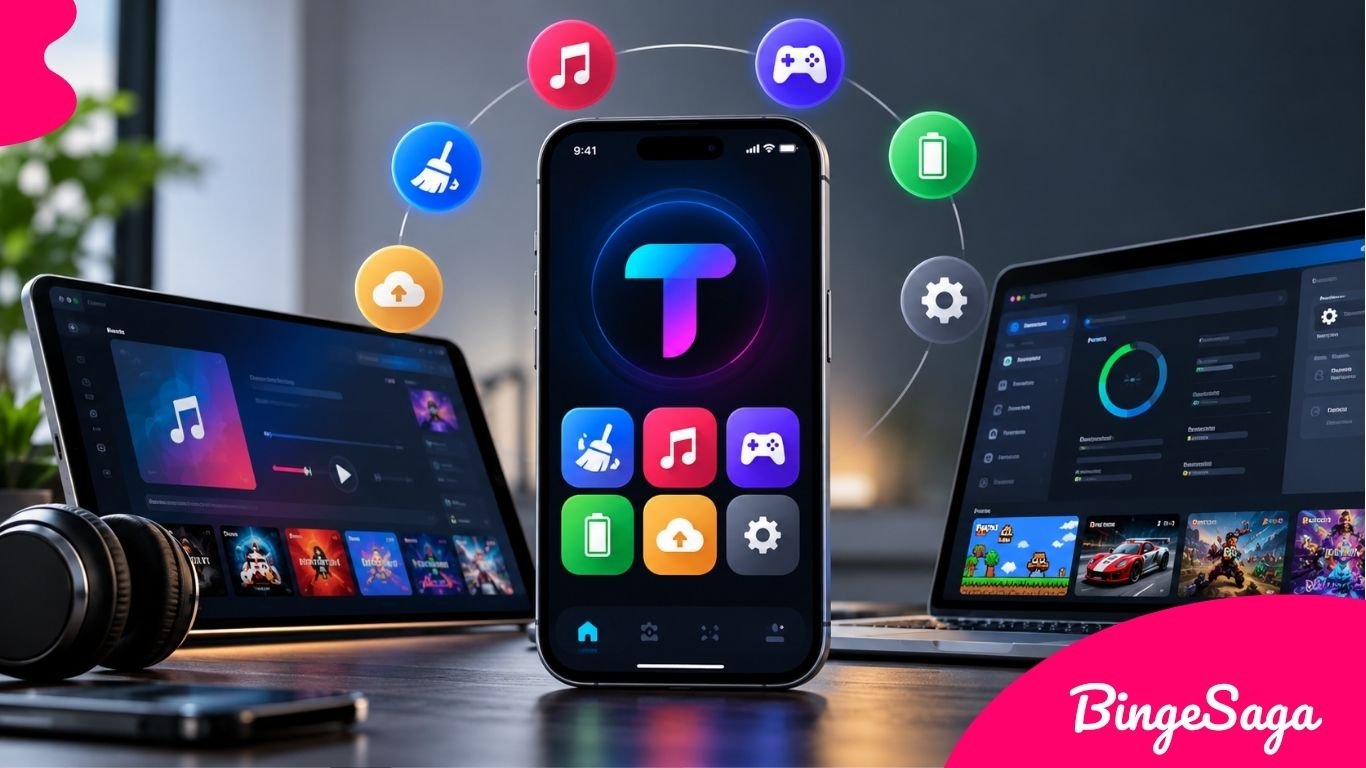
Tikcotech is described as an all-in-one app that brings file cleaning, music playback, gaming, and battery tools into one place. It is reported to support Android, iOS, and Windows. Its main goal is to help users manage common device tasks without using several apps.
- How Does Tikcotech Work?
- Key Features of Tikcotech
- Tikcotech App Manager and File Cleaner
- Tikcotech Music Player and Audio Support
- Tikcotech Gaming and Emulator Features
- Tikcotech Battery and System Optimization
- Tikcotech Compatibility and Supported Devices
- How to Download and Install Tikcotech?
- How to Use Tikcotech for Daily Tasks?
- Benefits of Using Tikcotech
- Is Tikcotech Safe and Reliable?
- Tikcotech Limitations and Common Problems
- Tikcotech vs Other Utility Apps
- Is Tikcotech Worth Using in 2026?
- Conclusion
- FAQs
The app is also said to offer offline music, game emulation, storage management, and backup tools. However, its official availability, safety, and performance claims have not been fully verified. Users should check these details before downloading it.
How Does Tikcotech Work?
The app is described as having a main dashboard. Users can choose a tool based on what they want to do. They may open the file cleaner to check storage or use the music player to listen to songs.
Some tools may need access to device files or settings. For example, a music player needs access to saved audio files. A file cleaner may need access to certain folders. The exact steps depend on the device and app version.
Key Features of Tikcotech
Tikcotech is said to offer several tools in one app. These include an app manager, file cleaner, music player, game emulator, and battery controls. Each tool is made for a different task.
The app is also reported to have backup and storage tools. Backups help users keep copies of important files. Battery controls aim to reduce power use. However, these features and their results have not been fully tested.
Tikcotech App Manager and File Cleaner
The app manager is said to help users manage installed apps and stored files. Phones often collect old downloads and temporary files. A file cleaner can help find and remove files that are no longer needed.
The app is also described as offering storage tools and automatic backups. Backups can help protect important data if files are lost. Users should check files before deleting them to avoid losing anything important.
Tikcotech Music Player and Audio Support
The app is reported to include a music player that supports MP3, AAC, and FLAC files. MP3 and AAC are common audio formats. FLAC keeps more sound detail but often takes up more storage space.
Offline playback is another reported feature. It would let users listen to saved songs without internet access. This can be useful while traveling or when the network is weak. The app’s sound quality and format support have not been fully tested.
Tikcotech Gaming and Emulator Features
The app is also said to include a game emulator. An emulator lets users run games made for another system. For example, some emulators allow older console games to run on modern phones and computers.
Its gaming tools are reported to include settings that aim to reduce delays. The app is also described as supporting classic games and Android games. However, game support depends on the device and software. Users should only use game files they have the right to access.
Tikcotech Battery and System Optimization
Tikcotech is said to offer battery and system tools. These tools aim to manage apps running in the background and control data syncing. Reducing tasks that are not needed may help save battery power.
Some reports claim the app can improve battery life by up to 20%. However, this claim has not been proven by independent tests. Battery life also depends on screen brightness, device age, and app use. Users should not expect the same results on every device.
Tikcotech Compatibility and Supported Devices
Tikcotech is reported to support Android, iOS, and Windows. It may work on phones, tablets, and computers. However, official support for these devices has not been confirmed.
Some features may work differently on each system. Android and iOS have different rules for file access and device settings. This may affect cleaning and battery tools.
Before installing, users should check the supported devices and system needs. They should also confirm which features are available for their device.
How to Download and Install Tikcotech?
Users should look for the app on trusted platforms. Android users can check Google Play, while iPhone users can search the App Store. Windows users can check the Microsoft Store or the developer’s website. Its availability on these platforms is not confirmed.
Before downloading, check the developer’s name, app details, and reviews. Avoid unknown websites and unofficial files. These may contain harmful software.
If an official version is available, follow its setup steps. Check the permissions before allowing access to files or settings. Only give access that the app needs.
How to Use Tikcotech for Daily Tasks?
The app is described as having one dashboard for several tools. Users may be able to open the file cleaner, music player, gaming tools, and device settings from one place.
The file cleaner may help find old downloads and temporary files. Users should check these files before deleting them to avoid losing important data.
The music player is said to support saved songs. Gaming tools aim to run older games, while battery settings may control background tasks. The exact steps for using these tools are not confirmed.
Benefits of Using Tikcotech
One possible benefit is having several tools in one app. Users may be able to manage files, play music, and access games without opening different programs.
The storage tools may help find files that are no longer needed. Offline music playback could also be useful when internet access is poor.
The app also claims to offer backups and battery controls. These tools may help with daily device use, but their results have not been verified.
Is Tikcotech Safe and Reliable?
The app’s safety has not been confirmed. Before installing it, check the developer, download source, and permissions. A trusted app should explain what data it collects.
File cleaning and backup tools may need access to personal files. Users should read the privacy policy before giving access. Avoid apps that ask for permissions they do not need.
Reviews may help users learn about an app’s performance. However, reviews alone cannot prove that it is safe. Check official details and security updates before installing.
Tikcotech Limitations and Common Problems
Tikcotech may have limits on different devices. Some tools may work on Android but not on iOS or Windows. Each system has its own rules for files and background tasks.
Storage and battery tools also have limits. A file cleaner cannot fix every storage problem. Battery controls may not improve power use on every device.
The app’s full features, system needs, and test results remain unclear. Users should check these details before using it for important tasks.
Tikcotech vs Other Utility Apps
Tikcotech is described as an all-in-one app. Other utility apps often focus on one task. A file manager handles files, while a music player plays audio. Game emulators run games made for other systems.
An all-in-one app may be useful for people who want fewer apps. However, apps made for one task may offer more features and settings.
The best choice depends on what users need. Built-in phone tools may be enough for storage cleaning. Separate music or gaming apps may offer more options. There are no verified tests to show which performs better.
Is Tikcotech Worth Using in 2026?
Tikcotech may be useful for people who want file management, music, gaming, and system tools in one app. Its reported features cover several daily tasks.
However, its official availability and full features are not confirmed. The claimed battery improvement also lacks independent test results.
Before installing, check the official source, developer, and privacy policy. If these details are missing, trusted apps or built-in device tools are safer choices.
Conclusion
Tikcotech is described as an all-in-one app with file cleaning, music playback, gaming, backups, and battery tools. It aims to bring common device tasks into one place.
However, its safety, features, and performance claims have not been fully verified. Users should confirm these details before downloading or using the app.
FAQs
What is Tikcotech used for?
Tikcotech is described as an app for file cleaning, music playback, gaming, backups, and battery management.
Is Tikcotech free to use?
Its pricing and whether it offers a free version have not been confirmed.
Is Tikcotech available for Android and iOS?
It is reported to support Android, iOS, and Windows, but official availability has not been verified.
Is Tikcotech safe to download?
Its safety has not been confirmed. Users should check the developer, permissions, and official download source before installing it.
Does Tikcotech improve battery life?
The app claims to improve battery life by up to 20%, but independent tests have not confirmed this result.
Read Also: What Is Provascin? Benefits, Uses, and Risks

From Ertugrul to the Live Feed from Makkah: How British Muslims Binge-Watch in Ramadan

Foodie Co: Powder Blending and Manufacturing Services

What Is Tikcotech? Features and Uses Explained

Alex Pettyfer Net Worth, Wife, Age, Height, Children, Career and More

Brad Williams Net Worth, Wife, Height, Age, Daughter, Family, Career and More

Eldorado.gg Review 2026: How It Works, Safety, Fees, and Risks
-
Celebrity9 months ago
Alex Pettyfer Net Worth, Wife, Age, Height, Children, Career and More
-
Celebrity10 months ago
Brad Williams Net Worth, Wife, Height, Age, Daughter, Family, Career and More
-
Blog1 month ago
Eldorado.gg Review 2026: How It Works, Safety, Fees, and Risks
-
 Anime11 months ago
Sanzoku Bandits of One Piece: Origins, Higuma, and Their Role in Dawn Island
-
 Celebrity10 months ago
John McGinn Net Worth, Age, Height, Wife, Childrens, Career and More
-
 Celebrity10 months ago
Frances de la Tour Net Worth, Age, Height, Husband, Childrens, Career and More
-
 Celebrity10 months ago
Will Trickett Net Worth, Wife, Childrens, Age, Career and More
-
 Blog2 months ago
Crackstube: A Complete Guide to the Digital Publishing Platform
Pingback: What Is Laaster? Features, Uses, and How It Works - Binge Saga