
Tech
What Is an Integrated Amplifier, and Who Should Actually Buy One?

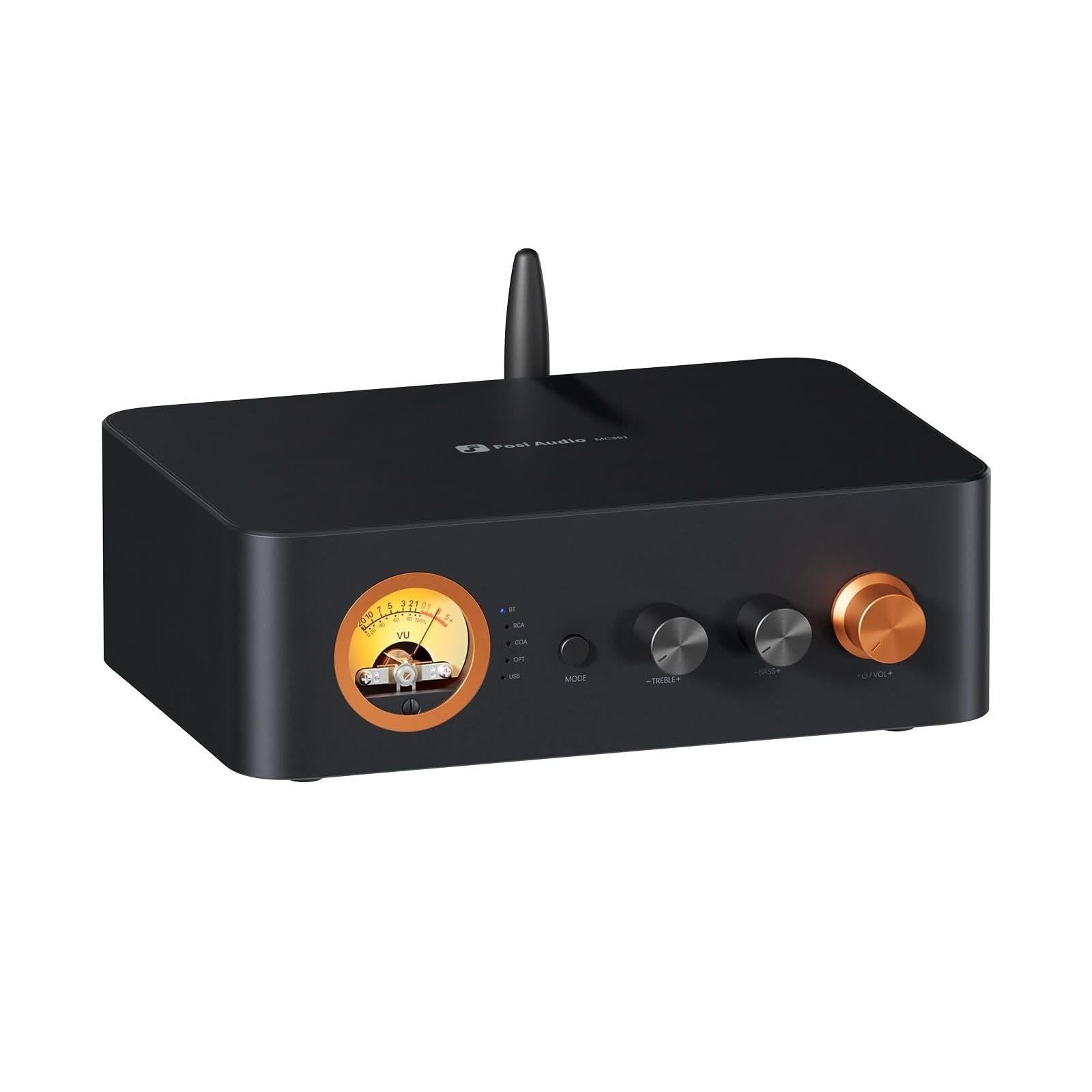
Walk into a hi-fi shop and the most common box on the shelf is the integrated model: one case, one volume knob, a handful of inputs, and speaker terminals at the back. It is the default shape of home audio amplification, so common that many people use one for years without knowing what the name means or what the alternatives would give them instead.
The short answer is that an integrated amplifier combines two historically separate devices — a preamplifier and a power amplifier — in a single chassis. The longer answer, about why that matters and who it suits, is worth the next few minutes if you are about to spend money on one.
Two Jobs, One Box
Every amplifier chain does two distinct jobs. The first is management: choosing which source plays, adjusting volume and tone, and presenting the signal in good order. That is the preamplifier’s work, and it happens at whisper level, in millivolts. The second job is muscle: taking that managed signal and delivering it with enough voltage and current to move speaker cones. That is the power amplifier’s work, and it is the part that gets warm.
An integrated amplifier simply houses both jobs under one lid, sharing a case, a power switch and usually a remote control. Nothing about the combination is a compromise by definition — some of the finest amplifiers ever sold are integrated designs. The format’s real advantages are mundane and decisive: one box to buy, one shelf to find, one set of connecting cables that you cannot get wrong.
There is a subtler benefit, too. When one engineer designs both halves, the gain structure between them is settled on the test bench rather than left to chance pairings. A well-made integrated amplifier is a matched system in a way that randomly combined separates sometimes are not.
Integrated or Separates?
The alternative — a separate preamplifier and power amplifier — buys flexibility. You can upgrade the muscle without touching the management, run long cable distances between the halves, or use several power amplifiers for bi-amping or home cinema. The price of that flexibility is literal: two chassis, more cabling, more shelf, and more money spent reaching the same baseline of quality.
For most rooms, the honest verdict is that the flexibility goes unused. If your present and realistically future system is two speakers and three or four sources, an integrated amplifier covers it entirely, and the money saved belongs in the speakers. Separates earn their keep when speakers are genuinely demanding, when the system will grow in stages, or when the owner simply enjoys the modular hobby for its own sake — which is a valid reason, as long as it is the stated one.
Features Worth Paying For
Within the format, spend on the things you will touch daily. A remote control with a well-behaved volume adjustment. Enough inputs for your sources plus one spare. A headphone output that is a real circuit rather than a token. A phono input if you play records, so a separate phono stage is not another purchase. Digital inputs — optical for the television, USB for a computer — turn one integrated amplifier into the single hub of a room, which is the role the format was born to play.
- Bluetooth is convenient for guests and casual listening; it is not the main course.
- Tone controls are unfashionable and genuinely useful in difficult rooms.
- A subwoofer output costs little now and saves a tangle later.
Second-hand examples deserve a mention, because this format has been built by the millions for fifty years and the used market is deep. The things to check are tactile: a volume control silent through its travel, switches that do not crackle, speaker terminals that grip, and no smell of hot dust when the case warms up. Capacitors age, but a well-made unit from a serious maker usually has decades in it, and a service by a local technician costs less than the difference between used and new. That arithmetic is why so many long-term listeners are running amplifiers older than their children. Buy the best-kept example of a good model rather than a neglected example of a famous one, ask for a demonstration with your own speakers if the seller allows it, and remember that a heavy, honest box at twenty years old is a safer bet than a featherweight novelty at two.
Buy one if you want a music system that a household can operate without a manual: one box, one remote, every source a button press away. Look elsewhere if you are building toward demanding speakers in a large room, or if staged upgrades are half the fun for you. An integrated amplifier is not the beginner’s apology for a real system. For the overwhelming majority of listeners, it is the real system — complete, coherent, and finished.

Trees do more than shade your backyard. They boost property value, clean the air, and give your landscape character that no amount of landscaping stone or mulch can replicate. But healthy trees don’t happen by accident — they need regular attention from people who understand how Central Texas soil, weather, and native species behave.
- Why Tree Health Matters More Than You Think
- Common Signs Your Trees Need Attention
- Dead or Dying Branches
- Unusual Leaning or Root Damage
- Pest Infestations or Fungal Growth
- Overgrowth Near Structures
- What Professional Tree Care Actually Involves
- How to Choose the Right Tree Care Provider in Austin
- Protecting Your Property Starts With the Right Care
That’s where Austin Tree Specialists comes in. With years of hands-on experience caring for trees across the Austin area, the team combines local knowledge with proven techniques to keep your trees thriving through every season. Whether you’re dealing with storm damage, overgrown limbs, or a tree that’s simply seen better days, knowing when and how to act makes all the difference.
This post walks through the most common tree care needs homeowners face, what causes them, and how professional care can protect your property for years to come.
Why Tree Health Matters More Than You Think
A healthy tree isn’t just a nice backdrop for your yard — it’s an investment. Mature, well-maintained trees can increase curb appeal and property value significantly, and they provide practical benefits too: shade that cuts cooling costs, windbreaks that protect your home, and root systems that help prevent soil erosion.
But trees under stress can quickly become liabilities. Weak limbs can snap during storms. Diseased trees can spread problems to healthy ones nearby. And overgrown branches can interfere with power lines or damage roofs. Austin’s climate, with its hot summers and occasional severe storms, adds extra pressure on local trees, making regular care even more important.
Common Signs Your Trees Need Attention
Most tree problems don’t appear overnight. They build gradually, and catching the early signs can save you money and prevent bigger headaches down the road.
Dead or Dying Branches
Branches that are brittle, discolored, or no longer growing leaves are a clear signal something is wrong. Left unaddressed, they can fall unpredictably, posing a risk to people, pets, and property.
Unusual Leaning or Root Damage
A tree that suddenly starts leaning, or one with roots that are cracking your driveway or lifting your foundation, needs a professional assessment right away. These issues often indicate instability that only gets worse with time.
Pest Infestations or Fungal Growth
Insects boring into bark, visible fungus at the base of the trunk, or unusual spotting on leaves can all point to underlying health issues that require targeted treatment before they spread.
Overgrowth Near Structures
Branches creeping toward your roofline, windows, or power lines aren’t just inconvenient — they’re a safety hazard, especially during Austin’s storm season.
What Professional Tree Care Actually Involves
Caring for trees goes well beyond trimming a few branches. It requires an understanding of tree biology, seasonal timing, and the right tools and techniques for each situation.
Pruning and Trimming
Proper pruning encourages healthy growth, improves a tree’s structure, and reduces the risk of falling limbs. Done incorrectly, however, pruning can stress a tree or open it up to disease. Knowing which branches to remove, and when, takes training and experience.
Tree Removal
Sometimes a tree is too far gone to save, or it’s located somewhere that poses an ongoing risk. Safe removal requires careful planning, especially near homes, fences, or utility lines, to prevent damage during the process.
Stump Grinding
Leftover stumps aren’t just an eyesore. They can attract pests, create tripping hazards, and take up valuable yard space. Grinding them down clears the way for new landscaping or simply a cleaner-looking yard.
Disease and Pest Management
Catching and treating disease or infestations early can mean the difference between saving a tree and losing it entirely. This often involves identifying the specific issue and applying treatments designed for that problem.
How to Choose the Right Tree Care Provider in Austin
Not all tree care is created equal, and the wrong approach can actually do more harm than good. When evaluating a provider, consider the following:
- Experience with local tree species: Austin’s trees, from live oaks to cedar elms, each have unique needs. A provider familiar with the local ecosystem can tailor their approach accordingly.
- Proper equipment and safety practices: Tree work can be dangerous, especially around power lines or tall structures. Professionals should have the right gear and training to work safely.
- Transparent communication: A good provider explains what they’re doing and why, rather than leaving you guessing about the health of your trees.
- Comprehensive service offerings: From pruning to removal to ongoing maintenance, working with a team that covers the full range of needs saves you the hassle of coordinating multiple providers.
Protecting Your Property Starts With the Right Care
Reliable tree service that keeps your property safe, beautiful, and stress-free year-round is exactly what busy Austin homeowners need, without the guesswork of DIY trimming or the risk of hiring an inexperienced crew. Austin Tree Specialists brings the local expertise, equipment, and attention to detail needed to keep your trees healthy through every season, from the summer heat to storm cleanup.
Whether you’re noticing early warning signs or simply want peace of mind that your trees are in good hands, reaching out to a trusted local team is the smartest first step. Healthy trees don’t just happen; they’re the result of consistent, knowledgeable care, and that’s a service worth investing in.

There’s a moment at every well-run outdoor event when nobody’s thinking about restrooms. The band’s playing, the food trucks have lines, kids are running around with face paint smudged across their cheeks. Nobody’s worried about the one thing that could’ve derailed the whole day. That’s not an accident. That’s the result of someone, somewhere, making a quiet decision weeks earlier to get the logistics right.
Event planners and job site managers rarely get applause for the things that go smoothly. They get complaints when something goes wrong. A broken-down unit, a long line, an overflowing tank — these are the details that turn a great event into a forgettable one, or worse, a viral complaint on social media. The people who avoid that fate have usually done one thing: they planned ahead for sanitation before it became an emergency.
This is the story of what it actually feels like when that part of the job is handled right — and why so many organizers, contractors, and hosts have stopped treating restroom logistics as an afterthought.
The Morning Before the Crowd Arrives
Picture a construction foreman walking the site at 6 a.m., coffee in hand, running through his mental checklist. Materials delivered? Check. Crew scheduled? Check. Restrooms stocked, clean, and placed where they won’t slow down foot traffic? Also check — because it was handled days ago, not scrambled together the night before.
That’s the difference between reactive planning and proactive planning. A job site with dozens of workers can’t afford downtime because someone has to drive off-site to find a restroom. A well-placed, well-maintained unit keeps people on the clock and focused on the work in front of them. It sounds like a small thing until you calculate the hours lost across a crew of twenty, thirty, or more over the course of a project.
Event organizers face a similar reality, just with higher stakes in terms of public perception. A wedding, a festival, a charity run — these are moments people remember, good or bad. Guests don’t typically compliment a host on restroom availability, but they absolutely notice when it’s missing or poorly managed. The invisible stuff is often the stuff that matters most.
What Actually Goes Into Getting It Right
Good sanitation planning isn’t just about dropping off a unit and walking away. It takes an understanding of guest count, duration of the event, site layout, and accessibility needs. A backyard birthday party has different requirements than a three-day music festival with ten thousand attendees. A six-month construction project needs a different service rhythm than a one-day 5K race.
This is where experience matters. Knowing how many units a crowd realistically needs, how often servicing should happen to avoid unpleasant surprises, and how to position units so they’re accessible without disrupting flow — these are details that separate a smooth operation from a logistical headache. It also means having ADA-compliant options ready for events that need to accommodate guests with mobility needs, something that’s increasingly expected rather than optional.
Reliability counts for a lot here too. A unit that’s delivered late, serviced inconsistently, or poorly maintained can undo all the other planning that went into an event. Cleanliness isn’t a nice-to-have; it’s the baseline expectation. People notice immediately if something feels off, and that impression can color how they remember the entire day.
Why Contractors and Hosts Are Rethinking Who They Trust With This Job
There’s been a shift in how construction managers and event planners approach sanitation. It used to be treated as a last-minute checkbox item — something ordered the week before and forgotten about. Now, more organizers are building it into their planning timeline from the start, right alongside permits, vendors, and staffing.
Part of that shift comes from experience. Anyone who’s dealt with a sanitation failure once tends to never make that mistake twice. The smarter move has become partnering early with a provider who understands the specific demands of the job or event, rather than treating the whole category as interchangeable.
Reliable sanitation solutions that keep crews working and guests comfortable without a second thought start with Express Portable, a company built around the idea that this part of the job should never be the reason an event or project runs into trouble. Whether it’s a single unit for a weekend gathering or a full rotation of units across a multi-week construction timeline, the goal is the same: keep things clean, keep things stocked, and keep people focused on what they came to do.
That kind of dependability builds trust fast. When a provider shows up on time, services units without being chased down, and answers questions before they even become problems, it changes the entire relationship. Planners stop worrying about that part of the checklist entirely, which frees them up to focus on the hundred other things competing for their attention.
The Real Payoff: Nobody Notices, and That’s the Point
The best compliment a sanitation provider can get is silence. No complaints, no lines, no awkward moments where someone has to apologize for a broken unit. When restrooms are clean, well-stocked, and conveniently placed, guests and workers alike simply move on with their day. That silence is the whole goal.
For event planners, this translates into glowing feedback about the parts of the day people do notice — the music, the food, the atmosphere — because nothing distracted from it. For construction site managers, it means a crew that stays productive instead of losing time to inconvenience. In both cases, the value isn’t flashy, but it’s real, and it compounds over every event or project where it’s done right.
Making the Invisible Part of the Job Easier
Every successful event or job site runs on dozens of small decisions made well in advance. Sanitation shouldn’t be the one detail left to chance. The organizers and contractors who’ve figured this out aren’t doing anything complicated — they’re just choosing to plan early, ask the right questions about crowd size and duration, and work with a provider who treats reliability as non-negotiable.
The next time an event goes off without a hitch, or a job site hums along without a single sanitation complaint, remember that it didn’t happen by luck. It happened because someone made a smart call early on, and because the quiet work of showing up, cleaning up, and following through got handled exactly as it should have.


Introduction
Portable hard drives contain family photos, client projects, financial information and years of hard work.
They are compact and handy, but also makes them susceptible to drops, knocks and everyday wear. When one suddenly stops responding, there’s panic. The good news is that a failed drive seldom means that the data has disappeared forever.
Most files are safely saved when there is professional External recovery London .
This guide explains why portable drives fail, what you need to do immediately and how you choose an expert that you need.
Why Portable Drives Fail
Portable drives live in distress. They are transported in bags, connected to various computers and are often removed without safe release. The following are the most common reasons for failure:
- Physical damage from drops that may damage the read/write heads or platters.
- Corrupted file systems after power failure or insecure removal .
- Clicking, beep or grinding caused by mechanical disturbance .
- Water, heat or moisture damage Firmware Errors that prevent the drive Knowing to recognize the cause .
because it will decide which recovery method is safe. A logical mistake like corruption requires treatment different from a mechanical fault, such as head damage.
Warning Signs to Watch For
Drives often warn you before failing completely. Look out for:
- The drive not appearing in File Explorer or Finder
- Your computer freezing when it is connected
- Very slow transfers or frequent errors
- Missing or unreadable files
- Unusual clicking or buzzing sounds
If the drive still works, back up what you can immediately. If it does not, stop using it.
What to Do (and What Not to Do) When Your Drive Fails
You could decide if your data will survive for the first few minutes. Disconnect the drive immediately, keep it safe and dry anywhere, and note the symptoms so that you can describe them to a specialist.
What you avoid is equally important. Keep the drive not connected to “see if it works.” Don’t run free recovery software on a physically damaged drive, and never open the casing itself. Shaking, knocking, or placing the drive in a freezer are myths that truly do harm. Every attempt on a failed drive can increase wear and overwrite exactly the data that you would like to get back.
How Professional External Hard Drive Recovery Works
Professional external hard drive recovery London services follow a structured process:
Diagnosis: Engineers will explore the drive to identify the fault and assess the likelihood of recovery.
Cleanroom repair: For mechanical failures, damaged parts like read/write heads are replaced in dust-free surroundings.
Imaging: A sector-by-sector copy will be created so the original drive is not stressed anymore.
Data extraction: File structures will be reset, your files will be restored from image.
Verification and Return: Recovered files are checked and transmitted on new media.
Unlike generic software, this approach is built for physically damaged drives that are unstable or severely corrupted.
Why Choose a London-Based Specialist
The choice of a local provider gives practical advantages. You can hand deliver the drive, avoiding risk of post-transit.
Urgent cases can often be dealt with faster and you can talk face to face with engineers. If you need external hard drive recovery London for a portable or removable drive, working with an experienced local lab will provide you with clear communication and fast turnaround at a time of stress.
What to Look for in a Recovery Service
Not every provider offers the same standard. Before you hand over your drive, check for:
- Genuine cleanroom facilities
- Transparent pricing and a clear evaluation process
- Experience with all major brands, such as Seagate, Western Digital, Toshiba and Samsung
- Strict confidentiality and secure handling of your files
- Helpful, honest communication about your chances of success
How to Protect Your Data in the Future
Once your files are back, ensure that you never encounter this stress again. Follow 3.2-1 Backup Rule: Keep three copies of your data in two different kinds of storage, either with a copy from the site or stored in the cloud. Always eject drives safely, handle them carefully, and replace older drives before failing.
Conclusion
A failed portable drive is scary but it’s not the end of your data. Take action fast, stop use of the drive and avoid risky DIY fixes. Professional external recovery London specialists have the tools, cleanroom facilities and experience to restore files which simply can not reach the software.
Select a trusted provider to store and protect your recovered data using a proper backup plan. Your important files will stay secure in the future.

Best IPTV UK for Football: What Fans Should Compare

Turning trade show budgets into measurable pipeline

Being Named an Executor: What the Role Really Involves

Alex Pettyfer Net Worth, Wife, Age, Height, Children, Career and More

Brad Williams Net Worth, Wife, Height, Age, Daughter, Family, Career and More

Eldorado.gg Review 2026: How It Works, Safety, Fees, and Risks
-
Celebrity10 months ago
Alex Pettyfer Net Worth, Wife, Age, Height, Children, Career and More
-
Celebrity10 months ago
Brad Williams Net Worth, Wife, Height, Age, Daughter, Family, Career and More
-
Blog2 months ago
Eldorado.gg Review 2026: How It Works, Safety, Fees, and Risks
-
 Anime11 months ago
Sanzoku Bandits of One Piece: Origins, Higuma, and Their Role in Dawn Island
-
 Celebrity10 months ago
John McGinn Net Worth, Age, Height, Wife, Childrens, Career and More
-
 Celebrity10 months ago
Frances de la Tour Net Worth, Age, Height, Husband, Childrens, Career and More
-
 Celebrity11 months ago
Will Trickett Net Worth, Wife, Childrens, Age, Career and More
-
 Blog2 months ago
Crackstube: A Complete Guide to the Digital Publishing Platform