
Blog
Securing Remote Sites With No Power: A Guide to Off-Grid Solar Camera Systems


Some of the properties that most need security are the hardest to protect. Construction sites, farms, equipment yards, vacant lots, remote gates and pump stations often have no reliable electricity and no network cable within reach. Bringing in utility power can cost thousands and take weeks of permits. Meanwhile, theft of tools, fuel, copper and machinery from these sites is a constant problem.
Solar-powered camera systems solve both problems at once. With the right planning, they deliver continuous surveillance in places where traditional systems simply are not practical.
How an Off-Grid Camera System Works
A solar camera setup has four main parts working together:
- Solar panels that generate electricity during daylight.
- A charge controller that safely manages power flowing into the battery.
- A battery bank that stores energy to run equipment overnight and through cloudy days.
- The security equipment itself: cameras, often a small recorder or PoE switch, and a way to send video off site.
Some systems are sold as integrated kits with everything sized and housed together in a weatherproof enclosure, which simplifies installation considerably.
Step One: Calculate Your Power Needs
Sizing is where most solar camera projects succeed or fail. Start by adding up how much power the equipment draws. A typical IP camera might use around 5 to 8 watts, more when infrared or white-light illuminators switch on at night. A cellular router or wireless bridge might add another 5 to 10 watts. A small recorder adds more again.
Multiply the total wattage by 24 hours to find your daily energy use in watt-hours. For example, two cameras at 6 watts and a router at 6 watts add up to 18 watts, or roughly 430 watt-hours per day.
Step Two: Size the Battery for Bad Weather
The battery has to carry the system through nights and stretches of poor sunlight. Most designers plan for at least two to three days of “autonomy,” meaning the system can run that long without any solar input. Using the example above, three days would require about 1,300 watt-hours of usable storage.
Battery chemistry matters. Lithium iron phosphate (LiFePO4) batteries are increasingly popular because they tolerate deep discharge, last for many more cycles and weigh less than traditional lead-acid batteries. Lead-acid batteries cost less up front but should not be discharged too deeply, so they need a larger rated capacity to deliver the same usable energy.
Step Three: Size the Panels for Winter
Solar panels must recharge the battery and run the equipment at the same time, in the worst season of the year, not the best. Winter days are shorter and the sun is lower. A common approach is to divide daily energy needs by the number of peak sun hours available in winter at your location, then add a margin for losses from dust, heat, cable resistance and charging inefficiency.
In the example, 430 watt-hours divided by four peak sun hours, with a margin for losses, points to roughly 150 to 200 watts of panel capacity. Sites in cloudier climates or further north will need more.
Ready-made solar power kits for security cameras take much of this guesswork away, since panels, batteries and controllers are matched to a stated camera load. Even so, it is worth checking the kit’s capacity against your actual equipment and local sunlight.
Step Four: Get the Video Off Site
Recording locally on a camera’s SD card or a small recorder ensures footage is captured, but remote viewing and alerts require a connection. The most common options are a 4G or 5G cellular router, or a point-to-point wireless bridge linking the site to a building with internet access up to several miles away. Cellular data plans should be sized carefully. Streaming high-resolution video continuously can consume a large amount of data, so many systems record locally and upload only event clips or allow live viewing on demand.
Placement and Installation Tips
- Face panels toward the equator, true south in the northern hemisphere, and angle them for winter sun.
- Avoid shade from trees, buildings and equipment at all times of day.
- Mount equipment high on a sturdy pole and use tamper-resistant hardware, since thieves may target the solar gear itself.
- Keep batteries in a ventilated, weatherproof enclosure, protected from extreme heat.
- Use cameras with efficient smart detection to reduce false alerts and unnecessary data use.
- Combine cameras with audio warnings or deterrent lights for a more active response.
Maintenance
Off-grid systems are low maintenance, but not maintenance free. Clean panels periodically, since dust and bird droppings reduce output. Check battery health and charge levels remotely if the controller supports it. Inspect cables and enclosures after storms.
Conclusion
Solar-powered surveillance brings reliable security to places that power lines never reach. The key is honest sizing: measure your equipment’s real power draw, plan for several days of bad weather, size panels for winter, and choose a dependable way to send video off site. Done properly, an off-grid system can protect a remote site day and night, with no utility bills and no trenching required.

Being named executor in someone’s will is usually received as an honor, and rarely understood as a job. The person chosen is often a spouse, an adult child, or a trusted sibling, someone selected for their judgment and reliability rather than any particular expertise in estate administration, and most people who take on the role have never done anything like it before. What follows is not a single afternoon of paperwork but a role that can stretch across many months, carrying real legal responsibilities, real deadlines, and, in some circumstances, real personal exposure for the person carrying it out. Understanding what the job actually involves, before the first document is signed, changes how the entire process feels from the inside. Some executors settle an estate in a matter of months with few complications; others spend well over a year working through disputed property, delayed filings, or an inventory more complicated than anyone anticipated at the outset. The role rarely looks the same twice, which is exactly why a general sense of the sequence of events matters more than any single form.
Sworn In, Then Handed the One Document That Matters
The role formally begins with a swearing-in before the county’s Register of Wills, a short procedural step that can feel almost anticlimactic given everything that follows. What comes out of that appointment matters far more than the ceremony itself: a document called Letters Testamentary, which is the executor’s actual proof of authority. Banks will not release funds, brokerages will not transfer securities, and most institutions will not discuss the deceased person’s accounts at all without seeing that document first. An executor who assumes the will itself is sufficient identification is usually turned away at the first counter they visit, which is why understanding this single piece of paper, and requesting enough certified copies of it up front, saves real time later. Every institution the estate deals with, from the smallest local credit union to a national brokerage, will want to see its own certified copy, and running out partway through the process means another trip back to the courthouse at a moment when time is already stretched thin.
The Months of Inventory, Notice, and Waiting
Once formally appointed, the practical work begins, and it is slower than most people expect. Every asset the deceased person owned needs to be identified and valued, from bank accounts and real estate to vehicles, retirement accounts, and personal property, producing a full inventory that the court and beneficiaries can rely on. That inventory becomes the foundation for nearly everything that follows, from calculating what is owed in taxes to determining exactly what remains for distribution once every obligation has been settled, so accuracy at this stage matters more than speed. Beneficiaries named in the will need to be formally notified that the estate has opened, and known creditors need notice as well, since they generally have a defined window to come forward with any claims against the estate before it can be safely settled. For anyone facing this for the first time, a step-by-step guide for executors published for one Pennsylvania county walks through the sequence in plain terms, and a step-by-step guide for executors like that can turn what feels like an overwhelming list into a series of manageable, ordered steps. The notice-and-waiting period exists precisely to protect the estate from later claims, and skipping or rushing it does not make the underlying obligations disappear, it simply pushes the risk of an unresolved claim further down the road, often to a point when it is far harder to untangle cleanly.
Why the Order of Payment Matters
The single most important principle an executor needs to internalize is sequence: debts and taxes get paid before anyone receives a distribution, never the other way around. An executor who distributes assets to beneficiaries before creditors and tax obligations are settled can be held personally liable for the shortfall if the estate later turns out not to have enough left to cover what it owed, even when the early distribution was made with good intentions and full transparency. That risk surprises people who assume their only job is to follow the will’s instructions as quickly as possible. It is worth knowing, too, that executors are not expected to handle every task alone. The law generally allows an executor to hire accountants, attorneys, or appraisers as needed, with those professional fees paid out of the estate itself rather than out of the executor’s own pocket, which is exactly the kind of detail that makes a genuinely demanding role somewhat more manageable in practice. Recognizing early on which parts of the job call for professional help, and which can reasonably be handled directly, is often the difference between an executor who finishes the process feeling competent and one who finishes it simply relieved it is over.

Introduction
Can you take a guess on the product’s pricing just from the way it looks? Have you ever seen a new coffee brand and assumed that it might be more expensive than your regular brand only because of the way it was presented and packaged? Most people will agree on this here; you aren’t alone.
Fun fact: the assumption isn’t just about the coffee here; it’s about how a brand wants to be seen, to be known.
That’s how strong and big a role good packaging can play.
How Packaging Shapes Brand Perception
Design has the power to influence. For product packaging, it plays an important role. A well-crafted & executed design lets you take a guess at the brand’s story, overall vibe and its aesthetic, and how they want them to be experienced even before the product has been bought. Good packaging can convince people to spend more, beyond the budget, just to experience the premium feel. The product was sold, and so was the experience here.
Difference between minimal and bold packaging
Think about a minimal packaging jar of coffee, earthy tones, a simple font, no heavy illustrations, and a muted look and feel. The brand feels like something very natural, connects us to where the coffee originated from, and gives us the sense of relaxation we feel after our morning cup and how we hold onto the traditional coffee imagery.
While on the other hand, think about the second coffee brand with bold font and vibrant color combinations along with illustrations depicting the story. This brand connects us with the boldness of coffee, the beauty of its craftsmanship and translates coffee’s energy visually. No branding can be defined as right or wrong; you will pick the one product that resonates the most with you. The brand targets communities that have similar ideology, similar thoughts about life, or any such similarity and not individuals who like or dislike the design.
This was a small example of how we can perceive different meanings from a design. Creativity lies within us; it is what we assume, what we understand, and at last what makes sense to us. The color of red itself denotes both love and anger. Hence, there is no limit to our creativity and imagination.
Design As a Business Choice
And that is where design goes beyond being decoration. Design becomes a business choice.
Every element, color palette, font pairings, image and graphical elements, shapes shape the story about a product. Good packaging can make your brand stand out and build a recall value amid other products on the shelves. Uniquely crafted branding and visual identity grabs customer’s attention and makes them remember the brand.
Here is the crucial thing, though: design that isn’t built on a solid story is just distracting. A brand shouldn’t choose bright colors because they draw attention. It needs to understand what message colors convey, who exactly the packaging talks to, and what role the design plays in positioning.
Building a Consistent Brand Identity
The branding of coffee should not be confined to the packaging alone. The branding efforts need to continue from packaging to websites, social media design services, marketing, advertisements, promotional campaigns and even presentations. In case the packaging is unique and bold, while the rest of the branding efforts lack any distinct character, there will be inconsistency in the brand identity.
That is why companies have to go beyond the individual branding designs to come up with a well-coordinated brand identity. An effective brand is created by putting all branding components together. Consistency enables customers to recognize the brand while proper creative execution makes sure the character of the brand is reflected in all the different forms.
How Packaging Influences Buying Decisions
Packaging isn’t limited to good design. It can encourage us to break our rituals by changing our decisions. Think of yourself scrolling through an e-commerce website looking for your regular moisturizer or any skin care product. You have your particular product in mind, but suddenly a new product grabs your attention. Premium look & feel, clear messaging, better packaging. This isn’t something new or something that is happening recently. Good packaging and clear messaging have always been rule number one of any product brand.
Because sometimes people buy the one product that allows them to experience something new, something better.
Bringing Brand Stories to Life with PitchWorx
At PitchWorx, we help brands communicate and bring these ideas to life. It is not just about a good logo, packaging, and impressive color palette. It is all about how we resonate all of this with the brand’s story. From brand identity to everyday creatives, we focus on the right visual storytelling. We focus on consistency.
And for brands that need creative support regularly, our Creative Design Subscription provides an ongoing way to turn ideas into design assets without the overhead of hiring a full-time design team. Whether you’re launching a new product, building brand recognition, or keeping your marketing campaigns active, the goal is to make sure your design works as hard as your brand does.
Why Should You Choose PitchWorx?
PitchWorx provides an Unlimited design subscription for companies that require constant design assistance and a dedicated team that not just delivers the creatives but also brainstorms with you until we find the right one.
Unlimited design request submissions are provided by PitchWorx, with a maximum of two requests being worked on at one point in time. Most of the requests are fulfilled within 72 hours from their submission, depending on the level of complexity and the number of other requests currently being processed.

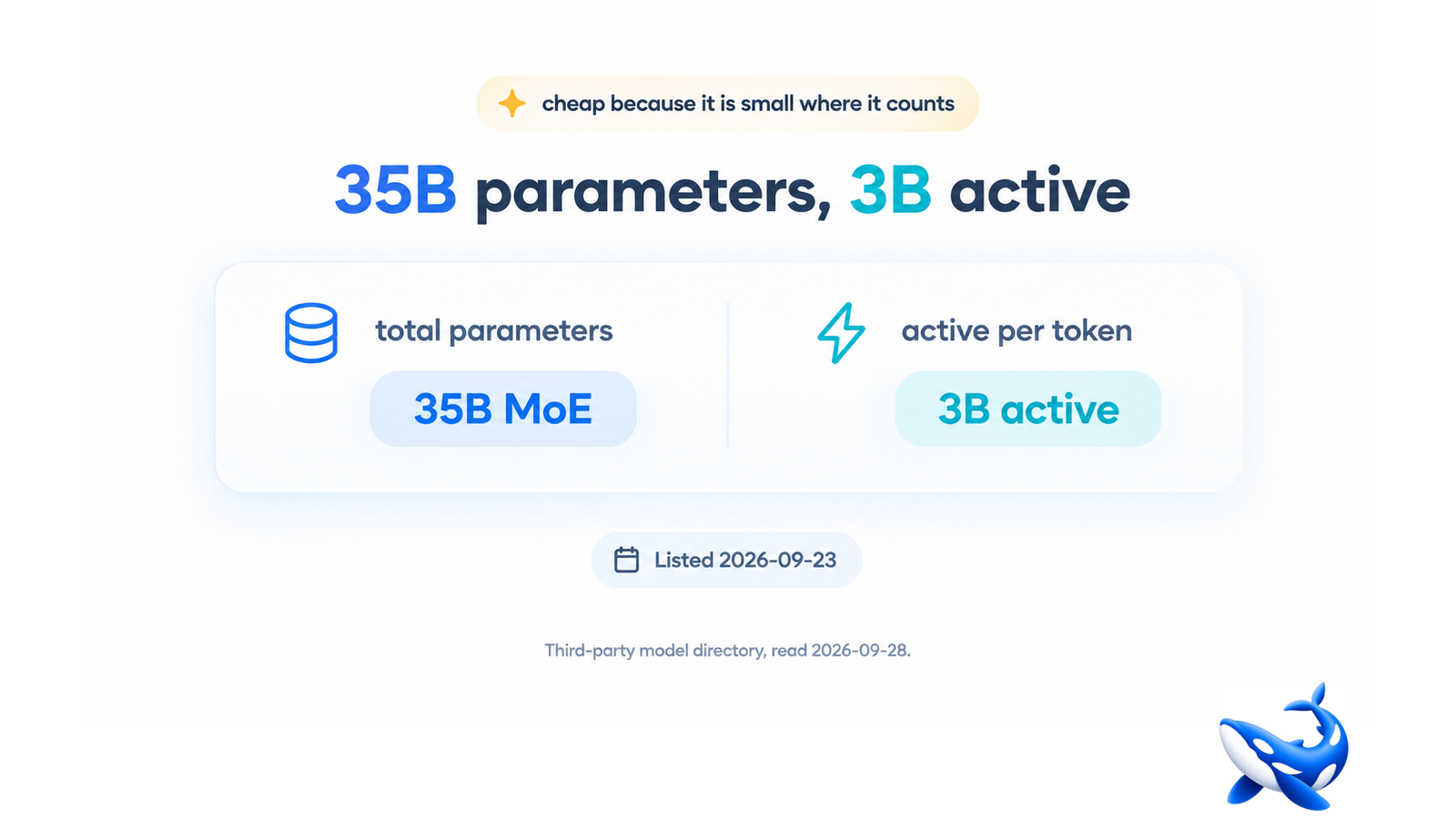
Among this week’s new AI models, the cheapest agentic entry is not the weakest one, and the reason is a single number that most coverage will skip: it is a mixture-of-experts model with thirty-five billion parameters in total and roughly three billion active per token. That gap is the whole story of its price. It is also the thing that makes it easy to misread — a small active count and a large total count point in opposite directions depending on which question you are asking. On OrcaRouter the catalogue of new ai models this week lists models by what they cost to call, and that is the frame in which the active count is the number that matters.
Two numbers, two different jobs
Total parameters describe how much the model knows. Active parameters describe how much work it does to produce one token.
In a dense model those are the same number, which is why the habit of reading parameter counts as a size label is so hard to break. In a mixture-of-experts model they diverge, and the divergence is the architecture’s entire purpose: route each token through a small subset of the network that happens to be relevant, and you get the capacity of a large model at something close to the compute cost of a small one.
So thirty-five billion and three billion are both true, and they answer different questions. Thirty-five billion is the answer to “how much does it know”. Three billion is the answer to “how fast and how cheap”. A comparison table that lists only the first will make this model look expensive; one that lists only the second will make it look incapable.
Why the architecture suits agent loops
There is a specific reason this shape fits agentic workloads better than it fits chat, and it is about what an agent loop spends its tokens on.
An agent spends most of its life on work that is not hard. It reads a tool result, decides the result was expected, and picks the next action — over and over. A small number of steps in any trajectory are genuinely difficult; the rest are routine. A dense model pays its full parameter cost on every one of those routine steps. A sparse model pays its active cost on them and can still bring its full capacity to bear on the step that needs it.
That is not a claim that a sparse model is smarter. It is a claim about the shape of the spend, and it is why a model with a modest active count can be the right choice for a long autonomous loop while a smaller dense model struggles: the dense model’s per-step cost is not the problem, its per-step ceiling is.
What to compare it against
The honest comparison for an agent model is not another agent model’s headline score. It is cost per completed task, and the variable that dominates it is not the per-token rate but the number of turns a task takes.
Two models at the same per-token rate can differ by a factor of three in cost per task if one of them reliably finishes in fewer steps. That difference is invisible in every table that lists rates, and it is the largest single term in an agent budget. Running a fixed set of tasks against the candidate, counting turns and tokens together, will tell you more than any leaderboard column will.
The other thing to check before trusting a cheap number is tokenisation. A model’s rate is quoted per token, and tokens are not a universal unit — the same English sentence can tokenise to different counts across tokenizers. A low rate on a tokenizer that produces twenty percent more tokens for your content is not a low rate. This is a five-minute check and it is the most commonly skipped one.
The score question, handled honestly
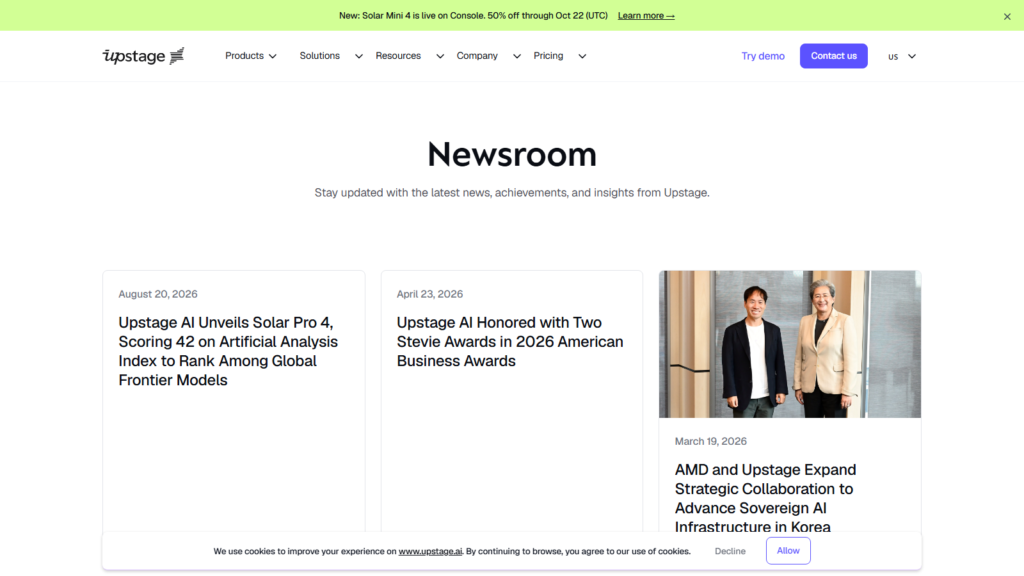
If you look for this model on the independent intelligence index, be careful about what you find. There is a page on that index whose slug resembles this model’s name, but it describes a different, much older entry with a context window in the low thousands — it is not this release and its score does not belong to this release. We checked on 28 September 2026 and found no page for this version.
The reason to spell that out is that misattributing a score is worse than having none. A missing number invites a question; a wrong number ends one. And this is the exact failure mode that a similarly named predecessor creates: the search succeeds, the page loads, and nothing on it announces that it is four versions out of date.
What you can rely on instead is the vendor’s own description of the model’s shape — the architecture, the active-parameter count, the agent framing — which is the vendor’s characterisation, plus whatever you measure yourself.
Where a sparse model is the wrong choice
Sparsity is not free, and the cases where it hurts are worth knowing before routing anything.
If your workload is a single hard question with a long input and a short answer — a document question, a classification over a large text — the active-parameter advantage has nothing to amortise against. You pay the routing overhead and get nothing back, and a dense model of comparable total size will often do the job at least as well for a simpler operational story.
If your workload depends on every token being informed by every other, as in fine-grained reasoning over a tight logical chain, the router’s choices become a source of variance rather than a saving.
And if your workload is genuinely tiny — short prompts, short outputs, no loop — the cheapest dense model available will usually beat a sparse one, because there is no long tail of routine steps for the architecture to make cheap.
What this entry says about the week
The interesting thing about this release is not that it is cheap. It is that it is cheap for a stated architectural reason that you can check. That is rarer than it should be: most cheap entries in this week’s crop are cheap because they are small, or because they are a preview, or because a price has not been recorded yet.
A cost advantage with a mechanism behind it is one you can reason about. You can predict when it will hold and when it will not, which is what makes it usable in a budget rather than merely attractive in a comparison. That is the standard worth applying to every cheap row on the calendar: not “how little does it cost”, but “why”.
Sourcing note: Solar Mini 4’s listing date of 23 September 2026, its mixture-of-experts architecture with thirty-five billion total parameters and roughly three billion active per token, and its agentic positioning are from a third-party public model directory read on 28 September 2026 and from the vendor’s own description of the model. The absence of an independent intelligence index page for this version was our own check on 28 September 2026, as was the finding that the index does have a separate page for a much older entry with a similar name and a context window in the low thousands, whose score does not apply to this release. The statement that this model is not in OrcaRouter’s catalogue is a statement about our own catalogue on 28 September 2026. No per-token price and no index score is quoted, because none is published for this version; nothing has been estimated. The arguments about agent-loop token spend, cost per completed task, tokenisation and the cases where sparsity is the wrong choice are editorial framing rather than measured results. This article names no competing platform and describes none.

Being Named an Executor: What the Role Really Involves

Securing Remote Sites With No Power: A Guide to Off-Grid Solar Camera Systems

Why Steam Cleaning Is the Secret to a Fresher, Healthier Home

Alex Pettyfer Net Worth, Wife, Age, Height, Children, Career and More

Brad Williams Net Worth, Wife, Height, Age, Daughter, Family, Career and More

Eldorado.gg Review 2026: How It Works, Safety, Fees, and Risks
-
Celebrity10 months ago
Alex Pettyfer Net Worth, Wife, Age, Height, Children, Career and More
-
Celebrity10 months ago
Brad Williams Net Worth, Wife, Height, Age, Daughter, Family, Career and More
-
Blog2 months ago
Eldorado.gg Review 2026: How It Works, Safety, Fees, and Risks
-
 Anime11 months ago
Sanzoku Bandits of One Piece: Origins, Higuma, and Their Role in Dawn Island
-
 Celebrity10 months ago
John McGinn Net Worth, Age, Height, Wife, Childrens, Career and More
-
 Celebrity10 months ago
Frances de la Tour Net Worth, Age, Height, Husband, Childrens, Career and More
-
 Celebrity11 months ago
Will Trickett Net Worth, Wife, Childrens, Age, Career and More
-
 Blog2 months ago
Crackstube: A Complete Guide to the Digital Publishing Platform