
Blog
inurl:spatial Explained: How This Google Search Operator Works


Searching the web can get messy when a topic has thousands of results. A search operator can make the job much easier. One useful example is inurl:spatial. It tells Google to focus on pages that contain the word “spatial” in the URL.
- What Is inurl?
- How the Search Operator Works
- Why People Use This Search?
- Finding GIS and Mapping Resources
- Using inurl for SEO Research
- Checking Competitor Site Structure
- Narrowing Academic and Technical Searches
- What inurl Cannot Do?
- Why Search Results Can Be Ambiguous?
- Is inurl an Indexing Check?
- Best Practices for Better Results
This can help with SEO research, GIS discovery, technical research, and site checks. It is simple to use, but it also has clear limits. This guide explains how the query works, where it can help, and how to avoid common mistakes.
What Is inurl?
inurl:spatial is a Google search query built around the inurl: operator. The operator asks Google to look for a word inside a page URL instead of only in the visible page text. Older Google documentation describes inurl: as a way to restrict results to documents that contain a chosen word in the result URL. Current SEO references also report that the operator still works.
In this case, the target word is “spatial.” A matching page could have a URL such as example.com/spatial-data/ or docs.example.com/spatial-tools/. The page may also use the same word in its title or content, but the URL match is the main point.
This makes the search useful when URL structure matters more than a broad keyword search.
How the Search Operator Works
The query has two parts. The first is inurl:. This tells Google that the next term should appear in the web address. The second part is the word being searched.
With inurl:spatial, Google tries to return pages whose URLs include “spatial.” The operator should be written with no space between inurl: and the target term. Google’s current search help also says operators should be placed directly next to the term they control.
This is different from a normal search for spatial topics. A regular search can show pages where the word appears only in the title, headings, or body text.
Why People Use This Search?
People use this query when they want a smaller and more focused group of results. It can help when studying websites about maps, GIS, 3D systems, location data, spatial computing, or similar subjects.
SEO users may use it to study folder names and URL patterns. Researchers may use it to locate topic-based sections on large websites. Developers may use it to find documentation pages whose URLs include a useful technical term.
The main benefit is focus. Instead of searching every page that mentions a topic, the query helps find pages where that topic is part of the web address.
Finding GIS and Mapping Resources
One common use is finding pages related to geographic information systems. Many GIS websites use clear folder names for datasets, mapping tools, guides, and analysis pages.
For example, a university, public agency, or software company may use URLs such as /spatial-data/, /spatial-analysis/, or /spatial-tools/. A URL-focused search can help surface those sections faster.
Still, the word “spatial” does not prove that a page contains GIS data. It can be used in many fields. Open the result and check the page before treating it as a useful geographic source.
Using inurl for SEO Research
SEO work often includes studying site structure. This operator can help show how websites place a topic inside folders, slugs, and subdirectories.
You may notice patterns such as short URLs, category folders, or repeated naming systems. These details can help you understand how another site groups related content.
The operator does not explain why a page ranks. It does not show backlinks, search volume, authority, or content quality. It is only a filter. For deeper SEO work, combine it with normal keyword research, page review, and technical SEO tools.
Checking Competitor Site Structure
You can combine the query with a site restriction. For example, site:example.com inurl:spatial can help find matching URLs on one domain.
This can be useful when reviewing a competitor, publisher, university, or software website with many pages. It may reveal a topic section that is hard to find through the main menu.
Google officially supports the site: operator for limiting results to a domain or path.
However, search results should not be treated as a full website crawl. If you need a complete technical audit, use a proper crawler or an SEO platform.
Narrowing Academic and Technical Searches
Technical websites often use clear words in their URLs. This makes the query useful for finding documentation, research pages, project notes, or educational material linked to spatial topics.
You can add another word after the operator to make the results more useful. Examples include “database,” “GIS,” “audio,” “AR,” “mapping,” or “analysis.”
This matters because “spatial” can refer to many fields. It may describe geography, 3D computing, sound, psychology, design, or data systems. A second keyword cuts down unrelated pages and saves time.
You can also use quotation marks around an exact phrase. Google supports quoted searches when you want an exact word or phrase in the results.
What inurl Cannot Do?
This search is not a GIS command, database query, or geographic calculation. It does not measure distance, compare coordinates, create maps, or search inside a spatial database.
It also cannot prove that a page is trustworthy. A matching URL may belong to a strong research source, a basic blog, a product page, or an unrelated site that happens to use the same word.
The operator only helps narrow search results by URL text. Any deeper judgment still needs a manual review of the page and its source.
Why Search Results Can Be Ambiguous?
The word “spatial” is broad. Because of that, the same search can return pages about very different subjects.
One result may focus on GIS. Another may discuss spatial audio. A third may cover augmented reality, room design, memory studies, or 3D software. The shared word in the URL does not mean the pages have the same purpose.
To reduce this problem, add a clear topic after the operator. A search with “GIS” will usually be more focused than the URL filter alone. The same idea works with words such as “database,” “computing,” “mapping,” or “audio.”
Is inurl an Indexing Check?
Some users treat this type of search as a way to check whether pages are indexed. That is not a reliable use of the operator.
Google Search Console gives site owners better tools for this task. The URL Inspection tool shows what Google knows about a specific page and can report whether the URL is indexed or may be indexable.
Google also says its Page Indexing report is useful for viewing broader indexing coverage across a site. For a specific URL, URL Inspection is the more direct choice.
A search operator can help you discover pages, but it should not replace Search Console when you are checking your own site.
Best Practices for Better Results
Use inurl:spatial as a discovery tool, not as proof of quality. Start with a clear goal. Decide whether you want GIS data, technical docs, competitor pages, academic material, or another type of result.
Then add one or two useful terms. Keep the search simple at first. Add filters one at a time. Very complex searches may hide good pages or return too few results.
Open several results and compare them. Check the publisher, page date, author, and purpose. If the page contains technical facts or downloadable data, confirm that the information comes from a reliable source.
For your own website, use Search Console when you need crawl and indexing details. Google says URL Inspection can show indexed information for a specific page and can also test a live URL for many search requirements.
In short, this operator works best when you use it for focused discovery. It can support SEO, GIS research, technical searches, and site structure reviews. It does not replace specialist tools, but it can make a broad web search much easier to manage.


If your tap water tastes a little off, smells faintly of chlorine, or leaves spots on your glassware, you’re not imagining things. Most municipal water supplies do a solid job of meeting safety standards, but “safe” and “great-tasting” aren’t always the same thing. That gap is exactly why so many households are turning to reverse osmosis systems to take control of what comes out of their faucet.
At CleanLine Water Co, we’ve spent years helping homeowners understand what’s actually in their water and how to fix it. Reverse osmosis has become one of the most requested solutions we install, and for good reason. It’s a filtration method that doesn’t just mask bad taste or odor. It physically removes the particles, chemicals, and dissolved solids responsible for them in the first place.
This post breaks down how reverse osmosis works, what it removes, and why it might be the upgrade your kitchen has been missing.
How Does Reverse Osmosis Actually Work?
Reverse osmosis, often shortened to RO, pushes water through a semi-permeable membrane with pores so fine that only water molecules can pass through easily. Everything else — dissolved salts, heavy metals, certain bacteria, and a long list of contaminants — gets left behind and flushed away.
Think of it like a security checkpoint for your water. Most filtration methods use a single barrier, similar to a basic screen door that catches larger debris but lets smaller particles through. An RO system, by contrast, uses multiple stages: a sediment pre-filter, a carbon filter to tackle chlorine and odor, the RO membrane itself, and often a polishing filter at the end. By the time water reaches your glass, it’s been filtered more thoroughly than almost any other residential method available today.
What Does Reverse Osmosis Remove From Your Water?
This is usually the first question homeowners ask us, and it’s a fair one. A quality RO system can reduce or eliminate:
- Lead and other heavy metals
- Chlorine and chloramines
- Nitrates and sulfates
- Arsenic
- Fluoride
- Many pharmaceutical residues and microplastics
The result is water that’s noticeably cleaner, crisper, and free of the chemical aftertaste that so many people associate with tap water. Ice cubes come out clearer. Coffee and tea taste the way they’re supposed to. Even something as simple as filling a water bottle for work starts to feel like a small upgrade to daily life.
Why Homeowners Are Choosing Reverse Osmosis Over Other Filters
Not all filtration is created equal. Pitcher filters and basic faucet attachments can improve taste slightly, but they’re limited in what they actually remove and need frequent replacement to stay effective. Whole-house carbon filters help with chlorine and sediment but aren’t designed to tackle dissolved solids or heavy metals at the molecular level.
Reverse osmosis fills that gap. It’s one of the few residential-grade methods certified to reduce contaminants down to the parts-per-billion range, which matters most for households concerned about lead pipes, agricultural runoff, or aging municipal infrastructure. It’s also remarkably low-maintenance once installed, typically needing filter changes just once or twice a year depending on usage.
For families with young kids, anyone managing a health condition sensitive to water quality, or simply those who’ve grown tired of buying bottled water, RO systems tend to pay for themselves quickly. Choose reverse osmosis if lead reduction, consistent taste, and long-term cost savings over bottled water matter more to your household than upfront installation cost.
Bringing Reverse Osmosis Into Your Home
Crisp, contaminant-free water straight from your own tap is exactly what Reverse Osmosis delivers, and it’s one of the easiest upgrades a household can make without any major plumbing overhaul. At CleanLine Water Co, our certified technicians handle everything from water testing to full system installation, so you know precisely what’s being filtered out and why it matters for your home.
We also design our systems to fit under standard kitchen sinks without eating into storage space, and we pair every installation with a maintenance plan, so filters get swapped before they ever affect performance. No guesswork, no surprise plumbing bills, just consistently clean water on demand.
Ready for Cleaner Water?
Good water shouldn’t be something you have to think twice about. Whether you’re dealing with hard water stains, an unpleasant chlorine smell, or just want peace of mind about what your family is drinking, reverse osmosis offers a dependable, low-maintenance solution backed by real science.
CleanLine Water Co is ready to help you figure out the right system for your home, your budget, and your water quality concerns. Reach out today for a free water test and consultation, and see firsthand what a difference properly filtered water can make.
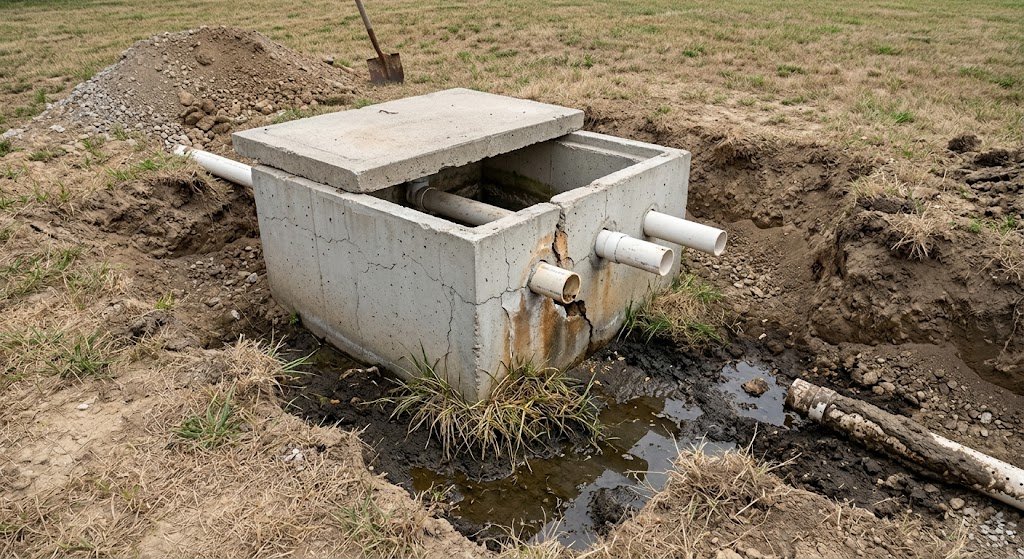
If your septic system has been acting up lately — slow drains, soggy patches in the yard, or a foul odor that won’t quit — the culprit might not be your septic tank at all. It could be a small, often-overlooked component called the distribution box. This unassuming concrete or plastic box plays a massive role in how wastewater flows through your entire septic system, and when it fails, the consequences can ripple through your whole property.
At Septic Advisor, we’ve seen firsthand how a compromised distribution box can turn a minor issue into a major, costly headache. Understanding what this component does, why it fails, and when it needs to be replaced can save homeowners thousands of dollars in emergency repairs down the road.
What Does a Distribution Box Actually Do?
Think of the distribution box as the traffic controller of your septic system. After wastewater leaves your septic tank, it doesn’t just flow randomly into the drain field. Instead, it passes through the distribution box, which evenly divides the effluent among the various pipes leading to your drain field’s leach lines.
This even distribution is critical. Without it, some sections of your drain field would get flooded with excess wastewater while others sit dry and underused. Over time, this imbalance leads to soil saturation, sewage backups, and premature drain field failure — one of the most expensive septic problems a homeowner can face.
Signs Your Distribution Box Needs Attention
Septic systems rarely fail without warning. Here are some telltale signs that your distribution box might be struggling:
- Uneven wet spots in your yard: If certain areas near your drain field are consistently soggy or lush green while others remain dry, your distribution box may be sending water unevenly.
- Slow or gurgling drains: When wastewater can’t flow smoothly out of your home, it often backs up, causing sluggish drainage throughout the house.
- Sewage odors: A cracked or shifted distribution box can allow effluent to pool near the surface, creating persistent, unpleasant smells.
- Visible cracks or settling: Older distribution boxes, especially those made of concrete, can crack, tilt, or sink due to ground movement, tree root intrusion, or simple age-related wear.
Ignoring these symptoms rarely makes them go away. In most cases, the problem worsens, and what could have been a simple fix turns into a full drain field replacement — a project that costs significantly more than addressing the distribution box on its own.
Why Replacement Often Beats Repair
Some homeowners try to patch a damaged distribution box, but this is usually a temporary fix at best. Concrete boxes crack further over time, and once the internal baffles or outlet ports are damaged, they can’t distribute effluent evenly no matter how many patches are applied.
Modern replacement distribution boxes, particularly those made from durable, corrosion-resistant materials, offer a far more reliable long-term solution. They’re designed to resist the ground shifting, root intrusion, and general wear that plagues older concrete models. Choosing a full replacement over a patchwork repair means fewer callbacks, less disruption to your yard, and genuine peace of mind that your septic system is functioning as it should.
What to Expect During a Replacement
A professional distribution box replacement typically involves a few key steps:
- Inspection: A technician locates the existing distribution box and assesses the extent of the damage.
- Excavation: The area around the box is carefully dug out to expose the unit and connecting pipes.
- Removal and replacement: The damaged box is removed, and a new, properly leveled unit is installed in its place.
- Reconnection and testing: Pipes are reconnected, and the system is tested to confirm even effluent distribution across all leach lines.
- Backfilling: The excavation site is restored, leaving your yard as close to its original condition as possible.
While this might sound like a significant undertaking, most replacements can be completed in a single day by an experienced team, minimizing disruption to your household routine.
Trust Septic Advisor for a Seamless Distribution Box Replacement
Distribution Box Replacement is one of the most valuable investments you can make to protect your drain field and extend the life of your entire septic system, and Septic Advisor makes the process straightforward from start to finish. Our team brings years of hands-on experience diagnosing distribution box issues accurately, so you’re never paying for unnecessary work or guessing at the root cause of your septic troubles.
We understand that septic problems can feel overwhelming, especially when they come with an unpleasant surprise like a backed-up drain or a smelly yard. That’s why we prioritize clear communication, transparent pricing, and efficient service every step of the way. Our technicians use quality materials designed to outlast older concrete models, giving you a distribution box that can handle years of reliable use without the recurring issues that plague outdated systems.
Beyond the technical work, we take pride in treating every property with care. Our excavation and restoration process is designed to minimize yard damage, so you won’t be left with an unsightly mess once the job is done.
Protect Your Property Before Small Problems Become Big Ones
A septic system is only as strong as its weakest component, and for many homeowners, that weak point turns out to be an aging or damaged distribution box. Catching the warning signs early — uneven wet patches, slow drains, persistent odors — can mean the difference between a straightforward replacement and a full-scale drain field overhaul.
If you’ve noticed any of these red flags on your property, don’t wait for the problem to escalate. Reach out to Septic Advisor today for an inspection, and let our experienced team help you keep your septic system running smoothly for years to come.

There’s nothing quite like walking into a perfectly cooled home after a scorching summer afternoon, or sinking into a warm living room while snow falls outside. Comfort like this doesn’t happen by accident. It takes a reliable HVAC system, regular maintenance, and a team of professionals who genuinely care about keeping your home running smoothly. That’s exactly what homeowners find when they turn to a trusted local provider for their heating and cooling needs.
Finding the right HVAC partner can feel overwhelming. There are countless companies promising fast service and fair prices, but few actually deliver on both. Homeowners want more than a quick fix. They want a team that shows up on time, explains the problem clearly, and offers solutions that fit their budget and lifestyle. This is where a dedicated, customer-first approach truly makes a difference.
Why HVAC Maintenance Matters More Than You Think
Many homeowners only think about their heating and cooling systems when something breaks. By then, the damage is often more extensive, and the repair bill reflects it. Routine maintenance catches small issues before they snowball into costly breakdowns. A clogged filter, a worn belt, or a refrigerant leak might seem minor, but left unchecked, these issues can shorten the lifespan of an entire system.
Regular tune-ups also improve energy efficiency. A well-maintained HVAC system doesn’t have to work as hard to heat or cool a home, which translates directly into lower utility bills. Over the course of a year, those savings add up significantly. Beyond the financial benefits, consistent maintenance improves indoor air quality, which matters for families with allergies, asthma, or young children.
What Sets Quality HVAC Service Apart
Not all HVAC companies operate the same way. The best ones combine technical expertise with genuine customer care. Technicians should arrive fully equipped, diagnose issues accurately, and explain findings in plain language rather than confusing jargon. Transparency around pricing matters too. Nobody wants to be surprised by hidden fees after the work is already done.
Response time is another critical factor, especially during extreme weather. A broken air conditioner in the middle of a heat wave isn’t just inconvenient; it can be a genuine health risk for young children, older adults, and pets. Similarly, a failed furnace during a winter storm demands immediate attention. Companies that prioritize fast response times and emergency availability earn the trust of their communities for good reason.
Installation, Repair, and Everything In Between
HVAC needs vary widely from one household to the next. Some homeowners need a complete system replacement because their current unit is outdated or inefficient. Others simply need a repair to get through the season. A comprehensive HVAC provider handles the full spectrum of services, including:
- System Installation: Helping homeowners choose the right size and type of unit for their space, ensuring optimal performance and energy efficiency.
- Routine Maintenance: Seasonal tune-ups that keep systems running smoothly and extend their operational lifespan.
- Emergency Repairs: Fast, reliable fixes when a system unexpectedly breaks down.
- Air Quality Solutions: Options like air purifiers, humidifiers, and duct cleaning to improve the air circulating through a home.
Offering this range of services under one roof saves homeowners the hassle of juggling multiple contractors. It also means technicians become familiar with a property over time, which can lead to more accurate diagnostics and personalized recommendations.
Choosing a Company That Treats Your Home Like Their Own
Trust is the foundation of any good HVAC relationship. Homeowners are inviting technicians into their personal space, often around their families, so professionalism and respect matter just as much as technical skill. Licensed, insured technicians who communicate clearly and leave the workspace clean reflect a company’s commitment to doing things the right way.
Experience real peace of mind knowing a dependable local team has your home’s comfort covered year-round with NexAir Home Services. From the first phone call to the final walkthrough, NexAir Home Services focuses on building lasting relationships with homeowners rather than chasing one-time transactions. That means honest assessments, fair pricing, and a genuine commitment to getting the job done right the first time.
Whether it’s a routine seasonal check-up, an unexpected breakdown, or a full system upgrade, having a dependable partner on call brings real peace of mind. Homeowners shouldn’t have to worry about whether their HVAC provider will show up on time or stand behind their work. That reliability is what turns a one-time service call into a long-term relationship.
Comfort You Can Count On, Season After Season
A well-functioning HVAC system is one of those things people rarely think about until it stops working. But when temperatures spike or plunge, having a trustworthy team just a phone call away makes all the difference. Investing in regular maintenance, choosing a transparent and responsive provider, and staying ahead of small issues before they escalate are the keys to year-round comfort.
If your home is due for a tune-up or you’re facing an HVAC issue that needs expert attention, don’t wait until the problem worsens. Reach out to a team that treats your comfort as seriously as you do, and experience the difference reliable, professional service can make.

Why Your Home’s Electronics Are One Lightning Strike Away From Disaster

Gary Air: Bringing Reliable Comfort to Every Home

The Hidden Dangers Lurking Behind Your Walls (and How to Fix Them)

Alex Pettyfer Net Worth, Wife, Age, Height, Children, Career and More

Brad Williams Net Worth, Wife, Height, Age, Daughter, Family, Career and More

Eldorado.gg Review 2026: How It Works, Safety, Fees, and Risks
-
Celebrity9 months ago
Alex Pettyfer Net Worth, Wife, Age, Height, Children, Career and More
-
Celebrity10 months ago
Brad Williams Net Worth, Wife, Height, Age, Daughter, Family, Career and More
-
Blog1 month ago
Eldorado.gg Review 2026: How It Works, Safety, Fees, and Risks
-
 Anime10 months ago
Sanzoku Bandits of One Piece: Origins, Higuma, and Their Role in Dawn Island
-
 Celebrity10 months ago
John McGinn Net Worth, Age, Height, Wife, Childrens, Career and More
-
 Celebrity10 months ago
Frances de la Tour Net Worth, Age, Height, Husband, Childrens, Career and More
-
 Celebrity10 months ago
Will Trickett Net Worth, Wife, Childrens, Age, Career and More
-
 Blog2 months ago
Crackstube: A Complete Guide to the Digital Publishing Platform
Pingback: What Is Yonochomp.com? Features, Topics, and Content Overview - Binge Saga
Pingback: Renvoit com: What Is Renvoit.com? Complete Guide - Binge Saga