
Blog
Hillary Clinton’s Net Worth in 2026: Salary, Books, Speeches, and Assets


Hillary Clinton is an American lawyer, author, professor, and former public official. She was born in Chicago in 1947. She served as First Lady of the United States, a U.S. senator from New York, and Secretary of State. She is married to former President Bill Clinton and has one daughter, Chelsea Clinton.
- Quick Bio
- Hillary Clinton’s Net Worth in 2026
- How Hillary Clinton Started Her Career?
- Hillary Clinton’s Wealth Before the White House
- Hillary Clinton’s Income After the White House
- Hillary Clinton’s Net Worth From Books
- Hillary Clinton’s Net Worth From Speaking
- Hillary Clinton’s Government Salary
- How Hillary Clinton Built Her Wealth?
- Hillary Clinton and Bill Clinton’s Income
- Hillary Clinton’s Business and Media Projects
- How Much Does Hillary Clinton Make a Year?
- Hillary Clinton’s Real Estate and Assets
- Hillary Clinton’s Career and Wealth Growth
- Hillary Clinton’s Life Today
- Hillary Clinton’s Personal Life
- Hillary Clinton’s Net Worth Compared With Other Politicians
- Hillary Clinton’s Net Worth Over the Years
- Bottom Line
- FAQs
Hillary Clinton net worth is reported at about $120 million combined with Bill Clinton. Much of their income came from books, paid speeches, professional work, and investments. Clinton also works as a professor at Columbia University and has continued her work in books and media.
Quick Bio
| Detail | Information |
|---|---|
| Full Name | Hillary Diane Rodham Clinton |
| Date of Birth | October 26, 1947 |
| Birthplace | Chicago, Illinois, U.S. |
| Age in 2026 | 78 |
| Education | Wellesley College, Yale Law School |
| Profession | Attorney, author, professor, former public official |
| Former Role | First Lady of the United States |
| U.S. Senate | Senator from New York, 2001–2009 |
| Secretary of State | 2009–2013 |
| Spouse | Bill Clinton |
| Married | October 11, 1975 |
| Child | Chelsea Clinton |
| Major Books | Living History, Hard Choices, What Happened, State of Terror, Something Lost, Something Gained |
| Current Academic Work | Professor at Columbia University |
| Production Company | HiddenLight Productions |
| Reported Net Worth | About $120 million combined with Bill Clinton |
Hillary Clinton’s Net Worth in 2026
Hillary Clinton net worth is reported at about $120 million combined with Bill Clinton in 2026. This is an outside estimate. It does not mean Hillary has $120 million in cash or that the full amount belongs to her alone.
The couple has earned money from several sources. These include legal work, government salaries, books, speaking events, consulting, and investments. Books and paid speeches became major income sources after the White House.
Their income rose sharply after 2000. Their reported gross income was $416,000 in 2000. It increased to about $16 million in 2001. They later reported $20 million in 2004 and $28 million in 2014.
They did not keep all of this money. Between 2007 and 2014, Bill and Hillary reported about $141 million in combined income. They paid about $56 million in federal and state taxes. They also donated about $15 million to charity.
How Hillary Clinton Started Her Career?
Hillary Clinton began her career in law. After Yale Law School, she worked with the Children’s Defense Fund. She also did legal research linked to the congressional impeachment inquiry involving President Richard Nixon.
She moved to Arkansas in 1974. She joined the University of Arkansas School of Law. She married Bill Clinton in 1975. She later joined Rose Law Firm in Little Rock and became its first female full partner.
Her legal career gave her an income before she entered national politics. She also earned money from corporate board positions. At times, she earned more than Bill Clinton while he was governor of Arkansas.
Hillary also served as First Lady of Arkansas while Bill was governor. During those years, she continued professional and public work. She worked on education, children’s health, and legal-aid issues.
Hillary Clinton’s Wealth Before the White House
Hillary earned much of her early income through law. Her work at Rose Law Firm was an important part of her career in Arkansas.
She also earned money from corporate board positions. Bill Clinton was serving in state government at the time. His salary as governor was modest compared with some of Hillary’s professional earnings.
Their income at that time was much lower than it became later. Their biggest financial growth came after Bill Clinton left the White House in 2001.
During his presidency, Bill earned about $200,000 a year as president. Hillary stopped practicing law after becoming First Lady. Her 1996 book, It Takes a Village, also brought her book royalties.
Hillary Clinton’s Income After the White House
The Clintons’ finances changed after they left the White House in January 2001. At the time, they had large legal bills and less liquid wealth than they later gained. Hillary later said they left the White House “dead broke,” a description that became politically disputed.
Their income soon increased. They earned money from speaking events, book advances, royalties, consulting work, and investments. These sources brought in millions of dollars over the following years.
Their reported gross income was about $416,000 in 2000. It rose to $16 million in 2001, $9 million in 2002, and $8 million in 2003. Later, they reported $20 million in 2012, $27 million in 2013, and $28 million in 2014.
Books and paid speeches became two important sources of Hillary’s income. Both brought in much more money than her earlier government salaries.
Hillary Clinton’s Net Worth From Books
Books have been an important source of Hillary Clinton’s income. She published It Takes a Village in 1996. Her memoir Living History followed in 2003.
She later wrote Hard Choices and What Happened. She also wrote State of Terror with Louise Penny. In 2024, she published Something Lost, Something Gained.
Some of her book deals included large advances. She reportedly received a $14 million advance for Hard Choices. An advance is money paid by a publisher before future book royalties are counted.
Her books have continued to be part of her work after government. They have also added to her income through advances and royalties.
Books are therefore an important part of Hillary Clinton net worth. However, they are only one part of the couple’s wider financial history.
Hillary Clinton’s Net Worth From Speaking
Paid speeches became another major income source for Hillary after her government career. She spoke before companies, universities, industry groups, and other organizations.
She often received about $200,000 to $225,000 per appearance. During a 15-month period ending in March 2015, she earned more than $11 million from paid speeches.
These fees added millions of dollars to her income. A single speech could bring in an amount close to her yearly salary as Secretary of State.
These figures are from earlier years. They do not show what Clinton charges for a speaking event in 2026.
Hillary Clinton’s Government Salary
Hillary Clinton served in the U.S. Senate after winning a New York seat in 2000. She took office in January 2001 and won reelection in 2006.
She later became the 67th U.S. Secretary of State. She started the job on January 21, 2009, and served until February 1, 2013. Her salary was about $186,600 per year.
Her government pay was much lower than some of her later speaking fees. One paid speech could reportedly bring in about as much as her annual Secretary of State salary.
Government salaries were part of her income for many years. But books and paid speeches brought in much larger amounts after she left office.
How Hillary Clinton Built Her Wealth?
Hillary Clinton earned money from several types of work. Early in her career, she earned money as a lawyer and from corporate board positions. She later received government salaries and book income.
Paid speeches became another large source of money. Bill Clinton also earned income from books, speeches, consulting, and other work. Their combined finances are important because the reported $120 million figure covers both of them.
This means Hillary Clinton net worth should not be treated as money earned by Hillary alone. Many reports combine her assets and income with those of Bill Clinton.
Their wealth grew over many years. Law, public service, books, speeches, investments, and other paid work all played a part.
Hillary Clinton and Bill Clinton’s Income
Bill and Hillary Clinton reported large combined earnings over the years. From 1991 through 2015, their listed gross income totaled about $241.5 million.
Their yearly income changed a lot. They reported $200,000 in 1991 and $290,000 in 1992. Their income later reached $16 million in 2001, $21 million in 2007, $20 million in 2012, $27 million in 2013, and $28 million in 2014.
Gross income is not the amount they kept. Between 2007 and 2014, the couple reported about $141 million in income. They paid about $56 million in federal and state taxes and gave about $15 million to charity.
Income and net worth are different. Income is money earned during a set period. Net worth is the value of assets after debts are taken away.
Hillary Clinton’s Business and Media Projects
Hillary Clinton has worked on several media projects. She co-founded HiddenLight Productions with Chelsea Clinton and Sam Branson. The company makes documentary, unscripted, and scripted programs.
HiddenLight has worked on projects such as In Her Hands and Gutsy. Hillary and Chelsea Clinton also hosted the Apple TV+ series Gutsy.
Clinton also became a Broadway producer. In 2024, she was a co-producer of Suffs. The musical is about the women’s suffrage movement.
There is no clear public figure for how much Clinton earned from these projects. They should not be given a set value when looking at Hillary Clinton net worth.
How Much Does Hillary Clinton Make a Year?
There is no confirmed public figure for Hillary Clinton’s yearly income in 2026. Her income can come from books, teaching, media projects, speeches, and other paid work.
Her past income changed from year to year. Bill and Hillary Clinton reported combined gross income of $20 million in 2012. It rose to $27 million in 2013 and $28 million in 2014. In 2015, they reported $11 million. These figures cover both Bill and Hillary.
Hillary also made more than $11 million from paid speeches during a 15-month period ending in March 2015. Speaking was a major source of income at that time.
In 2023, Clinton joined Columbia University as a professor of international and public affairs. She has also continued her work in books and media.
Hillary Clinton’s Real Estate and Assets
Bill and Hillary Clinton have long owned a home in Chappaqua, New York. The property is part of their known real estate holdings.
In 2016, they bought a property next to their Chappaqua home. The reported purchase price was about $1.6 million. This expanded their property in the area.
A purchase price does not show what a home is worth today. Property values can change over time. The source does not give a verified 2026 value for the property.
For this reason, the home should not be used to create a new net worth figure. The known purchase price is the useful confirmed detail.
Hillary Clinton’s Career and Wealth Growth
Hillary Clinton started her career in law. She later served as First Lady of Arkansas and First Lady of the United States. She then became a U.S. senator from New York and Secretary of State.
She ran for the Democratic presidential nomination in 2008. Barack Obama won the nomination. Clinton later joined his administration as Secretary of State. In 2016, she became the Democratic presidential nominee. She received about 65.9 million votes, while Donald Trump received about 63 million. Trump won the Electoral College.
After the 2016 election, Clinton continued writing books and working on media projects. In 2023, she joined Columbia University as a professor.
Her sources of income also changed over time. Government salaries were important during her public career. Books and paid speeches later became major sources of income.
Hillary Clinton’s Life Today
Hillary Clinton continues to work in education, writing, and media. She joined Columbia University’s School of International and Public Affairs as a professor in 2023.
Her work at Columbia added teaching to her later career. She also became chair of the faculty advisory board for Columbia’s Institute of Global Politics.
Clinton has continued writing. In 2024, she published Something Lost, Something Gained. The book covers family, friendship, aging, faith, public life, and world affairs.
She has also continued her media and production work. HiddenLight Productions is one of the projects she started after her government career.
Hillary Clinton’s Personal Life
Hillary met Bill Clinton at Yale Law School in 1971. They married on October 11, 1975, in Fayetteville, Arkansas.
Their daughter, Chelsea Victoria Clinton, was born on February 27, 1980. Chelsea later married Marc Mezvinsky. Bill and Hillary have three grandchildren.
Hillary has been a lifelong member of the United Methodist Church. She has spoken about the role of faith in her life and public work.
Bill and Hillary have long had a home in Chappaqua, New York. Their finances are often reported together. This matters when reading estimates of Hillary Clinton net worth.
Hillary Clinton’s Net Worth Compared With Other Politicians
Net worth figures for public figures are often estimates. Different sources may count property, investments, income, and shared assets in different ways.
The $120 million figure used for Hillary Clinton is a reported combined estimate with Bill Clinton. It should not be treated as Hillary’s personal wealth alone.
The couple also reported about $241.5 million in gross income from 1991 through 2015. Gross income is different from net worth.
Taxes, donations, debts, and spending affect how much wealth remains. This is why gross income and net worth figures should not be compared as if they mean the same thing.
Hillary Clinton’s Net Worth Over the Years
Hillary Clinton earned money as a lawyer before reaching the White House. She also earned income from corporate board positions. Bill Clinton earned a government salary while serving as governor of Arkansas.
Their finances changed after they left the White House in 2001. Books, paid speeches, consulting work, and investments became major sources of income. Their combined gross income rose from $416,000 in 2000 to $16 million in 2001.
Some later years brought even higher income. The couple reported $21 million in 2007, $20 million in 2012, $27 million in 2013, and $28 million in 2014.
These earnings help explain the rise in Hillary Clinton net worth over time. However, gross income is not the same as current wealth.
Bottom Line
Hillary Clinton has earned money from law, government work, books, paid speeches, teaching, and media projects. Bill Clinton’s income is also important because their wealth is often reported together.
Hillary Clinton net worth is reported at about $120 million combined with Bill Clinton. This is an estimate, not a confirmed personal financial total.
Their reported combined gross income from 1991 through 2015 was about $241.5 million. Books and paid speeches became major income sources after the White House.
Clinton has continued working after her government career. Her later work includes books, teaching at Columbia University, HiddenLight Productions, and Broadway production.
FAQs
What is Hillary Clinton net worth in 2026?
Hillary Clinton net worth is reported at about $120 million combined with her husband, Bill Clinton.
How did Hillary Clinton make her money?
Her income has come from legal work, government salaries, books, paid speeches, investments, teaching, and media projects.
How much did Hillary Clinton make from speeches?
She earned more than $11 million from paid speeches during a 15-month period ending in March 2015.
How much did Hillary Clinton earn from books?
Her books brought large advances and royalties, including a reported $14 million advance for Hard Choices.
What does Hillary Clinton do now?
In 2026, Clinton is a professor of international and public affairs at Columbia University and continues work in education, writing, and public affairs.
Read Also: Nick Saban’s Net Worth: How the Alabama Coach Built His Wealth


Starting a franchise is exciting. You’ve built a business model that works, customers love your product, and now you’re ready to multiply that success across new locations and new owners. But before you hand over your brand to someone else to run, there’s a critical step that too many business owners skip or delay: getting proper legal guidance in place.
Franchising isn’t just a bigger version of running your own store. It’s a completely different legal and business structure, governed by federal and state regulations that most entrepreneurs have never encountered. One misstep in your Franchise Disclosure Document, one poorly worded clause in your franchise agreement, and you could be facing lawsuits, fines, or a damaged reputation before you’ve sold a single franchise unit.
This is where The Franchise Firm comes in. With deep experience guiding business owners through every stage of the franchising process, The Franchise Firm helps entrepreneurs transform their concept into a legally sound, scalable franchise system. In this post, we’ll walk through what makes franchise law so distinct, the common pitfalls that trip up new franchisors, and how working with the right legal team can set your brand up for sustainable growth.
What Makes Franchise Law So Different from General Business Law?
Franchising sits at the intersection of contract law, intellectual property law, and federal trade regulation. The Federal Trade Commission requires every franchisor to prepare a Franchise Disclosure Document, commonly known as an FDD, before offering or selling any franchise. This document contains 23 specific categories of information, covering everything from litigation history to initial investment costs to territorial rights.
Beyond the FDD, many states have their own registration and disclosure requirements. States like California, New York, and Illinois are known as “registration states,” meaning franchisors must register their FDD with state regulators before selling franchises there. Miss a filing deadline or misunderstand a state’s specific amendments, and your entire expansion timeline can grind to a halt.
Add to this the complexity of trademark protection, royalty structures, territorial exclusivity, and renewal terms, and it becomes clear why franchising demands specialized legal knowledge. A general business attorney, however skilled, may not have the specific experience needed to navigate this layered regulatory environment.
Common Legal Mistakes New Franchisors Make
Many business owners jump into franchising with enthusiasm but without the legal groundwork to support it. Some of the most frequent mistakes include:
- Skipping or rushing the FDD. A poorly drafted disclosure document can expose franchisors to legal liability and scare away qualified franchisee candidates who recognize red flags.
- Using generic franchise agreement templates. Every brand has unique operational needs. A one-size-fits-all agreement often fails to protect specific business interests, like proprietary systems or supply chain requirements.
- Neglecting trademark registration. Your brand name and logo are among your most valuable assets. Without proper federal trademark protection, you risk losing exclusive rights to your own identity.
- Underestimating ongoing compliance. Franchise law doesn’t end once you sign your first franchisee. Annual FDD updates, state renewal filings, and advertising compliance all require continuous attention.
Each of these missteps can be costly, both financially and reputationally. Fixing a flawed franchise agreement after you’ve already sold units is far more difficult, and expensive, than getting it right from the start.
How Strategic Legal Guidance Supports Long-Term Franchise Growth
Think of franchise legal support less as a one-time transaction and more as an ongoing partnership. The right legal team doesn’t just hand you a document and wish you luck. They help you think through how your brand will scale, where potential disputes might arise, and how to structure agreements that protect both you and your franchisees.
This proactive approach matters because franchise relationships are built on trust. Franchisees are investing their savings and their futures into your brand. When your legal framework is clear, fair, and well-constructed, it builds confidence with prospective franchisees and reduces the likelihood of disputes down the road.
Strong legal support also means staying current with evolving regulations. Franchise law changes as states update registration requirements or as new case law shapes how agreements are interpreted. A legal team that stays ahead of these shifts can help you avoid compliance surprises before they become costly problems.
Why The Franchise Firm Is the Right Partner for Growing Brands
A franchise lawyer who understands both the legal intricacies and the business realities of franchising can be the difference between a smooth expansion and a legal headache, and that’s exactly the value The Franchise Firm brings to the table. Rather than offering generic legal templates, The Franchise Firm takes the time to understand each client’s business model, growth goals, and operational structure before drafting any documents.
The Franchise Firm’s team works closely with franchisors to prepare comprehensive FDDs, draft tailored franchise agreements, and navigate state-specific registration requirements. This hands-on approach ensures that every legal document reflects the unique needs of the brand, rather than relying on boilerplate language that may not hold up under scrutiny.
Beyond the initial paperwork, The Franchise Firm supports franchisors through ongoing compliance, annual FDD renewals, and dispute resolution when conflicts arise. This continuity means franchisors aren’t left scrambling to find new legal counsel every time a regulatory update or operational question comes up.
For business owners who are serious about building a franchise system that lasts, partnering with a firm that specializes exclusively in franchise law provides a level of insight and precision that general practice firms simply can’t match.
Build Your Franchise on a Solid Legal Foundation
Franchising offers tremendous potential for business owners ready to scale, but that potential is only fully realized when the legal foundation is strong. From disclosure documents to trademark protection to ongoing compliance, every piece of the franchising puzzle depends on sound legal strategy.
Working with a firm that understands the specific demands of franchise law, like The Franchise Firm, means spending less time worrying about regulatory pitfalls and more time focused on growing your brand. If you’re preparing to franchise your business or looking to strengthen your existing franchise system, now is the time to put the right legal support in place.

If your tap water tastes a little off, smells faintly of chlorine, or leaves spots on your glassware, you’re not imagining things. Most municipal water supplies do a solid job of meeting safety standards, but “safe” and “great-tasting” aren’t always the same thing. That gap is exactly why so many households are turning to reverse osmosis systems to take control of what comes out of their faucet.
At CleanLine Water Co, we’ve spent years helping homeowners understand what’s actually in their water and how to fix it. Reverse osmosis has become one of the most requested solutions we install, and for good reason. It’s a filtration method that doesn’t just mask bad taste or odor. It physically removes the particles, chemicals, and dissolved solids responsible for them in the first place.
This post breaks down how reverse osmosis works, what it removes, and why it might be the upgrade your kitchen has been missing.
How Does Reverse Osmosis Actually Work?
Reverse osmosis, often shortened to RO, pushes water through a semi-permeable membrane with pores so fine that only water molecules can pass through easily. Everything else — dissolved salts, heavy metals, certain bacteria, and a long list of contaminants — gets left behind and flushed away.
Think of it like a security checkpoint for your water. Most filtration methods use a single barrier, similar to a basic screen door that catches larger debris but lets smaller particles through. An RO system, by contrast, uses multiple stages: a sediment pre-filter, a carbon filter to tackle chlorine and odor, the RO membrane itself, and often a polishing filter at the end. By the time water reaches your glass, it’s been filtered more thoroughly than almost any other residential method available today.
What Does Reverse Osmosis Remove From Your Water?
This is usually the first question homeowners ask us, and it’s a fair one. A quality RO system can reduce or eliminate:
- Lead and other heavy metals
- Chlorine and chloramines
- Nitrates and sulfates
- Arsenic
- Fluoride
- Many pharmaceutical residues and microplastics
The result is water that’s noticeably cleaner, crisper, and free of the chemical aftertaste that so many people associate with tap water. Ice cubes come out clearer. Coffee and tea taste the way they’re supposed to. Even something as simple as filling a water bottle for work starts to feel like a small upgrade to daily life.
Why Homeowners Are Choosing Reverse Osmosis Over Other Filters
Not all filtration is created equal. Pitcher filters and basic faucet attachments can improve taste slightly, but they’re limited in what they actually remove and need frequent replacement to stay effective. Whole-house carbon filters help with chlorine and sediment but aren’t designed to tackle dissolved solids or heavy metals at the molecular level.
Reverse osmosis fills that gap. It’s one of the few residential-grade methods certified to reduce contaminants down to the parts-per-billion range, which matters most for households concerned about lead pipes, agricultural runoff, or aging municipal infrastructure. It’s also remarkably low-maintenance once installed, typically needing filter changes just once or twice a year depending on usage.
For families with young kids, anyone managing a health condition sensitive to water quality, or simply those who’ve grown tired of buying bottled water, RO systems tend to pay for themselves quickly. Choose reverse osmosis if lead reduction, consistent taste, and long-term cost savings over bottled water matter more to your household than upfront installation cost.
Bringing Reverse Osmosis Into Your Home
Crisp, contaminant-free water straight from your own tap is exactly what Reverse Osmosis delivers, and it’s one of the easiest upgrades a household can make without any major plumbing overhaul. At CleanLine Water Co, our certified technicians handle everything from water testing to full system installation, so you know precisely what’s being filtered out and why it matters for your home.
We also design our systems to fit under standard kitchen sinks without eating into storage space, and we pair every installation with a maintenance plan, so filters get swapped before they ever affect performance. No guesswork, no surprise plumbing bills, just consistently clean water on demand.
Ready for Cleaner Water?
Good water shouldn’t be something you have to think twice about. Whether you’re dealing with hard water stains, an unpleasant chlorine smell, or just want peace of mind about what your family is drinking, reverse osmosis offers a dependable, low-maintenance solution backed by real science.
CleanLine Water Co is ready to help you figure out the right system for your home, your budget, and your water quality concerns. Reach out today for a free water test and consultation, and see firsthand what a difference properly filtered water can make.
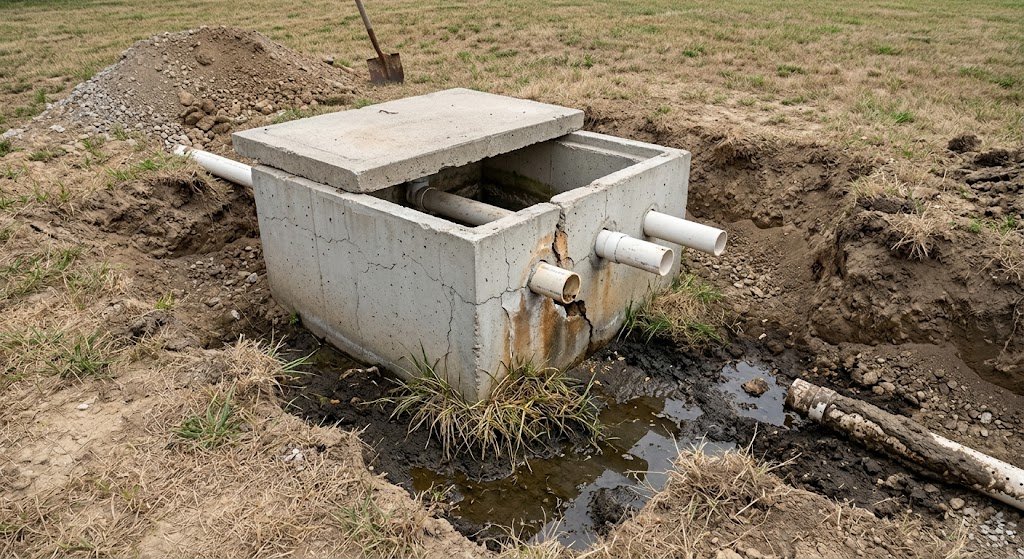
If your septic system has been acting up lately — slow drains, soggy patches in the yard, or a foul odor that won’t quit — the culprit might not be your septic tank at all. It could be a small, often-overlooked component called the distribution box. This unassuming concrete or plastic box plays a massive role in how wastewater flows through your entire septic system, and when it fails, the consequences can ripple through your whole property.
At Septic Advisor, we’ve seen firsthand how a compromised distribution box can turn a minor issue into a major, costly headache. Understanding what this component does, why it fails, and when it needs to be replaced can save homeowners thousands of dollars in emergency repairs down the road.
What Does a Distribution Box Actually Do?
Think of the distribution box as the traffic controller of your septic system. After wastewater leaves your septic tank, it doesn’t just flow randomly into the drain field. Instead, it passes through the distribution box, which evenly divides the effluent among the various pipes leading to your drain field’s leach lines.
This even distribution is critical. Without it, some sections of your drain field would get flooded with excess wastewater while others sit dry and underused. Over time, this imbalance leads to soil saturation, sewage backups, and premature drain field failure — one of the most expensive septic problems a homeowner can face.
Signs Your Distribution Box Needs Attention
Septic systems rarely fail without warning. Here are some telltale signs that your distribution box might be struggling:
- Uneven wet spots in your yard: If certain areas near your drain field are consistently soggy or lush green while others remain dry, your distribution box may be sending water unevenly.
- Slow or gurgling drains: When wastewater can’t flow smoothly out of your home, it often backs up, causing sluggish drainage throughout the house.
- Sewage odors: A cracked or shifted distribution box can allow effluent to pool near the surface, creating persistent, unpleasant smells.
- Visible cracks or settling: Older distribution boxes, especially those made of concrete, can crack, tilt, or sink due to ground movement, tree root intrusion, or simple age-related wear.
Ignoring these symptoms rarely makes them go away. In most cases, the problem worsens, and what could have been a simple fix turns into a full drain field replacement — a project that costs significantly more than addressing the distribution box on its own.
Why Replacement Often Beats Repair
Some homeowners try to patch a damaged distribution box, but this is usually a temporary fix at best. Concrete boxes crack further over time, and once the internal baffles or outlet ports are damaged, they can’t distribute effluent evenly no matter how many patches are applied.
Modern replacement distribution boxes, particularly those made from durable, corrosion-resistant materials, offer a far more reliable long-term solution. They’re designed to resist the ground shifting, root intrusion, and general wear that plagues older concrete models. Choosing a full replacement over a patchwork repair means fewer callbacks, less disruption to your yard, and genuine peace of mind that your septic system is functioning as it should.
What to Expect During a Replacement
A professional distribution box replacement typically involves a few key steps:
- Inspection: A technician locates the existing distribution box and assesses the extent of the damage.
- Excavation: The area around the box is carefully dug out to expose the unit and connecting pipes.
- Removal and replacement: The damaged box is removed, and a new, properly leveled unit is installed in its place.
- Reconnection and testing: Pipes are reconnected, and the system is tested to confirm even effluent distribution across all leach lines.
- Backfilling: The excavation site is restored, leaving your yard as close to its original condition as possible.
While this might sound like a significant undertaking, most replacements can be completed in a single day by an experienced team, minimizing disruption to your household routine.
Trust Septic Advisor for a Seamless Distribution Box Replacement
Distribution Box Replacement is one of the most valuable investments you can make to protect your drain field and extend the life of your entire septic system, and Septic Advisor makes the process straightforward from start to finish. Our team brings years of hands-on experience diagnosing distribution box issues accurately, so you’re never paying for unnecessary work or guessing at the root cause of your septic troubles.
We understand that septic problems can feel overwhelming, especially when they come with an unpleasant surprise like a backed-up drain or a smelly yard. That’s why we prioritize clear communication, transparent pricing, and efficient service every step of the way. Our technicians use quality materials designed to outlast older concrete models, giving you a distribution box that can handle years of reliable use without the recurring issues that plague outdated systems.
Beyond the technical work, we take pride in treating every property with care. Our excavation and restoration process is designed to minimize yard damage, so you won’t be left with an unsightly mess once the job is done.
Protect Your Property Before Small Problems Become Big Ones
A septic system is only as strong as its weakest component, and for many homeowners, that weak point turns out to be an aging or damaged distribution box. Catching the warning signs early — uneven wet patches, slow drains, persistent odors — can mean the difference between a straightforward replacement and a full-scale drain field overhaul.
If you’ve noticed any of these red flags on your property, don’t wait for the problem to escalate. Reach out to Septic Advisor today for an inspection, and let our experienced team help you keep your septic system running smoothly for years to come.

Why Every Franchisor Needs a Franchise Lawyer Before Day One

Why Your Home Deserves Expert Siding Care from Elegant Exteriors?

Don’t Let a Small Leak Become a Big Problem

Alex Pettyfer Net Worth, Wife, Age, Height, Children, Career and More

Brad Williams Net Worth, Wife, Height, Age, Daughter, Family, Career and More

Eldorado.gg Review 2026: How It Works, Safety, Fees, and Risks
-
Celebrity9 months ago
Alex Pettyfer Net Worth, Wife, Age, Height, Children, Career and More
-
Celebrity10 months ago
Brad Williams Net Worth, Wife, Height, Age, Daughter, Family, Career and More
-
Blog1 month ago
Eldorado.gg Review 2026: How It Works, Safety, Fees, and Risks
-
 Anime10 months ago
Sanzoku Bandits of One Piece: Origins, Higuma, and Their Role in Dawn Island
-
 Celebrity10 months ago
John McGinn Net Worth, Age, Height, Wife, Childrens, Career and More
-
 Celebrity10 months ago
Frances de la Tour Net Worth, Age, Height, Husband, Childrens, Career and More
-
 Celebrity10 months ago
Will Trickett Net Worth, Wife, Childrens, Age, Career and More
-
 Blog2 months ago
Crackstube: A Complete Guide to the Digital Publishing Platform