
Blog
European Active Projects: Marine and Industrial Work

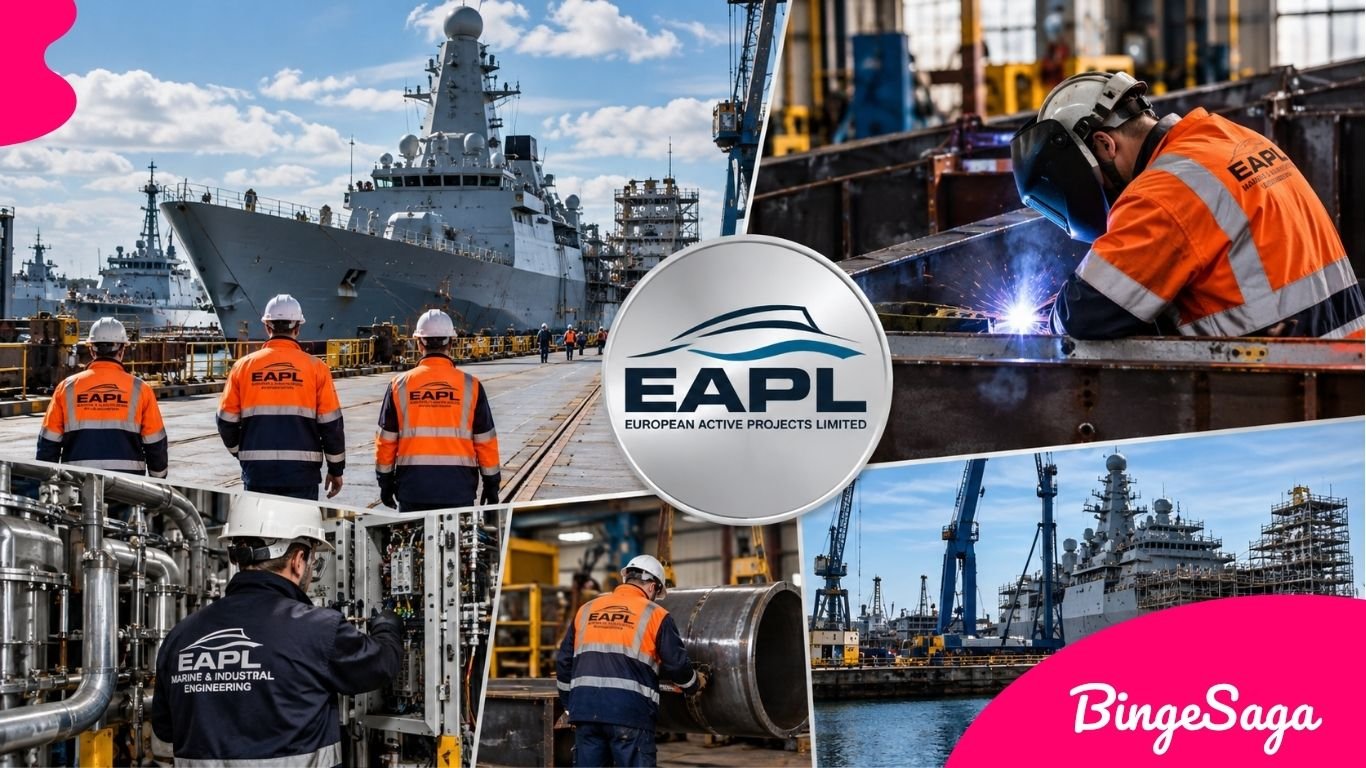
European Active Projects Limited (EAPL) is a UK marine and industrial engineering contractor founded in 2005 by Steve Jones. The company provides steel fabrication, mechanical and electrical engineering, project management, and skilled worker support. It has worked on major marine projects linked with Babcock International and Royal Navy ship programs.
- What Does European Active Projects Do?
- Marine and Steel Fabrication
- Mechanical and Electrical Engineering
- Project Management and Skilled Resource Support
- Rapid-Response and Global Riding Squads
- European Active Projects and the UK Marine Sector
- EAPL Operations at Rosyth
- EAPL Work in Glasgow
- Operations in Plymouth and Falmouth
- Southampton and Regional Workshops
- Industries Supported by European Active Projects
- How EAPL Handles Large Engineering Projects?
- Why Rapid Engineering Support Matters
- European Active Projects in 2026
European Active Projects operates across several UK locations, including Rosyth, Glasgow, Plymouth, Falmouth, and Southampton. Its work includes support for Type 31 and Type 26 frigate programs, vessel maintenance, rapid-response repairs, and fabrication for marine and industrial clients.
What Does European Active Projects Do?
European Active Projects provides marine, mechanical, electrical, and fabrication services. It can supply different types of skilled workers for the same project.
For example, a marine job may need steel parts, pipework, electrical work, and mechanical work. EAPL can provide several of these services instead of handling only one part of the project.
The company also offers project management and fixed-price project work. It provides resource management when clients need extra skilled workers for a project or a set period.
Marine and Steel Fabrication
Steel fabrication is a key part of EAPL’s work. The company handles heavy steelwork, structural fabrication, and pipe manufacturing. These services are used for marine and industrial projects.
Ships and industrial sites often need steel parts made to exact sizes. These parts must meet the needs of the project and be strong enough for their planned use.
European Active Projects has workshop facilities where parts can be made before they are sent to a work site. Its fabrication services also support construction, waste, and food packaging projects.
Mechanical and Electrical Engineering
EAPL provides mechanical engineering for ships and industrial sites. Its teams can support the fitting, repair, and maintenance of mechanical equipment. This work can be combined with the company’s fabrication services.
Electrical engineering is another part of its work. EAPL provides electrical installation and other electrical services for marine and industrial projects.
Its electrical services include motor work and EV charging. The company also provides NAPIT-approved electrical work.
Project Management and Skilled Resource Support
Large engineering projects need skilled workers and good planning. European Active Projects provides project management and resource support for this purpose.
The company can supply skilled workers and engineering teams for specific jobs. This can help shipyards and industrial sites when they need more workers during busy projects.
EAPL can also manage larger parts of a project instead of only supplying workers. Clients can choose the type of support that fits their project.
Rapid-Response and Global Riding Squads
Some ship repairs need to be done away from a normal repair yard. A vessel may need engineering help while it is operating in another location.
European Active Projects provides rapid-response teams and riding squads for marine work. These teams can travel to vessels and carry out repair and engineering work away from EAPL’s main facilities.
This service can help when repairs need to fit around a ship’s working schedule. It also allows EAPL to support marine projects outside the UK.
European Active Projects and the UK Marine Sector
Marine engineering is a major part of EAPL’s work. The company has supported shipbuilding, repair, and maintenance projects at several important UK marine sites.
EAPL has worked alongside Babcock International on major marine and defence projects. Its teams have supported work at sites linked with Royal Navy ships.
Its operations include work in Rosyth, Glasgow, Plymouth, and Falmouth. The work at these locations includes ship construction, maintenance, fabrication, and skilled worker support.
EAPL Operations at Rosyth
Rosyth in Scotland is an important UK naval engineering site. EAPL has supported work there linked with Royal Navy projects, including the Type 31 frigate program.
Building Type 31 frigates requires steelwork, fitting, mechanical work, and other engineering skills. Specialist contractors can provide workers and services during different stages of the work.
EAPL’s work at Rosyth has also included support for existing naval vessels. This includes work linked with Type 23 frigates and amphibious ships. Its work at the site covers both new ship construction and vessel maintenance.
EAPL Work in Glasgow
Glasgow is another key work site for EAPL. The company provides steel fabrication linked with the Type 26 frigate program. These ships are being built for the Royal Navy.
Steel parts must be made to the right size and meet the needs of each ship. European Active Projects provides skilled fabrication work for the program.
EAPL’s work in Glasgow also includes planned mechanical services. This lets the company support different parts of the shipbuilding work.
Operations in Plymouth and Falmouth
EAPL also works in Plymouth and Falmouth. It provides skilled workers and resource support for marine and naval projects in these areas.
Large ship projects may need extra workers at busy times. EAPL can provide skilled teams based on the needs of each project.
This helps clients add workers when they need them. The number and type of workers can depend on the job.
Southampton and Regional Workshops
European Active Projects uses workshop facilities for custom fabrication. Teams can make and prepare parts before they are sent to a ship, yard, or work site.
The company’s workshop services are not limited to marine projects. EAPL also provides fabrication for the construction, waste, and food packaging sectors.
Making parts in a workshop can reduce the amount of work needed at the final site. Finished parts can then be moved to where they are needed.
Industries Supported by European Active Projects
Marine and naval work are major parts of EAPL’s services. The company supports shipbuilding, vessel repairs, maintenance, and steel fabrication.
EAPL also works on industrial projects. Its services include steelwork, pipe manufacturing, electrical work, and mechanical engineering.
Its fabrication services also support construction, waste, and food packaging projects. The services used depend on the needs of each job.
How EAPL Handles Large Engineering Projects?
Large engineering projects can need several types of work. These may include design, fabrication, electrical work, mechanical work, skilled workers, and project management.
European Active Projects offers many of these services. Clients can use one service or several services for the same project.
EAPL also offers fixed-price project work. It can provide skilled workers when a client needs extra staff instead of full project management.
Why Rapid Engineering Support Matters
Ships can need repairs while they are away from their main repair yard. In these cases, taking the vessel to another site may not be the best option.
EAPL provides rapid-response teams and riding squads. These skilled teams can travel to vessels and carry out repair and engineering work.
This service allows work to be done where the vessel is located. Repairs can also be planned around the ship’s work schedule.
European Active Projects in 2026
In 2026, European Active Projects provides marine and industrial engineering services across several UK locations. Its work includes fabrication, mechanical and electrical engineering, project management, and skilled worker support.
Its marine work includes support linked with Royal Navy ship programs. This includes Type 31 frigates at Rosyth and Type 26 frigates in Glasgow. EAPL also supports maintenance work on other naval vessels.
The company also serves other industries. Its fabrication services support construction, waste, and food packaging projects.
Read Also: OTI IAS: What the Airport Codes Mean for Travelers


Skiing at high elevations exposes your eyes and eyewear to conditions that differ significantly from everyday use. Lower temperatures, stronger ultraviolet radiation, wind, and changing humidity can all affect comfort and visibility. Prescription ski goggles help skiers see clearly while providing coverage against snow, wind, and cold, but their performance depends on lens design, fit, and how well they handle changing mountain conditions.
Goggles that feel comfortable at the base of a resort may behave differently higher up the mountain. Lenses can fog, frames can feel tighter, and changing light can affect how clearly you see the terrain. Understanding why these changes occur helps you choose suitable eyewear and prepare for a more comfortable day on the slopes.
How Altitude Affects Prescription Ski Goggles
Altitude changes the environment in which ski goggles operate. Ultraviolet exposure generally increases with elevation, while snow reflects additional sunlight toward the eyes. This combination makes appropriate UV protection important, even when the weather is cloudy or temperatures are low.
At higher elevations, the air is often colder and drier, and wind exposure can increase on open slopes. These conditions can make the eyes feel dry or irritated, particularly during long descents. Goggles provide a protective barrier against wind and airborne snow, but the seal and ventilation must be appropriate for the conditions.
Altitude itself does not automatically change a prescription lens’s corrective power. However, environmental changes can affect comfort, perceived clarity, and lens performance. Bright snow, flat light, fogging, or an inaccurate prescription may make it harder to distinguish bumps, icy patches, and changes in slope.
Why UV Protection Matters at Elevation
Snow can reflect substantial ultraviolet radiation, increasing exposure to the eyes from different directions. Look for goggles with verified UVA and UVB protection rather than assuming a darker lens offers better protection.
Lens tint also affects how terrain appears. A lens suited to bright sunshine may make shaded areas difficult to read when clouds move in. Choosing a lens that matches your typical skiing conditions helps balance glare reduction with the ability to distinguish surface details.
Why Extreme Cold Changes Lens Performance
Cold weather affects the materials and conditions surrounding your goggles. Frame components may feel stiffer, while the difference between cold outdoor air and warm, moist air inside the goggles can encourage condensation. These changes become especially noticeable when moving between lifts, lodges, and exposed slopes.
Fogging occurs when moisture condenses on a lens surface. During skiing, sweat and warm air escaping around the face can meet the colder lens, reducing visibility. Prescription lenses introduce another surface and layer to consider, particularly when regular glasses are worn beneath an over-the-glasses goggle design.
Common Cold-Weather Problems
| Problem | Why It Happens | What Can Help |
| Fogged lenses | Moisture condenses on a cold surface | Use suitable ventilation and avoid blocking vents |
| Uncomfortable frame | Fit and materials may feel different in cold conditions | Check fit with your helmet and face covering |
| Reduced contrast | Flat light and unsuitable tint make terrain harder to distinguish | Choose a lens suited to changing light |
| Moisture between lenses | Warm, humid air becomes trapped in the eyewear system | Follow the manufacturer’s drying and care guidance |
| Irritated or dry eyes | Cold wind and dry air can increase discomfort | Ensure adequate coverage and take breaks when needed |
Avoid wiping the inside of a fogged lens with gloves or fabric. This can damage anti-fog coatings. Follow the manufacturer’s cleaning instructions and allow wet goggles to dry properly after use.
How Prescription Lenses Affect Fit and Comfort
Prescription eyewear needs to do more than correct vision. The lens position, frame shape, and compatibility with the goggle determine whether you can see comfortably across the field of view. Poor alignment or an unsuitable prescription can cause distortion, eyestrain, or difficulty judging changes in terrain.
Some skiers use goggles designed to fit over regular glasses, while others choose goggles with prescription lens inserts. Each approach has practical considerations. Over-the-glasses designs need enough internal space to prevent pressure on the nose and temples. Inserts need to sit securely and be compatible with the goggle’s shape and ventilation system.
The choice of setup is important because fit problems and fogging can undermine visibility on the slopes. Understanding common mistakes skiers make when choosing prescription goggles can help you assess compatibility, lens placement, and comfort before purchasing.
Choosing Prescription Goggles for Skiing in Changing Light
Prescription goggles for skiing should support clear vision across the conditions you are likely to encounter. Mountain weather can shift from bright sunshine to cloud cover within a short period, changing the amount of contrast available on the snow.
Lens colour and light transmission affect how terrain appears. Darker lenses can be useful in strong sunlight, while lighter lenses may be more suitable for overcast conditions. Photochromic lenses adjust their tint in response to light, but the speed and degree of change vary by product and temperature. Check the manufacturer’s specifications rather than assuming all photochromic lenses behave alike.
For skiers who regularly encounter different weather conditions, interchangeable lenses can offer flexibility. Make sure changing lenses is practical with gloves and that replacement lenses are compatible with the frame. Whatever option you choose, prioritize UV protection, optical clarity, and visibility over appearance alone.
A Practical Checklist for Mountain Conditions
Before heading to the slopes, use this checklist to reduce common eyewear problems:
- Check lenses for scratches, damage, and residue.
- Confirm that UV protection and lens tint suit the expected conditions.
- Make sure prescription lenses or inserts are secure.
- Test the goggles with your helmet and face covering.
- Keep ventilation openings clear of snow and fabric.
- Carry a suitable lens-care cloth and follow cleaning instructions.
- Allow wet goggles to dry fully after skiing.
- Avoid leaving eyewear in extreme temperatures for prolonged periods unless the manufacturer confirms it is suitable.
RX Safety Canada offers prescription eyewear options for people who need vision correction while participating in outdoor activities. When comparing available ski goggles, review prescription compatibility, lens features, fit, and care requirements. If you are uncertain about your prescription or the suitability of a particular setup, consult an eye care professional.
Conclusion
Altitude and extreme cold can affect the skiing experience by changing light exposure, increasing the risk of fogging, and making fit and comfort more noticeable. Prescription eyewear must account for these conditions while providing reliable correction and suitable protection against wind and snow.
Choose goggles based on your prescription, typical mountain weather, lens performance, and helmet compatibility. Proper care and preparation can help maintain visibility and comfort as conditions change throughout the day.


A familiar transition can become a fresh fashion clip when the outfit and character are yours. This guide shows how AI genjutsu can help you adapt the motion, choose better reference images, and keep the result watchable.
Pick the moment viewers will remember
Outfit videos work when the change happens at a satisfying moment: a spin, a step past the camera, or a quick turn back into frame. Before gathering images, choose a short clip with a transition you would watch twice. The motion should be clear enough to understand without sound.
You do not need a complicated dance. A simple gesture often gives the clothes more room to register. Use a clip you created or have permission to adapt, especially if you plan to post the finished video publicly.
Choose outfit images that match the movement
If the reference subject turns, collect images that show the outfit from more than one angle. If the shot is full length, avoid using only a portrait crop. Try to keep lighting, body position, and color consistent across the images you give AI genjutsu. These details make the change feel intentional instead of jumpy.
Think about what the viewer should notice first. A bold coat needs enough screen space to show its silhouette. A pair of shoes needs a source clip that actually shows the feet. Matching the image to the action matters more than adding a long list of style words to the prompt.
Build a version with your own details
With AI genjutsu, you can start from a short video or template, add pictures of your character or outfit, and describe the change you want. The new clip follows the reference’s motion and timing while bringing in your own visual material. For a quick fashion test, a prompt such as “keep the spin and camera position, but use the silver jacket and black trousers in the reference images” gives the tool a clear job.
Choose the shape of the final post before generating. A vertical 9:16 frame suits many short video feeds, while square or wide formats may work better elsewhere. If the source keeps the subject near an edge, check that the chosen frame does not cut off the outfit reveal.
Make the reveal worth replaying
Watch the finished clip on a phone, where most viewers will see it. Does the outfit change happen at the beat you expected? Can you still recognize the fabric and shape after the transition? Pause on a few frames around the change to spot distorted sleeves, shoes, or hands.
If the AI genjutsu outfit looks wrong, simplify the source action or replace the weakest image. If the timing feels flat, try another reference with a clearer trigger moment. Keep any caption short enough that it does not compete with the visual reveal.
Finish with a clip you can stand behind
Trend inspired does not have to mean identical. The strongest version keeps the satisfying rhythm of a format while giving viewers a real reason to notice your character, styling, or product. Obtain permission for the footage and images you use, and review the result before posting.
AI genjutsu makes the experiment approachable: choose a good movement, provide images that match it, and keep your request specific. Your taste in the outfit and the final edit is what turns a familiar transition into your own short video.


A car accident can turn an ordinary drive into a situation involving medical treatment, vehicle damage, insurance questions, and unexpected financial pressure. Even when the collision appears straightforward at first, injuries may become more noticeable later and the process of dealing with insurance can become increasingly complicated. For someone recovering from an accident, understanding what happened and documenting its consequences can be important. New Jersey has specific automobile insurance rules, including Personal Injury Protection and different coverage options that can affect an injured person’s rights.
- Why the Details of a Collision Matter
- Evidence Can Help Tell the Story
- New Jersey Auto Insurance Can Affect the Process
- Medical Treatment Should Be Taken Seriously
- A Serious Injury Can Affect More Than Health
- Understanding Potential Losses
- Determining Who May Be Responsible
- How Legal Review Can Help
- Insurance Companies May Request Detailed Information
- Hit-and-Run and Uninsured Driver Cases
- Documenting the Recovery Process
- When a Bergenfield Car Accident Lawyer May Be Helpful
- Final Thoughts
Why the Details of a Collision Matter
No two car accidents are exactly alike. A crash at an intersection may involve different evidence from a collision on a busy roadway, while an accident involving a distracted driver may require a different investigation from one involving dangerous road conditions.
The circumstances surrounding the collision can influence how responsibility and insurance issues are evaluated. Police reports, photographs, witness accounts, traffic signals, road conditions, vehicle damage, and available video footage may all help create a clearer picture of what occurred.
Evidence Can Help Tell the Story
Evidence can become particularly important when the people involved have different accounts of how the accident happened. Photographs taken shortly after the collision can document vehicle damage, roadway conditions, debris, visibility, and other details that may change over time.
A Bergenfield car accident lawyer may review these materials together with medical records, insurance documents, and other information to understand the circumstances of the collision. Preserving relevant evidence early can also make it easier to reconstruct the events later.
Evidence That May Be Important
- Police or crash reports
- Photographs of the vehicles and accident scene
- Witness contact information
- Available security or traffic-camera footage
- Medical records and treatment documentation
- Vehicle repair estimates
- Insurance correspondence
New Jersey Auto Insurance Can Affect the Process
Auto insurance is required in New Jersey, and drivers can choose between Basic and Standard policies with different coverage options. The Standard Policy includes Personal Injury Protection, while uninsured and underinsured motorist coverage may also be available depending on the policy.
The policy selected can also affect certain rights after an accident. New Jersey’s Standard Policy requires a choice concerning the right to sue, and that choice can affect claims for pain and suffering or other non-economic losses.
Medical Treatment Should Be Taken Seriously
Some injuries are immediately obvious after a crash, while others may develop or become more noticeable as the initial shock wears off. Pain, stiffness, headaches, dizziness, and other symptoms may require medical evaluation.
Medical records can create an important timeline of what happened after the collision. Emergency treatment, diagnostic testing, physician appointments, prescriptions, physical therapy, and other care can help document both the injury and the recovery process.
A Serious Injury Can Affect More Than Health
A significant injury can interfere with work, family responsibilities, transportation, and everyday activities. Someone who was able to perform a full work schedule before an accident may suddenly need time away from employment or may require modified duties during recovery.
The financial consequences can also continue after the initial treatment. Rehabilitation, follow-up appointments, medication, transportation, and other expenses may add to the economic impact of the accident. In more serious cases, an injury may affect future earning ability as well.
Understanding Potential Losses
The consequences of a car accident can involve several different types of losses. Some are relatively easy to document, while others may require a broader examination of the injured person’s circumstances.
| Potential Loss | Examples |
| Medical expenses | Emergency care, diagnostic testing, treatment, medication |
| Lost income | Time missed from work during recovery |
| Future earnings | Reduced ability to work because of lasting limitations |
| Rehabilitation | Physical therapy and other continuing treatment |
| Transportation | Travel expenses associated with medical care |
| Property damage | Vehicle repair or replacement costs |
| Daily assistance | Help required with certain everyday activities |
Determining Who May Be Responsible
A vehicle collision does not automatically establish legal responsibility. The circumstances leading up to the crash need to be examined to determine what happened and whether another driver’s conduct or another factor contributed to the accident.
Depending on the circumstances, relevant issues may include distracted driving, speeding, unsafe lane changes, failure to yield, poor visibility, roadway conditions, or other factors. Evidence should be used to establish these facts rather than relying solely on assumptions.
How Legal Review Can Help
A serious accident can create several questions at once. An injured person may need to understand insurance coverage, medical expenses, lost income, property damage, and the potential effect of continuing injuries.
A Bergenfield car accident lawyer can review the available documentation and examine how the accident and resulting injuries may relate to a potential claim. This may involve looking at the accident report, medical records, photographs, witness information, insurance policy, and employment documentation.
Insurance Companies May Request Detailed Information
After an accident, insurers may ask for information about the collision, vehicle damage, medical treatment, and other losses. Keeping records organized can make it easier to provide accurate information and maintain a clear history of the claim.
New Jersey’s insurance system can involve PIP coverage as well as uninsured and underinsured motorist coverage, depending on the policy. The state’s Department of Banking and Insurance explains that coverage limits and options vary between policies, making it important to examine the actual policy involved.
Hit-and-Run and Uninsured Driver Cases
A collision can become more complicated when the responsible driver leaves the scene or does not have sufficient insurance coverage. In those circumstances, identifying available insurance protection may become particularly important.
New Jersey Standard Policies provide uninsured and underinsured motorist coverage, subject to applicable policy terms and selected limits. The circumstances of the accident and the specific coverage available can determine what options may exist.
Documenting the Recovery Process
Keeping accident-related records organized can help preserve important information. Medical bills, treatment records, prescriptions, repair estimates, insurance correspondence, and employment documents can all contribute to a clearer timeline.
It can also be useful to document meaningful changes in everyday activities. Difficulties with work, transportation, household responsibilities, or normal routines can provide additional context when evaluating the broader effect of an injury.
When a Bergenfield Car Accident Lawyer May Be Helpful
Some collisions are resolved relatively quickly, while others involve serious injuries, disputed facts, complicated insurance coverage, or continuing financial losses. The more complicated the circumstances become, the more important it may be to understand the legal and insurance issues involved.
A Bergenfield car accident lawyer can review the available evidence and help explain the legal considerations that may apply to the particular circumstances. A careful review can help identify relevant documentation, potential insurance issues, and questions that may need further attention.
Final Thoughts
A car accident can create consequences that extend well beyond vehicle repairs. Medical treatment, lost income, insurance questions, rehabilitation, and changes to everyday life can all become part of the recovery process when injuries are involved. New Jersey’s automobile insurance system contains specific rules concerning PIP, uninsured and underinsured motorist coverage, and lawsuit options.
For someone dealing with the aftermath of a serious collision, understanding the available evidence and insurance coverage can provide a clearer foundation for making informed decisions. A Bergenfield car accident lawyer can evaluate the circumstances of the collision, review relevant documentation, and help an injured person understand the legal options that may apply to the particular case.

Renting a Stylish Coupe in Dubai: What Actually Matters

How to Tell Real Korean Toxin Brands From Copycat Vials Before You Buy

A Practical Guide to Fortnite Accounts and V-Bucks

Alex Pettyfer Net Worth, Wife, Age, Height, Children, Career and More

Brad Williams Net Worth, Wife, Height, Age, Daughter, Family, Career and More

Eldorado.gg Review 2026: How It Works, Safety, Fees, and Risks
-
Celebrity11 months ago
Alex Pettyfer Net Worth, Wife, Age, Height, Children, Career and More
-
Celebrity11 months ago
Brad Williams Net Worth, Wife, Height, Age, Daughter, Family, Career and More
-
Blog3 months ago
Eldorado.gg Review 2026: How It Works, Safety, Fees, and Risks
-
 Anime12 months ago
Sanzoku Bandits of One Piece: Origins, Higuma, and Their Role in Dawn Island
-
 Celebrity11 months ago
John McGinn Net Worth, Age, Height, Wife, Childrens, Career and More
-
 Celebrity11 months ago
Frances de la Tour Net Worth, Age, Height, Husband, Childrens, Career and More
-
 Celebrity11 months ago
Will Trickett Net Worth, Wife, Childrens, Age, Career and More
-
 Blog3 months ago
Crackstube: A Complete Guide to the Digital Publishing Platform