
Health
Can IVF Help With Unexplained Infertility?


Being told that you have unexplained infertility can be frustrating. You may have undergone fertility tests that show regular ovulation, an open fallopian tube and no significant problem with your partner’s semen analysis, yet pregnancy still does not occur.
- What Is Unexplained Infertility?
- Why Can Infertility Remain Unexplained?
- How Can IVF Help With Unexplained Infertility?
- Does IVF Treat the Cause of Unexplained Infertility?
- When Might IVF Be Recommended for Unexplained Infertility?
- Is IUI Usually Tried Before IVF?
- When Might IVF Be Considered Earlier?
- How Does IUI Compare With IVF for Unexplained Infertility?
- Can IVF Overcome a Fertilisation Problem That Cannot Be Detected?
- Is ICSI Needed for Unexplained Infertility?
- What Happens During IVF for Unexplained Infertility?
- Ovarian Stimulation
- Trigger Injection
- Egg Retrieval
- Fertilisation
- Embryo Development
- Embryo Transfer
- Pregnancy Testing
- What Happens If No Embryos Develop?
- Does IVF Guarantee Pregnancy for Unexplained Infertility?
- Does Unexplained Infertility Have a Better IVF Prognosis?
- How Does Age Affect IVF for Unexplained Infertility?
- How Long Should You Try Before Considering IVF?
- What Are the Potential Benefits of IVF?
- Greater Control Over Fertilisation
- Embryo Development Can Be Observed
- Embryo Selection
- Frozen Embryos May Be Available
- Treatment Can Be More Direct
- What Are the Risks and Downsides of IVF?
- What If the First IVF Cycle Does Not Work?
- Are Additional Tests Needed Before IVF?
- Can Lifestyle Changes Help With Unexplained Infertility?
- What Fertility Treatment Is Available in Singapore?
The diagnosis does not mean that pregnancy is impossible. It means that standard fertility investigations have not identified a specific cause for the difficulty conceiving.
In-vitro fertilisation (IVF) can help some couples with unexplained infertility by allowing fertilisation and early embryo development to take place under laboratory conditions before an embryo is transferred into the uterus.
However, IVF is not necessarily the first treatment for every couple with unexplained infertility. Depending on factors such as age, duration of infertility, previous treatment and individual preferences, a fertility specialist may first recommend a limited course of ovarian stimulation with intrauterine insemination (IUI) or consider IVF sooner.
Understanding when IVF may be useful can help couples make more informed decisions about their fertility treatment options.
What Is Unexplained Infertility?
Unexplained infertility is diagnosed when appropriate fertility investigations do not identify a clear reason why pregnancy has not occurred.
A standard assessment may include:
- Assessment of ovulation
- Ovarian reserve testing where clinically indicated
- Evaluation of the uterus
- Assessment of fallopian tube patency
- Semen analysis
- Review of medical and reproductive history
For unexplained infertility to be considered, there is generally no obvious problem such as blocked fallopian tubes, significant ovulation problems or a major sperm abnormality that clearly explains the difficulty conceiving.
The term can therefore be misleading.
Unexplained infertility does not mean that there is no biological reason for infertility. It means that routine investigations have not identified the reason.
Why Can Infertility Remain Unexplained?
Conception involves several stages, and not all of them can be assessed through routine fertility tests.
For pregnancy to occur naturally:
- An egg needs to develop and be released.
- Sperm needs to reach the egg.
- The sperm needs to fertilise the egg.
- The fertilised egg needs to develop into a viable embryo.
- The embryo needs to travel towards the uterus.
- The embryo needs to implant successfully.
- The pregnancy needs to continue developing.
Routine fertility tests can assess some of these processes but cannot directly evaluate every step.
For example, a normal semen analysis can provide information about sperm concentration and movement, but it cannot guarantee that fertilisation will occur normally.
Similarly, a woman may have an open fallopian tube and apparently normal ovulation without this confirming that every egg is capable of successful fertilisation and embryo development.
These limitations help explain why some couples receive a diagnosis of unexplained infertility despite apparently normal test results.
How Can IVF Help With Unexplained Infertility?
IVF can bypass some of the steps involved in natural conception.
During IVF:
- The ovaries are stimulated to develop multiple follicles.
- Eggs are retrieved from the ovaries.
- Sperm is collected and prepared.
- Eggs and sperm are brought together in a laboratory.
- Fertilised eggs are cultured into embryos.
- A suitable embryo is transferred into the uterus.
This allows the fertility team to observe and manage some stages of reproduction that would normally happen inside the body.
IVF does not identify the hidden cause of unexplained infertility in every case, but it can potentially overcome some problems that routine testing cannot detect.
Does IVF Treat the Cause of Unexplained Infertility?
Not necessarily.
This is an important distinction.
IVF is generally a treatment for infertility rather than a treatment that identifies or corrects the underlying cause of unexplained infertility.
For example, IVF does not necessarily determine why natural fertilisation did not occur.
Instead, it changes the reproductive process by:
- Retrieving eggs directly
- Bringing sperm and eggs together in a laboratory
- Monitoring fertilisation
- Monitoring embryo development
- Placing an embryo directly into the uterus
This can provide another opportunity for pregnancy even when the reason for previous unsuccessful conception remains unknown.
When Might IVF Be Recommended for Unexplained Infertility?
The timing of IVF depends on the individual circumstances.
A fertility specialist may consider IVF when:
- The couple has been trying to conceive for a significant period
- Previous IUI treatment has not resulted in pregnancy
- The woman is older
- There are concerns about declining ovarian reserve
- The couple prefers a more direct assisted reproductive approach
- There are additional fertility factors that make IUI less suitable
- Delaying treatment may reduce the likelihood of success
IVF may also be considered earlier when there is concern that less invasive treatments are unlikely to provide sufficient benefit.
Is IUI Usually Tried Before IVF?
For some couples, yes.
Intrauterine insemination (IUI) is less invasive than IVF and involves placing prepared sperm directly into the uterus around the time of ovulation.
When combined with medication to stimulate the development of ovarian follicles, IUI may increase the number of eggs available for fertilisation during a treatment cycle.
For younger women with unexplained infertility, a fertility specialist may consider several cycles of ovarian stimulation with IUI before moving to IVF.
A commonly used approach is approximately three to four cycles of stimulated IUI before considering IVF if pregnancy does not occur.
However, this is not an absolute rule.
When Might IVF Be Considered Earlier?
Age is an important factor in deciding how long to try less invasive treatments.
For women approaching or above 38, IVF may be considered sooner because delaying treatment can have a greater effect on the number and quality of eggs available.
Other reasons for considering IVF earlier may include:
- Longer duration of infertility
- Previous unsuccessful fertility treatment
- Reduced ovarian reserve
- Patient preference
- Limited time available for treatment
- Other factors affecting the likelihood of IUI success
The treatment sequence should therefore be individualised rather than based solely on the diagnosis of unexplained infertility.
How Does IUI Compare With IVF for Unexplained Infertility?
The two treatments differ considerably.
IUI
IUI involves:
- Monitoring ovulation
- Sometimes using medication to stimulate follicle development
- Collecting and preparing sperm
- Placing the sperm directly into the uterus
Fertilisation still takes place inside the body.
IVF
IVF involves:
- Ovarian stimulation
- Egg retrieval
- Fertilisation in a laboratory
- Embryo culture
- Embryo transfer
Fertilisation therefore takes place outside the body.
IVF is more invasive and generally more expensive than IUI, but it also provides greater control over fertilisation and embryo development.
Can IVF Overcome a Fertilisation Problem That Cannot Be Detected?
Potentially.
One possible explanation for unexplained infertility is that fertilisation is not occurring efficiently despite apparently normal sperm and egg function.
With conventional IVF, eggs and sperm are brought together in a laboratory environment.
The embryology team can then observe whether fertilisation occurs.
This does not guarantee fertilisation, but it provides information that is not available when couples are trying to conceive naturally.
Is ICSI Needed for Unexplained Infertility?
Not necessarily.
Intracytoplasmic sperm injection (ICSI) involves injecting a single sperm directly into an egg during IVF.
ICSI may be considered when there is:
- Significant male-factor infertility
- Very low sperm count
- Poor sperm motility
- Surgically retrieved sperm
- Previous fertilisation failure
For unexplained infertility without a male-factor problem, ICSI is not automatically required.
Current evidence does not show a clear live-birth advantage from routinely using ICSI instead of conventional IVF in couples without a male-factor indication.
The decision should therefore be based on the patient’s individual circumstances rather than assuming that ICSI is necessary simply because the cause of infertility is unknown.
What Happens During IVF for Unexplained Infertility?
The IVF process is generally similar to IVF for other causes of infertility.
Ovarian Stimulation
Medication is used to encourage multiple follicles to develop.
The ovaries are monitored through ultrasound and, where appropriate, blood tests.
Trigger Injection
Once the follicles reach an appropriate stage, medication is given to trigger final egg maturation.
Egg retrieval is then scheduled at the appropriate time.
Egg Retrieval
Eggs are collected using an ultrasound-guided procedure.
The retrieved eggs are assessed in the laboratory to determine which are mature.
Fertilisation
The eggs are fertilised using either conventional IVF or ICSI when clinically appropriate.
Embryo Development
Fertilised eggs are monitored as they develop into embryos.
Some embryos may stop developing during this process.
Embryo Transfer
A suitable embryo is transferred into the uterus.
Depending on the treatment plan, the transfer may be performed during the same cycle or after the embryo has been frozen for later use.
Pregnancy Testing
A blood test is performed after embryo transfer to determine whether implantation has resulted in pregnancy.
What Happens If No Embryos Develop?
Not every IVF cycle produces an embryo suitable for transfer.
The number of embryos available depends on:
- Number of eggs retrieved
- Egg maturity
- Fertilisation
- Embryo development
- Age
- Sperm factors
A couple may therefore begin with several eggs but end up with fewer embryos available for transfer.
This does not necessarily mean that IVF cannot work in a future cycle.
The fertility team can review the outcome and determine whether changes to the treatment approach may be appropriate.
Does IVF Guarantee Pregnancy for Unexplained Infertility?
No.
IVF can improve the chances of pregnancy for appropriately selected patients, but it does not guarantee pregnancy or a live birth.
Treatment outcomes vary according to factors such as:
- Maternal age
- Ovarian reserve
- Number of eggs retrieved
- Egg quality
- Sperm factors
- Embryo development
- Uterine factors
- Previous fertility treatment
Singapore’s current data also shows that maternal age and underlying medical history are significant factors affecting IVF success.
For example, reported IVF success rates decline substantially as maternal age increases, making age an important consideration when deciding whether to continue trying naturally, pursue IUI or move to IVF.
Does Unexplained Infertility Have a Better IVF Prognosis?
Not necessarily.
A diagnosis of unexplained infertility does not automatically mean that IVF will be successful.
However, couples with unexplained infertility may not have some of the specific factors associated with reduced IVF outcomes, such as severe tubal disease or certain severe forms of male-factor infertility.
Individual prognosis still depends on age, ovarian response, embryo development and other factors.
A fertility specialist should therefore assess the couple’s specific circumstances rather than applying a single success rate to all unexplained infertility cases.
How Does Age Affect IVF for Unexplained Infertility?
Age is particularly important when considering IVF for unexplained infertility.
Female fertility generally declines with age because:
- Ovarian reserve decreases
- Egg quality decreases
- Chromosomal abnormalities become more common
- Miscarriage risk increases
This means that a younger woman may have more time to try IUI or continue trying naturally, while an older woman may benefit from moving to IVF sooner.
The appropriate decision depends on the individual rather than age alone.
How Long Should You Try Before Considering IVF?
There is no single timeframe that applies to every couple.
In Singapore, couples are generally advised to seek medical advice after:
- 12 months of trying when the woman is below 35
- Six months of trying when the woman is 35 or older
Earlier assessment may be appropriate when there are known fertility risk factors.
Once unexplained infertility has been diagnosed, the decision about when to start IVF depends on:
- Age
- Duration of infertility
- Previous treatment
- Ovarian reserve
- Patient preferences
- Expected benefit of IUI
- Time available for treatment
What Are the Potential Benefits of IVF?
For couples with unexplained infertility, potential advantages include:
Greater Control Over Fertilisation
Eggs and sperm are brought together in a laboratory rather than relying entirely on natural fertilisation.
Embryo Development Can Be Observed
Embryos can be monitored during laboratory culture before transfer.
Embryo Selection
The fertility team can select an embryo for transfer based on its developmental characteristics.
Frozen Embryos May Be Available
Additional suitable embryos may be cryopreserved for future transfer.
Treatment Can Be More Direct
For some couples, IVF may shorten the time needed to achieve pregnancy compared with continuing less invasive treatment approaches.
These potential advantages need to be balanced against the cost, physical demands and risks of IVF.
What Are the Risks and Downsides of IVF?
IVF is more invasive than treatments such as IUI.
Potential considerations include:
- Medication side effects
- Ovarian hyperstimulation syndrome
- Discomfort from injections
- Egg retrieval risks
- Multiple pregnancy if more than one embryo is transferred
- Ectopic pregnancy
- Pregnancy loss
- Emotional stress
- Financial costs
There is also no guarantee that an IVF cycle will result in pregnancy.
The fertility team should explain the expected benefits and potential risks before treatment begins.
What If the First IVF Cycle Does Not Work?
A failed IVF cycle does not necessarily mean that future treatment will be unsuccessful.
The fertility specialist may review:
- Ovarian response
- Number of eggs retrieved
- Egg maturity
- Fertilisation rate
- Embryo development
- Embryo quality
- Uterine factors
- Sperm factors
If frozen embryos are available, a frozen embryo transfer may be considered without repeating ovarian stimulation and egg retrieval.
If no embryos remain, the specialist may discuss whether another IVF cycle or a different treatment strategy is appropriate.
Are Additional Tests Needed Before IVF?
Not necessarily.
It can be tempting to pursue increasingly specialised tests when routine fertility investigations are normal.
However, more testing does not automatically lead to better treatment outcomes.
Additional investigations may be appropriate when there are specific symptoms, medical history findings or previous treatment outcomes that justify them.
The aim should be to perform tests that can meaningfully influence treatment decisions.
Can Lifestyle Changes Help With Unexplained Infertility?
Healthy lifestyle habits can support general reproductive health, although they should not be presented as a guaranteed treatment for unexplained infertility.
Couples may consider:
- Avoiding smoking
- Limiting excessive alcohol consumption
- Maintaining a healthy weight
- Staying physically active
- Eating a balanced diet
- Managing existing medical conditions
- Taking recommended preconception supplements
- Maintaining adequate sleep
These measures may support overall health while fertility treatment is being considered.
What Fertility Treatment Is Available in Singapore?
Singapore offers several fertility treatment options, including:
- Ovulation induction
- IUI
- IVF
- ICSI
- Frozen embryo transfer
- Fertility preservation
- Selected genetic testing and donor-assisted treatments
For couples with unexplained infertility, IUI and IVF are particularly relevant treatment options.
The appropriate sequence depends on the couple’s age, fertility history and clinical findings.
Singapore’s public assisted reproduction centres currently provide government co-funding for eligible couples undergoing assisted conception procedures. The current framework covers up to three fresh and three frozen ART cycles, subject to eligibility requirements and funding caps.
IVF can help some couples with unexplained infertility, even when routine fertility tests have not identified a specific cause.
The treatment can bypass or control several stages of natural conception by retrieving eggs, bringing sperm and eggs together in a laboratory, monitoring embryo development and transferring an embryo directly into the uterus.
However, IVF is not automatically the first treatment for every couple with unexplained infertility. Depending on age and individual circumstances, a fertility specialist may recommend a limited course of ovarian stimulation with IUI before moving to IVF. For older women or couples with other factors that make delaying treatment less appropriate, IVF may be considered sooner.
Unexplained infertility also does not mean that IVF will guarantee pregnancy. Age, ovarian reserve, egg and sperm factors, embryo development and uterine factors can all influence the outcome.
For couples in Singapore, a fertility specialist can review the results of both partners’ assessments and help determine whether continued attempts at natural conception, IUI or IVF is the most appropriate next step.
This article is for general information only and should not replace medical advice from a qualified healthcare professional.

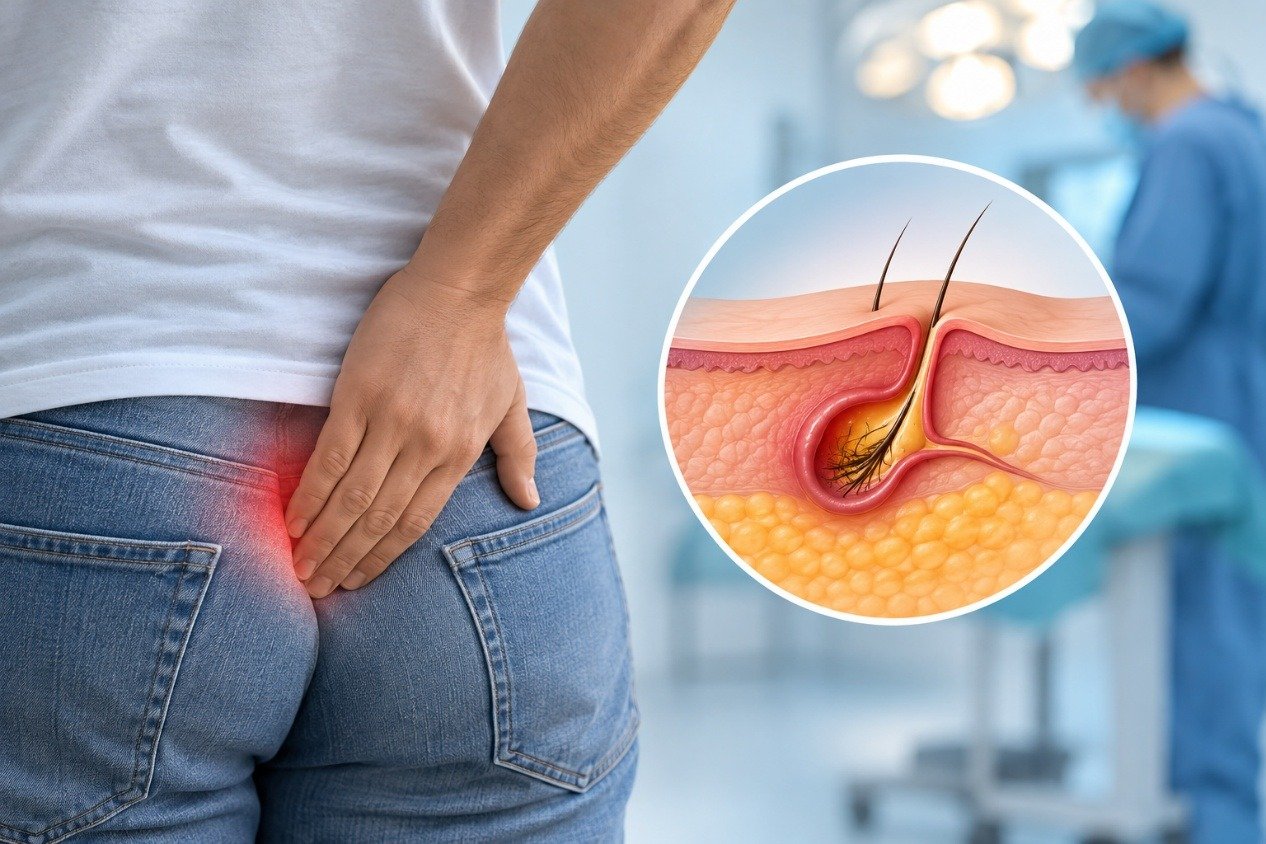
A pilonidal cyst is a common inflammatory condition that develops in the natal cleft, near the tailbone. Also known as pilonidal disease, it involves the formation of cavities and sinus tracts beneath the skin. Although the condition may remain asymptomatic for extended periods, it can cause discomfort and interfere with everyday activities. Advances in surgical technology now offer minimally invasive treatment options with reduced tissue damage and shorter recovery periods.
What Causes a Pilonidal Cyst?
Pilonidal disease primarily develops when loose hairs penetrate the skin of the natal cleft. These hairs act as foreign bodies, triggering a localized inflammatory response. Over time, cavities and sinus tracts may form beneath the skin, accumulating hair, inflammatory material, and secretions.
The condition occurs more frequently among adolescents and young adults, particularly males. Excessive body hair, obesity, prolonged sitting, and repetitive friction are common contributing factors. A family history of pilonidal disease and a deep natal cleft may also increase the likelihood of developing the condition. However, individuals without obvious risk factors can also develop pilonidal disease.
What Are the Symptoms of a Pilonidal Cyst?
Symptoms vary depending on the stage of the condition. During the chronic phase, patients may experience mild swelling, discomfort while sitting, and discharge of fluid, blood, or pus.
During the acute phase, an abscess may develop, causing severe pain, redness, and swelling. Fever, general discomfort, and foul-smelling discharge may also occur.
A sudden worsening of symptoms requires immediate medical assessment. An established pilonidal abscess usually requires surgical incision and drainage, as antibiotics alone cannot replace the drainage of accumulated pus.
Diagnosis and Treatment Options
A specialized proctologist typically diagnoses a pilonidal cyst through a clinical examination. In selected cases, ultrasound or magnetic resonance imaging (MRI) may help determine the extent of the disease and identify associated sinus tracts.
Medication cannot eliminate a pilonidal cyst. When surgical treatment is necessary, the appropriate technique depends on the severity of the condition, the presence of branching sinus tracts, and individual patient characteristics.
Minimally Invasive Laser Treatment for Pilonidal Cysts
One modern treatment option is SiLaC (Sinus Laser Closure), a minimally invasive technique that avoids extensive surgical excision.
Initially, the surgeon cleans the cyst and removes accumulated hair and inflammatory material. A specialized diode laser fiber then delivers controlled thermal energy through the existing skin openings. This process promotes the shrinkage and gradual closure of the sinus tracts without extensive tissue removal.
The procedure typically takes 15–20 minutes and may be performed under local anesthesia in selected patients. Its potential benefits include reduced postoperative pain, smaller wounds, faster healing, and a shorter recovery period.
Another available technique is LaPSiT, which uses a surgical CO₂ laser to remove affected tissue precisely.
The Importance of Personalized Treatment
No single surgical technique is suitable for every patient. Furthermore, recurrence remains possible regardless of the treatment method. Appropriate postoperative monitoring, good personal hygiene, and laser hair removal following wound healing may help reduce this risk.
If you are experiencing symptoms of a pilonidal cyst, contact Dr. Ioannis Dontas, Surgeon and Proctologist, certified as a Master Surgeon in Surgical Proctology.

What Are Gallstones and Why Do They Develop?
Gallstones are solid deposits that form inside the gallbladder, a pear-shaped organ located beneath the liver. The gallbladder stores bile, a digestive fluid produced by the liver that is released into the small intestine.
Gallstones vary considerably in size, ranging from tiny grains to formations as large as a golf ball. Their development may be associated with excessive cholesterol or bilirubin levels in bile. Incomplete emptying of the gallbladder may also contribute to their formation.
Several factors can increase the likelihood of developing gallstones, including obesity, pregnancy, advanced age, diabetes, hereditary predisposition and rapid weight loss. Dietary habits may also influence their development.
Symptoms and Potential Complications of Gallstones
Many individuals with gallstones experience no noticeable symptoms. However, others may develop abdominal pain, nausea, vomiting, bloating, indigestion or fever. Pain frequently occurs in the upper right abdomen or back and may persist for several hours.
Gallstones can obstruct the normal flow of bile, potentially leading to inflammation and further complications. These include acute cholecystitis, jaundice, cholangitis and pancreatitis.
Early medical evaluation is particularly important for identifying potential complications. Diagnosis typically involves an ultrasound examination, while blood tests help identify inflammation and other associated abnormalities.
When Is Cholecystectomy Recommended?
Cholecystectomy is the surgical removal of the gallbladder. It is an established treatment for symptomatic gallstones, cholecystitis, certain gallbladder polyps and gallstone-related pancreatitis.
Although the gallbladder contributes to digestion, it is not essential for normal bodily function. Following its removal, the liver continues producing bile, which flows directly into the duodenum.
Before surgery, patients undergo preoperative assessment, including blood tests and cardiovascular evaluation. The surgeon also reviews existing medication and provides appropriate dietary instructions.
How Is Laparoscopic Cholecystectomy Performed?
Laparoscopic cholecystectomy is the preferred surgical approach in most cases. The procedure takes place under general anesthesia through small abdominal incisions.
A specialized camera provides a magnified, high-definition view of the surgical field. Using dedicated instruments, the surgeon carefully removes the gallbladder. The small incisions are subsequently closed with surgical adhesive or sutures.
Open surgery may be necessary in exceptional circumstances, particularly when severe inflammation has altered the surrounding anatomy. Robotic cholecystectomy is another available approach, offering enhanced visualization, surgical precision and freedom of movement.
Recovery and Benefits of Minimally Invasive Surgery
Laparoscopic cholecystectomy offers reduced postoperative pain, smaller scars, shorter hospitalization and a lower risk of certain complications. Patients can usually return home within several hours or the following day.
During recovery, patients should temporarily avoid strenuous exercise and heavy lifting. Temporary digestive disturbances, including bloating or diarrhea, may occur as the body adapts. A balanced diet rich in fiber, alongside reduced consumption of fatty foods and caffeine, may help manage these symptoms.
Individuals experiencing symptoms associated with gallstones can contact General Surgeon Dimitrios Gialvalis, who specializes in gallbladder diseases, for a comprehensive medical assessment and personalized surgical treatment.

Hernias of the abdominal wall are common surgical conditions that can affect individuals of different ages. Among the most frequent types are inguinal and umbilical hernias. Although they develop in different anatomical areas, both involve the protrusion of internal tissue through a weakened point in the abdominal wall. Early diagnosis and appropriate treatment are important for preventing potentially serious complications.
What is an inguinal hernia?
An inguinal hernia occurs when a portion of the intestine or another abdominal organ protrudes through the inguinal canal. It accounts for approximately 80% of hernia cases and occurs more frequently in men.
Common risk factors include obesity, smoking, chronic constipation, persistent coughing, heavy lifting and hereditary predisposition. Advanced age and previous abdominal injuries may also contribute to its development.
The most characteristic symptom is a visible bulge in the groin. Patients may also experience abdominal pain, a sensation of heaviness or discomfort. The swelling often becomes more noticeable during coughing or prolonged standing.
What is an umbilical hernia?
An umbilical hernia develops when intestinal tissue or abdominal fat protrudes through an opening near the navel. It can affect both children and adults.
In infants, the condition is usually congenital and often resolves during the first years of life. In adults, however, it is commonly associated with increased intra-abdominal pressure.
Pregnancy, obesity, significant weight fluctuations, chronic constipation and strenuous physical work are among the main contributing factors.
Symptoms typically include swelling around the navel, pain, a burning sensation and discomfort. However, smaller umbilical hernias may remain asymptomatic for extended periods.
When can a hernia become dangerous?
Both inguinal and umbilical hernias in adults may gradually increase in size without treatment. One of the most serious complications is strangulation, which occurs when the blood supply to the trapped tissue becomes restricted.
This condition can lead to intestinal ischemia, tissue necrosis, perforation and peritonitis. Severe pain, persistent swelling, redness, fever or vomiting require immediate medical evaluation.
Diagnosis primarily involves a clinical examination and a detailed medical history. In selected cases, ultrasound or computed tomography may provide additional information.
Modern surgical treatment options
Surgery is the only definitive treatment for repairing an abdominal wall hernia in adults. Medications and hernia support belts cannot correct the underlying anatomical defect.
Modern surgical techniques include open, laparoscopic, endoscopic and robotic approaches. For inguinal hernias, available techniques include TAPP, TEP, ONSTEP and eTEP. Umbilical hernias can be treated using IPOM, MOPP, ventral TAPP, eTEP-RS and LIRA.
The eTEP and eTEP-RS techniques allow surgeons to position a reinforcing mesh outside the peritoneal cavity. This placement prevents direct contact between the mesh and the abdominal organs, reducing the risk of adhesions.
Minimally invasive approaches can also contribute to reduced postoperative discomfort, shorter hospitalization, faster recovery and improved aesthetic outcomes.
The importance of specialized surgical care
Selecting the appropriate surgical technique depends on the type and size of the hernia, alongside the patient’s medical history and individual needs.
For personalized evaluation and treatment, contact Dr. Fotis Archontovasilis, a specialized abdominal wall and hernia surgeon, distinguished as Surgeon of Excellence by the international accreditation organization Surgical Review Corporation (SRC). His expertise in modern hernia repair techniques supports an individualized approach to surgical treatment.

Pilonidal Cyst: Recognizing the Symptoms and Exploring Modern Treatment Options

Gallstones and Cholecystectomy: When Is Gallbladder Removal Necessary?

Inguinal and Umbilical Hernias: Symptoms, Risks and Modern Treatment Options

Alex Pettyfer Net Worth, Wife, Age, Height, Children, Career and More

Brad Williams Net Worth, Wife, Height, Age, Daughter, Family, Career and More

Eldorado.gg Review 2026: How It Works, Safety, Fees, and Risks
-
Celebrity11 months ago
Alex Pettyfer Net Worth, Wife, Age, Height, Children, Career and More
-
Celebrity11 months ago
Brad Williams Net Worth, Wife, Height, Age, Daughter, Family, Career and More
-
Blog3 months ago
Eldorado.gg Review 2026: How It Works, Safety, Fees, and Risks
-
 Anime1 year ago
Sanzoku Bandits of One Piece: Origins, Higuma, and Their Role in Dawn Island
-
 Celebrity12 months ago
John McGinn Net Worth, Age, Height, Wife, Childrens, Career and More
-
 Anime1 year ago
Shimotsuki Ushimaru – The Last Daimyo of Wano Country Explained
-
 Celebrity12 months ago
Frances de la Tour Net Worth, Age, Height, Husband, Childrens, Career and More
-
 Celebrity12 months ago
Will Trickett Net Worth, Wife, Childrens, Age, Career and More