
Technology
What Happens During a Car Breathalyzer Installation Appointment?

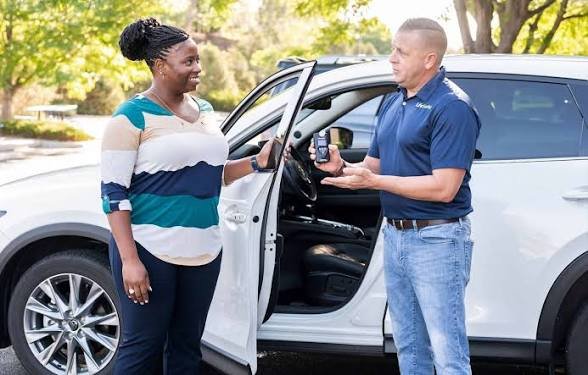
Every appointment for the installation of a breath analyzer begins with a Court Order, Monitoring Authority Reference Number and often little knowledge of the install process from the Service Center, Installer, Attorney and Case Manager of the client referred for installation. The appointment is the starting point for full compliance and problems which surface weeks later can be avoided if the install process is troubleshot the moment any problems are detected.
What happens at the installation appointment and what decisions are taken during the appointment. Also what are the obligations of the installed breath alcohol ignition device once it has been installed in a client’s vehicle and they have driven off from the appointment.
Pre-appointment checks that prevent a failed install
Confirm the following before the service starts to avoid the biggest parts of same day failures.
- Vehicle ownership or written permission from the registered owner, since the installation involves cutting into the ignition circuit.
- Battery condition and charging system health. A weak battery produces voltage drops that the device logs as power interruptions.
- Any aftermarket remote start, alarm, or anti-theft immobilizer, which changes the wiring approach and sometimes the device model.
- The monitoring authority’s specific requirements, including whether a camera, GPS, or real-time reporting is mandated.
- Hybrid or push-button start configuration, which affects where the relay sits and how the retest window is calculated.
Documentation the client must bring
Ideally, every client must provide the following documentation for servicing of the vehicle equipped with an alcohol testing device, a valid photo ID, a copy of the court order or a reference number to the monitoring authority, proof of insurance of the vehicle equipped with the alcohol testing device, and vehicle registration.
Vehicle preparation and the wiring itself
Before we start the installation, we will take note of the vehicle’s odometer reading, take a picture of the dash and take a note of the vehicle’s VIN number. Additionally, we will note any existing electrical faults on the vehicle before we start the installation.
1. Connect the positive lead to the power wire of the ignition harness.
2. Connect the negative lead to the ground wire of the ignition harness.
3. Connect the wire from the starter interrupt relay to the crank wire.
4. Mount the control unit of the breath tester so that it is not located in a region where condensation may collect (e.g. Below the climate control air outlets).
5. Position the handset of the breath tester so that it is within easy reach of the driver while ensuring that it does not obstruct the airbag and steering wheel area.
Wiring is loomed up, tamper-evident seals are placed over the joins and each of the seals is logged and associated with the particular join they have been used on. The device is then powered up and configured, set to monitor on behalf of the issuing authority, for a number of things such as fail point, retest interval and the various lockout thresholds for violations such as failure and retest etc.
Typical appointment stages and timing
| Stage | Typical duration | What determines the variance |
| Paperwork and account setup | 15 to 25 minutes | Completeness of court documentation |
| Vehicle inspection and photos | 10 minutes | Pre-existing electrical faults |
| Wiring and mounting | 45 to 90 minutes | Aftermarket alarms, push-button start, hybrids |
| Calibration check and program settings | 15 minutes | Authority-specific parameters |
| Client training and test blows | 20 to 40 minutes | Client comprehension and language needs |
Training the client, not just demonstrating the device
Training others is where most future problems with client breaches are caused. Give the client enough information that within a week they can be tested unaided 3 times for a breath sample and re-test within a couple of minutes for a rolling re-test.
Introduce the full breath test sequence and complete a warm-up series. Explain the method for a successful rolling retest and describe what action to take in each scenario including error messages that appear on the breath test device. Most importantly, inform the client that there are some foods, and certain mouthwashes and medications that can cause a person to test positive for up to 20 minutes after use. The simple action of rinsing the mouth with water and waiting a few minutes will resolve this and does not require another person to drive in your place.
Setting expectations about reporting
Be sure to explain to the client that the device in question logs ALL activity on the device in question, that activity is communicated to the monitoring authority in question and as such all data on the device is the authority’s to utilize as they so choose. This will typically prevent numerous future service center calls asking to edit or even worse, suppress data in question for a client.
Calibration visits and the ongoing service relationship
Recurring service is required for almost all car breathalyzer installations, usually scheduled every 30 to 60 days. Service involves downloading of the device data log and verification of the sensor against a known alcohol sample. The seals are also inspected for tamper and the service countdown on the device is reset.
Fail to complete the required service work within the specified time frame and the unit may enter into a permanent lockout position requiring a tow to have it serviced back to normal operation. Many licensing authorities also require an incident report to be filed with them as a result of such lockout events. Remind the client of the required work time frame for service work in 2 telephone calls spaced 5 days apart (e.g. 5 days and 1 day prior to required service work). Drivers in southwest Virginia are best served by booking car breathalyzer installation in Roanoke at a center that also handles their monthly calibrations, since one location keeps the service history and seal records together.
What ends the program
Formal written authorization must be obtained from the issuing authority to remove the device and restore the ignition circuit to its original functioning configuration. A Removal Certificate should be provided to the client along with a copy of the final data download from the device. Such documentation can be demanded by the client months after compliance with all terms and conditions of the court order has been met.

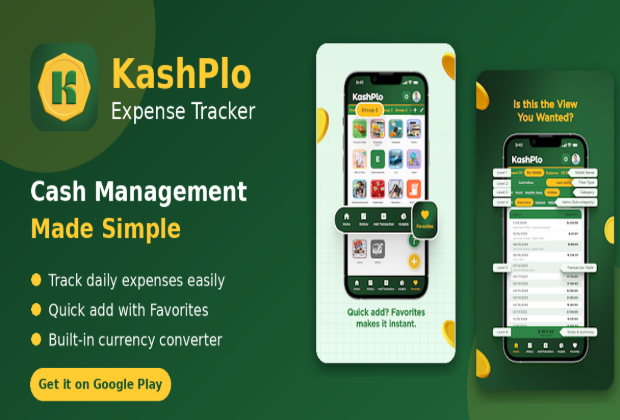
Think about the last time you bought something small, like a snack, a bus ticket or a cup of tea. Now imagine logging it in your expense tracker. How many times did you have to tap your screen?
For many apps, the honest answer is six, seven or more. And that’s the quiet reason so many expense trackers end up forgotten.
The Hidden Cost of Every Tap
A single tap feels like nothing. But expense tracking isn’t a one-time task. It’s something you repeat several times a day, every day.
Here’s what a typical entry looks like in a feature-heavy app:
- Open the app
- Tap the “Add” button
- Choose expense or income
- Select a category
- Select an account or wallet
- Enter the amount
- Add a note or date
- Tap save
That’s eight steps for one small purchase. Multiply it by four or five purchases a day, and you’re spending a real chunk of your time just recording what you spent.
Nobody decides to quit tracking. It happens because the effort slowly outweighs the reward. One skipped entry becomes a skipped day, and then a skipped week.
Where Complexity Creeps In
Many budgeting apps try to do everything: investment tracking, bank syncing, reports, goals, reminders. Each feature adds a new button, tab or menu. The result is an app that is powerful on paper but tiring in practice.
For people who just want to know where their daily money goes, most of that is noise. What they need is a fast, simple way to record spending and a clear way to see it.
The KashPlo Approach: Count Fewer Taps
KashPlo was designed around a simple question: how few steps can it take to record an everyday expense? Its answer is built on four ideas.
Saved Favorites Remove the Repetition
We spend on the same things again and again: groceries, tea, fuel, lunch, rent. KashPlo lets you save these as Favorites, each with its wallet, category and item already set.
To record one, you:
- Tap the Favorite.
- Type the amount.
- Save.
That’s roughly three steps, and it takes about 4 seconds. Compare that with the eight steps above. The details you’d normally pick every time are already there.
A Table-Style Home Screen You Can Read at a Glance
Many apps greet you with graphs, banners and cards. KashPlo’s home screen is a simple, table-style list of your transactions, similar to a paper ledger.
You don’t need to interpret a chart to answer “What did I spend today?” The information is right there in rows, which also means fewer taps to check or confirm anything.
A Clean Interface That Stays Out of Your Way
KashPlo is intentionally basic. There are fewer buttons, fewer competing elements and fewer distractions. When you open it, you can see what to do next without thinking.
A cleaner screen also lowers the small mental effort of opening the app, which makes you more likely to open it at all.
Direct Access to What Matters
The essential features, adding an expense, viewing transactions and checking your spending, are placed where you can reach them directly. You don’t have to remember which menu hides which option.
Tap Count: A Quick Comparison
| Task | Typical feature-heavy app | KashPlo with Favorites |
| Record a repeat expense | About 7 to 8 steps | About 3 steps |
| Check today’s spending | Open app, find reports or dashboard | Open app, view the home screen |
| Time per entry | Often 20 to 30 seconds | About 4 seconds |
These figures are illustrative and vary by app and by how you use it. KashPlo’s roughly 4 seconds applies to saved Favorites.
Simple on the Surface, Capable Underneath
Simplicity doesn’t mean KashPlo can’t handle more. When you need it, the app also offers:
- Multiple wallets and categories to organize spending your way.
- A Monthly Tasks checklist to track which recurring bills are paid and which are due.
- A budget dashboard with spending charts for a bigger-picture view.
- Travel expense tracking with currency conversion.
These sit in the background. They don’t crowd the everyday experience of logging a quick expense.
Is KashPlo Right for You?
KashPlo suits you if you:
- Have given up on an expense tracker because it felt like too much work.
- Mostly want a quick, reliable record of daily spending.
- Prefer a clean app over one packed with options.
- Are starting a tracking habit and want the easiest possible way in.
If you love detailed financial analysis and automatic bank syncing, a more complex tool may suit you better. But if your goal is to track consistently without the hassle, simple is the way to go.
Final Thoughts
Tracking your expenses only helps if you keep doing it, and people keep doing what’s easy. By cutting unnecessary taps, saving your frequent transactions as Favorites and keeping the interface clean, KashPlo turns tracking from a chore into a few-second habit.
Ready to try it? KashPlo is available on the App Store for iPhone and iPad, and on Google Play for Android. It’s free to download, with optional in-app subscriptions.

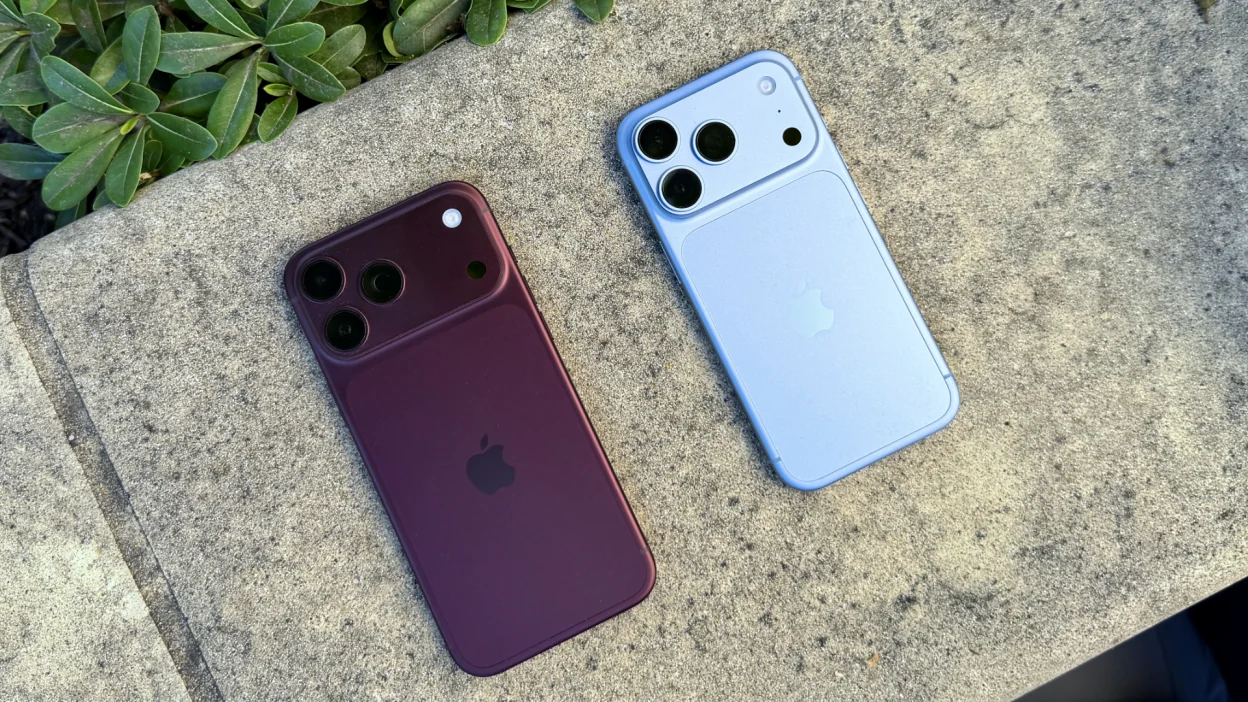
Migration day is supposed to feel like Christmas. Lid off the box, new iPhone 18 in your palm, tap through setup, watch the little progress circle promise that everything is coming with you.
Except for a lot of people this fall, it didn’t.
Scroll the forums and the complaints repeat in an eerie loop. Photo libraries missing whole years. WhatsApp histories that didn’t make the jump. Notes folders half-empty. And in a parallel wave, people who never bought a new phone at all — they just updated an older iPhone to iOS 27, and now it’s frozen on the Apple logo, taunting them.
Apple hasn’t called it a bug, and honestly, most of it isn’t one. But that doesn’t make your missing photos any less missing. Here’s what’s actually going on, and what works.
Two different problems wearing the same costume
First, the migration stuff. Quick Start is genuinely good at moving the obvious things: contacts, messages, most app data. It’s worse at the invisible stuff. Media cached under “System Data,” some third-party app databases, and files sitting in app-specific sandboxes don’t always hop across the wireless transfer. And in a surprising number of forum threads, the “lost” photos were never lost at all — they were still sitting on the old device, which the owner had already wiped, traded in, or handed to a kid.
Second, the update stuff. iOS 27 is a big install. Phones with nearly full storage, flaky Wi-Fi, or aging batteries fail mid-write more often than you’d think. A failed write doesn’t always brick the phone, but it can leave the operating system unable to boot: recovery mode, boot loops, the endless logo.
Different causes. Same panic. And the fixes are nothing alike.
Why “just restore from backup” makes it worse
The reflexive advice — restore from iCloud — is a blunt instrument. A restore rolls the whole phone back to the moment the backup was taken. Do that on a brand-new iPhone 18, and you’ll undo weeks of new messages, new photos, new everything, just to get back one folder of old notes.
Worse, plenty of people discover mid-restore that their only backup is months stale, or encrypted with a password nobody wrote down.
What actually works, in the right order
Start boring. Keep the old phone. Charged, switched on, in a drawer. Do not wipe it until you’ve confirmed every last photo made the jump, because in half these stories the old phone is the rescue.
Then check the dumb stuff: Recently Deleted, app-level trash bins, and whether iCloud Photos got toggled off during setup. You’d be amazed how many “migration disasters” turned out to be a settings switch.
If the data truly isn’t on the new device, go surgical instead of nuclear. Desktop suites like the Stellar Toolkit for iPhone can read your old local iTunes or Finder backups — including encrypted ones — and let you pull out just the missing album or chat history without touching the new phone’s current state. The current build already supports iOS 27 and the iPhone 18 line, which matters more than it sounds. Plenty of older recovery tools simply can’t parse the new backup format yet.
For the frozen-phone crowd, skip the DFU restore on your first attempt. A system-level repair that rebuilds the corrupted OS files around your data beats a wipe-and-pray restore every time. The same suite includes a module to repair a boot-looped iPhone without wiping it, and it’s one of the few routes that keeps your data intact while the phone learns to start again.
And to be fair to Apple: if the device is under warranty and physically misbehaving — overheating, battery swelling, storage failing — Genius Bar first. Software can’t fix solder.
The boring checklist nobody follows
Free up storage before updating. A phone at 99% capacity is how most iOS 27 boot loops get born. Make a fresh encrypted local backup and write the password on actual paper. Update your apps before the OS, not after. And if your phone is your livelihood, sit on .0 releases for a week or two while the early adopters find the gremlins for you.
Questions people are asking right now
Are my photos gone forever after the iPhone 18 transfer?
Probably not. In most cases, they’re still on the old device, in an old local backup, or hidden behind an iCloud Photos toggle that got switched off during setup. Check all three before mourning anything.
Can a phone stuck on the Apple logo after iOS 27 be saved?
Usually, yes. The storage is typically fine. It’s the operating system that’s confused. A system-repair pass that replaces only the corrupted OS files will bring most of these phones back with user data untouched. DFU restore works too, but it empties the device first.
Does recovery software even work on iPhone 18 and iOS 27 yet?
Some does, some doesn’t. New hardware and new backup formats break older tools until vendors ship updates, so check the compatibility list before buying anything. Stellar’s iPhone toolkit shipped iOS 27 support alongside the launch, which is why it keeps coming up in these threads.
Will iOS 27 slow down my older iPhone?
Marginally, in some cases, and usually only for the first few days while indexing runs in the background. If it’s still sluggish after a week, the culprit is more often storage pressure than the OS itself.
Should I update to iOS 27 right now?
If the phone is your only camera, bank key, and work device? Give it a fortnight. Security patches matter, but so does not being the person debugging a .0 release on a Tuesday night.
The last word
Every major iPhone launch produces the same story: new hardware, new OS, and a thousand people convinced their digital life evaporated overnight. It almost never evaporated. It’s misplaced, half-migrated, or locked inside a backup nobody can open. Stay calm, keep the old device alive, and work the problem in the right order. That’s the whole trick.
Technology
The Rise of AI Macro Dramas: How Solo Creators Are Producing Binge-Worthy Cinematic Series at Home


We are living in the undisputed golden age of the binge-watch. From sweeping fantasy epics to gritty sci-fi dystopias, our appetite for deep, narrative-driven content is insatiable. For decades, the power to create these sagas was locked behind the towering gates of Hollywood studios, requiring millions of dollars, massive crews, and months of grueling production. If you had a brilliant idea for a complex, multi-season drama, it usually stayed exactly where it started: in your head.
But the entertainment landscape is experiencing a seismic shift. We are witnessing the birth of a entirely new genre of digital storytelling: the AI Macro Drama. Thanks to rapid advancements in generative artificial intelligence, solo creators—writers, dreamers, and cinephiles—are bypassing traditional production bottlenecks entirely. They are sitting in their bedrooms and directing cinematic, binge-worthy series using nothing but their imagination and an internet connection.
This is no longer about generating a quirky three-second clip of a cat riding a skateboard. This is about real storytelling. This is about constructing rich worlds, developing complex characters, and stringing together episodic narratives that keep viewers hitting “Next Episode.”
What Exactly is an AI Macro Drama?
To understand the AI Macro Drama, we first have to look at the evolution of AI video. In its infancy, generative video was a novelty. It was plagued by inconsistencies, bizarre morphing, and an inability to maintain a coherent visual style for more than a few seconds. You could generate a beautiful still image, but the moment you tried to animate it, the illusion shattered.
An AI Macro Drama represents the maturation of this technology. It is a long-form or episodic narrative created primarily through AI generation, characterized by consistent character identities, distinct cinematic direction, and a structured plot. These aren’t just random visuals stitched together with an AI voiceover; they are intentional, scripted, and meticulously directed pieces of cinema.
Creators are treating these projects like actual TV shows. They are writing pilot scripts, creating storyboards, and dropping episodic releases on platforms like YouTube and TikTok. For fans of deep lore and expansive universes, AI Macro Dramas offer a new frontier of content to consume. When one creator’s imagination isn’t limited by budget constraints, the stories they can tell are boundless. We are seeing independent creators produce cyberpunk thrillers, historical dramas, and mind-bending sci-fi series that rival the conceptual ambition of major streaming networks.

Breaking Down the Traditional Filmmaking Barriers
Why is this happening now? Because the traditional barriers to entry in filmmaking have always been brutally high.
Consider what it takes to shoot a standard dialogue scene in a traditional indie film. You need to cast actors, secure a location, hire a camera crew, arrange lighting, manage audio, and then spend weeks in post-production color grading and editing. If your script calls for an explosion, a futuristic cityscape, or a period-accurate costume, your budget immediately skyrockets.
For the average storyteller, these logistical nightmares often mean compromising their vision. The sprawling sci-fi epic gets rewritten into a “two people talking in a diner” indie flick just to get made.
AI generation eliminates these physical and financial constraints. The creator assumes the role of the ultimate auteur: writer, director, cinematographer, and casting director, all rolled into one. The “set” is virtual, the “actors” are generated, and the lighting is dictated by algorithms rather than heavy equipment.
The Next Generation of Text-to-Video Technology
The engine driving this revolution is the incredible leap in text-to-video capabilities. Just a year ago, generating video from text required complex coding knowledge and a massive amount of computational power. Today, the process has been streamlined into intuitive, user-friendly interfaces that prioritize the creator’s vision over technical hurdles.
Instead of setting up physical cameras, modern creators direct their films using highly specific prompts. They dictate camera angles (e.g., “low angle, wide shot”), lighting conditions (e.g., “cinematic lighting, neon rim light, volumetric fog”), and character actions.
This democratization of cinema is largely fueled by advanced AI-powered filmmaking platforms like APOB.ai, which have transformed the complex process of video generation into an accessible, browser-based workflow. For solo creators, having a centralized platform where they can type a script and watch it materialize into dynamic video is the equivalent of handing them the keys to a virtual Hollywood backlot.
The focus has shifted from how to make the video to what the video should be about. Storytelling is taking center stage once again.

Directing High-Fidelity Scenes: The Cinematic Edge
Of course, if a creator wants an audience to binge-watch a five-part AI Macro Drama, the visual quality has to be impeccable. Audiences are trained to recognize the visual language of high-end cinema—the depth of field, the texture of film grain, the realistic physics of movement.
This is where the underlying AI models make all the difference. To achieve true cinematic immersion, creators are relying on heavy-duty rendering models. For example, utilizing the Ultra S model (driven by the robust Seedance 2.5 architecture) allows directors to push past the “uncanny valley” and generate high-fidelity footage.
When generating scenes with these advanced models, the difference is night and day. Skin textures look porous and real, clothing fabrics move naturally with the character’s gait, and lighting bounces accurately off different surfaces. This level of photorealism is essential for Macro Dramas because it allows the audience to forget they are watching an AI-generated piece and simply get lost in the saga.
Solving the Multi-Character Dilemma: The Key to True Drama
While beautiful visuals are important, the beating heart of any drama—whether it’s a soap opera or an HBO thriller—is human interaction. It’s the tension between two people in a room. It’s dialogue, conflict, and chemistry.
Historically, this has been the Achilles’ heel of AI video generation. AI models are notoriously bad at handling multiple subjects in a single frame. If you asked early AI to generate “a man and a woman arguing at a table,” you would often get a horrifying amalgamation of limbs, blending faces, and distorted backgrounds. The AI simply couldn’t keep track of who was who.
To produce a compelling AI Macro Drama, creators absolutely must be able to direct multi-character scenes. You cannot tell a compelling story if your characters can never share the same screen.
Thankfully, the technology has finally caught up to the narrative demands of creators. Modern tools have introduced precise control mechanisms to ensure spatial consistency. A major breakthrough for indie directors is creating multi-character scenes via APOB’s Add Element feature.
By allowing creators to specifically isolate and add new elements or additional characters into a generated environment, the AI is forced to understand the spatial relationship between subjects. A director can now generate a stunning background, place their protagonist in the frame, and subsequently “add” an antagonist stepping out of the shadows, all without the video warping into a glitchy mess.
This capability unlocks the true potential of the Macro Drama. It allows for over-the-shoulder dialogue shots, complex action sequences, and the subtle, unspoken reactions between characters that define great television. It elevates the medium from “moving pictures” to actual acting and directing.
The Future of the Binge-Watch
As these tools become faster, cheaper, and even more intuitive, we are going to see a flood of new cinematic voices. The next great saga might not come from a writers’ room in Los Angeles; it might be produced by a teenager in a small town who finally has the tools to bring their universe to life.
We are entering an era where the only limit to cinematic creation is the depth of the creator’s imagination. As viewers, we should be thrilled. The streaming queues of tomorrow won’t just be filled with studio greenlights; they will be populated by wildly original, visually stunning AI Macro Dramas born from the minds of independent visionaries.
For anyone who has ever watched a movie and thought, “I have a better story to tell,” the wait is over. The studio is open, the camera is ready, and it only takes a few keystrokes to call “Action.”

Inside a China Eyewear Factory: How Eyewear Goes from Design and Material Selection to Mass Production

Building Emotional Wellness Through Professional Guidance and Support

How to Choose an Eyewear Manufacturer in China for Your European or American Private Label Brand

Alex Pettyfer Net Worth, Wife, Age, Height, Children, Career and More

Brad Williams Net Worth, Wife, Height, Age, Daughter, Family, Career and More

Eldorado.gg Review 2026: How It Works, Safety, Fees, and Risks
-
Celebrity11 months ago
Alex Pettyfer Net Worth, Wife, Age, Height, Children, Career and More
-
Celebrity11 months ago
Brad Williams Net Worth, Wife, Height, Age, Daughter, Family, Career and More
-
Blog3 months ago
Eldorado.gg Review 2026: How It Works, Safety, Fees, and Risks
-
 Anime12 months ago
Sanzoku Bandits of One Piece: Origins, Higuma, and Their Role in Dawn Island
-
 Celebrity11 months ago
John McGinn Net Worth, Age, Height, Wife, Childrens, Career and More
-
 Celebrity11 months ago
Frances de la Tour Net Worth, Age, Height, Husband, Childrens, Career and More
-
 Anime12 months ago
Shimotsuki Ushimaru – The Last Daimyo of Wano Country Explained
-
 Celebrity12 months ago
Will Trickett Net Worth, Wife, Childrens, Age, Career and More