
Blog
George Galloway Net Worth, Height, Age, Wife, Religion, Career, Controversies, and More


George Galloway remains one of the most recognisable and polarising figures in modern British politics. His career spans five decades, touching activism, media broadcasting, international controversies, multiple parliamentary victories, and dramatic comebacks. As of 2025, Galloway continues to influence public debate through political campaigns, social media broadcasting, and leadership within the Workers Party of Britain. His path from a working-class childhood in Dundee to a headline-making national figure shows the unique blend of activism, conviction, and controversy that has defined his name for years.
- Quick Facts
- Early Life Activism, War on Want, and First Parliamentary Term
- Career & Rise to Fame
- Break with Labour — Iraq War, Mariam Appeal & Expulsion
- Later Parliamentary Career
- What is George Galloway’s Net Worth?
- Political Views and Controversies
- 2024–2025: Return
- Personal Life & Relationships
- Conclusion
- FAQs
Quick Facts
| Full Name | George Galloway |
|---|---|
| Age | 71 years old (as of 2025) |
| Date of Birth | 16 August 1954 |
| Parents | George Galloway Sr. and Sheila O’Reilly |
| Religion | Atheist |
| Net Worth | 1 to 5 million dollars (2024–2025 estimates) |
| Height | 5 ft 9 in (175 cm) |
| Spouse/Partner | Putri Gayatri Pertiwi |
| Ethnicity | Scottish with Irish ancestry |
| Nationality | British |
| Source of Wealth | Politics, broadcasting, authorship, media work |
| Education | Harris Academy, Dundee |
Early Life Activism, War on Want, and First Parliamentary Term
George Galloway was born in Dundee, Scotland, in 1954. He grew up in the Lochee area, often referred to as the Irish quarter. His family lived in modest conditions, and he has described his birthplace as an attic in a tenement known locally as Tipperary. His working-class background shaped his worldview. His father worked as an electrician, electromechanical engineer, and later as a teacher. His mother, Sheila O’Reilly, was a Scot of Irish descent who worked in factories and cleaning roles.
A formative moment in Galloway’s early life occurred at age 13. He joined the Labour Party Young Socialists, reportedly lying about his age to join early. The experience exposed him to political organising and moral arguments around inequality. George Galloway quickly became active within the Dundee Labour movement, eventually serving as secretary of the Dundee Labour Party while still in his teens. That early political exposure became his turning point. It set him on a path far outside traditional working-class expectations. Instead of entering a trade, he leaned fully into activism.
He attended Charleston Primary School and Harris Academy. He played football enthusiastically during his youth, representing West End United and Lochee Boys Club. His football background gave him confidence and presence. In 1973, at age 19, he joined the Transport and General Workers’ Union, which later merged into UNITE. Union activism became his first major platform.
His national profile grew after joining War on Want in 1983. At age 29, he became its general secretary. The role placed him in humanitarian campaigns across Africa and the Middle East. George Galloway wrote about famine in Eritrea and travelled widely as part of anti-poverty missions. The exposure helped build his reputation as a principled activist focused on international justice.
In 1987 he stepped into parliamentary politics. Running as a Labour candidate, he defeated Roy Jenkins, leader of the Social Democratic Party, to win the Glasgow Hillhead constituency. At 32 years old, he became one of Labour’s rising figures. His victory over a high-profile opponent cemented his reputation as a powerful campaigner capable of overturning established political expectations.
Career & Rise to Fame
George Galloway’s rise to national fame came through a mix of powerful rhetoric, controversial foreign policy positions, and a reputation for being an uncompromising political figure. From the late 1980s to the early 2000s, he became one of Labour’s most outspoken voices on international politics, especially the Middle East.
During his early parliamentary years, he focused on issues of global justice. He positioned himself as a critic of Western interventionism. His outspoken views attracted admiration from supporters and scepticism from opponents. His speeches drew national attention for their conviction and theatrical delivery. His oratorical reputation eventually defined how he would be viewed throughout his career.
He served as MP for Glasgow Hillhead until boundary changes created Glasgow Kelvin. George Galloway held that seat with strong majorities in both the 1997 and 2001 general elections. By the early 2000s, Galloway had become one of Labour’s most identifiable figures on anti-war politics. His criticism of the Gulf War and later the Iraq sanctions made him a frequent presence in media debates.
His activism included founding the Mariam Appeal in 1998. The organisation was created to campaign against sanctions on Iraq. Its mission centred on supplying medical support to Iraqi children affected by sanctions. Galloway frequently travelled to Iraq and the Middle East during this period. His work brought him international visibility and increasing controversy. Supporters viewed his efforts as humanitarian advocacy. Critics questioned the political implications of his foreign relations.
By the early 2000s, his anti-war stance became the central feature of his political identity. This culminated in his opposition to the Iraq War, which accelerated tensions between him and the Labour leadership. The stage was set for one of the most dramatic political splits of his career.
Break with Labour — Iraq War, Mariam Appeal & Expulsion
The early 2000s marked George Galloway’s most contentious period inside the Labour Party. As the United States and the United Kingdom prepared to invade Iraq in 2003, Galloway became one of the loudest and most consistent critics within Labour.
He was accused of urging British soldiers to refuse what he described as illegal orders. Labour’s disciplinary panel later argued that his public comments brought the party into disrepute. Galloway maintained that his criticisms were directed at political leadership, not military personnel. The disagreement escalated. In 2003, Labour expelled him from the party.
The expulsion was a political watershed. It broke his long association with Labour, which he had joined as a teenager. After the split, he positioned himself as a leading anti-war independent voice. The Mariam Appeal continued to be referenced during this period. Some critics alleged questions around its funding structure. Galloway denied wrongdoing, and no criminal charges were brought.
The Iraq War controversy placed him at the centre of global media attention. His combative debating style became widely recognised. His Senate testimony in the United States in 2005, confronting allegations linked to the UN Oil-for-Food scandal, drew international headlines. His refusal to soften his rhetoric established him as one of the most distinctive political personalities in Britain.
Later Parliamentary Career
Following his expulsion from Labour, Galloway aligned with the newly formed Respect Party. In the 2005 general election, he stood for the seat of Bethnal Green and Bow in London. In a major upset, he defeated Labour MP Oona King by 823 votes. His victory reflected strong support from anti-war voters and local communities.
He served as MP for Bethnal Green and Bow from 2005 to 2010. During this period, he also expanded his media presence. George Galloway became a broadcaster on TalkSport and hosted The Mother of All Talk Shows. His style resonated with audiences seeking commentary outside mainstream ideological boundaries.
In 2012, he returned to Parliament by winning the Bradford West by-election. The result shocked political observers. He overturned a Labour majority of more than 5,000 votes. His campaign was supported by younger voters and segments of the Bradford Muslim community. The victory reinforced his reputation as a politician capable of unseating large political machines.
In 2019 he founded the Workers Party of Britain. The party positioned itself as a socially conservative and economically left platform. It appealed to voters disaffected by Labour’s direction under Jeremy Corbyn and later leadership changes.
His political comeback continued in February 2024. He won the Rochdale by-election after Labour withdrew support from their own candidate. His campaign centred heavily on the Gaza conflict. George Galloway declared after winning that the result was dedicated to Gaza. However, his return to Parliament was short. In the July 2024 general election, he lost the seat to Labour candidate Paul Waugh.
In 2025 he announced his return to Scottish politics. He declared plans to run for the Scottish Parliament in 2026 for Glasgow Southside and on the Glasgow regional list.
What is George Galloway’s Net Worth?
Net worth estimates for George Galloway vary widely because a public and verified financial declaration does not exist. Most estimates rely on media reports or speculative modelling.
According to NetWorthSpot, his estimated net worth is about 846,200 dollars. Other outlets estimate figures from 1 to 5 million dollars, citing income streams from:
• parliamentary salary during years in office
• broadcasting and media hosting
• book publication
• paid speaking engagements
• political leadership roles
• online broadcasting platforms
As of 2025, no major financial institution such as Forbes has published an official valuation. His revenue sources are diverse. His media projects, including independent broadcasting of The Mother of All Talk Shows, contribute to ongoing income. His political work, though not as financially substantial, adds public visibility.
Political Views and Controversies
George Galloway has been associated with several controversies. His political views span a wide spectrum and have shifted over time. His positions frequently attract strong reactions. Below are major themes that have defined his public image.
Allegations and Criticism
He was accused of making comments that critics viewed as sympathetic to controversial leaders in the Middle East. George Galloway denied such interpretations and insisted that he opposed Western interventionism. Some political groups alleged that his statements on certain conflicts crossed rhetorical boundaries. His testimony in the United States Senate in 2005 was a defining moment. Supporters praised his defence. Opponents framed it as combative.
He was alleged by political opponents to promote divisive rhetoric during local campaigns. Critics argued that his direct style influenced the tone of by-election battles. Galloway consistently rejected accusations of sectarian politics.
He became associated with controversy on social issues. In 2024 he stated that as a father of six children he held socially conservative views on family structure. Some left-leaning groups criticised these comments. They accused him of adopting positions contrary to modern equality standards. Galloway stated that the claims misrepresented his stance.
Several commentators alleged that his comments on transgender rights contributed to heated debate. George Galloway rejected the allegations. Public reactions to these comments varied among political constituencies.
In 2025 he reversed his historic opposition to Scottish independence. Some political analysts argued that the shift was strategic. Others viewed it as a genuine evolution. His public statement framed it as a response to changing national conditions.
2024–2025: Return
George Galloway re-entered Parliament in February 2024 after winning the Rochdale by-election. His victory occurred in a unique political climate. Labour’s candidate had been withdrawn. The Gaza conflict influenced political narratives, and Galloway ran a campaign rooted in foreign policy.
After taking office, he continued to broadcast regularly. His parliamentary tenure lasted approximately 92 days. In the July 2024 general election he lost his seat. The result returned Rochdale to Labour.
In August 2025 he shifted focus to Scotland. George Galloway announced his candidacy for the 2026 Scottish Parliament elections. His decision marked a significant repositioning. It showed his willingness to re-engage with Scottish politics after years focused on Westminster campaigns.
Throughout 2025 he continued to lead the Workers Party of Britain. He maintained an active presence online. His political commentary reached millions across social platforms. His position within the party gave him influence, even without a parliamentary seat.
Personal Life & Relationships
George Galloway’s personal life has been prominent in media coverage. He has been married multiple times. His current spouse is Putri Gayatri Pertiwi. George Galloway has several children. Details about his family are occasionally referenced in his public speeches but he does not release extensive personal information.
His previous marriages included relationships with Rima Husseini and other partners. Public records show that his family life has intersected with his political narrative. In 2024 he referenced being a father of six children. Media outlets frequently cite this when discussing his social views.
He is known for enjoying football, boxing, reading and film production. He has produced documentaries and has engaged in charity projects. His media career expanded after parliamentary roles. He appeared on Celebrity Big Brother in 2006. That appearance became widely discussed due to a moment in which he acted as a cat during a televised task. It remains one of the most referenced moments of his public life.
Despite controversies, he maintains a consistent support base. His followers respond to his direct style and rhetorical skill. His detractors point to his comments and foreign policy positions as problematic. His personal life, though often referenced by media, is rarely discussed at length by Galloway himself.
Conclusion
George Galloway’s life combines activism, political conviction, controversy, and repeated reinvention. From a working-class upbringing in Dundee to multiple parliamentary terms and headline-creating campaigns, he has shaped political debate for decades. His voice has been central to discussions on foreign policy, anti-war activism, workers’ issues, media broadcasting and now Scottish political identity.
As of 2025, he continues to influence public dialogue through the Workers Party of Britain and through his online broadcasting platforms. His decision to re-enter Scottish politics marks another potential chapter in a career defined by unexpected turns. Whether admired or criticised, his presence remains unmistakable. He continues to be a figure who provokes debate, challenges political norms, and shapes public conversation both inside and outside Parliament.
FAQs
What is George Galloway’s age?
71 years old in 2025.
What is George Galloway’s net worth?
Estimates range from 846,000 to 5 million dollars.
What political party does he lead?
The Workers Party of Britain.
Which seat did he win in 2024?
Yes, to Putri Gayatri Pertiwi.

When the science fair sign-up sheet comes home, many parents feel the same mix of excitement and dread. You want your child to do well, but you also know the project should be theirs, not yours. The good news is that your role is simpler than it looks. Think of yourself as a coach on the sidelines: you help with planning, ask good questions, and keep the timeline on track while your child does the real thinking.
- Step 1: Start With Your Child’s Curiosity
- Step 2: Narrow the Question
- Step 3: Build a Realistic Timeline
- Step 4: Teach the Scientific Method by Doing
- Step 5: Keep a Science Notebook
- Step 6: Make Sense of the Results
- Step 7: Design a Clear Display Board
- Step 8: Practice the Presentation
- Step 9: Get Ready for Fair Day
- Your Role: Guide, Don’t Take Over
This guide walks you through each stage of a science fair project, from picking a topic to presenting on the big day.
Step 1: Start With Your Child’s Curiosity
The best projects grow out of real questions. Instead of searching for “winning” ideas, talk with your child about what they already wonder about. Why does bread go moldy faster in some places? Which paper airplane design flies farthest? Does music affect how plants grow?
If they’re stuck, get out of the house. A trip to a hands-on children’s museum Orlando families love, such as Orlando Science Center, can spark ideas in a single afternoon. Seeing how exhibits explain forces, weather, or the human body often leads kids to their own “what if” question. Libraries, nature trails, and even your kitchen can do the same.
Step 2: Narrow the Question
A broad topic like “plants” isn’t a project yet. Help your child turn it into a testable question, with one thing they change and one thing they measure. “Do plants grow taller under sunlight from a window or under a grow lamp?” works because it compares two conditions and produces data.
Then check the question against a few practical limits. Can it be done with materials you have or can buy cheaply? Can it be finished before the deadline? Is it safe? Read the fair’s rules early, too, since many schools restrict projects involving live animals, mold, chemicals, or human subjects.
Step 3: Build a Realistic Timeline
Science fair stress usually comes from starting late. Sit down with a calendar and work backward from the due date. A typical project might look like this:
- Week 1: Choose a topic and finalize the question
- Week 2: Do background research and write a hypothesis
- Weeks 3–4: Run the experiment and record data
- Week 5: Analyze results and draw conclusions
- Week 6: Build the display board and practice presenting
Leave a buffer week if you can. Experiments fail, seeds don’t sprout, and it’s far better to find that out with time to adjust. Younger children can work with shorter, simpler projects.
Step 4: Teach the Scientific Method by Doing
Judges look for a clear process. Rather than lecturing, guide your child through each stage with questions:
- Research: What do others already know about this?
- Hypothesis: What do you think will happen, and why?
- Variables: What will you change, and what will you keep the same?
- Procedure: Could someone else repeat your steps exactly?
Encourage multiple trials. Testing three plants per condition instead of one makes the results much more trustworthy, and it’s an easy way to show why scientists repeat their work.
Step 5: Keep a Science Notebook
A dedicated notebook is one of the most underrated parts of any project. Have your child record dates, measurements, observations, photos, and anything that went wrong. Messy notes are fine. Judges often appreciate seeing the real trail of the work, and the notebook makes writing the final report much easier.
Step 6: Make Sense of the Results
Once the data is in, help your child organize it into a simple table, then turn it into a chart or graph. Ask: What pattern do you see? Did the results support the hypothesis? If not, why might that be?
Reassure them that a “wrong” hypothesis isn’t a failure. Some of the most interesting presentations explain an unexpected result and what the student would try next. That kind of honest reflection is real science.
Step 7: Design a Clear Display Board
The board should tell the project’s story at a glance. A standard tri-fold layout works well:
- Left panel: Question, hypothesis, and background research
- Center panel: Title, results charts, and key photos
- Right panel: Conclusion and ideas for further study
Keep text large and short, use clear headings, and let your child choose the colors and layout. A neat board helps, but judges care more about understanding than decoration. Resist the urge to “fix” it; a board that looks like a student made it is exactly what judges expect.
Step 8: Practice the Presentation
Many students know their project well but freeze when a judge asks a question. Run a few practice sessions at home. Let your child explain the project in two or three minutes, then ask questions like:
- Why did you choose this topic?
- What would you change if you did it again?
- How do you know your results are reliable?
Let them know that “I’m not sure, but my best guess is…” is a perfectly good answer. Confidence comes from familiarity, so even a couple of run-throughs with family can make a big difference.
Step 9: Get Ready for Fair Day
The night before, pack the board, the notebook, any allowed materials, and a small kit with tape, glue dots, and spare printouts. Make sure your child gets a good night’s sleep and a solid breakfast, and plan to arrive early. Remind them that the goal is to share what they learned, not to be perfect.
Your Role: Guide, Don’t Take Over
It’s tempting to step in when a project hits a snag. But the skills a science fair builds, like asking questions, solving problems, and bouncing back from setbacks, only develop when your child does the work. Your job is to supply materials, encouragement, and well-timed questions.
After the fair, keep the momentum going. Talk about what they’d like to explore next, try a kitchen experiment together, or plan another visit to Orlando Science Center to see science in action. One project can grow into a lasting curiosity about how the world works.
Blog
Thermal Paper Jumbo Roll: How to Choose the Right Specifications for Industrial Converting and Bulk Supply

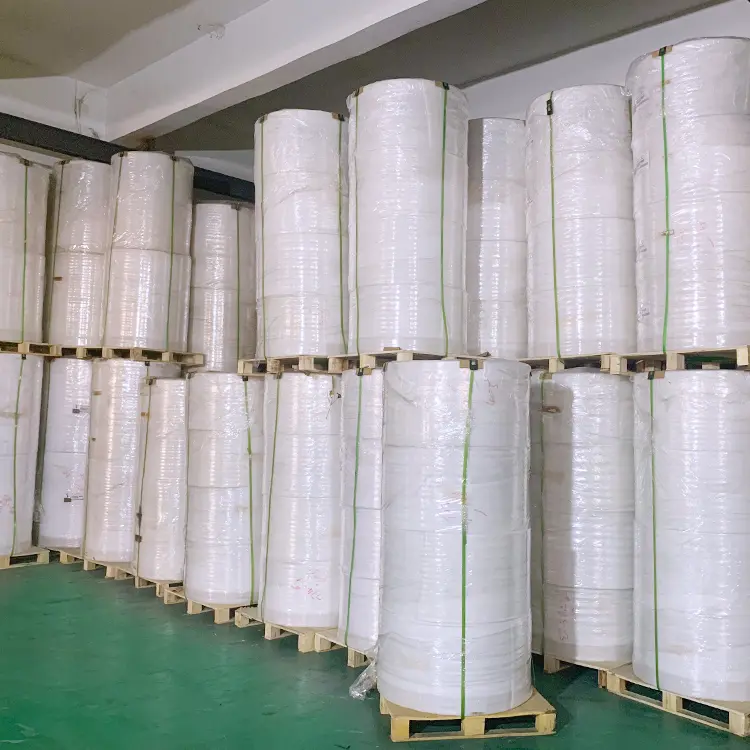
For thermal paper converters, wholesalers, distributors, and printing businesses, choosing the right thermal paper jumbo roll is an important part of maintaining production efficiency and product quality. Unlike finished receipt roll, jumbo roll are supplied in larger formats and are designed to be converted into smaller roll for different commercial applications.
- Quick Answer: What Should Buyers Look for in a Thermal Paper Jumbo Roll?
- 1. Understand How Thermal Paper Jumbo Roll Are Used in Manufacturing
- 2. Select the Correct GSM, Width, and Core Specifications
- 3. Why Thermal Coating Quality Matters for Finished Products
- 4. How Jumbo Roll Quality Affects Slitting and Rewinding Efficiency
- 5. Choosing a Thermal Paper Jumbo Roll Supplier for Bulk Production
- 6. Storage, Packaging, and Transportation Considerations
- 7. How to Reduce Purchasing Costs Without Compromising Quality
- Frequently Asked Questions About Thermal Paper Jumbo Roll
- Final Takeaway: Choose Jumbo Roll That Support Efficient Converting
These large roll are widely used in the production of POS receipt paper, ATM paper, lottery tickets, medical record paper, logistics receipts, and other thermal paper products. Their size makes them particularly useful for businesses operating converting equipment and supplying finished roll to multiple markets.
However, purchasing jumbo roll involves more than selecting a suitable paper width or finding a competitive price. Buyers need to consider coating performance, GSM, roll dimensions, core size, paper length, storage conditions, and compatibility with their slitting and rewinding equipment.
For international buyers, working with a dependable supplier is equally important. Consistent material quality and reliable bulk availability help converters maintain production schedules and meet customer requirements without unnecessary interruptions.
Quick Answer: What Should Buyers Look for in a Thermal Paper Jumbo Roll?
A suitable thermal paper jumbo roll should match the converter’s equipment, required finished-roll specifications, and printing performance expectations.
Before purchasing, buyers should evaluate:
- Paper GSM and thickness.
- Jumbo roll width and diameter.
- Core size and compatibility.
- Thermal coating quality and sensitivity.
- Surface smoothness and paper consistency.
- Slitting and rewinding performance.
- Storage and packaging conditions.
- Supplier reliability and bulk supply capabilities.
The best purchasing decision comes from comparing these specifications together rather than choosing a jumbo roll based only on its price per ton or kilogram.
1. Understand How Thermal Paper Jumbo Roll Are Used in Manufacturing
Thermal paper jumbo roll serve as the starting material for producing smaller thermal paper products. Their large format allows converters to process substantial quantities of paper through industrial slitting and rewinding equipment.
The process generally begins with a coated thermal paper parent roll. This material is loaded onto a converting machine, where it is slit into narrower widths according to the required finished product dimensions. The narrower paper webs are then rewound into individual roll with specified lengths, diameters, and core sizes.
It is important to distinguish thermal coating from converting. Coating is the process that gives paper its heat-sensitive printing properties. Slitting and rewinding happen afterward and turn the coated material into finished roll. Some manufacturers perform coating in-house, while others purchase coated jumbo roll from specialized paper producers.
Depending on the customer’s equipment and production requirements, jumbo roll can be converted into products such as:
- POS receipt paper roll.
- ATM and payment terminal paper.
- Supermarket and retail receipt roll.
- Lottery and ticketing paper.
- Medical recording paper.
- Logistics and transportation receipts.
For converters supplying multiple industries, selecting the correct parent roll specification is essential because every subsequent production stage depends on the incoming material.
2. Select the Correct GSM, Width, and Core Specifications
One of the most common challenges in jumbo roll purchasing is determining which specifications will work best with existing converting equipment.
Paper GSM, or grams per square meter, describes the weight of the paper. It influences the physical characteristics of the material, including thickness, stiffness, and how much paper can fit within a particular finished-roll diameter.
Sailingpaper lists different thermal paper grades, including 35, 40, 45, 48, 50, 55, 58, 60, 65, 70, and 80 GSM options. The appropriate grade depends on the intended application and the converter’s requirements.
Other important specifications include:
| Specification | Why It Matters |
| GSM | Influences paper weight and physical characteristics |
| Jumbo roll width | Must match the converting machine’s requirements |
| Outer diameter | Determines machine loading compatibility |
| Core size | Must fit the equipment’s holding mechanism |
| Paper thickness | Affects winding capacity and finished-roll length |
| Coating grade | Influences thermal printing performance |
| Paper length | Helps estimate production output and material usage |
Width is particularly important when converting jumbo roll into several finished-roll formats. A converter producing different POS paper sizes may require multiple parent roll widths to minimize trimming waste and improve material utilization.
Sailingpaper offers jumbo roll width options such as 80mm, 100mm, and 210mm, along with customized specifications for different equipment requirements.
Before requesting a quotation, buyers should provide their machine specifications and intended finished-roll sizes. This allows the supplier to recommend a more suitable material configuration.
3. Why Thermal Coating Quality Matters for Finished Products
The quality of a thermal paper jumbo roll is not determined by dimensions alone. Its coating performance directly influences the printing results of the finished roll.
Thermal paper uses a heat-sensitive coating that reacts when exposed to a compatible thermal printhead. If the coating is uneven or the thermal response varies across the paper surface, the finished receipts may show inconsistent darkness, faded text, or unclear barcodes.
For converters, these problems can create customer complaints even when the slitting and rewinding operations are performed correctly.
Before approving a jumbo roll supplier, buyers should consider:
Thermal sensitivity: The paper should develop clear images under suitable printer settings.
Coating uniformity: The thermal layer should remain consistent across the usable paper width.
Surface smoothness: An appropriate surface finish supports reliable printing and paper handling.
Background stability: Excessive background discoloration can affect the appearance and readability of receipts.
Image retention: The paper should meet the storage and image-retention expectations of its intended application.
Testing samples before bulk purchasing is a practical way to evaluate whether the material performs well in actual production conditions.
4. How Jumbo Roll Quality Affects Slitting and Rewinding Efficiency
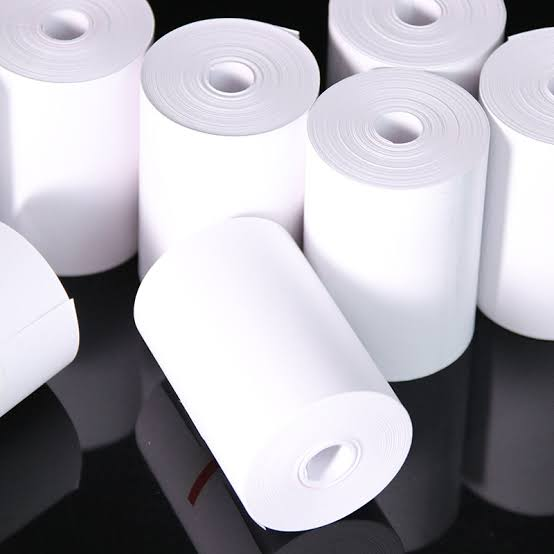
For thermal paper converters, material quality and converting performance are closely connected. Even good thermal paper can create production problems if its physical characteristics are unsuitable for the machinery.
During slitting, the jumbo roll is divided into narrower webs. Poor edge quality, inconsistent thickness, or unsuitable paper tension can affect the converting process.
Rewinding introduces another set of considerations. The paper must be wound with controlled tension to produce stable finished rolls. Excessive tension may affect the inner layers, while insufficient tension can result in loose or uneven rolls.
Several factors deserve attention:
- Consistent paper thickness across the web.
- Accurate slitting width.
- Clean and smooth paper edges.
- Stable unwinding and rewinding tension.
- Proper roll alignment.
- Compatibility with the converter’s core specifications.
These details are especially important for converters producing large quantities of 57mm and 80mm receipt rolls. Small variations in the parent material can become more noticeable when repeated across thousands of finished products.
A good supplier should therefore understand how the jumbo roll will be processed rather than treating the purchase as a simple paper transaction.
5. Choosing a Thermal Paper Jumbo Roll Supplier for Bulk Production
Bulk buyers need a supplier that can support both product quality and ongoing material requirements. A competitive first quotation is useful, but long-term supply reliability is often more important for businesses operating continuous converting operations.
Sailingpaper has been active in the thermal paper industry since 2005 and supplies thermal paper products to international customers. Its product range includes jumbo roll designed for converters and distributors serving retail, financial, logistics, medical, and ticketing applications.
The company offers different width, length, and core-size options to accommodate varying production requirements. Standard and customized specifications are available depending on the intended application.
For bulk buyers, the ability to discuss product grades, material dimensions, special coating requirements, and order quantities before production is particularly useful. These details help establish a clear purchasing specification and reduce misunderstandings between the supplier and converter.
Sailingpaper also reports exporting thermal paper jumbo roll to more than 60 countries and regions, supporting customers with international supply requirements.
When evaluating a supplier, buyers should discuss the following:
| Purchasing Factor | What to Confirm |
| Product specifications | GSM, width, diameter, and core size |
| Coating requirements | Thermal performance and special grades |
| Customization | Available dimensions and material options |
| Quality control | Material inspection and batch consistency |
| Order volume | Availability for recurring bulk requirements |
| Packaging | Protection during storage and transportation |
| Export arrangements | Shipping schedules and destination requirements |
For businesses seeking a long-term sourcing partner, clear communication about these requirements is an important starting point.
6. Storage, Packaging, and Transportation Considerations
Thermal paper is sensitive to environmental conditions. Even when jumbo roll leave the supplier in good condition, improper handling during storage and transportation may affect their performance.
Excessive heat can contribute to unwanted background discoloration, while moisture may affect paper stability and dimensional consistency. Dust, direct sunlight, and physical pressure can also create problems during storage.
For large converters and distributors, proper packaging helps protect jumbo roll throughout transportation and warehouse handling.
Buyers should consider:
- Protective wrapping against dust and moisture.
- Appropriate carton or pallet arrangements.
- Secure loading to prevent roll movement.
- Suitable warehouse temperature and humidity conditions.
- Protection from direct sunlight and excessive heat.
- Proper handling during loading and unloading.
Storage requirements should also be communicated to warehouse teams. Maintaining suitable environmental conditions helps preserve the material before it enters the converting process.
7. How to Reduce Purchasing Costs Without Compromising Quality
The lowest-priced jumbo roll is not necessarily the most economical choice. A cheaper material may create more waste during slitting, require additional production adjustments, or result in finished rolls that fail customer expectations.
For converters, a more practical cost evaluation includes the usable paper area, converting yield, defect rate, machine performance, and transportation expenses.
For example, a jumbo roll with an unsuitable width may generate excessive edge waste. Similarly, inconsistent material quality may lead to more rejected finished rolls.
To improve purchasing efficiency, buyers should:
- Match jumbo roll width with their converting equipment.
- Select GSM according to the intended finished product.
- Test samples before approving bulk orders.
- Compare suppliers using identical technical specifications.
- Evaluate material utilization rather than price alone.
- Establish consistent specifications for repeat purchases.
A well-planned purchasing process can help converters reduce avoidable waste and maintain more predictable production costs.
Frequently Asked Questions About Thermal Paper Jumbo Roll
What is a thermal paper jumbo roll used for?
It is a large coated paper roll used as raw material for producing smaller thermal paper products, including POS receipts, ATM paper, tickets, medical recording paper, and logistics receipts.
What GSM options are available for thermal paper jumbo roll?
Common grades include 35, 40, 45, 48, 50, 55, 58, 60, 65, 70, and 80 GSM. The appropriate choice depends on the intended application and equipment requirements.
Can thermal paper jumbo roll be customized?
Yes. Depending on the supplier’s capabilities, buyers can request different widths, lengths, core sizes, paper grades, and special coating requirements.
What information should buyers provide when requesting a quotation?
Provide the required GSM, jumbo roll width, outer diameter, core size, estimated quantity, intended application, and destination country. Sharing converting machine specifications can also help avoid compatibility problems.
How can converters check jumbo roll quality before bulk purchasing?
Request samples and evaluate coating uniformity, thermal response, surface condition, paper dimensions, and converting performance. Approved specifications should be retained for future orders.
Final Takeaway: Choose Jumbo Roll That Support Efficient Converting
Selecting the right thermal paper jumbo roll requires careful attention to material specifications, coating performance, converting compatibility, storage conditions, and supplier reliability.
For converters and distributors, the goal is not simply to purchase large paper roll at a competitive price. It is to secure material that can be processed efficiently into consistent finished products while supporting long-term customer requirements.
Sailingpaper provides thermal paper jumbo roll options for international converters, wholesalers, and distributors, with different specifications and customization possibilities for various applications.
Businesses planning bulk purchases should begin by identifying their required GSM, roll width, diameter, core size, and intended finished products. Sharing these details with the supplier makes it easier to evaluate material compatibility and establish a more reliable purchasing arrangement.
Blog
Inside a China Eyewear Factory: How Eyewear Goes from Design and Material Selection to Mass Production


Have you ever wondered how a simple eyewear design becomes thousands of finished frames ready for international retailers?
- 1. Inside an Eyeglass Factory: Everything Starts with Product Design
- 2. Material Selection: Why Every Frame Factory Needs Different Production Capabilities
- 3. What Happens in the Frames Factory During Production?
- 4. Is a Lens Factory the Same as an Eyewear Factory?
- 5. From Sample Approval to Factory-Direct Eyeglasses Production
- 6. Quality Control: What Happens Before Finished Glasses Leave the Factory?
- 7. How to Find the Right Glasses Manufacturer Near You or in China
- Choosing a Manufacturing Partner for Your Next Eyewear Collection
Behind every pair of glasses is a manufacturing process involving design development, material preparation, precision machinery, skilled workers, assembly, and quality inspection.
A modern china eyewear factory is not simply a place where frames are assembled. It is part of a wider production ecosystem connecting raw material suppliers, component manufacturers, frame production facilities, lens suppliers, and international buyers.
Understanding how these operations work helps eyewear brands, importers, and distributors evaluate manufacturing partners more effectively.
Let’s take a closer look at what happens inside an eyewear manufacturing operation, from the first design discussion to the final packed product.
1. Inside an Eyeglass Factory: Everything Starts with Product Design
The manufacturing journey usually begins when a brand shares its design requirements, reference samples, sketches, or technical specifications.
The development team reviews important details such as:
- Frame shape and dimensions.
- Material selection.
- Color and surface finish.
- Hinge and temple construction.
- Lens size and fitting requirements.
- Target retail positioning.
The design is then converted into technical drawings or CAD specifications to establish the dimensions and construction requirements.
Before mass production, manufacturers generally develop samples so buyers can evaluate the appearance, comfort, fit, and construction.
A professional eyeglass factory should also identify manufacturing limitations early. A design may look attractive digitally but require adjustments to make it suitable for production.
2. Material Selection: Why Every Frame Factory Needs Different Production Capabilities
Material selection directly affects the manufacturing process, product characteristics, and final cost.
An experienced frame factory may work with several materials, but each requires different production techniques.
Acetate: Acetate sheets are cut into frame components using CNC machinery or other cutting equipment. The components are shaped, assembled, tumbled, and polished to achieve the desired finish.
Metal: Metal frames require processes such as stamping, bending, welding, plating, and component assembly. Precision is particularly important when connecting bridges, rims, temples, and hinges.
TR90 and injection materials: These thermoplastic materials are processed through injection molding. The molten material is injected into molds to create frame components, which are subsequently trimmed, finished, and assembled.
This is why choosing an optical factory with the right material specialization matters. A manufacturer experienced in acetate production may not necessarily have the same expertise in titanium or injection molding.
3. What Happens in the Frames Factory During Production?
Once the materials and specifications are approved, production begins.
Although the exact process varies by material and factory, a typical frame manufacturing workflow includes:
- Raw material inspection.
- Cutting, stamping, or molding.
- Component shaping and processing.
- Hinge and metal component installation.
- Surface grinding and polishing.
- Plating or coating where required.
- Frame assembly and adjustment.
- Intermediate quality inspection.
For example, acetate manufacturing involves several finishing operations to achieve smooth surfaces and consistent gloss. Metal production places greater emphasis on welding accuracy, structural strength, and surface treatment.
A well-organized glasses factory maintains inspection checkpoints throughout production rather than waiting until the frames are completely assembled.
4. Is a Lens Factory the Same as an Eyewear Factory?
Not necessarily. This is an important distinction for buyers entering the eyewear industry.
A lens factory manufactures lenses, while a frame manufacturer produces the physical eyewear structure.
Lens production can involve casting, surfacing, polishing, and coating, depending on the lens type and application.
For example, prescription lenses may require additional optical processing and edging before they can be fitted into frames. Sunglasses lenses may require tinting, polarization, or UV-protection specifications.
Some eyewear manufacturers purchase finished lenses from specialized suppliers, while others have access to affiliated or integrated lens operations.
Therefore, when evaluating a factory, ask whether lens manufacturing, lens sourcing, and final lens fitting are handled internally or by external partners.
5. From Sample Approval to Factory-Direct Eyeglasses Production
After the buyer approves the sample, the manufacturer prepares for bulk production.
This stage involves confirming the final specifications, order quantities, materials, colors, packaging, and production schedule.
For buyers seeking factory direct eyeglasses, working directly with a manufacturer can improve communication about product specifications and production changes.
However, direct factory purchasing does not automatically guarantee lower prices. The total cost still depends on order volume, materials, customization, tooling, and quality requirements.
Before mass production, buyers should confirm that the approved sample and production specifications are properly documented.
This reduces the risk of receiving bulk products that differ from the original sample.
6. Quality Control: What Happens Before Finished Glasses Leave the Factory?
Quality control is not a single inspection at the end of production.
A structured manufacturing operation may include:
- Incoming Quality Control (IQC): Checking raw materials and components.
- In-Process Quality Control (IPQC): Monitoring production stages.
- Final Quality Control (FQC): Inspecting completed products.
- Outgoing Quality Control (OQC): Verifying packaging, quantities, and shipping requirements.
Common inspection points include frame symmetry, hinge performance, surface defects, dimensional accuracy, lens fitting, and product specifications.
For sunglasses, appropriate UV-protection and other relevant performance tests should also be verified through suitable documentation.
The goal is to ensure that bulk production consistently matches the approved sample and agreed specifications.
7. How to Find the Right Glasses Manufacturer Near You or in China
When buyers search for eyeglasses frame near me or a glasses manufacturer near me, they are often looking for a convenient sourcing partner.
Local suppliers may offer easier communication and proximity. However, international buyers should not overlook specialized manufacturing ecosystems in China.
Searching for the glasses factory or a particular eyeglass factory in ventura may help identify local businesses, but buyers should first establish whether those businesses actually manufacture frames or simply operate retail stores, optical laboratories, or distribution facilities.
Similarly, brands researching fashion eye collections should evaluate design development, material options, and production consistency rather than relying only on product photographs.
Whether you choose a local supplier or an overseas manufacturer, verify its actual production capabilities, quality-control procedures, and commercial terms.
Choosing a Manufacturing Partner for Your Next Eyewear Collection
Understanding how eyewear moves from design to mass production makes it easier to distinguish between a genuine manufacturing partner and a supplier that simply resells finished products.
Hivision Eyewear, based in Wenzhou, China, provides OEM/ODM eyewear manufacturing services across acetate, metal, titanium, and injection materials.
For brands exploring factory sunglasses production or customized optical frames, evaluating the manufacturer’s material capabilities, sample development, production processes, and quality-control arrangements is essential.
You can explore Hivision’s eyewear product collections and sunglasses range to understand its product offerings.
Ultimately, the strength of an eyewear manufacturing partner is not determined by how large its factory looks. It is determined by how consistently it can transform approved designs and specifications into finished products that meet the buyer’s requirements.

Build a Living Room Worth Bingeing In: The Complete Setup for Marathon Viewing Nights

How to Help Your Child Prepare for a Science Fair: A Step-by-Step Guide for Parents

Custom Label: How to Choose the Right Materials, Adhesives, and Manufacturer for Your Business

Alex Pettyfer Net Worth, Wife, Age, Height, Children, Career and More

Brad Williams Net Worth, Wife, Height, Age, Daughter, Family, Career and More

Eldorado.gg Review 2026: How It Works, Safety, Fees, and Risks
-
Celebrity11 months ago
Alex Pettyfer Net Worth, Wife, Age, Height, Children, Career and More
-
Celebrity11 months ago
Brad Williams Net Worth, Wife, Height, Age, Daughter, Family, Career and More
-
Blog3 months ago
Eldorado.gg Review 2026: How It Works, Safety, Fees, and Risks
-
 Anime1 year ago
Sanzoku Bandits of One Piece: Origins, Higuma, and Their Role in Dawn Island
-
 Celebrity12 months ago
John McGinn Net Worth, Age, Height, Wife, Childrens, Career and More
-
 Anime1 year ago
Shimotsuki Ushimaru – The Last Daimyo of Wano Country Explained
-
 Celebrity12 months ago
Frances de la Tour Net Worth, Age, Height, Husband, Childrens, Career and More
-
 Celebrity12 months ago
Will Trickett Net Worth, Wife, Childrens, Age, Career and More