
Business
10 Proven Strategies On How Can Businesses Reduce Transportation Costs


In most organisations in the UK, transportation costs are rising. Efficient logistics and proper planning are necessary to control and cut down costs and ensure high profit margins. Such smart choices will also improve the supply chain in the organizations. The ten effective ways outlined below are efficient when it comes to saving transport cost and providing the customers with the best services.
- 1. Optimize Route Planning and Transportation Logistics
- 2. Implement Transportation Management Systems
- 3. Use Freight Consolidation Strategies
- 4. Improve Warehouse Operations
- 5. Leverage Real-Time Data and Analytics
- 6. Reduce Fuel Consumption
- 7. Build Strong Partnership Networks
- 8. Automate Daily Logistics Tasks
- 9. Choose Cost-Effective Transportation Modes
- 10. Strengthen Supply Chain Management
- Final Thoughts
1. Optimize Route Planning and Transportation Logistics
Better route planning cuts waste and saves money. Use route optimization tools to find faster routes. This helps reduce transportation costs and improve speed & reliability of delivery van service. Fewer delays also lower fuel consumption and transportation expenses. Good transportation logistics creates lasting cost savings.
2. Implement Transportation Management Systems
A modern transportation management system improves daily work. Many transportation management companies have systems that provide real-time tracking and better visibility. Managers can optimize loads and avoid mistakes. Strong automation supports better logistics management. These tools improve cost management and reduce logistics cost.
3. Use Freight Consolidation Strategies
Freight consolidation is about consolidating various shipments to form a larger one so that there will be fewer trips per week, which will lead to saving money. These tips about consolidation are good methods of cutting transportation costs of your firm.
4. Improve Warehouse Operations
A well-managed warehouse speeds every shipment. Better layouts reduce handling time and storage costs. Fast loading improves utilization and avoids unnecessary waiting. Efficient warehouses support efficient logistics and smoother logistics and supply chain operations. This also helps reduce costs.
5. Leverage Real-Time Data and Analytics
Use real-time data to make smarter choices. Predictive analytics and analytics reveal weak areas early. Teams can prevent every delay before costs increase. Better tracking systems improve supply chain visibility. This proactive approach delivers significant cost savings.
6. Reduce Fuel Consumption
Fuel remains a major expense. Choose fuel-efficient vehicles whenever possible. Train drivers to reduce fuel use during trips. Good driving habits reduce fuel consumption and reduce fuel costs. Watching every fuel price change also supports better pricing decisions.
7. Build Strong Partnership Networks
A trusted partnership with carriers creates better value. Reliable third-party logistics providers improve flexibility. Some companies also use collaborative logistics to share transportation resources. These logistics networks help businesses adapt to changing demand. Strong relationships also improve the service level.
8. Automate Daily Logistics Tasks
One needs to automate their company wherever possible. Automation leads to reduced processing times because automation avoids manual mistakes, and therefore there is efficient processing. It also supports better cost reduction and operational efficiency. Simple systems often deliver a significant cost advantage.
9. Choose Cost-Effective Transportation Modes
Review different transportation modes for every freight movement. Intermodal transportation often lowers long-distance costs. The right mix can significantly reduce transportation spending. Such smart planning does not affect customer service but increases profitability. This is perhaps the best strategy of reducing transportation costs.
10. Strengthen Supply Chain Management
Strong supply chain management supports lasting success. Review your supply chain often and remove waste. Use operational strategies and risk management strategies to prevent disruption. Improper planning leads to unnecessary expedited transportation; hence, these strategies will optimize your supply chain and reduce logistics costs.
Final Thoughts
No company would want higher transportation costs and lower profitability margins. Such strategies of cutting down costs without affecting the quality of service are very essential.
Business
Hazard Identification and Risk Assessment Explained: Who Is Responsible for Conducting a Hazard Assessment?


A plant manager told me once that his hazard assessments were “handled.” I asked who handled them. Long pause. Then a name, then a second name, then “well, between the two of them, mostly.” Two weeks earlier a pallet rack near the loading bay had started leaning and both of those people had assumed the other one had logged it. Nobody had.
That is the whole problem in one story. Not a missing form. A missing owner.
So before we argue about who should be holding the clipboard, it’s worth being honest about what a hazard assessment is really for and why “whose job is it” turns out to be a harder question than most companies expect.
What Hazard Identification and Risk Assessment Really Means
HIRA, if you want the short version, is the work of looking at a place and naming what could hurt someone in it. Then deciding how much to worry about each thing.
The naming part is broader than people think. Yes, the faulty machine and the trailing cable. But also the lighting that’s just dim enough to cause a stumble on the night shift, the solvent nobody thinks about until someone’s been breathing it for three years, the lift-and-twist motion that quietly ruins a back over a decade. What comes out of the exercise is two things. A list of what could go wrong, tied to a specific task or area or bit of kit. And a rating on each one, likelihood against severity, so you know what to fix first instead of fixing whatever shouted loudest that morning.
Here’s the part that trips people. A hazard assessment isn’t a photograph. It’s more like a weather report that goes stale. New equipment arrives, the seasons change, a machine wears in ways nobody predicted and a risk that looked trivial last year is suddenly the one that bites. Sign it off once and file it and you’re protecting a workplace that no longer exists.
The Steps and Why Each One Needs an Owner
The rhythm is roughly the same across industries. You walk the actual floor instead of trusting an old record. You find the hazards through a mix of watching, checking the incident history and asking the people who do the job. You rate each one. You decide on controls, from re-engineering the problem out to, as a last resort, handing someone protective gear. And you write it all down with follow-up actions that have names and dates on them.
Miss a step and the rest sags. A hazard list with no ratings gives you no priorities, just anxiety. Ratings with no assigned action become a tidy report that changes nothing. That’s the real reason ownership matters so much: every one of those steps needs a person on the hook for finishing it, not just a person who’s aware it exists.
Who Is Responsible for Conducting a Hazard Assessment?
There’s no clean single name for this and pretending there is causes most of the trouble. It’s shared and the roles don’t substitute for each other.
- The employer carries the ultimate weight. Legally and morally, a safe workplace is their obligation, full stop.
- The safety manager or EHS lead tends to run the machinery of it, keeping records straight and the approach consistent from one department to the next.
- Supervisors know how the work is genuinely done, which is often a world away from the laminated procedure on the wall.
- The people on the floor see what nobody reading a report in an office ever could, because they’re standing next to the hazard all day.
A closer look at who is responsible for conducting a hazard assessment argues that spreading this across a structure, rather than resting it on one job description, holds up far better over time. My own experience says the same and then some.
Why One Owner Is Never Enough
The tidy instinct is to give the whole thing to whoever has “safety” in their title and move on. What you’ve actually built is a single choke point. One person can’t stand in every corner of a large site, can’t know every task down to the muscle memory, can’t feel every small drift in conditions before it becomes a problem.
Share the load and it lands where it should. Supervisors catch things on the daily walk. Workers flag a hazard the second they meet it, because they’re closest to it. The safety professional takes all that raw input and shapes it into something ranked and usable that leadership can actually act on.
There’s a quieter benefit too and it’s about trust. When a worker mentions something and then watches it get fixed, they keep mentioning things. When they mention something and nothing moves, they stop and they teach the next person to stop as well. You can’t buy that engagement with a poster. It’s earned slowly, through follow-through people can see with their own eyes.
And distributing the work builds in a safety net. A supervisor misses a lean in the racking? The forklift driver who passes it forty times a day might not. A report gets stuck in someone’s inbox? A safety manager reading incident trends might spot the same thing from a completely different direction. Fewer things fall through when there’s more than one pair of hands underneath.
Keeping HIRA Alive Day to Day
The common failure is treating HIRA as an annual box, ticked and shelved until the next audit forces it open again. It does far more good as a running habit, one that reacts to a new machine, a shift change, a hot summer, a near-miss that could have been much worse.
If you’re standing this up for the first time, a structured guide to hazard identification and risk assessment beats cobbling something together from generic templates. What you’re really after is consistency, because that’s what lets you line up this quarter’s findings against last quarter’s and actually see a trend forming.
Where It Usually Breaks Down
The failures repeat. Assessments done once and never reopened. Frontline people left out entirely, so the findings rest on what a manager assumed rather than what’s true on the floor. Corrective actions logged with no owner and no date, floating in limbo. New starters who never get told the hazards specific to their own role, because that handoff belongs to nobody in particular. Reports quietly stacking up in a folder the safety team is the only one ever to open.
Chase any of these back far enough and you hit the same thing: nobody was sure whose job it was to close the gap. So the gap stayed open.
The Takeaway
HIRA isn’t hard to understand. It’s hard to own. The question of who’s responsible for conducting a hazard assessment refuses to collapse into one name and it’s supposed to. The employer sets the expectation. The safety team runs the process. Supervisors bring the operational truth and the workers supply the detail no report ever fully captures.
Get that spread of responsibility right, back it with clear roles and follow-through people can count on and problems surface earlier and get closed faster. A perfect binder gathering dust was never the aim. A floor where hazards get seen, weighed and dealt with before they turn into something expensive, that’s the aim.
Business
Zchwantech Emerges as Leading Authorized Technology Solutions Provider for Enterprise Digital Transformation

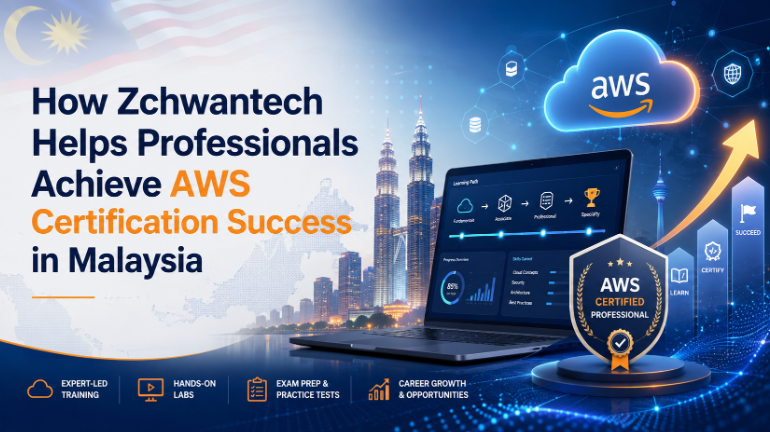
Malaysian enterprises face mounting pressure to transform digitally or risk falling behind competitors. The shift towards automation, cloud infrastructure, and data driven decision making has become non-negotiable for businesses aiming to thrive in today’s market. Yet finding the right technology partner to guide this transformation remains a challenge for many organizations across the country.
- Understanding the Role of an Authorized Technology Solutions Provider
- How Zchwantech Supports Enterprise Digital Transformation
- Assessment and Strategy Development
- Cloud Management Solutions for Scalability
- Custom Development Services for Unique Requirements
- The Business Value of Working with Zchwantech
- Vendor Relationships and Certifications
- Local Expertise with Global Standards
- End to End Implementation Support
- Measuring Digital Transformation Success
- Moving Forward with Digital Transformation
Zchwantech has positioned itself as a leading authorized technology solutions provider, helping Malaysian enterprises navigate complex digital transformation journeys with confidence. Their approach combines technical expertise with practical implementation strategies that address real business challenges.
Understanding the Role of an Authorized Technology Solutions Provider
An authorized technology solutions provider does more than simply sell software or hardware. These partners maintain official relationships with major technology vendors, which grants them access to specialized training, support resources, and product certifications that generic IT service providers cannot offer.
This authorized status matters significantly for enterprises. It ensures that solutions are implemented according to vendor best practices, warranty and support agreements remain valid, and the organization receives genuine products with proper licensing. For Malaysian businesses investing substantial resources into digital transformation, these assurances protect their investment.
Zchwantech holds multiple authorizations across enterprise technology categories, positioning them to serve as a single point of contact for diverse technological needs. This consolidated approach streamlines vendor management and creates accountability that fragmented IT services cannot match.
How Zchwantech Supports Enterprise Digital Transformation
Digital transformation extends far beyond purchasing new technology. It requires strategic planning, change management, and ongoing optimization to deliver measurable business results.
Zchwantech approaches each client engagement by first understanding the specific business outcomes the organization seeks to achieve. Revenue growth, operational efficiency, customer satisfaction, and competitive differentiation all require different technological approaches. Cookie cutter solutions rarely succeed in enterprise environments where legacy systems, regulatory requirements, and organizational culture create unique constraints.
Assessment and Strategy Development
Before recommending specific technologies, Zchwantech conducts comprehensive assessments of existing infrastructure, workflows, and pain points. This diagnostic phase identifies gaps between current capabilities and future requirements. The resulting roadmap prioritizes initiatives based on impact potential and implementation feasibility.
Malaysian enterprises particularly benefit from this localized approach. Understanding regional compliance requirements, industry specific regulations, and local market dynamics ensures solutions align with the operating environment.
Cloud Management Solutions for Scalability
Cloud infrastructure has become the foundation for modern enterprise operations. However, migrating to the cloud involves complex decisions about architecture, security, cost optimization, and workload management.
As an authorized technology solutions provider, Zchwantech helps organizations design cloud strategies that balance performance with cost efficiency. Their cloud management services include migration planning, hybrid cloud architectures, and ongoing optimization that adapts resources to changing business demands.
Malaysian businesses moving critical workloads to the cloud need assurance that data sovereignty requirements are met, latency remains acceptable for end users, and disaster recovery capabilities meet business continuity standards. Zchwantech addresses these concerns through careful planning and vendor selection.
Custom Development Services for Unique Requirements
Off the shelf software solves common problems effectively. But enterprises often face unique challenges that require custom development. Proprietary business processes, integration with legacy systems, or specialized industry requirements necessitate tailored solutions.
Zchwantech provides custom development services that extend and enhance existing systems rather than forcing organizations to abandon working processes. This pragmatic approach minimizes disruption while delivering the specific functionality businesses need to compete effectively.
Their development teams work within enterprise grade frameworks that ensure code quality, security, and maintainability. This matters enormously for organizations that will depend on these systems for years to come.
The Business Value of Working with Zchwantech
Choosing the right technology partner impacts project success rates, total cost of ownership, and long term flexibility. Several factors distinguish Zchwantech in the Malaysian market.
Vendor Relationships and Certifications
Authorized status with major technology vendors means access to technical support channels, pre release product information, and specialized training that keeps skills current. When implementation challenges arise, having direct vendor escalation paths resolves issues faster than working through intermediaries.
These relationships also provide cost advantages through partner pricing structures and volume licensing agreements that individual enterprises cannot access independently.
Local Expertise with Global Standards
Zchwantech operates with understanding of Malaysian business culture, regulatory environment, and market conditions while implementing solutions according to international best practices. This combination proves particularly valuable for local enterprises expanding regionally or multinational organizations establishing Malaysian operations.
Their teams communicate effectively with both technical stakeholders and business leadership, bridging the gap that often creates misalignment in technology projects.
End to End Implementation Support
Digital transformation projects fail most often during implementation and adoption phases rather than planning stages. Zchwantech provides hands on support throughout the entire project lifecycle, from initial assessment through deployment, training, and ongoing optimization.
This continuity ensures knowledge transfer happens effectively and organizations build internal capabilities to manage solutions long term. Rather than creating vendor dependency, their approach empowers teams to operate independently while maintaining access to expert support when needed.
Measuring Digital Transformation Success
Effective technology partners establish clear metrics at project inception and track progress against these benchmarks throughout implementation. Zchwantech works with clients to define key performance indicators that align with business objectives rather than simply measuring technical specifications.
Revenue impact, cost reduction, process efficiency gains, customer satisfaction improvements, and employee productivity all provide more meaningful success measures than infrastructure uptime percentages or system response times alone.
Regular business reviews ensure solutions continue delivering value as requirements evolve. Technology serves business needs, not the reverse. This philosophy guides how Zchwantech approaches client relationships and solution delivery.
Moving Forward with Digital Transformation
Malaysian enterprises cannot afford to delay digital transformation initiatives. Competitive pressures, changing customer expectations, and operational efficiency demands require modern technology foundations.
Working with an experienced authorized technology solutions provider like Zchwantech reduces implementation risks while accelerating time to value. Their combination of vendor certifications, technical expertise, and practical business understanding creates a partnership approach that supports sustainable transformation.
Organizations ready to begin or accelerate their digital transformation journey can connect with Zchwantech’s solutions team at sales@zchwantech.com to discuss specific requirements and explore how tailored technology solutions can drive measurable business results.
Business
Flexible Office Space in Warsaw – How Hybrid Work Is Reshaping What Companies Need From Their Office?


The relationship between companies and their office space has changed fundamentally since 2020. What began as a forced experiment in remote work has evolved into a deliberate redesign of how and where work gets done. For companies active in Warsaw’s office market, this shift has practical implications for how much space they need, what that space should look like and how lease structures should be designed to accommodate an inherently uncertain future.
The most immediate effect of hybrid work adoption was a reassessment of the ratio between headcount and square meters. Companies that had traditionally allocated eight to twelve square meters per employee on a one-to-one basis began questioning whether a model where fifty or sixty percent of employees are in the office on any given day requires the same total footprint.
The answer, as most occupiers have discovered, is more nuanced than simple arithmetic. Reducing space in proportion to average daily attendance does not work if the reduction eliminates the capacity to accommodate peak attendance days – typically Tuesday through Thursday – when the majority of employees choose to come in. The more significant redesign is not about total square meters but about how those square meters are used.
What does a hybrid-ready office look like?
Office spaces in Warsaw that genuinely support hybrid working differ fundamentally from traditional offices in their allocation of space types. Fixed individual desks, which dominated traditional office planning, give way to flexible workstations available on a hot-desk reservation system. The square meters freed from dedicated desk allocation are redistributed toward meeting and collaboration spaces – which are chronically undersupplied in most traditional offices – and toward focus work areas that provide the quiet and concentration that home environments cannot reliably offer.
The proportion of space dedicated to formal meeting rooms versus informal collaboration zones is another area of significant change. Large boardrooms that host full-team meetings once a month are less valuable than a variety of smaller spaces – for two to four people – that support the daily cadence of team work, one-to-one conversations and video calls.
How do lease structures need to adapt to hybrid occupancy models?
Traditional lease structures – long-term commitments for fixed amounts of space – sit in tension with the inherent uncertainty of hybrid work. Companies that are genuinely uncertain about their space requirements over a five or ten year horizon face a difficult choice between under-committing and risking insufficient space as the business grows, or over-committing and carrying unused capacity at significant cost.
Several structural approaches help manage this tension. Break options – the right to exit part or all of the lease at defined points – provide flexibility at the cost of typically less favorable commercial terms. Expansion options – the right to take additional space within the same building – allow for managed growth without the disruption of a full relocation. Rights to sublet unused space provide a safety valve if requirements prove lower than anticipated.
What technology infrastructure does a hybrid office require?
Effective hybrid working depends on technology infrastructure that allows remote and in-office participants to collaborate without significant friction. Meeting rooms equipped for high-quality video conferencing – with ceiling microphones that capture all participants clearly, cameras with appropriate field of view and displays that show remote participants at near life-size – are the foundation. Desk reservation systems that allow employees to plan their in-office days and choose workstations near their team members reduce the friction of hot-desking.
Office for rent in Warsaw within modern buildings managed by CPIPG offers the technical infrastructure and building management systems needed to support demanding hybrid work environments, including high-capacity connectivity, building access systems compatible with flexible working hours and facilities management that adapts to variable daily occupancy patterns.

10 Proven Strategies On How Can Businesses Reduce Transportation Costs

How Modern 3D Scanning Simplifies Digital Design and Reverse Engineering

Hazard Identification and Risk Assessment Explained: Who Is Responsible for Conducting a Hazard Assessment?

Alex Pettyfer Net Worth, Wife, Age, Height, Children, Career and More

Brad Williams Net Worth, Wife, Height, Age, Daughter, Family, Career and More

Eldorado.gg Review 2026: How It Works, Safety, Fees, and Risks
-
Celebrity9 months ago
Alex Pettyfer Net Worth, Wife, Age, Height, Children, Career and More
-
Celebrity9 months ago
Brad Williams Net Worth, Wife, Height, Age, Daughter, Family, Career and More
-
Blog3 weeks ago
Eldorado.gg Review 2026: How It Works, Safety, Fees, and Risks
-
 Anime10 months ago
Sanzoku Bandits of One Piece: Origins, Higuma, and Their Role in Dawn Island
-
 Celebrity9 months ago
John McGinn Net Worth, Age, Height, Wife, Childrens, Career and More
-
 Celebrity9 months ago
Frances de la Tour Net Worth, Age, Height, Husband, Childrens, Career and More
-
 Blog3 weeks ago
What Is Troozer.com? A Clear Guide to the Digital Content Site
-
 Celebrity9 months ago
Will Trickett Net Worth, Wife, Childrens, Age, Career and More