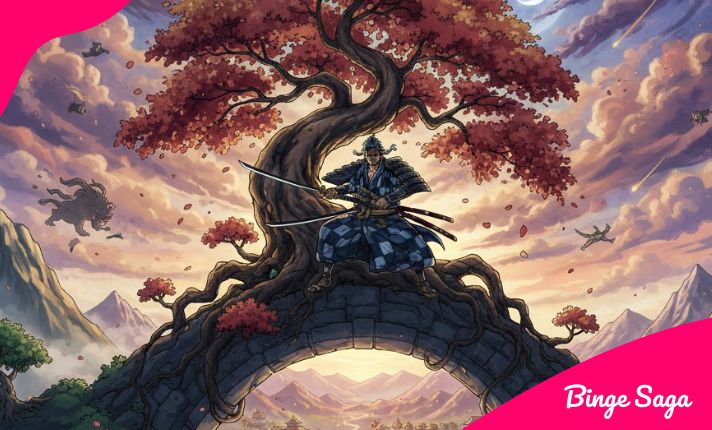
Shimotsuki Ushimaru is a name that quietly threads through one of the most tragic and stirring chapters of One Piece: the Wano Country arc. Though not a front-and-center character for long, shimotsuki ushimaru embodies the old samurai spirit of sacrifice, duty, and loyalty. His brief but powerful presence helps explain the stakes of Wano’s fall, sheds light on the Kozuki loyalists’ resistance, and connects to larger threads in the series—linking past and future through family ties, sword styles, and the samurai code.
- Who is Shimotsuki Ushimaru?
- Role and Significance in One Piece
- His position as the last daimyo of Ringo in Wano
- Loyalty to Kozuki Oden and opposition to Orochi
- Summary of his story arc and fate
- Personality and Characteristics
- Abilities and Combat Skills
- Shimotsuki Ushimaru’s Legacy
- Influence on Yamato and the future battle for Wano
- Connection to Zoro’s family lineage and sword style
- Popular Theories and Fan Discussions
- Clarification on common misconceptions
- Fan theories and discussions from forums and community platforms
- Conclusion
- FAQ
This article walks through who shimotsuki ushimaru is, why he matters in the story, what he stood for, and how his legacy continues to shape events in Wano and beyond. We’ll look at his origins, his role as Ringo’s last daimyo, his relationship with figures like Shimotsuki Ryuma and Roronoa Zoro, his abilities, and the ways fans discuss and remember him. By the end you’ll have a fuller picture of why this minor character leaves a major impression.
Who is Shimotsuki Ushimaru?
Shimotsuki Ushimaru is introduced in the Wano Country backstory as an honorable samurai tied to Ringo, a district of Wano. The Shimotsuki name carries weight in One Piece lore—most famously associated with Shimotsuki Ryuma, the legendary samurai whose corpse later became part of Thriller Bark and who is often linked to Roronoa Zoro through myth and stylistic echoes. Shimotsuki ushimaru shares that family name and the samurai heritage.
Origin and family background
Ushimaru’s lineage is rooted in the Shimotsuki family, a name that suggests a tradition of swordsmanship passed down through generations. In Wano’s feudal system, families like the Shimotsuki often held local authority, martial responsibility, and cultural duties. As Ringo’s last daimyo, Ushimaru inherited both leadership and the burden of defending his people when the larger political storm hit Wano.
While the manga and anime do not give an exhaustive genealogy, the Shimotsuki name links Ushimaru to a broader tradition. The presence of multiple Shimotsuki—historic figures like Ryuma and later references—creates a sense of continuity: a clan defined by swords and honor.
Relation to other key characters
Ushimaru’s main narrative connections are to the Kozuki clan and to the mythic Shimotsuki line that fans associate with Zoro’s swordsmanship. He was a loyalist to Kozuki Oden, standing with the daimyo who defied the shogunate and the invading forces. This loyalty put Ushimaru in direct opposition to Kurozumi Orochi and the forces of Kaido—an alignment that shaped his final actions.
Although some fans mistakenly linked Ushimaru to Roronoa Zoro as a direct ancestor or father figure, canonical details do not support that claim. Instead, Ushimaru’s place in the tapestry is as a contemporary Shimotsuki who echoes the values and martial traditions celebrated in the clan—values that Zoro, by coincidence or fate, ultimately channels.
Role and Significance in One Piece
Even characters with brief screen time in One Piece can carry symbolic weight. Shimotsuki ushimaru is one such example: his role as Ringo’s last daimyo and his choice at a pivotal moment make him a quiet but crucial figure in the Wano saga.
His position as the last daimyo of Ringo in Wano
As the last daimyo of Ringo, Ushimaru represents the end of an era. When Wano fell under the combined rule of Orochi and Kaido, many local lords were stripped of power, killed, or forced into subjugation. Ushimaru’s title marks him as the representative of local governance and the cultural continuity of his region. His decision-making in the face of invasion reflected the responsibilities daimyo carry: to protect the people even when the odds are overwhelming.
Loyalty to Kozuki Oden and opposition to Orochi
Ushimaru’s loyalty to Kozuki Oden places him among the brave few who resisted the tyrannical changes in Wano. Oden’s defiance of the shogunate and subsequent persecution set the stage for decades of suffering under Orochi’s puppet rule. Ushimaru, like many samurai and retainers, chose to stand with Oden’s cause or at least resist the antagonists who benefitted from Oden’s fall.
That opposition had consequences. In One Piece, siding with the Kozuki often means death or exile. Ushimaru’s fate—one tied to his resistance—reflects the tragic cost many loyalists paid. His story functions as a microcosm of Wano’s suffering and a reminder of the sacrifices that paved the way for later rebellions.
Summary of his story arc and fate
Ushimaru’s on-panel arc is short but resonant. He stands, he fights by principle, and he gives up something vital for the future—most notably, protecting the young Yamato or helping the Kozuki line through dangerous times. His death (or at least his departure from Wano’s living history) is presented as an act of selflessness: a samurai choosing a final duty over survival. That ending cements his status not as a background detail but as a moral anchor for Wano’s resistance narrative.
Personality and Characteristics
What made shimotsuki ushimaru meaningful to readers and the other characters was not flashy power, but character: the samurai code, quiet dignity, and willingness to lay down life for others.
Samurai code and honor
Ushimaru lived by a traditional samurai code—honor before life, duty before comfort. That ethic shows in his refusal to bow to Orochi’s corruption and in his steady bearing during Wano’s darkest hours. He acts the way a daimyo-samurai should in the stories—calm in defeat, principled in choice, and conscious of the legacy he leaves.
This commitment to code makes Ushimaru emblematic of the thematic heart of Wano: a place where history, ritual, and duty collide with tyranny. Ushimaru’s presence reminds readers that for many characters in Wano, the conflict is less about territory and more about preserving a way of life.
His selflessness and sacrifice for Yamato
One of Ushimaru’s most important acts is his care for younger generations, especially Yamato. In Wano’s story, older samurai often pay a heavy price so that the next generation can live and carry forward the spirit of resistance. Ushimaru’s choices helped ensure that key figures could survive long enough to shape the future battle for Wano. That kind of sacrifice is quiet but powerful—something that resonates emotionally because it mirrors real-world histories of guardianship through hardship.
Abilities and Combat Skills
Ushimaru’s combat scenes are not prolonged set pieces, but his actions show a samurai who knows the sword and can stand against enemies larger than himself.
Swordsmanship
Like other Shimotsuki, Ushimaru displays skilled swordsmanship. His movements reflect training and tradition: precise strikes, disciplined stances, and an understanding of timing. In Wano, where swordwork is a cultural language, Ushimaru’s fighting expresses more than technique—it signals lineage and respect.
The Shimotsuki name evokes particular sword styles in the fan imagination, and Ushimaru fits that narrative: his blade work is less flamboyant and more classical, echoing the older generation of warriors who count control and form as much as force.
Use of Busoshoku Haki and other martial skills
Although the story does not heavily dramatize Ushimaru’s haki use, it is reasonable within the One Piece framework to infer that a daimyo and veteran samurai would command Busoshoku Haki (armament haki) at a sufficient level to defend his people. His actions suggest an ability to hold the line and make strategic decisions in combat rather than relying purely on overwhelming power.
Ushimaru’s martial skills include battlefield awareness, leadership under pressure, and the capacity to coordinate resistance. These traits matter as much as raw strength in the Wano conflicts, where cunning and willpower shape outcomes.
Shimotsuki Ushimaru’s Legacy
Legacy is where Ushimaru’s story truly shines: the deeds of a single man become a throughline that influences major characters and the larger arc.
Influence on Yamato and the future battle for Wano
Ushimaru’s protection and mentorship of the younger generation—Yamato among them—have an outsized effect. Yamato’s later choices, her relationship to the Kozuki legacy, and her role in joining the rebellion can be read as directly connected to the groundwork laid by elders like Ushimaru. By ensuring that key figures survive, he helped preserve the seedbed for the rebellion that eventually cracks Wano’s iron rule.
That ripple—older samurai safeguarding youth so they can topple tyrants—gives Ushimaru’s sacrifice moral weight. He becomes part of the chain that allows Wano to reclaim its honor.
Connection to Zoro’s family lineage and sword style
Fans love connecting dots. The Shimotsuki surname raises natural questions about links to Roronoa Zoro and the historic Ryuma. Ushimaru’s existence reinforces the idea that Wano’s sword tradition is widespread, with families like the Shimotsuki contributing to a cultural milieu that shapes legendary swordsmen. While Ushimaru is not a direct teacher to Zoro in canon, the shared stylistic elements of Shimotsuki swordsmanship appear across generations, helping explain why Zoro resonates as a successor to the samurai legacy.
In short, Ushimaru helps maintain the cultural bridge between the old guard and modern fighters: he is the living proof that samurai values and sword styles survive despite oppression, and those surviving threads eventually appear in swordsmen like Zoro.
Popular Theories and Fan Discussions
Because One Piece fandom is both passionate and meticulous, even minor characters generate lively debate. Shimotsuki ushimaru is no exception.
Clarification on common misconceptions
A recurring misconception is that Ushimaru is a direct ancestor or father figure to Roronoa Zoro. Canon evidence does not support that claim—Zoro’s origins are separate, and Zoro himself comes from the East Blue, not Wano. The Shimotsuki name does, however, create acceptable room for comparison: shared techniques, legendary echoes, and symbolic lineage rather than bloodline connections.
Another misconception is that Ushimaru wielded world-shattering power. His role is more grounded: a regional daimyo who fought with honor and helped preserve the Kozuki legacy. The emotional weight of his actions matters more than the scale of his strength.
Fan theories and discussions from forums and community platforms
Fans speculate about many threads involving Ushimaru. Some of the common lines of discussion include:
- Whether Ushimaru trained a hidden pupil who later influenced major sword styles.
- The precise nature of his relationship to Ryuma and whether family lore shaped his tactics.
- How much of Wano’s eventual liberation hinged on the indirect actions of minor daimyo like Ushimaru.
- The symbolism of Ushimaru’s death and whether Oda intended him as a narrative vessel to show the cost of preserving history.
On forums and community pages, fans often praise Ushimaru for providing emotional depth to Wano’s tragedy. Players of the anime and manga communities produce fan art, short fictions, and analytical posts about how his decisions set up later events—especially Yamato’s arc and the eventual involvement of the Straw Hats.
These debates matter because they show how even a character with limited page time can become a locus for the fandom’s emotional and analytical energy. Fans look for patterns and meaning, and Ushimaru provides fertile ground for that activity.
Conclusion
Shimotsuki ushimaru may not dominate panels or fill pages, but his role in One Piece is quietly profound. As Ringo’s last daimyo, a loyalist to Kozuki Oden, and a guardian of the young who would shape Wano’s future, Ushimaru embodies the samurai’s most enduring traits: honor, duty, and sacrifice. His legacy threads through Yamato’s choices, through the cultural echoes that touch swordsmen like Zoro, and through the narrative logic that rewards selflessness with a lasting moral imprint.
When One Piece tells stories of fallen provinces and resilient people, it often uses brief figures—people who give everything without the fanfare of heroes. Ushimaru is one of those figures. Remembering him means honoring Wano’s unseen defenders and recognizing that in this saga, small acts of courage can help bend the arc toward justice.
FAQ
Who is Shimotsuki Ushimaru in One Piece?
Shimotsuki Ushimaru is a samurai and the last daimyo of Ringo in Wano Country. He is a loyalist of Kozuki Oden and plays a supporting but meaningful role in the Wano backstory, known for his honor and sacrifice on behalf of future generations such as Yamato.
Is Shimotsuki Ushimaru related to Zoro?
No direct family relation is established between Ushimaru and Roronoa Zoro in canon. They share the Shimotsuki name in the broader samurai tradition in Wano, and that shared cultural heritage helps explain similar sword techniques and thematic echoes, but Ushimaru is not presented as Zoro’s ancestor or father.
What happened to Shimotsuki Ushimaru in Wano?
Ushimaru resisted Orochi’s rule and Kaido’s power as part of the Kozuki loyalists. His story ends with sacrifice: he gives himself up in the effort to protect others and preserve the Kozuki legacy, helping ensure that younger fighters survive to eventually challenge Wano’s oppressors.