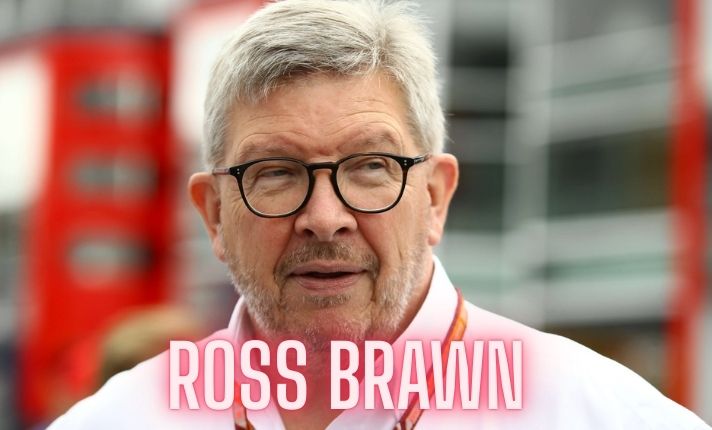
Ross Brawn is one of the most influential figures in modern Formula 1. His career spans engineering, technical leadership, race strategy, team ownership, and executive governance. He shaped championship eras at multiple teams and helped redesign Formula 1’s regulations in the Liberty Media era. His impact continues to influence engineering, competition, and motorsport strategy across the world.
- Quick Facts
- Early Life and Education
- Ross Brawn Career Journey
- Early Industry Roles and Entry into Formula 1
- Technical Growth and World Sportscar Success
- Championship Era with Benetton
- The Ferrari Dream Team Era
- Team Principal of Honda and the Birth of Brawn GP
- Transition to Mercedes
- Executive Leadership under Liberty Media
- What is Ross Brawn’s Net Worth
- Personal Life and Relationships
- Controversies
- Impact on Formula 1 and Motorsport Strategy
- Conclusion
- FAQs
Quick Facts
| Key Fact | Details |
|---|---|
| Full Name | Ross James Brawn |
| Age | 70 years old |
| Date of Birth | 23 November 1954 |
| Parents | Gilbert Brawn and Lillian Brawn |
| Net Worth | 150 million USD approximate |
| Height | 6 feet 2 inches approximate |
| Spouse | Jean Brawn |
| Ethnicity | White British |
| Nationality | British |
| Source of Wealth | Motorsport leadership, team ownership, executive roles, consulting |
| Education | Apprenticeship at United Kingdom Atomic Energy Authority, Reading School |
Early Life and Education
Ross Brawn was born in Ashton under Lyne in Lancashire. His early childhood interests centred on machines, tools and solving mechanical problems. He developed a fascination with engines and racing after visiting Belle Vue Stadium in Manchester where he watched live motorsport events. This environment shaped his ambitions long before he entered professional engineering.
His family moved to Reading when he was 11. He attended Reading School, a grammar institution known for academic discipline. Brawn has often credited these years for teaching him structure, responsibility and analytical thinking. He was not from a motorsport background. His turning point was the moment he realised engineering could connect with racing. This insight led him to pursue technical training rather than a traditional university route.
In 1971 he joined the United Kingdom Atomic Energy Authority as a mechanical craft apprentice. He learned machining, systems engineering and instrument mechanics. These skills became foundational in his later motorsport work. His apprenticeship also included structured academic study in mechanical engineering. The combination of practical and theoretical learning allowed him to enter motorsport with strong technical confidence. Brawn later stated that the apprenticeship taught him discipline and attention to detail that shaped every role in his career.
Ross Brawn Career Journey
Ross Brawn’s career is closely connected to the evolution of Formula 1’s engineering culture. He built his reputation through hands on work before becoming one of the most successful technical leaders in motorsport history.
Early Industry Roles and Entry into Formula 1
Brawn entered professional motorsport in 1976 when he joined March Engineering in Bicester. He began as a milling machine operator. His productivity and understanding of machining allowed him to transition into the Formula 3 team as a trackside mechanic. This role exposed him to real time problem solving, race setup and performance adjustments.
His work attracted attention from Frank Williams, who hired him into Williams Grand Prix Engineering in 1978. Brawn first worked as a machinist before moving to research and development. He later became an aerodynamicist in the wind tunnel, where he learned airflow modelling and aerodynamic optimisation. These skills helped him build the strategic and technical mindset that defined his later success.
Technical Growth and World Sportscar Success
During the 1980s he held senior technical positions with several teams. He became technical director for the Jaguar sports car programme under Tom Walkinshaw Racing. His engineering leadership contributed to the team winning the 1991 World Sportscar Championship and the 24 Hours of Le Mans. These achievements strengthened his reputation beyond Formula 1 and demonstrated his ability to run high pressure technical operations.
Championship Era with Benetton
Ross Brawn returned to Formula 1 in 1991 as technical director for Benetton. His collaboration with Michael Schumacher was central to the team’s victories. Under his technical guidance Benetton won:
• 1994 Drivers Championship
• 1995 Drivers Championship
• 1995 Constructors Championship
He became known for innovative race strategy, especially fuel and pit stop decisions that often changed the outcome of races. His engineering judgement and calm decision making made him one of Formula 1’s most respected strategists.
The Ferrari Dream Team Era
In 1997 Brawn joined Jean Todt and Rory Byrne at Ferrari. This group rebuilt Ferrari after years without a world title. Their collective leadership created one of the most dominant periods in Formula 1 history. With Michael Schumacher driving, Brawn contributed to:
• Breaking Ferrari’s 21 year title drought
• Winning five consecutive Drivers Championships from 2000 to 2004
• Securing multiple Constructors Championships
Brawn’s influence included car development, race strategy, operational structure and long term planning. His ability to integrate engineering with race craft made Ferrari the benchmark of technical excellence during this era.
Team Principal of Honda and the Birth of Brawn GP
After leaving Ferrari in 2006 he took a sabbatical. In 2008 he returned as team principal of Honda Formula 1. When Honda withdrew from the sport, Brawn led a management buyout and rebranded the team as Brawn GP.
The 2009 season marked one of the most remarkable success stories in sport. Despite limited resources the team created a car with a significant aerodynamic advantage through the double diffuser concept. Brawn GP achieved:
• 2009 Drivers Championship with Jenson Button
• 2009 Constructors Championship
It was the only season in the team’s history. The triumph cemented Brawn as a strategic and technical genius within motorsport.
Transition to Mercedes
After acquiring Brawn GP, Mercedes Benz formed their works Formula 1 team. Brawn stayed on as team principal and retained an ownership stake. His presence was a major factor in Michael Schumacher returning from retirement in 2010.
Brawn built much of the operational and technical structure that later delivered Mercedes’s hybrid era dominance. Although he left the team at the end of 2013, many analysts believe the foundations he created directly enabled their long run of championships under Toto Wolff and Lewis Hamilton.
Executive Leadership under Liberty Media
In 2017 he returned to Formula 1 as Managing Director of Motorsports for Liberty Media. His responsibilities included:
• Overseeing sporting regulations
• Guiding technical rule changes
• Improving racing quality
• Restructuring competitive fairness
• Supporting long term strategic planning for the championship
He played a major role in designing the 2022 technical regulations which aimed to make cars follow each other more closely and enhance overtaking. Teams and analysts widely credit Brawn for modernising Formula 1 governance and restoring competitive balance.
He stepped back from his role at the end of 2022. By 2025 he continues to influence global motorsport through consulting and advisory work.
What is Ross Brawn’s Net Worth
According to Celebrity Net Worth and industry financial estimators, Ross Brawn’s net worth in 2024 and 2025 is approximately 150 million USD. The figure is based on accumulated earnings from race team leadership, team ownership, executive positions and long term investments.
Breakdown of his wealth includes:
• Earnings from technical and leadership roles at Benetton and Ferrari
• Proceeds from the sale of Brawn GP to Mercedes
• High level salary as Formula 1 Managing Director of Motorsports
• Consultancy and executive advising in motorsport
• Equity and long term holdings within the automotive and engineering sectors
His ownership stake in Brawn GP during the sale to Mercedes is widely believed to be one of the largest contributors to his overall wealth.
Personal Life and Relationships
Ross Brawn lives in the Henley on Thames region in Oxfordshire. He is married to Jean Brawn. They maintain a private personal life and avoid public discussions about family matters. Brawn is known for hobbies such as fishing, gardening and photography. His personal interests reflect a preference for quiet environments and analytical pastimes.
He has spoken publicly about valuing work life balance following decades of pressure in Formula 1. His private lifestyle contrasts with the high profile nature of his professional career. This distinction has helped preserve the privacy of his family.
Controversies
Ross Brawn has maintained one of the cleanest reputations in Formula 1. However a few public controversies have been associated with his career. These situations were often industry debates rather than personal conflicts.
He was involved in regulatory disputes during the 1994 and 1995 Benetton seasons. Rival teams alleged that Benetton used grey area interpretations of technical rules. Investigations were conducted but no direct wrongdoing by Brawn was proven.
During the 2009 season some teams challenged the legality of the double diffuser design used by Brawn GP. They argued that the interpretation stretched the aerodynamic regulations. The FIA confirmed the design as legal. This dispute became one of the defining technical controversies of the season.
In his Liberty Media executive role he was occasionally criticised by teams that disagreed with the 2022 regulation framework. These criticisms were focused on policy outcomes rather than personal behaviour.
No verified accusations of misconduct have been linked to Ross Brawn. All controversies involved technical interpretations or regulatory disagreements that are common in Formula 1.
Impact on Formula 1 and Motorsport Strategy
Ross Brawn’s influence on motorsport is significant and long lasting. His contributions shaped both competitive success and structural evolution.
Key impacts include:
• Creating engineering and strategy systems that delivered multiple world championships
• Developing innovative race strategy models for fuel, tyres and pit stops
• Building Ferrari’s early 2000s dominance with Schumacher, Todt and Byrne
• Leading the only team in history to win both world titles in its single season
• Helping build the structural foundations for Mercedes’s hybrid era dominance
• Redesigning the sporting and technical regulations for Formula 1 under Liberty Media
• Promoting competitiveness, cost control and global expansion of the championship
His strategic thinking and engineering insight positioned him as one of motorsport’s most influential leaders. His decisions altered how teams operate, how races are run and how the championship evolves.
Conclusion
Ross Brawn’s biography reflects a career defined by technical mastery, strategic vision and strong leadership. His influence began with machining and engineering foundations before progressing to championship winning technical roles and executive governance. He shaped historic eras at Benetton, Ferrari, Brawn GP and Mercedes. His regulatory work in the Liberty Media era transformed modern Formula 1.
Brawn stands as one of the sport’s most respected engineers and executives. His legacy continues to impact competitive outcomes, technical development and long term planning across global motorsport.
FAQs
What is Ross Brawn’s age?
He is 70 years old.
What is Ross Brawn’s net worth?
Approximately 150 million USD.
Which teams did Ross Brawn work for?
Williams, Benetton, Ferrari, Honda, Brawn GP, Mercedes and Formula 1 Management.
Is Ross Brawn retired?
He stepped back from Formula 1 leadership in 2022 but continues to advise.
What is Ross Brawn known for?
Technical leadership, championship success and the 2022 Formula 1 regulations.