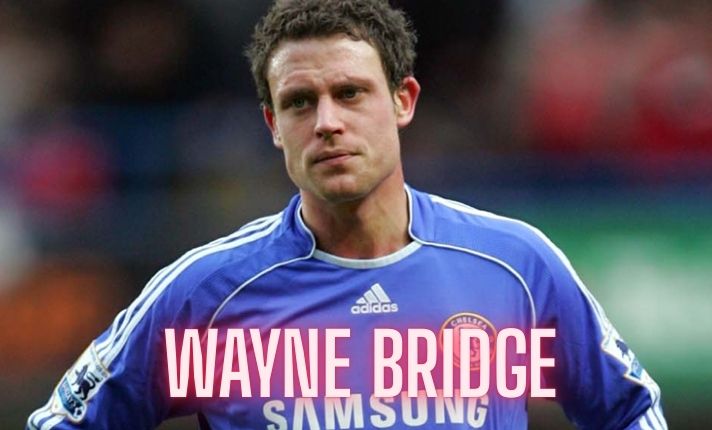
Wayne Bridge is an English former left back who played in the Premier League and earned 36 senior caps for England. He won top domestic honours with Chelsea, later featured for Manchester City and other clubs, and retired in 2014. His name is linked to a major off pitch controversy.
- Early Life & Education
- Wayne Bridge’s Career & Rise to Fame
- Southampton: academy graduate to Premier League regular
- Chelsea: trophies, tactical discipline, and a defining European goal
- Manchester City: a new project and changing squad dynamics
- Loans and late career: match fitness and leadership roles
- England: international caps and tournament squads
- Life after retirement: television, fitness, and boxing
- What is Wayne Bridge’s Net Worth?
- Personal Life & Relationships of Wayne Bridge
- Controversies
- Legacy
- Conclusion
- FAQs
| Field | Details |
|---|---|
| Full Name | Wayne Michael Bridge |
| Age | 45 (as of December 2025) |
| DOB | 5 August 1980 |
| Parents | Not publicly named in major football biographies |
| Net Worth | About $9 million (widely cited estimate) |
| Height | 1.80 m |
| Spouse or Partner | Married to Frankie Bridge (née Sandford) since July 2014 |
| Childrens | Jaydon Jean Claude Bridge (from ex Vanessa Perroncel) , Parker Bridge, Carter Bridge |
| Ethinicity | British |
| Nationalty | English (United Kingdom) |
| Source of Wealth | Professional football wages, bonuses, endorsements, and media work |
| Education | Oliver’s Battery Primary School and The King’s School, Winchester |
Early Life & Education
Wayne Bridge was born in Southampton and, as a toddler, moved with his family to Winchester.
He played youth football locally and came through the academy system at Southampton F.C.. That pathway mattered because it rewarded reliability, fitness, and positional discipline, not just flair.
The turning point in his youth was not a single headline moment. It was the moment he became “trusted” at professional level, which is rare for a teenager in the Premier League.
Bridge signed professional terms at Southampton and made his senior debut in August 1998.
He was quickly used in high pressure league matches where mistakes are punished. For a young full back, that trust signals something specific: coaches believe you will do the basics every week.
His early career also shows a key shift that shaped his identity. He was not marketed as a superstar. He built his reputation on stamina, recovery runs, and accurate crossing from wide areas.
Schooling is part of the story because it explains the routine behind the football. He attended Oliver’s Battery Primary School and The King’s School in Winchester, which reflects a settled upbringing away from a glamour narrative.
By his early twenties, he had become a Premier League regular. That consistency set up the next turning point: a major move to a title chasing club, where the demands are different and the spotlight is harsher.
Wayne Bridge’s Career & Rise to Fame
Southampton: academy graduate to Premier League regular
Bridge progressed from youth football into Southampton’s senior squad and became a first team defender.
As a left back in the Premier League, his job was both defensive and creative. He had to manage one against one defending, track runners, and still provide width in possession.
He made more than 150 league appearances for Southampton, which is a major total for a player who began as a teenager.
That run of games built his profile as a dependable England calibre full back. It also made him a realistic target for clubs shopping for ready made starters.
Chelsea: trophies, tactical discipline, and a defining European goal
In July 2003, Bridge joined Chelsea from Southampton for a fee reported as £7 million, with Graeme Le Saux involved in the deal structure.
ALSO READ: Adam Lallana Net Worth, Career and More
At Chelsea, the environment was different. Squad depth was deeper, competition for places was constant, and success was judged by trophies.
A signature moment in his rise came in the UEFA Champions League against Arsenal, when he scored a late winner in the quarter final second leg at Highbury. That goal became a lasting part of his highlight reel and boosted his reputation beyond “solid full back.”
Under José Mourinho, Chelsea’s style put huge emphasis on compact defending, coordinated pressing triggers, and disciplined full back positioning. Bridge was valued because he could follow instructions and protect the back line.
He won major honours with Chelsea, including Premier League titles and domestic cups across his years at the club.
Key achievements from the Chelsea era include:
- Premier League winner (two titles with the squad)
- FA Cup winner (one title with the squad)
- League Cup winner (two titles with the squad)
His role later shifted when Ashley Cole arrived, reducing Bridge’s minutes and pushing him toward a “rotation” profile.
That change is common at elite clubs. A player can be first choice one season and second choice the next, even without a sharp decline in performance.
Manchester City: a new project and changing squad dynamics
In January 2009, Bridge moved to Manchester City for a fee reported to be in the region of £10 million.
The transfer mattered because City were entering a new era of aggressive recruitment. The expectation was that Bridge would become a stable starter at left back and help the team progress toward European qualification.
He did play regularly at points, but injuries and competition affected his long term grip on the role. His City years also included loans, which usually signal that a club is reshaping the squad.
Loans and late career: match fitness and leadership roles
Bridge spent time on loan at West Ham United, Sunderland, and Brighton & Hove Albion.
Loans can be misunderstood. For many established players, they are a practical tool to get minutes, restore rhythm, and stay relevant in a competitive market.
At Brighton, he played significant football in the Championship and contributed goals from wide areas, which is notable for a defender.
He later joined Reading and made a limited number of appearances, with injury problems playing a major role in how the final chapter looked.
In May 2014, he retired from professional football.
England: international caps and tournament squads
Bridge represented England at senior level from 2002 to 2009, earning 36 caps and scoring one goal.
International football adds pressure because mistakes are amplified and training time is limited. Full backs must absorb instructions quickly and deliver consistent defensive positioning.
ALSO READ: Mark Noble Net Worth, Career and More
He was selected in major tournament contexts, including the 2002 and 2006 World Cup squads and Euro 2004, largely as a dependable option in the defensive unit.
His international career later became intertwined with a high profile off pitch situation, which affected selection and his willingness to remain involved.
Life after retirement: television, fitness, and boxing
After retiring, Bridge remained a public figure. He appeared on reality television, including I’m a Celebrity…Get Me Out of Here!, which introduced him to a wider audience beyond football fans.
He also took part in celebrity boxing as part of BBC Sport Relief, fighting Spencer Matthews in March 2018 and winning on points.
In January 2025, he was announced for a boxing bout with KSI under the Misfits Boxing banner, but the fight was later called off after Bridge withdrew.
What is Wayne Bridge’s Net Worth?
Wayne Bridge’s net worth is not published by Forbes in a formal ranking or audited profile. Most public figures for him come from celebrity wealth estimate sites rather than primary financial disclosures.
According to Celebrity Net Worth, Wayne Bridge has an estimated net worth of $9 million.
That figure should be treated as an estimate, not a verified statement of assets. Footballers’ finances can vary widely depending on spending, tax planning, property choices, and post career income.
A realistic breakdown of where that wealth typically comes from, based on his career profile, includes:
- Football wages and bonuses: Long spells at top Premier League clubs tend to be the main driver of lifetime earnings.
- Signing payments and performance incentives: Transfers often involve bonuses and appearance related incentives, especially at elite clubs.
- Endorsements and sponsorships: Generally smaller for defenders than star forwards, but still material during peak years.
- Media and entertainment income: Reality television fees, appearances, and brand work can add a second income stream after retirement.
- Boxing and events: Charity and exhibition bouts can pay appearance fees, especially in televised events.
There is no comprehensive public inventory of Bridge’s properties, investments, or private business holdings. Any precise “asset list” would be speculation unless supported by filings or direct statements.
Personal Life & Relationships of Wayne Bridge
Wayne Bridge’s personal life has been heavily covered at specific moments, even though much of his day to day family life is kept relatively private.
He was in a relationship with Vanessa Perroncel from 2005 to 2009, and they have a son together, Jaydon Jean Claude Bridge, born in November 2006.
In 2013, he became engaged to Frankie Bridge, known for her music career with The Saturdays.
They married in July 2014.
The couple have two sons together, and they have spoken publicly at times about family life in the context of media work and mental health discussions. Public coverage tends to focus on milestones rather than private details.
Wayne Bridge is a father of three sons. His eldest, Jaydon Jean Claude Bridge, was born in 2006 to his former partner Vanessa Perroncel. He also shares two sons with his wife Frankie Bridge: Parker, born in 2013, and Carter, born in 2015.
Bridge also maintains an active public presence around fitness and family life on social platforms, including Instagram.
Controversies
The most widely reported controversy linked to Wayne Bridge involves allegations about a former teammate and his then partner.
In January 2010, media reporting and court activity centred on claims that John Terry had allegedly had an affair with Vanessa Perroncel after her split from Bridge. A High Court “super injunction” initially restricted reporting, but it was lifted about a week later.
Later in March 2010, Perroncel succeeded in a claim for child maintenance, with reporting noting a High Court award of £6,000 per month until their son turned 18.
The story fed into public scrutiny around England’s leadership group at the time. Bridge then withdrew from England duty in 2010, citing the impact of the situation on him and those close to him.
A visible on pitch moment followed in February 2010, when Bridge refused to shake hands with Terry before a match, a widely publicised incident that became symbolic of the dispute.
In 2025, the issue resurfaced in a different setting. Bridge withdrew from a planned boxing match with KSI after stating that comments made during promotion had “crossed a line.”
These events are often discussed together because the later dispute referenced the earlier allegations. The public record shows the long tail effect that high profile personal claims can have on a sports figure’s career narrative.
Legacy
Wayne Bridge’s football legacy is built more on dependability than celebrity branding. In modern terms, he fits the model of a high level squad full back who could start at a title winning club and also anchor a developing side.
At Chelsea, he was part of an era where defensive organisation and tactical discipline were central to success. He earned major honours and delivered a Champions League moment that many supporters still remember clearly.
At Manchester City, his move marked an early stage of the club’s transformation into a transfer market force. His signing was framed as a key piece in making the squad stronger and more balanced.
For England, his 36 caps reflect genuine international standing, not a brief call up. A defender does not accumulate that number without long term trust from multiple managers.
His post playing presence also matters to legacy. Reality television and charity sport created a second chapter, where he became known as a grounded public figure rather than only a former player.
A fair summary is that Bridge is remembered for three things:
- Consistent Premier League level defending over many seasons
- A trophy winning period at Chelsea, including a defining European goal
- A personal controversy that influenced public perception and international availability
Conclusion
Wayne Bridge’s career shows how far reliability can take a player in elite football. He progressed from academy football to the Premier League, won major trophies, and represented England 36 times.
His story also shows the other side of public sport. Off pitch allegations and media attention can reshape reputations and decisions, even years after retirement.
By 2025, Bridge remains a recognisable figure through media work and fitness content, while his playing peak continues to define his professional standing.
FAQs
How old is Wayne Bridge in 2025?
He is 45, born on 5 August 1980.
What clubs did Wayne Bridge play for?
He played for Southampton, Chelsea, Manchester City, and later had spells with Fulham, West Ham, Sunderland, Brighton, and Reading.
How many England caps did Wayne Bridge win?
He won 36 senior caps for England.
Who is Wayne Bridge married to?
He is married to Frankie Bridge (formerly Frankie Sandford).
What was Wayne Bridge’s famous Champions League moment?
He scored a late winner against Arsenal in the 2003 to 2004 Champions League quarter final second leg.
What is Wayne Bridge’s net worth?
A widely cited estimate is about $9 million, though it is not an audited public figure.
Why did Wayne Bridge withdraw from the KSI fight?
He withdrew after saying promotional comments had “crossed a line.”