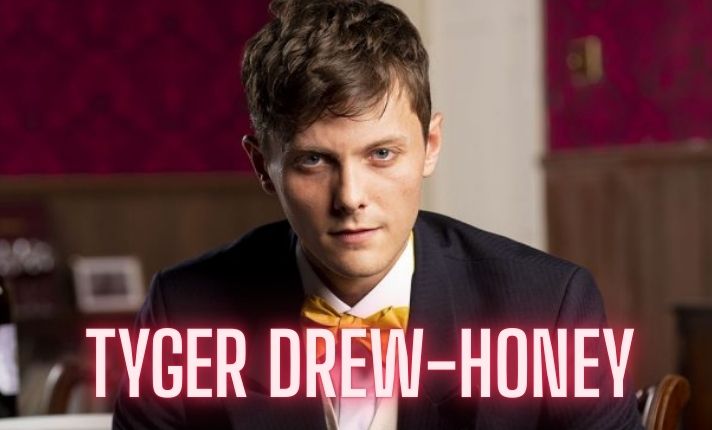
Tyger Drew-Honey is a British actor, musician, and creative professional best known for his long-running role as Jake Brockman in the BBC sitcom Outnumbered. Entering the public eye at a young age, Drew-Honey grew up on screen during one of British television’s most beloved family comedies. Unlike many child actors, he successfully navigated the transition into adulthood by diversifying into music, independent projects, and behind-the-scenes creative work. By 2025, his career reflects evolution, restraint, and a conscious move away from childhood fame.
- Quick Facts
- Early Life & Origin Story
- Entry into Acting and Casting in Outnumbered
- The Unique Demands of Outnumbered
- Impact of Early Fame
- Transition Away from Child Acting
- Music Career and Artistic Development
- Return to Acting on His Own Terms
- Tyger Drew-Honey’s Net Worth
- Personal Life & Relationships
- Mental Health and Post-Child Star Identity
- Controversies
- Legacy
- Conclusion
- FAQs
Quick Facts
| Detail | Information |
|---|---|
| Full Name | Tyger Drew-Honey |
| Age (2025) | 29 |
| Date of Birth | 26 January 1996 |
| Place of Birth | Epsom, Surrey, England |
| Parents | Ben Dover (actor), Linzi Drew (producer) |
| Height | Approx. 5 ft 9 in (1.75 m) |
| Spouse/Partner | Not publicly disclosed |
| Children | None publicly known |
| Ethnicity | White British |
| Nationality | British |
| Profession | Actor, musician, creative artist |
| Source of Wealth | Television acting, music, creative work |
| Education | Educated while working as a child actor |
| Net Worth (2025) | Estimated £800,000 to £1.2 million |
Early Life & Origin Story
Tyger Drew-Honey was born on 26 January 1996 in Epsom, Surrey, into a family already connected to the entertainment industry. His father, Ben Dover, is an actor, and his mother, Linzi Drew, is a television producer. This background meant that film sets, production discussions, and creative collaboration were part of his everyday environment from an early age.
Despite this proximity to the industry, Drew-Honey’s childhood was not engineered toward fame. His parents maintained balance between work and normal family life, ensuring he experienced school, friendships, and routine outside television.
From an early age, Tyger displayed curiosity and humour rather than overt ambition. He was observant, quick-witted, and comfortable in conversation, qualities that later translated naturally to screen performance.
The defining turning point of his early life came not through deliberate pursuit but through opportunity. His natural presence and comedic timing led to casting interest that would soon define his childhood.
Entry into Acting and Casting in Outnumbered
Landing the Role of Jake Brockman
Tyger Drew-Honey was cast as Jake Brockman in Outnumbered in 2007. The show was built around semi-improvised dialogue and naturalistic performance, requiring children who could think quickly and respond authentically.
Unlike traditional scripted sitcoms, Outnumbered relied heavily on instinct. Drew-Honey’s ability to deliver dry humour without self-consciousness made him ideally suited to the format.
Jake Brockman was written as sarcastic, intelligent, and emotionally guarded. Drew-Honey’s performance felt natural rather than performed, contributing significantly to the show’s realism.
Growing Up on Screen
Outnumbered ran for several years, during which Drew-Honey grew from child to teenager in full public view. Audiences watched his character mature, mirroring his real-life development.
This prolonged exposure created familiarity rather than celebrity spectacle. Drew-Honey became recognisable without becoming tabloid-focused.
The experience provided professional stability but also posed long-term challenges associated with child fame.
The Unique Demands of Outnumbered
Outnumbered was unconventional in its production style. Scripts were loose, and child actors were encouraged to respond naturally rather than recite lines verbatim.
This environment demanded intelligence, listening skills, and confidence. Drew-Honey learned timing, restraint, and reaction rather than exaggerated performance.
These skills shaped his acting style permanently. Even in later roles, his performances favoured understatement over theatricality.
The show also cultivated resilience. Mistakes were incorporated rather than corrected, teaching adaptability rather than perfectionism.
Impact of Early Fame
Public Recognition Without Celebrity Culture
Despite Outnumbered’s popularity, Drew-Honey avoided many pitfalls of child stardom. The show’s family-centric audience and BBC platform created recognition without sensationalism.
He attended school while working, maintaining peer relationships outside the industry. This balance reduced identity distortion often experienced by young performers.
However, the visibility still created pressure. Expectations followed him into adolescence, raising questions about future direction.
Navigating Adolescence in the Public Eye
As Drew-Honey entered his teenage years, he became increasingly aware of being associated with a single role. The risk of typecasting loomed.
Rather than pursuing immediate follow-up television roles, he chose to step back, prioritising personal development over constant visibility.
This decision marked a critical shift from passive career progression to active self-direction.
Transition Away from Child Acting
Deliberate Distance from Mainstream Acting
Following the conclusion of Outnumbered’s main run, Drew-Honey reduced acting commitments. He avoided jumping into similar sitcom roles that would replicate Jake Brockman.
This pause allowed him to redefine his relationship with performance. Acting became one creative outlet rather than a defining identity.
The decision reflected maturity uncommon among former child stars.
Exploration of Music and Creative Identity
During this transitional period, Drew-Honey developed a serious interest in music. He learned instruments, experimented with songwriting, and explored audio production.
Music offered creative control absent from acting. It allowed expression without external character constraints.
This shift laid the foundation for his post-acting career evolution.
Music Career and Artistic Development
Band Formation and Musical Style
Tyger Drew-Honey became involved in alternative and indie music projects, contributing as a guitarist, vocalist, and songwriter.
His musical style leaned toward experimental rock, electronic elements, and introspective lyrics rather than mainstream pop.
While commercial success was not immediate, the process prioritised authenticity and skill development.
Independent Releases and Performances
Drew-Honey released independent music and performed at smaller venues. These environments allowed creative risk without public expectation tied to his television past.
Music audiences often discovered his work independently, separate from Outnumbered recognition. This separation was intentional.
His music career reinforced the idea that his creativity extended beyond acting.
Return to Acting on His Own Terms
Selective Screen Appearances
As an adult, Drew-Honey returned to acting selectively. He appeared in guest roles and independent projects that differed tonally from his childhood work.
These roles often explored darker or more complex themes, helping to break nostalgic association.
Rather than chasing high-profile television roles, he prioritised projects aligned with personal interest.
Creative Collaboration Over Visibility
Drew-Honey has expressed preference for collaboration and experimentation rather than headline roles. This approach reflects long-term sustainability rather than fame-driven momentum.
Tyger Drew-Honey’s Net Worth
As of 2025, Tyger Drew-Honey’s net worth is estimated between £800,000 and £1.2 million. While he became widely known as a child actor, his long-term earnings have come from staying active across different creative lanes rather than relying on one ongoing hit.
A major portion of his income is linked to television work, including fees from acting roles and any ongoing residual-style payments tied to repeat broadcasts and licensing. He has also earned through music projects and live performance work, which add a separate stream outside acting.
In recent years, he’s taken on more independent roles, often choosing projects that match his personal interests, alongside creative collaborations that can include writing, producing, or building concepts with other artists. Overall, his finances reflect variety and consistency more than constant mainstream exposure.
Personal Life & Relationships
Tyger Drew-Honey has always preferred to keep his private life out of the spotlight, but that changed slightly in June 2025, when he confirmed he had married his long-term partner, Fluke Chotphuang, sharing a small set of wedding photos publicly.
Even with that update, he still draws a clear line between public work and personal matters. The wedding itself was reported as a quiet, low-key ceremony in Farnham, Surrey, reflecting a more grounded approach rather than a highly public celebrity moment.
Over the years, Tyger has spoken more generally about what it’s like to grow up on television—recognising both the opportunities and the pressures that come with early fame. He has also explored bigger themes like identity and modern relationships through his on-screen projects, while continuing to keep the day-to-day details of his home life largely private.
Mental Health and Post-Child Star Identity
Drew-Honey has acknowledged the psychological challenges associated with early fame. Like many child actors, he experienced identity confusion during adolescence.
Music and creative experimentation played a significant role in restoring agency and self-definition.
His openness around these issues contributes to broader conversations about child performers and long-term wellbeing.
Controversies
Tyger Drew-Honey has not been involved in any major controversies.
He has avoided legal issues, public disputes, and tabloid scandals. Media attention has remained focused on nostalgia rather than misconduct.
His low-profile approach has insulated him from negative exposure.
Legacy
Tyger Drew-Honey’s legacy is quietly significant.
He represents a successful transition away from child stardom without collapse or exploitation. His career demonstrates that stepping back can be as powerful as pressing forward.
For audiences, he remains associated with one of British television’s most authentic family comedies.
For the industry, he represents restraint, adaptability, and creative independence.
Conclusion
Tyger Drew-Honey’s career defies the typical arc of child actors. Instead of chasing constant visibility, he prioritised growth, creativity, and mental balance.
From Outnumbered to music and independent projects, his journey reflects conscious reinvention rather than reaction.
As of 2025, he remains a respected creative figure whose influence extends beyond nostalgia into sustainable artistic practice.
FAQs
Who is Tyger Drew-Honey?
He is a British actor and musician best known for Outnumbered.
How old is Tyger Drew-Honey in 2025?
He is 29 years old.
What role did Tyger Drew-Honey play in Outnumbered?
He played Jake Brockman.
Is Tyger Drew-Honey still acting?
Yes, selectively, alongside music and creative work.
What is Tyger Drew-Honey’s net worth?
His net worth is estimated between £800,000 and £1.2 million.