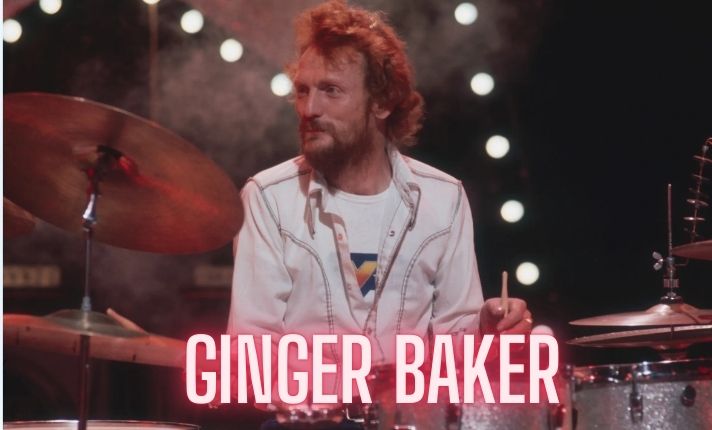
Ginger Baker was one of the most influential drummers in modern music history. Best known as the powerhouse behind Cream, he redefined rock drumming by fusing jazz virtuosity, African polyrhythms, and unprecedented stamina. Admired for innovation and feared for volatility, Baker’s legacy remains both towering and contentious.
- Quick Facts
- Early Life of Ginger Baker
- Career Journey
- Early Jazz and Blues Foundations
- Formation of Cream
- Blind Faith and Experimental Projects
- African Influence and Afrobeat Exploration
- Later Career and Final Performances
- What is Ginger Baker’s Net Worth?
- Personal Life & Relationships of Ginger Baker
- Documentaries & Cultural Recognition
- Awards & Accolades
- Legacy
- Conclusion
- FAQs
Quick Facts
| Detail | Information |
|---|---|
| Full Name | Peter Edward Baker |
| Age | 80 (at time of death) |
| Date of Birth | August 19, 1939 |
| Parents | Frederick Louvain Formidable Baker (father); Ruby May Baker (mother) |
| Net Worth | Approx. $2 million (estate estimate) |
| Height | Approx. 6 ft 4 in (193 cm) |
| Spouse / Partner | Married four times |
| Children | Ginette (Nettie), Leda, and Kofi |
| Ethnicity | White British |
| Nationality | British |
| Source of Wealth | Music performance, recordings, touring, royalties |
| Education | Self taught musician; early jazz training |
Early Life of Ginger Baker
Ginger Baker was born in Lewisham, South London, during the final months of the Second World War. His childhood was marked by instability and early loss. Baker’s father, a bricklayer, died when Ginger was just four years old, leaving a formative emotional void.
The turning point came in adolescence. Baker gravitated toward jazz records rather than mainstream pop. He became obsessed with American jazz drummers, especially Max Roach, whose melodic approach to rhythm reshaped Baker’s understanding of percussion.
As a teenager, Baker joined local jazz circles where competition was ruthless. He studied under Phil Seamen, a revered British jazz drummer whose brilliance was matched by self destructive habits. From Seamen, Baker absorbed advanced swing techniques and an uncompromising attitude toward musical discipline.
This early immersion in jazz, rather than rock and roll, set Baker apart. By the time British rock began its ascent, Baker already viewed himself as a jazz musician forced into louder settings. That tension would define his entire career.
Career Journey
Early Jazz and Blues Foundations
Before global fame, Baker built credibility in London’s jazz and blues underground. He played with the Graham Bond Organisation, where he first worked alongside Jack Bruce. Their volatile partnership foreshadowed future conflicts.
ALSO READ: Rik Mayall Net Worth, Career and More
Baker’s drumming stood out for its aggression and independence. Unlike traditional rock timekeepers, he treated drums as a lead instrument. This approach attracted musicians seeking something heavier and more expressive.
Formation of Cream
In 1966, Baker co founded Cream, widely regarded as rock’s first true supergroup. The lineup included Eric Clapton on guitar and Jack Bruce on bass and vocals. Each member was already a star within Britain’s blues scene.
Cream’s impact was immediate. The band fused blues improvisation with psychedelic rock, creating extended live performances that showcased instrumental virtuosity. Baker’s use of double bass drums and long solos broke every existing rule of rock percussion.
Key achievements with Cream included:
- Multi platinum albums including Disraeli Gears and Wheels of Fire
- Global touring success across Europe and North America
- Establishing the power trio format as commercially viable
Despite success, internal tensions were extreme. Baker and Bruce frequently clashed, sometimes violently. Cream disbanded in 1968 at the height of its popularity.
Blind Faith and Experimental Projects
After Cream, Baker reunited with Clapton in Blind Faith, another supergroup that included Steve Winwood. The project was short lived but historically significant, reflecting the era’s appetite for elite collaborations.
Baker then formed Ginger Baker’s Air Force, a large ensemble blending rock, jazz, and African rhythms. This marked a clear shift away from commercial rock toward rhythmic exploration.
African Influence and Afrobeat Exploration
One of Baker’s most defining career decisions was relocating to Nigeria in the early 1970s. There, he collaborated with Fela Kuti, immersing himself in Afrobeat and traditional African percussion.
This period expanded Baker’s rhythmic vocabulary. African polyrhythms reinforced his belief that Western rock drumming was rhythmically limited. His work from this era influenced later generations of fusion and world music artists.
Later Career and Final Performances
Throughout the 1980s and 1990s, Baker continued performing in various jazz and rock configurations. He collaborated with artists across genres, from hard rock to experimental jazz.
Health issues eventually curtailed his career. Chronic obstructive pulmonary disease and heart problems limited his stamina. Baker officially retired from touring in 2015, ending one of the longest and most physically demanding drumming careers in rock history.
What is Ginger Baker’s Net Worth?
Ginger Baker’s net worth is estimated at approximately $2 million, based on widely cited posthumous evaluations of his estate.
According to Celebrity Net Worth and corroborated by multiple music industry assessments, this figure reflects decades of earnings from:
- Album royalties from Cream and other projects
- Touring income during peak years
- Documentary participation and licensing
- Limited merchandise and publishing revenue
Unlike many peers, Baker did not accumulate vast wealth. Long periods outside mainstream touring, personal instability, and costly relocations reduced his lifetime earnings. No verified Forbes or Bloomberg reassessment has been published since his death in 2019, making the $2 million estimate the most credible figure for 2025.
Personal Life & Relationships of Ginger Baker
Ginger Baker’s personal life was turbulent. He was married four times and had several children:
- Elizabeth “Liz” Ann Finch (1959–1978)
- Sarah Dixon (1983–1984)
- Karen Loucks Rinedollar (1990–1999)
- Kudzai Machokoto (2010–2019)
Baker openly acknowledged struggles with heroin addiction, which lasted for years during his early fame. He later achieved long term sobriety, though the psychological consequences remained.
ALSO READ: Omri Katz Net Worth, Career and More
His personality was famously confrontational. Baker frequently clashed with bandmates, journalists, and even fans. These conflicts were not manufactured for publicity but reflected deeply ingrained behavioral patterns.
Despite this, those close to Baker often described moments of warmth and humor. His later years were spent largely in rural England, away from the music industry spotlight.
Documentaries & Cultural Recognition
Baker’s life became the subject of intense cultural examination through film.
The most influential documentary was Beware of Mr. Baker (2012), directed by Jay Bulger. The film presented an unfiltered portrayal of Baker’s brilliance, violence, and contradictions.
Key themes explored included:
- His revolutionary drumming techniques
- Personal relationships damaged by addiction and anger
- The psychological cost of extreme musical ambition
Earlier works, such as Ginger Baker in Africa, documented his immersion in African music and his collaboration with Fela Kuti. Together, these films cemented Baker’s reputation as both innovator and cautionary figure.
Awards & Accolades
Ginger Baker’s formal recognitions reflect his immense influence.
Major honors include:
- Induction into the Rock and Roll Hall of Fame as a member of Cream
- Grammy Lifetime Achievement Award shared with Cream
- Consistent placement in “greatest drummers of all time” rankings by major music publications
While Baker often dismissed awards, these accolades confirm his foundational role in shaping modern drumming.
Legacy
Ginger Baker’s legacy is complex but undeniable. He transformed the drummer’s role from background timekeeper to frontline soloist.
His innovations include:
- Introducing jazz phrasing into rock drumming
- Popularizing double bass drum setups
- Expanding rhythmic structures through African influences
Modern drummers across rock, metal, jazz fusion, and progressive music cite Baker as a direct influence. His insistence on musical seriousness raised the technical bar for the entire genre.
At the same time, Baker’s personal behavior sparked ongoing debate about separating artistic contribution from character. That tension remains central to discussions of his place in music history.
Conclusion
Ginger Baker was not a conventional hero. He was abrasive, brilliant, disciplined, and destructive in equal measure. His impact on music, however, transcends personality.
As the drummer who helped define the sound and ambition of rock’s formative years, Baker remains a reference point for excellence and excess. His influence continues to echo in every drummer who treats rhythm as art rather than accompaniment.
FAQs
Who was Ginger Baker?
A British drummer best known as the powerhouse behind Cream.
Why was Ginger Baker influential?
He fused jazz, rock, and African rhythms into a new drumming language.
What was Ginger Baker’s net worth?
Approximately $2 million at the time of his death.
Which documentary covers Ginger Baker’s life?
Beware of Mr. Baker is the most comprehensive portrait.
Is Ginger Baker considered one of the greatest drummers?
Yes, he is consistently ranked among the most influential drummers in history.