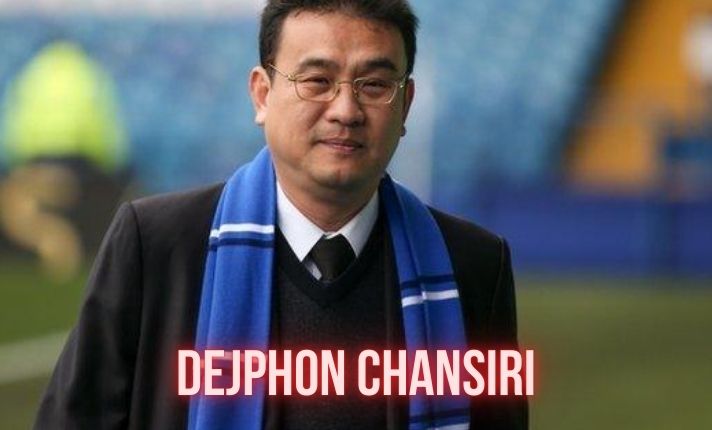
Dejphon Chansiri is a Thai businessman known internationally for his decade-long ownership of Sheffield Wednesday Football Club. He built his reputation as a bold investor with ambitions to elevate the club to the Premier League. His story blends family business influence, calculated risk, and a turbulent journey in English football. By 2025, his tenure had become one of the most debated ownership periods in the EFL.
- Quick Facts
- Early Life
- Dejphon Chansiri Career
- Dejphon Chansiri Entry into Football
- Dejphon Chansiri Investment, Hope and Growing Troubles
- Exit from Sheffield Wednesday
- 2025 The Decline
- What is Dejphon Chansiri’s Net Worth?
- Public Persona, Business Philosophy and Alleged Non Football Ventures
- Personal Life and Relationships of Dejphon Chansiri
- Controversies
- Conclusion
- FAQs
Quick Facts
| Category | Details |
|---|---|
| Full Name | Dejphon Chansiri |
| Age | 57 years old (as of 2025) |
| Date of Birth | 3 June 1968 |
| Parents | Kraisorn Chansiri father, Sudtida Chansiri mother |
| Net Worth | Approximately 437 million pounds estimated 2025 |
| Height | Approx 5 ft 7 in 170 cm |
| Spouse/Partner | Tipparut Chansiri |
| Ethnicity | Thai Asian |
| Nationality | Thai |
| Source of Wealth | Family seafood enterprise Thai Union Group, private investments |
| Education | Not publicly confirmed |
Early Life
Dejphon Chansiri was born into one of Thailand’s most commercially influential families. His early years in Bangkok exposed him to the inner workings of major corporate operations. His father, Kraisorn Chansiri, helped position Thai Union Group as the largest producer of canned tuna in the world. This environment shaped Dejphon’s understanding of supply chains, international markets, and the importance of global distribution.
A key turning point in his youth came when he began travelling with senior family members to observe business negotiations. Witnessing cross-border trade agreements and logistics planning introduced him to the scale of international commerce. It also inspired him to take an active role in diversifying the family’s business interests. This early exposure built the foundation for his later decisions in sport, retail, and private investment.
Although Dejphon never publicly discussed his educational background, it is commonly accepted that much of his business proficiency came from first-hand experience rather than formal academic training. This practical learning became a significant part of his business identity.
Dejphon Chansiri Career
Dejphon’s early business career cannot be separated from the influence of Thai Union Group. The seafood empire was already a global force when he entered adulthood. The company’s strong financial base allowed younger members of the family to pursue expansion outside the core seafood production sector. Dejphon became known as a strategic thinker who could spot opportunities and identify areas for diversification.
Business Roots and Diversification
The Chansiri family’s wealth was built on Thai Union’s multi-billion-dollar revenue model. While Dejphon did not hold a public-facing role within the top leadership of the company, he was part of the wider ownership family and benefited from the capital generated through seafood exports, supply partnerships, and global retail distribution.
His business ventures over the years reportedly extended into consumer retail, private equity, and sport. Links to King Power International, Thailand’s leading duty-free retailer founded by Vichai Srivaddhanaprabha, positioned him in circles of high-level Thai commercial networks. In these networks, major decisions often blended family alliances, corporate partnerships, and investments in fast-growing sectors such as tourism, hospitality, and entertainment.
Dejphon also pursued private ventures in real estate and domestic Thai markets, though these were not heavily publicised. Unlike some Southeast Asian tycoons, he did not cultivate a public brand around his investments. His profile remained low until his move into European football in 2015.
Dejphon Chansiri Entry into Football
In January 2015, Dejphon Chansiri completed the purchase of Sheffield Wednesday Football Club for a reported 37.5 million pounds. This acquisition was the moment he became known to the global sporting community. The deal was significant because few Thai businessmen had ventured into English football ownership at that time, aside from the well-known leadership at Leicester City.
Chansiri took full control of the club from Milan Mandaric and immediately declared an ambitious target. He aimed to return the club to the Premier League within two years. This goal aligned with the club’s 150th anniversary plans and resonated strongly with fans eager for a return to top-flight football.
His first seasons in charge delivered optimism. Sheffield Wednesday reached the Championship play-off final in 2016. The club also enjoyed increased transfer spending, new commercial partnerships, and improved brand visibility. Supporters saw Chansiri as a passionate owner willing to invest heavily.
The excitement surrounding his early tenure contributed to his rise in international sports media. He was frequently described as bold, confident, and determined to bring Sheffield Wednesday back to elite competition.
Dejphon Chansiri Investment, Hope and Growing Troubles
The later years of Chansiri’s ownership were defined by financial strain and a widening divide between expectations and results. Heavy investment created high operating costs. The club’s wage bill increased significantly as it pursued Premier League promotion. Despite strong early performances, the team could not secure promotion, and the financial model began to show signs of stress.
Throughout 2018 and 2019, the club operated under strict EFL profit and sustainability rules. This limited the ability to spend further, and squad quality began to lag behind competitors. Supporter frustration also increased as results declined.
Between 2020 and 2024, Sheffield Wednesday faced several operational difficulties. These included:
• Late wage payments to staff
• Delayed payments to HMRC
• A registration embargo during the 2024 season
• Accumulated losses exceeding 150 million pounds
• Statements from Chansiri calling on fans to contribute financially to keep the club afloat
• High managerial turnover
• Reduced trust between fans and ownership
By early 2025, tensions had escalated to their highest levels. Fan groups held protests outside the stadium. Public statements became increasingly confrontational. The club’s financial position deteriorated rapidly as wage arrears and regulatory penalties mounted.
Exit from Sheffield Wednesday
On 24 October 2025, after months of financial turmoil, Sheffield Wednesday entered administration. This officially ended Dejphon Chansiri’s ownership after ten years. The move triggered automatic points deductions and placed the club under new interim control. Administrators later reported substantial debt, including unpaid taxes and internal loans from the Chansiri family.
The English Football League also issued a directive barring Chansiri from involvement in any EFL club for a period of three years. This ban reflected breaches of payment obligations and repeated regulatory failures during his final seasons.
For many supporters, the administration process represented both relief and uncertainty. Chansiri’s departure marked the end of a turbulent era but also left the club in a fragile financial state.
2025 The Decline
The year 2025 became the defining moment of Dejphon Chansiri’s public career. His exit from Sheffield Wednesday reshaped his reputation both in Thailand and in the UK. Early optimism had turned into an example of how challenging modern football ownership can become when long-term sustainability is overlooked.
Analysts pointed to several key factors that contributed to the downfall:
• Persistent operating losses
• A declining squad without promotion revenue
• Limited commercial growth off the pitch
• Debt accumulation without clear refinancing
• Strained relationships with supporters
• Delayed player and staff payments
• Tight regulatory pressure from the EFL
Chansiri’s handling of public communication also played a major role. His direct statements often created controversy and increased fan frustration. By the time of his exit, supporters viewed his tenure as one of ambition overshadowed by mismanagement.
2025 became the year in which Dejphon Chansiri shifted from bold investor to divisive public figure.
What is Dejphon Chansiri’s Net Worth?
According to Forbes family wealth estimates and updated evaluations from UK sports finance analysts, the Chansiri family had an estimated worth of approximately 575 million US dollars in 2020. In 2025, industry publications ranked Dejphon Chansiri personally at approximately 437 million pounds using comparative models of EFL owners.
Public sources emphasise that Chansiri’s wealth is closely tied to family assets rather than liquid personal holdings. Much of his net worth is believed to come from Thai Union Group’s valuation, which remains one of the world’s largest seafood producers.
A breakdown of known wealth associations includes:
• Shareholding ties to Thai Union family assets
• Private real estate in Thailand
• Minority investment positions in retail and duty-free sectors
• Business partnerships through Thai commercial networks
• Residual holdings linked to Sheffield Wednesday prior to administration
There is no public confirmation of exact liquidity or personal debt obligations.
Public Persona, Business Philosophy and Alleged Non Football Ventures
Dejphon Chansiri has cultivated a business identity built on risk-taking, personal involvement, and ambition. Supporters often described him as passionate and intense. His public statements reflected a willingness to challenge critics and defend his decisions.
His business philosophy emphasises long-term loyalty and internal leadership. He often promoted the idea that businesses should take bold steps to achieve extraordinary results. This mindset shaped his investment behaviour in football.
There are recurring claims about his involvement in sectors such as hospitality, media, and real estate. However, major news outlets have found limited verifiable evidence tying him directly to large-scale ventures outside of Thai Union Group and football. Most of the references appear to stem from secondary sources or assumptions about prominent Thai families diversifying into multiple industries.
What is known is that he maintained business relationships within Thailand’s commercial elite. Associations with companies such as King Power International helped broaden his network. Reports also linked him to philanthropic efforts sponsored by Thai corporate foundations. These involved school-building programs, medical support initiatives, and cultural preservation projects, though not always under his personal name.
Personal Life and Relationships of Dejphon Chansiri
Dejphon Chansiri maintains a highly private personal life, but reliable sources confirm that he is married to Tipparut Chansiri. He has never placed his family in the public spotlight and rarely discusses domestic matters in interviews. This approach is consistent with his broader preference to keep public attention on business operations rather than personal affairs.
His discretion mirrors the cultural norms of many Thai business families, who generally separate corporate responsibilities from home life. Unlike more publicly visible Southeast Asian owners such as Tony Fernandes or Vichai Srivaddhanaprabha, Chansiri has consistently avoided creating a media-facing family profile.
Although supporters and commentators have speculated about his background over the years, Chansiri has not released detailed information about his children or broader family structure. Beyond acknowledging his wife, Tipparut, he continues to keep all personal matters firmly out of the public domain.
Controversies
Dejphon Chansiri’s career has included several significant controversies. These incidents shaped public perception and contributed to his complex reputation.
• He was accused of financial mismanagement during his tenure at Sheffield Wednesday.
• He was alleged to have repeatedly missed wage payments for players and staff across the 2024 and 2025 seasons.
• The club was charged with failing to meet financial obligations to HMRC.
• He was accused of poor communication with supporters and stakeholders during critical periods.
• He faced public criticism for urging fans to contribute a seven-figure sum to help keep the club afloat.
• Regulatory inquiries identified breaches of EFL financial rules.
These controversies created deep friction between the owner and the fanbase, ultimately accelerating calls for his departure.
Conclusion
Dejphon Chansiri’s story is a rare case of a Southeast Asian businessman becoming a central figure in English football. His rise from family business circles in Thailand to ownership of one of England’s historic clubs captured international attention. His early boldness won support, but long-term operational challenges led to one of the most turbulent periods in the Championship.
By 2025, his legacy had shifted from ambitious investor to a cautionary example in sports governance. Analysts continue to debate whether his intentions were simply overshadowed by financial realities or whether structural mismanagement defined his stewardship. What remains undeniable is that his decade-long role at Sheffield Wednesday stands as one of the most discussed ownership tenures of the modern EFL era.
FAQs
Is Dejphon Chansiri still the owner of Sheffield Wednesday?
No he exited after the club entered administration in October 2025.
What is Dejphon Chansiri’s net worth?
Around 437 million pounds estimated in 2025.
Why was Dejphon Chansiri banned from EFL ownership?
Due to repeated financial breaches and late payment issues.
How long did he own Sheffield Wednesday?
He owned the club for ten years from 2015 to 2025.
Is his wealth linked to Thai Union Group?
Yes his family controls the global seafood corporation.