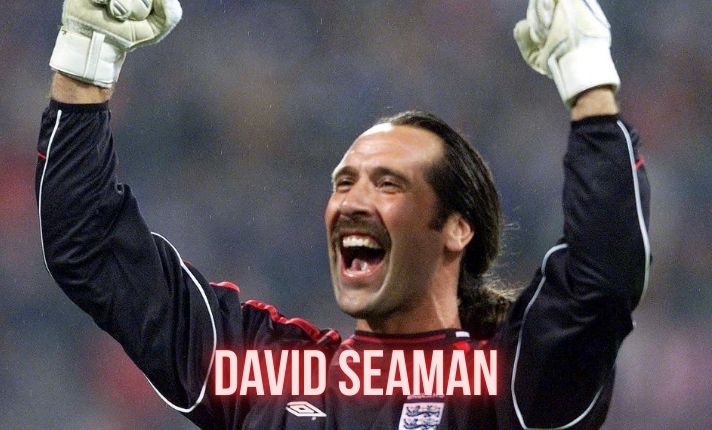
David Seaman remains one of the most respected and recognizable figures in English football. His career spans more than two decades at the top level, including a long tenure at Arsenal and a major role for the England national team. Fans continue to search for accurate information about his net worth, age, personal life, and career progress after retirement. This 2025 update provides a detailed and authoritative profile of his life based on verified information, focusing on high-intent facts that match what readers search for today.
- Quick Facts
- Early Life and Origin Story
- Career and Rise to Fame
- Peterborough United (1982 to 1984)
- Birmingham City (1984 to 1986)
- Queens Park Rangers (1986 to 1990)
- Arsenal Era (1990 to 2003)
- England National Team Career (1988 to 2002)
- Manchester City and Retirement (2003 to 2004)
- What is David Seaman’s Net Worth
- Personal Life and Relationships
- Controversies
- Conclusion
- FAQs
Quick Facts
| Category | Details |
|---|---|
| Full Name | David Andrew Seaman |
| Age | 61 years old (as of 2025) |
| DOB | September 19, 1963 |
| Net Worth | 14 million USD (2025 estimate) |
| Height | 6 ft 4 in (193 cm) |
| Spouse/Partner | Frankie Poultney |
| Ethnicity | White British |
| Source of Wealth | Football career, endorsements, media work |
| Education | Local schools in Rotherham, youth football development at Leeds United |
Early Life and Origin Story
David Seaman was born in Rotherham, Yorkshire, in 1963. His upbringing in a working class household shaped his future mindset. His father worked in a steelworks and his mother held jobs in local pubs. These early realities created financial discipline that he would later reference in interviews.
He showed athletic ability from a young age. Football became the sport he gravitated toward and by his early teens he was already seen as a tall and promising goalkeeper. Local coaches identified his size and calm nature as strengths. These traits developed further through structured training at school and local clubs.
The turning point in his youth came when he was scouted by Leeds United, his childhood team. Being selected as an apprentice provided access to professional facilities and formal coaching for the first time. The experience convinced him that a football career was possible. Even though he never broke into the Leeds first team, joining them as a teenager gave him direction and motivation that influenced the rest of his life.
His release from Leeds in 1982 could have ended his ambitions. Instead, it became a critical moment. The setback forced him to evaluate whether he was prepared to start again with a lower division club. Choosing to sign for Peterborough United for only 4000 pounds tested his resilience. This decision marked the true beginning of his professional journey.
Career and Rise to Fame
David Seaman’s professional career progressed through several English clubs before he reached elite status. The path included lower division service, mid table competition and eventually dominance at the top of English football. His rise was steady rather than sudden and his consistent performances earned him trust from managers and teammates.
Peterborough United (1982 to 1984)
Seaman joined Peterborough United after leaving Leeds. The club offered regular playing time and the chance to develop through match pressure. He gained valuable experience in the Football League. His handling, reflexes and maturity improved significantly during this period.
Birmingham City (1984 to 1986)
In 1984 Birmingham City signed him for 100000 pounds. The transfer elevated him into higher profile competition. He played regularly and contributed to strong defensive seasons. His form began attracting the attention of bigger clubs as he displayed reliability under pressure.
Queens Park Rangers (1986 to 1990)
Seaman moved to Queens Park Rangers, where he became one of the most consistent goalkeepers in the First Division. His performances at QPR established him as a leading English goalkeeper. During these years he earned his first England call up. Major clubs began monitoring him as a long term solution.
Arsenal Era (1990 to 2003)
Arsenal signed Seaman in 1990 for 1.3 million pounds. At the time this was a British record fee for a goalkeeper. His arrival marked the beginning of a dominant phase for the club under George Graham and later Arsène Wenger.
During his 13 year stay at Arsenal, Seaman became an icon. His calm style, positional intelligence and strong command of the penalty area made him one of the best keepers in Europe.
Key Arsenal achievements:
• Premier League titles in 1991, 1998 and 2002
• FA Cup victories in 1993, 1998, 2002 and 2003
• League Cup title in 1993
• European Cup Winners Cup in 1994
• Played every league match during the 1990 to 1991 title season and conceded only 18 goals
• Multiple penalty saves in high pressure matches, including shootouts
• Known for one of the greatest saves in FA Cup history in 2003 against Sheffield United, a reaction stop often replayed in highlight reels
Arsenal’s defensive line during this era included Tony Adams, Martin Keown, Lee Dixon and Nigel Winterburn. Seaman’s leadership and communication style were essential in coordinating one of the strongest defensive units in English football.
England National Team Career (1988 to 2002)
Seaman earned 75 caps for England, making him one of the most capped goalkeepers in national team history. He represented England across three major eras under Bobby Robson, Graham Taylor, Terry Venables, Glenn Hoddle and Sven Göran Eriksson.
Major tournaments:
• 1996 UEFA European Championship
• 1998 FIFA World Cup
• 2000 UEFA European Championship
• 2002 FIFA World Cup
Memorable moments include a penalty save against Ariel Ortega during the 1998 World Cup. His consistency made him England’s first choice goalkeeper for almost 15 years. He matched a national record for longevity in the squad.
Manchester City and Retirement (2003 to 2004)
Seaman completed his club career at Manchester City. A shoulder injury cut short his time at the club. He announced retirement in 2004 after medical advice confirmed that continuing would risk long term damage.
What is David Seaman’s Net Worth
David Seaman’s net worth in 2025 is estimated at 14 million USD. This figure is based on public earnings sources and is consistent with estimates from CelebrityNetWorth and sports wealth databases.
Net worth factors include:
• Two decades of Premier League salary
• England international appearances
• Bonuses from major tournaments with Arsenal
• Endorsements including sportswear partnerships
• Paid speaking engagements
• Media appearances including television competitions
• Brand ambassador roles
• Podcast and digital content income
• Investments and long term financial planning
His upbringing influenced how he handled money. Seaman has stated in interviews that early financial struggle taught him to save and invest carefully. His wealth has remained stable due to low risk financial behavior and consistent work after retirement.
Personal Life and Relationships
David Seaman has been married three times. His first marriage was to Sandra, followed by a second marriage to Debbie Rodgers, with whom he shares children. Both marriages ended in divorce. He later met Frankie Poultney, a professional figure skater, while participating in the television show Christian “Dancing on Ice.” The couple married in 2015.
Seaman keeps most family information private but shares occasional updates on social media about his outdoor activities, fishing trips and daily life with Frankie. They maintain a relatively low profile and prefer life away from major media attention.
He is known for enjoying countryside lifestyle activities. Fishing is his main hobby and he has built an audience for related content. His online presence highlights wildlife conservation interests and recreational angling.
Seaman also participates in charity events. He often works with organizations focused on youth sports, health and community programs. His public appearances tend to emphasize teamwork, mental strength and resilience.
Controversies
David Seaman has had a relatively controversy free career when compared to many elite athletes. However, a few incidents have attracted public discussion.
• During UEFA Euro 2000 he was criticized for a long range goal conceded against Gheorghe Hagi in a match against Romania. Some analysts argued he misjudged the flight of the ball.
• In the 2002 FIFA World Cup he was again critiqued for positioning during the free kick scored by Ronaldinho of Brazil. Commentators debated whether the shot was intentional.
• Seaman has occasionally faced media commentary regarding his hairstyle, image and public persona. These were largely lighthearted and never developed into reputational issues.
• No serious allegations or off field misconduct claims have been made against him.
The controversies associated with his name primarily relate to sports performance rather than personal behavior. He maintains a positive reputation as a respected professional.
Conclusion
David Seaman’s biography reflects resilience, consistency and professional excellence. His early life in Rotherham introduced him to hard work and financial caution. His football career progressed through several clubs before he became a central figure in one of Arsenal’s most successful eras. His England tenure made him a national icon and one of the most recognizable goalkeepers of his generation.
His post retirement life remains active through media work, brand partnerships and personal interests. Seaman’s measured personality and calm communication style have helped him maintain credibility in public life. As of 2025 his legacy remains firmly established. His achievements still influence discussions about the greatest English goalkeepers of all time.
FAQs
What is David Seaman’s net worth
14 million USD in 2025.
How old is David Seaman
He is 61 years old.
Who is David Seaman married to
He is married to Frankie Poultney.
How tall is David Seaman
He is 6 ft 4 in tall.
Which teams did David Seaman play for
Leeds United, Peterborough United, Birmingham City, Queens Park Rangers, Arsenal and Manchester City.
How many England caps does he have
He earned 75 caps.