
Blog
Mick Hucknall Net Worth, Wife, Daughter, Age, Height, Career and More


Mick Hucknall is an English singer and songwriter whose career is inseparable from Simply Red, the band he fronted from the mid-1980s onward. His voice became one of the most recognisable in British pop and soul, and his writing helped turn the group into a global brand. He is also known for sustaining commercial relevance across multiple music eras, from physical sales to streaming and modern touring.
- Mick Hucknall’s Early Life
- Education and Early Creative Direction
- Personal Life: Wife and Daughter
- Mick Hucknall Net Worth in 2024 and 2025
- Career
- Early Scene: Frantic Elevators and Pre-Simply Red Momentum
- Founding Simply Red and Establishing a Signature Sound
- “Holding Back the Years” and the Emotional Core of the Catalogue
- Peak Commercial Era: The “Stars” Album and UK Cultural Dominance
- Sustaining Relevance in the Late 1990s and 2000s
- Solo Work and Artistic Side Paths
- The Blood and Fire Label and Reggae Preservation
- Property Development and Reported Business Stakes
- Wine Venture and the “Il Cantante” Identity
- Ireland, Donegal, and a Public Legal Dispute
- 2015 to 2025: Reunion Era and the 40-Year Celebration
- Awards, Honours, and Major Recognition
- Public Image, Controversies, and How He Talks About Fame
- The Tabloid Era Reputation
- Onstage Confrontation and Audience Culture
- Business Headlines and Public Scrutiny
- What Mick Hucknall Is Best Known For
- Conclusion
- FAQs
Unlike many frontmen who split into constant side projects, Hucknall’s story is built on longevity and control. He has stayed closely connected to the band’s identity, often acting as the consistent creative centre even when musicians around him changed. That continuity is one reason the catalogue still sells tickets decades later.
| Field | Details |
|---|---|
| Full Name | Michael James Hucknall |
| Stage Name | Mick Hucknall |
| Date of Birth | June 8, 1960 |
| Age | 65 years (as of 2025) |
| Birthplace | Denton, Greater Manchester, England |
| Nationality | British |
| Ethnicity | White British |
| Religion | Not publicly disclosed |
| Height | Approx. 5 ft 8 in (173 cm) |
| Profession | Singer, Songwriter |
| Famous For | Lead vocalist of Simply Red |
| Band | Simply Red |
| Genres | Soul, Pop, Blue-eyed Soul |
| Years Active | 1976 – present |
| Education | Manchester Polytechnic (briefly attended) |
| Marital Status | Married |
| Wife | Gabriella Wesberry (m. 2010) |
| Children | One daughter – Romy True Hucknall |
| Residence | England |
| Estimated Net Worth | £40–£60 million (approx.) |
| Notable Hits | Holding Back the Years, If You Don’t Know Me by Now, Stars |
| Awards | Brit Awards, multiple chart-topping albums |
| Social Media | Active via Simply Red official platforms |
Mick Hucknall’s Early Life
Mick Hucknall was born on 8 June 1960 in Manchester. His early family story has been widely discussed in interviews over the years, particularly the fact that he was raised primarily by his father after his mother left when he was very young. That experience later became part of how listeners interpret his most emotionally direct songs.
The emotional tone in his writing is not accidental. Many of his best known lyrics sit in the space between vulnerability and restraint. His work often sounds romantic or nostalgic, but it is frequently driven by themes of absence, memory, and self-protection.
As a teenager, he came up in a Manchester environment where music, identity, and politics often overlapped. That background shaped the intensity of his performance style. Even when the music is smooth, the delivery often carries a sharp edge.
Education and Early Creative Direction
Mick Hucknall studied at Manchester Polytechnic’s School of Art, which is now part of Manchester Metropolitan University. The art school detail matters because it places him in a broader creative culture rather than a purely “music only” route. It also helps explain his comfort with image, design, and branding.
His education reinforced two habits that stayed with him. One was the instinct to treat style as part of communication, not decoration. The other was an interest in craft, meaning he valued execution and presentation, not just raw emotion.
In 2024, his connection to that institution was formally recognised with an honorary Doctorate of Arts. It reflected both his long career and his status as a high-profile creative figure rooted in Manchester.
Personal Life: Wife and Daughter
Mick Hucknall married Gabriella Wesberry in 2010. Their relationship has been described in public coverage as long-term and relatively private by celebrity standards. He has spoken at different points about valuing stability later in life, especially after a period when he was known for a fast, high-profile lifestyle.
The couple have a daughter, Romy True, born in June 2007. Hucknall has occasionally referenced fatherhood as a grounding influence, especially when discussing how his priorities changed over time. He has not built a public brand around family content, but family is frequently described as a central part of his present-day life.
Mick Hucknall Net Worth in 2024 and 2025
There is no single official net worth statement for Hucknall in public financial records because private wealth is not routinely disclosed in detail. However, he is often reported as one of the wealthier figures in British pop, largely due to the scale of Simply Red’s album era success. A widely circulated 2025 estimate places his wealth at around £60 million, though this should be read as an informed estimate rather than a confirmed accounting.
ALSO READ: Joe Dolan Net Worth, and More
His wealth is generally understood to be driven by multiple income streams:
- Songwriting and publishing income from major hits
- Master recording earnings from a long catalogue
- Touring and merchandising revenue over decades
- Business ventures outside music
The key context is timing. Artists who sold huge volumes during the CD era often secured financial advantages that are difficult for newer acts to replicate in today’s streaming economy. Hucknall’s peak era happened when album sales could produce massive returns.
Career
Early Scene: Frantic Elevators and Pre-Simply Red Momentum
Before Simply Red, Mick Hucknall was connected to the Manchester scene through Frantic Elevators. This period is important because it shows he did not arrive fully formed as a polished pop singer. He built his writing instincts and stage confidence in a setting that rewarded urgency and personality.
That early environment also sharpened his identity as a frontman. Even when he later moved toward sophisticated pop-soul arrangements, there was still a punk-era directness in how he communicated. His voice could be smooth, but his intent often sounded fierce.
Founding Simply Red and Establishing a Signature Sound
Simply Red formed in 1985 and quickly became identified with Hucknall’s voice and songwriting. From the start, the band’s appeal was built on a hybrid approach. It blended pop accessibility with soul influences, creating songs that worked for radio without feeling disposable.
Hucknall became the band’s most visible constant. Over time, this only grew stronger. The public understood Simply Red as an act anchored by one unmistakable vocalist, even as lineups evolved behind him.
Early success also established a template that still defines their live shows. Big melodies, clean arrangements, and hooks designed to land in large venues.
“Holding Back the Years” and the Emotional Core of the Catalogue
“Holding Back the Years” became one of the defining songs of Hucknall’s career. It is often connected, in both public commentary and his own reflections, to his childhood experiences and emotional memory. The track’s impact is not only musical. It’s the sense that the singer is exposing something real while still maintaining control.
ALSO READ: Johnny Vaughan Biography, Net Worth and More
That balance became a trademark. Hucknall could deliver sentiment without leaning into melodrama. For high-intent searches, this is the simplest explanation of why the song has survived: it feels personal, but it remains universally readable.
In performance, it also works as a reset button. Audiences often experience it as a moment of quiet focus in the middle of a set full of upbeat momentum.
Peak Commercial Era: The “Stars” Album and UK Cultural Dominance
Simply Red’s fourth album, “Stars,” became one of the most commercially dominant UK albums of its era. Its scale is part of why Hucknall’s name still carries financial and cultural weight. When a catalogue contains an album of that magnitude, it creates long-term advantages, from licensing to evergreen audience familiarity.
The album’s success also shifted the band from “hit makers” to an arena-level brand. It proved they could sell not just singles, but a complete body of work that listeners wanted to own. In the early 1990s UK music landscape, that mattered deeply.
This was also the period when Hucknall’s public image sharpened. He was no longer just a talented vocalist. He became a recognisable cultural figure, with a distinct look and a reputation for confidence that sometimes read as arrogance, depending on the observer.
Sustaining Relevance in the Late 1990s and 2000s
Many bands fade after their peak. Simply Red did not vanish. They continued releasing albums and touring, and Hucknall remained a reliable live draw. This stage of the career was less about dominating charts and more about maintaining a relationship with a stable audience.
A key factor was catalogue strength. Once a band owns multiple songs that people want to hear live, a touring career can outlast radio cycles. Hucknall’s job then becomes delivering consistency, not chasing trends.
This is also the period when the band’s identity became even more closely associated with him. Public perception often treated Simply Red as “Hucknall and company,” which can be both a strength and a pressure point.
Solo Work and Artistic Side Paths
Hucknall’s solo releases have often reflected his taste rather than commercial positioning. Projects like “Tribute to Bobby,” linked to Bobby Bland, and later “American Soul,” signalled a musician interested in lineage. He has consistently presented himself as someone who belongs to a tradition of soul and R&B influence, not a pop singer borrowing a style temporarily.
These projects strengthened his credibility with music listeners who value roots and references. They also show that he views himself as a curator as well as a performer.
For his broader brand, solo work served another purpose. It allowed him to explore material without the weight of the Simply Red name, while still reinforcing the vocal identity audiences already loved.
The Blood and Fire Label and Reggae Preservation
One of the most overlooked parts of Hucknall’s profile is his involvement with Blood and Fire, a specialist label known for reggae reissues and archival releases. This is not the typical celebrity “business venture” story. It aligns directly with musical values and historical preservation.
The label’s reputation rests on curation and quality. That suggests Hucknall’s interest in music extends beyond personal performance. He has invested in the culture that influenced him, which adds depth to his biography.
This also connects with his broader identity as a listener. His influences have always been part of the public narrative, and Blood and Fire made that narrative tangible.
Property Development and Reported Business Stakes
Hucknall has been publicly linked to property development, including a significant stake in Ask Property Development. This association has periodically placed him near wider business and political coverage, mostly because property and urban development attract public scrutiny.
For a biography, the key point is simple. Hucknall’s financial story is not only music royalties and touring. He has been connected to investments that operate in different economic cycles, which helps explain why his wealth is often discussed as substantial and durable.
Property also fits the timeline. Artists who build wealth during peak album eras often look for ways to convert income into longer-term assets.
Wine Venture and the “Il Cantante” Identity
Hucknall has also been associated with a wine venture in Sicily, often discussed under the label name “Il Cantante.” Wine projects can be superficial celebrity branding, but in his case it has been framed as a personal interest rather than a quick endorsement.
This venture adds a lifestyle dimension that many fans find intriguing. It reinforces an image of a veteran performer who built wealth and then invested in a quieter, more private kind of pleasure.
It also speaks to identity. “Il Cantante” translates to “the singer,” which suggests Hucknall sees the wine project as an extension of his personal narrative, not a random business move.
Ireland, Donegal, and a Public Legal Dispute
Hucknall has spent significant time in Ireland and has been linked to the Glenmore Estate in County Donegal, alongside bandmate Chris De Margary. Public reporting covered a dispute connected to rights and operations linked to the estate’s tourism activities, including hunting and fishing.
The story matters because it is one of the clearer examples of a non-music controversy attached to him. It also illustrates a wider point: when celebrities invest in land or tourism ventures, disputes can become public in ways they may not expect.
The dispute was later reported as settled. In biography terms, it is best treated as part of the business record rather than something that defines his reputation.
2015 to 2025: Reunion Era and the 40-Year Celebration
Simply Red reformed in 2015 and continued touring into the 2020s. By 2025, the act was marketed as a 40-year celebration of the band’s legacy, with major arena dates positioned as a milestone event.
This period shows how the brand evolved. The focus shifted from new-hit competition to “catalogue experience.” Audiences come to hear the songs that shaped their lives, delivered with professional consistency.
It also shows how Hucknall has aged as a performer. Recent coverage often describes him as more reflective, sometimes more direct, and clearly comfortable with the idea that Simply Red is now a legacy act that still sells out venues.
Awards, Honours, and Major Recognition
Major Industry Awards
Hucknall has received major honours that underline his status in UK music.
- Outstanding Achievement recognition from the MOBO Awards
- A Gold Badge honour connected to the UK music and songwriting community
- Long-term recognition tied to contribution and influence rather than a single release cycle
These awards matter because they reflect career-level esteem. They are not only about commercial success, but about impact and staying power.
2024 Honorary Doctorate
In 2024, Manchester Metropolitan University awarded Hucknall an honorary Doctorate of Arts. This reinforced the link between his career and Manchester’s cultural identity. It also placed him in a category of alumni figures recognised for broad contribution, not just fame.
2025 ASCAP Golden Note Award
In 2025, ASCAP announced a Golden Note Award linked to 40 years of success for Hucknall and Simply Red. This added a clear modern milestone to his public record and positioned the anniversary year as more than a tour marketing label.
Public Image, Controversies, and How He Talks About Fame
The Tabloid Era Reputation
Hucknall’s public image in the late 1980s and 1990s often included stories about wealth, confidence, and a fast personal life. Over time, he has spoken more openly about how fame affected his behaviour and how his priorities changed.
This shift is important because it affects how he is received today. The modern image is less about excess and more about veteran authority. He is frequently presented as a man who survived the intensity of celebrity and now prefers control.
Onstage Confrontation and Audience Culture
In 2025, coverage circulated about Hucknall pausing a show to address disruptive behaviour in the crowd. These moments are not unique to him, but they feed the narrative of an older, less tolerant performer who expects respect in a live environment.
For fans, it can be interpreted in two ways. Some see it as professionalism. Others see it as impatience. Either way, it reflects an artist who treats the performance as work, not a party.
Business Headlines and Public Scrutiny
When celebrities are linked to property development or land investments, scrutiny is inevitable. Hucknall’s reported business interests have occasionally drawn headlines that have little to do with music, but they are part of the broader public record around his name.
In biography terms, the most accurate framing is that he is a musician who also pursued investment interests. That combination is common among long-running artists with major catalogue earnings.
What Mick Hucknall Is Best Known For
High-intent searches usually want a clear answer. Mick Hucknall is best known for being the voice behind Simply Red’s biggest songs and for turning the band into a long-term touring brand. His signature traits are a distinct vocal tone, a catalogue built for live performance, and an unusually durable career.
His modern identity is built on three pillars:
- A globally recognised voice linked to a specific band brand
- A peak commercial era that created lasting financial strength
- Ongoing touring activity that keeps the catalogue alive in public memory
Conclusion
Mick Hucknall’s career is a case study in longevity. He rose from Manchester’s scene into global pop-soul dominance and then sustained relevance through catalogue power, disciplined touring, and a public identity anchored in his voice and songwriting. In 2024 and 2025, major honours and anniversary touring reinforced that his influence is still recognised at the highest industry levels.
FAQs
How old is Mick Hucknall?
He was born on 8 June 1960.
What is Mick Hucknall’s net worth in 2025?
It is commonly reported in the tens of millions, with one widely cited estimate around £60 million.
Is Mick Hucknall married?
Yes, he married Gabriella Wesberry in 2010.
Does Mick Hucknall have children?
Yes, he has one daughter, Romy True, born in June 2007.
What is Mick Hucknall famous for?
He is the lead singer of Simply Red and the voice behind their biggest hits.


Introduction
Can you take a guess on the product’s pricing just from the way it looks? Have you ever seen a new coffee brand and assumed that it might be more expensive than your regular brand only because of the way it was presented and packaged? Most people will agree on this here; you aren’t alone.
Fun fact: the assumption isn’t just about the coffee here; it’s about how a brand wants to be seen, to be known.
That’s how strong and big a role good packaging can play.
How Packaging Shapes Brand Perception
Design has the power to influence. For product packaging, it plays an important role. A well-crafted & executed design lets you take a guess at the brand’s story, overall vibe and its aesthetic, and how they want them to be experienced even before the product has been bought. Good packaging can convince people to spend more, beyond the budget, just to experience the premium feel. The product was sold, and so was the experience here.
Difference between minimal and bold packaging
Think about a minimal packaging jar of coffee, earthy tones, a simple font, no heavy illustrations, and a muted look and feel. The brand feels like something very natural, connects us to where the coffee originated from, and gives us the sense of relaxation we feel after our morning cup and how we hold onto the traditional coffee imagery.
While on the other hand, think about the second coffee brand with bold font and vibrant color combinations along with illustrations depicting the story. This brand connects us with the boldness of coffee, the beauty of its craftsmanship and translates coffee’s energy visually. No branding can be defined as right or wrong; you will pick the one product that resonates the most with you. The brand targets communities that have similar ideology, similar thoughts about life, or any such similarity and not individuals who like or dislike the design.
This was a small example of how we can perceive different meanings from a design. Creativity lies within us; it is what we assume, what we understand, and at last what makes sense to us. The color of red itself denotes both love and anger. Hence, there is no limit to our creativity and imagination.
Design As a Business Choice
And that is where design goes beyond being decoration. Design becomes a business choice.
Every element, color palette, font pairings, image and graphical elements, shapes shape the story about a product. Good packaging can make your brand stand out and build a recall value amid other products on the shelves. Uniquely crafted branding and visual identity grabs customer’s attention and makes them remember the brand.
Here is the crucial thing, though: design that isn’t built on a solid story is just distracting. A brand shouldn’t choose bright colors because they draw attention. It needs to understand what message colors convey, who exactly the packaging talks to, and what role the design plays in positioning.
Building a Consistent Brand Identity
The branding of coffee should not be confined to the packaging alone. The branding efforts need to continue from packaging to websites, social media design services, marketing, advertisements, promotional campaigns and even presentations. In case the packaging is unique and bold, while the rest of the branding efforts lack any distinct character, there will be inconsistency in the brand identity.
That is why companies have to go beyond the individual branding designs to come up with a well-coordinated brand identity. An effective brand is created by putting all branding components together. Consistency enables customers to recognize the brand while proper creative execution makes sure the character of the brand is reflected in all the different forms.
How Packaging Influences Buying Decisions
Packaging isn’t limited to good design. It can encourage us to break our rituals by changing our decisions. Think of yourself scrolling through an e-commerce website looking for your regular moisturizer or any skin care product. You have your particular product in mind, but suddenly a new product grabs your attention. Premium look & feel, clear messaging, better packaging. This isn’t something new or something that is happening recently. Good packaging and clear messaging have always been rule number one of any product brand.
Because sometimes people buy the one product that allows them to experience something new, something better.
Bringing Brand Stories to Life with PitchWorx
At PitchWorx, we help brands communicate and bring these ideas to life. It is not just about a good logo, packaging, and impressive color palette. It is all about how we resonate all of this with the brand’s story. From brand identity to everyday creatives, we focus on the right visual storytelling. We focus on consistency.
And for brands that need creative support regularly, our Creative Design Subscription provides an ongoing way to turn ideas into design assets without the overhead of hiring a full-time design team. Whether you’re launching a new product, building brand recognition, or keeping your marketing campaigns active, the goal is to make sure your design works as hard as your brand does.
Why Should You Choose PitchWorx?
PitchWorx provides an Unlimited design subscription for companies that require constant design assistance and a dedicated team that not just delivers the creatives but also brainstorms with you until we find the right one.
Unlimited design request submissions are provided by PitchWorx, with a maximum of two requests being worked on at one point in time. Most of the requests are fulfilled within 72 hours from their submission, depending on the level of complexity and the number of other requests currently being processed.

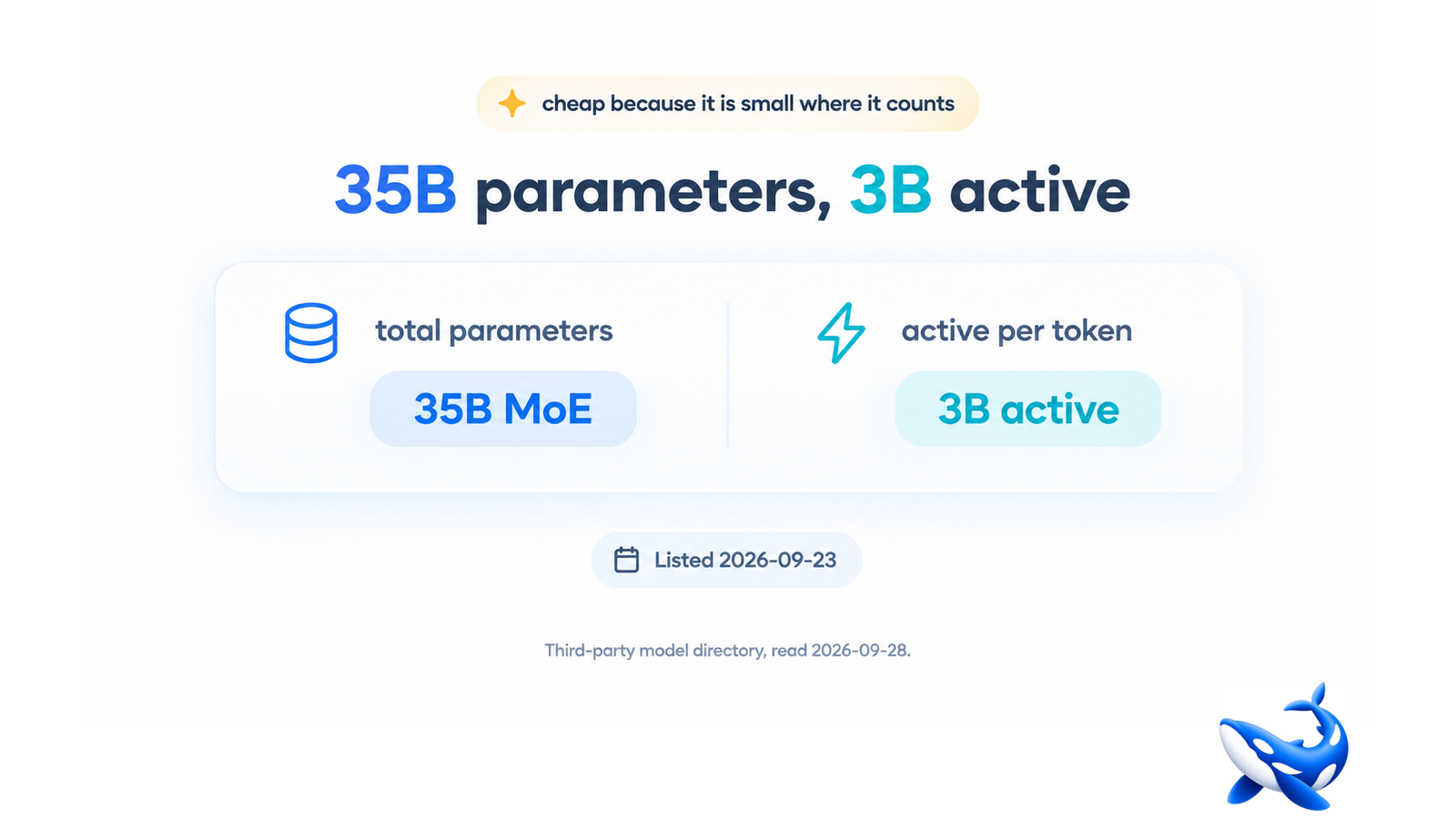
Among this week’s new AI models, the cheapest agentic entry is not the weakest one, and the reason is a single number that most coverage will skip: it is a mixture-of-experts model with thirty-five billion parameters in total and roughly three billion active per token. That gap is the whole story of its price. It is also the thing that makes it easy to misread — a small active count and a large total count point in opposite directions depending on which question you are asking. On OrcaRouter the catalogue of new ai models this week lists models by what they cost to call, and that is the frame in which the active count is the number that matters.
Two numbers, two different jobs
Total parameters describe how much the model knows. Active parameters describe how much work it does to produce one token.
In a dense model those are the same number, which is why the habit of reading parameter counts as a size label is so hard to break. In a mixture-of-experts model they diverge, and the divergence is the architecture’s entire purpose: route each token through a small subset of the network that happens to be relevant, and you get the capacity of a large model at something close to the compute cost of a small one.
So thirty-five billion and three billion are both true, and they answer different questions. Thirty-five billion is the answer to “how much does it know”. Three billion is the answer to “how fast and how cheap”. A comparison table that lists only the first will make this model look expensive; one that lists only the second will make it look incapable.
Why the architecture suits agent loops
There is a specific reason this shape fits agentic workloads better than it fits chat, and it is about what an agent loop spends its tokens on.
An agent spends most of its life on work that is not hard. It reads a tool result, decides the result was expected, and picks the next action — over and over. A small number of steps in any trajectory are genuinely difficult; the rest are routine. A dense model pays its full parameter cost on every one of those routine steps. A sparse model pays its active cost on them and can still bring its full capacity to bear on the step that needs it.
That is not a claim that a sparse model is smarter. It is a claim about the shape of the spend, and it is why a model with a modest active count can be the right choice for a long autonomous loop while a smaller dense model struggles: the dense model’s per-step cost is not the problem, its per-step ceiling is.
What to compare it against
The honest comparison for an agent model is not another agent model’s headline score. It is cost per completed task, and the variable that dominates it is not the per-token rate but the number of turns a task takes.
Two models at the same per-token rate can differ by a factor of three in cost per task if one of them reliably finishes in fewer steps. That difference is invisible in every table that lists rates, and it is the largest single term in an agent budget. Running a fixed set of tasks against the candidate, counting turns and tokens together, will tell you more than any leaderboard column will.
The other thing to check before trusting a cheap number is tokenisation. A model’s rate is quoted per token, and tokens are not a universal unit — the same English sentence can tokenise to different counts across tokenizers. A low rate on a tokenizer that produces twenty percent more tokens for your content is not a low rate. This is a five-minute check and it is the most commonly skipped one.
The score question, handled honestly
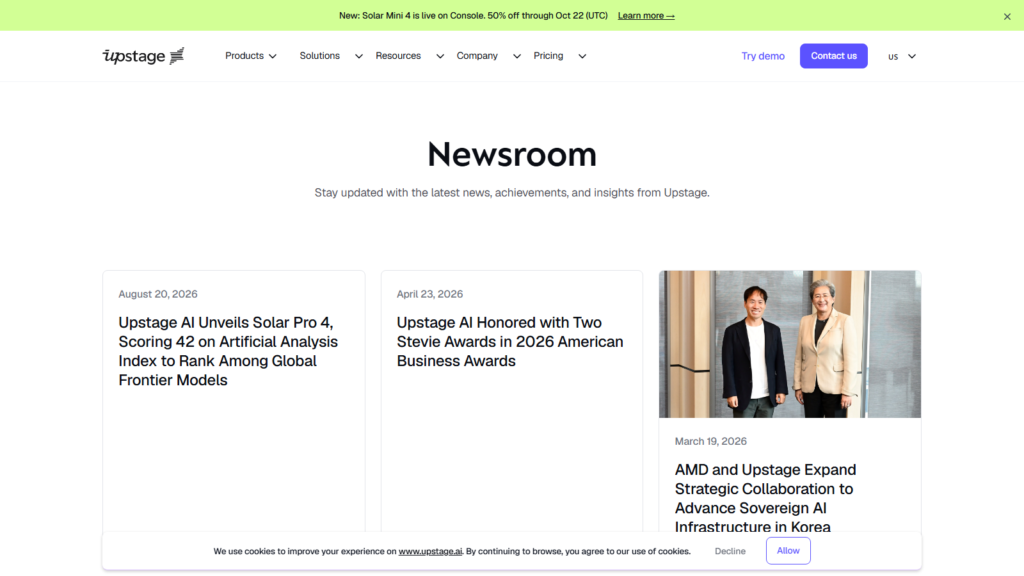
If you look for this model on the independent intelligence index, be careful about what you find. There is a page on that index whose slug resembles this model’s name, but it describes a different, much older entry with a context window in the low thousands — it is not this release and its score does not belong to this release. We checked on 28 September 2026 and found no page for this version.
The reason to spell that out is that misattributing a score is worse than having none. A missing number invites a question; a wrong number ends one. And this is the exact failure mode that a similarly named predecessor creates: the search succeeds, the page loads, and nothing on it announces that it is four versions out of date.
What you can rely on instead is the vendor’s own description of the model’s shape — the architecture, the active-parameter count, the agent framing — which is the vendor’s characterisation, plus whatever you measure yourself.
Where a sparse model is the wrong choice
Sparsity is not free, and the cases where it hurts are worth knowing before routing anything.
If your workload is a single hard question with a long input and a short answer — a document question, a classification over a large text — the active-parameter advantage has nothing to amortise against. You pay the routing overhead and get nothing back, and a dense model of comparable total size will often do the job at least as well for a simpler operational story.
If your workload depends on every token being informed by every other, as in fine-grained reasoning over a tight logical chain, the router’s choices become a source of variance rather than a saving.
And if your workload is genuinely tiny — short prompts, short outputs, no loop — the cheapest dense model available will usually beat a sparse one, because there is no long tail of routine steps for the architecture to make cheap.
What this entry says about the week
The interesting thing about this release is not that it is cheap. It is that it is cheap for a stated architectural reason that you can check. That is rarer than it should be: most cheap entries in this week’s crop are cheap because they are small, or because they are a preview, or because a price has not been recorded yet.
A cost advantage with a mechanism behind it is one you can reason about. You can predict when it will hold and when it will not, which is what makes it usable in a budget rather than merely attractive in a comparison. That is the standard worth applying to every cheap row on the calendar: not “how little does it cost”, but “why”.
Sourcing note: Solar Mini 4’s listing date of 23 September 2026, its mixture-of-experts architecture with thirty-five billion total parameters and roughly three billion active per token, and its agentic positioning are from a third-party public model directory read on 28 September 2026 and from the vendor’s own description of the model. The absence of an independent intelligence index page for this version was our own check on 28 September 2026, as was the finding that the index does have a separate page for a much older entry with a similar name and a context window in the low thousands, whose score does not apply to this release. The statement that this model is not in OrcaRouter’s catalogue is a statement about our own catalogue on 28 September 2026. No per-token price and no index score is quoted, because none is published for this version; nothing has been estimated. The arguments about agent-loop token spend, cost per completed task, tokenisation and the cases where sparsity is the wrong choice are editorial framing rather than measured results. This article names no competing platform and describes none.


You finally have a few days off work. There’s no alarm to rush you out of bed, no commute to worry about and, hopefully, a little more time to yourself.
But after a few days, you notice something unexpected. You might notice lower back pain or stiffness when you get up, a sore neck, or tightness around your shoulders that wasn’t there before the break.
It’s frustrating, especially when the whole point of taking time off was to relax.
One thing people often overlook is how much their bodies get used to their normal routine. During the working week, you might walk to the station, move between meetings, sit at your desk for a few hours and take regular trips around the office. When the holidays arrive, all of that can change almost overnight.
You might spend more time in the car, sleep in a different bed, stay up later or spend an afternoon sitting around with family. None of these things is unusual. It’s the sudden change in what your body is doing that can leave you feeling a little worse for wear.
It’s Not Always the Holiday Activities That Cause the Problem
A long drive, a few hours on the couch or an afternoon in the garden might not seem like much. The difference is that your body may not be used to doing these things for so long.
Think about someone who spends most of the year working at a desk. During the holidays, they decide to spend the day gardening, moving pots, pulling weeds and bending over garden beds. By evening, their lower back is aching.
The same person might feel uncomfortable after spending an entire day travelling to visit relatives, even though they’ve done very little physical work.
These situations are quite different, but they have something in common. The body has been asked to manage a different pattern of movement or a longer period in one position than usual.
Muscles can become tired, and joints may feel stiff after prolonged sitting or repetitive activity. That doesn’t automatically mean an injury has occurred. It does mean you should pay attention to how your body responds rather than assuming the discomfort will always settle on its own.
Why Long Drives Leave Your Back Feeling Stiff
Holiday travel is one of the first things I’d look at when someone mentions that their back started playing up during a break.
A drive that normally takes 20 minutes can turn into several hours on the road. You remain seated, your hips and knees stay bent, and your lower back spends much of that time in a fairly fixed position.
You might not notice anything while driving. It’s often when you get out of the car that the stiffness becomes obvious. Straightening up can feel uncomfortable, and those first few steps might be slower than you’d like.
For longer journeys, plan to stop and walk around rather than waiting until your back starts aching. Check that your seat allows you to reach the pedals without stretching, and avoid sitting so far away from the steering wheel that you have to lean forwards.
There’s another thing worth remembering: lifting luggage after a long drive. Your back might already feel stiff, and pulling a heavy suitcase out of the boot can put extra demands on it. Get close to the suitcase before lifting and turn your feet rather than twisting your body under load.
Small adjustments like these are often easier to make before the discomfort starts.
A Different Bed Can Change How You Feel in the Morning
Sleeping somewhere unfamiliar is another common holiday experience.
Perhaps you’re staying with family, spending a few nights in a hotel or sleeping on a mattress that feels nothing like the one at home. You may also be going to bed later and getting less sleep than usual.
Then you wake up with a stiff neck or an ache across your lower back.
It’s easy to blame the mattress, but it isn’t always that simple. Your sleeping position, the quality of your sleep and what you did the previous day can all influence how you feel when you get up.
If you’re stiff in the morning, start with some gentle movement. Walk around for a few minutes and allow yourself time to loosen up rather than forcing your neck or back into a stretch.
Occasional stiffness that settles is different from pain that keeps returning or regularly interrupts your sleep. If it persists, it’s worth having it assessed.
When Rest Means You’re Moving Less
Some people spend their holidays doing more than usual. Others barely leave the couch.
Neither is necessarily a problem. But if you’re accustomed to moving throughout the day, suddenly spending several hours sitting can leave you feeling uncomfortable.
You might notice it after a long family lunch, an afternoon watching television or a few hours reading in bed. Your back feels tight when you stand up, and you need a moment before moving comfortably.
Rather than trying to maintain a strict exercise schedule during your break, look for easy opportunities to move. Get up between television episodes, take a short walk after meals or change position while chatting with family.
If you’re doing more physical activity than usual, the same principle applies in reverse. Break demanding jobs into smaller tasks and avoid spending hours on one activity without a rest.
Your holiday doesn’t need to become another work schedule. A little variation throughout the day is a sensible place to start.
When Should You Get the Pain Checked?
Most importantly, don’t assume that every ache is simply part of having a different routine.
If your back, neck or shoulders continue to hurt after you’ve returned to your usual activities, or the discomfort is affecting your sleep, walking or everyday tasks, consider getting professional advice.
A chiropractor in Sydney can assess your movement, symptoms, relevant medical history and the activities that seem to aggravate the problem. If you’re looking for a Chiropractor in Penrith, the assessment should focus on understanding what may be contributing to your discomfort rather than automatically attributing it to posture or a particular joint.
Depending on the findings, care might involve movement advice, exercises or hands-on treatment where appropriate. Chiropractic treatment isn’t suitable for every cause of pain, and referral to another healthcare professional may be necessary.
Seek urgent medical attention if you develop new bladder or bowel control problems, numbness around the groin or saddle area, or significant or worsening weakness, particularly alongside back pain.
Enjoy the Break Without Ignoring Your Body
You don’t need to spend your holidays worrying about every movement. Travel, late nights, family gatherings and a change of pace are all part of having time off.
Just notice when your routine changes considerably. Take breaks on long drives, move regularly if you’re sitting for hours, and give yourself time to recover after an unusually active day.
And if the same discomfort keeps coming back, don’t keep working around it and hoping it disappears.
A holiday should leave you with good memories, not a problem that follows you back to work. If pain persists, getting it assessed is a sensible next step.

How Much Does Laundry Service Cost in London? A 2026 Price Guide

Why Family Dentistry Can Make Dental Records Easier To Manage

CurlyMe Hair Glueless Wigs Review: Style, Comfort, and Convenience

Alex Pettyfer Net Worth, Wife, Age, Height, Children, Career and More
Brad Williams Net Worth, Wife, Height, Age, Daughter, Family, Career and More

Eldorado.gg Review 2026: How It Works, Safety, Fees, and Risks
-
Celebrity10 months ago
Alex Pettyfer Net Worth, Wife, Age, Height, Children, Career and More
-
Celebrity10 months ago
Brad Williams Net Worth, Wife, Height, Age, Daughter, Family, Career and More
-
Blog2 months ago
Eldorado.gg Review 2026: How It Works, Safety, Fees, and Risks
-
 Anime11 months ago
Sanzoku Bandits of One Piece: Origins, Higuma, and Their Role in Dawn Island
-
 Celebrity10 months ago
John McGinn Net Worth, Age, Height, Wife, Childrens, Career and More
-
 Celebrity10 months ago
Frances de la Tour Net Worth, Age, Height, Husband, Childrens, Career and More
-
 Celebrity11 months ago
Will Trickett Net Worth, Wife, Childrens, Age, Career and More
-
 Blog2 months ago
Crackstube: A Complete Guide to the Digital Publishing Platform